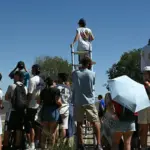





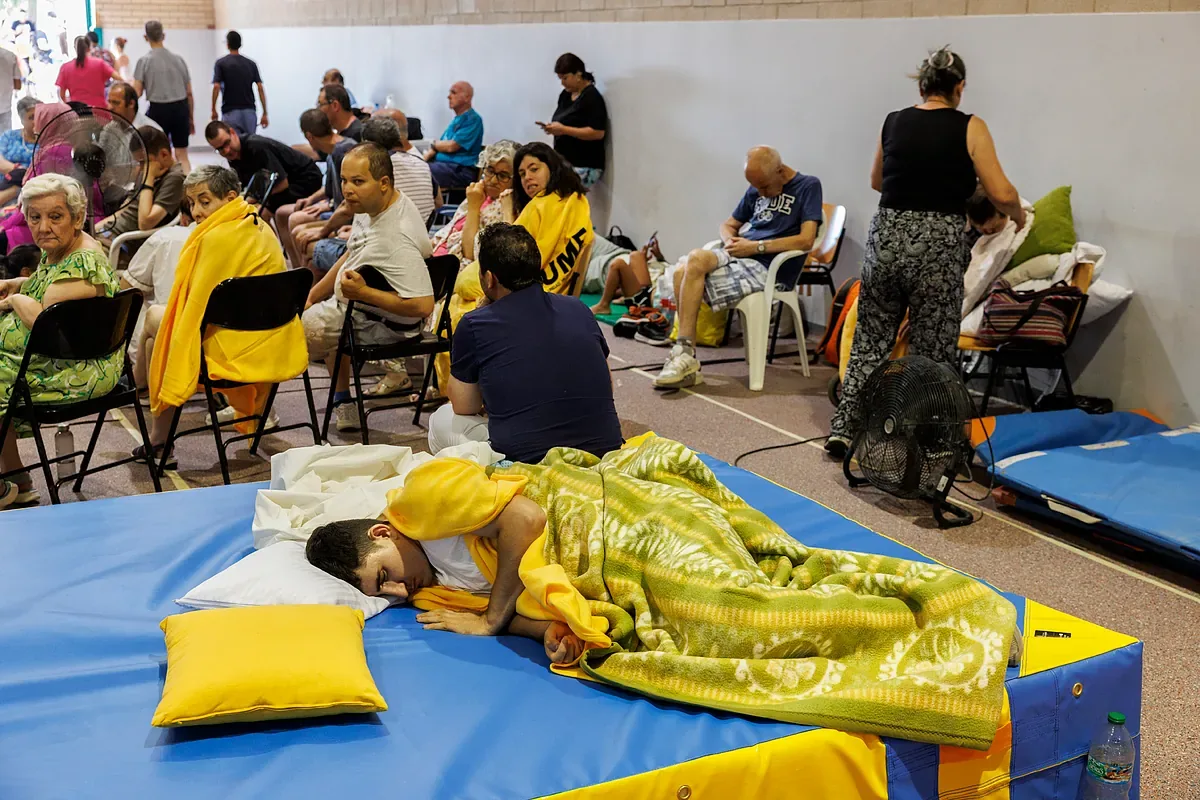
The silence barely lasts a few seconds. In one corner of the pavilion, someone drags a newly assembled folding bed while several groups watch attentively to then replicate the assembly. In another, a table full of volunteers distributes water bottles while, outside the venue, a human queue stacks dozens of food boxes one by one. A procedure that has not stopped working since early morning.
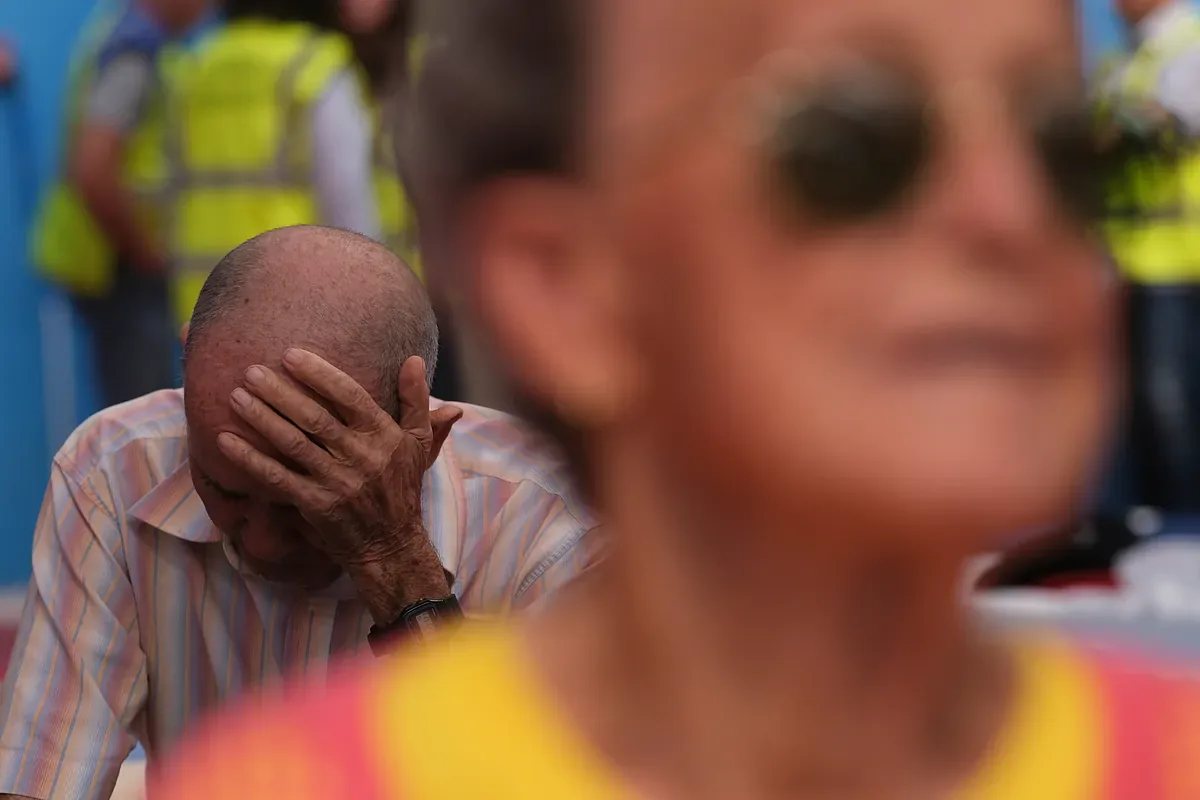
In between, the scene is made up of tired faces who had to sleep sitting on plastic chairs the day before, families watching the hours pass, and neighbors checking their phones every few minutes, waiting for a single piece of news. No one knows when the time will come to be able to return home.
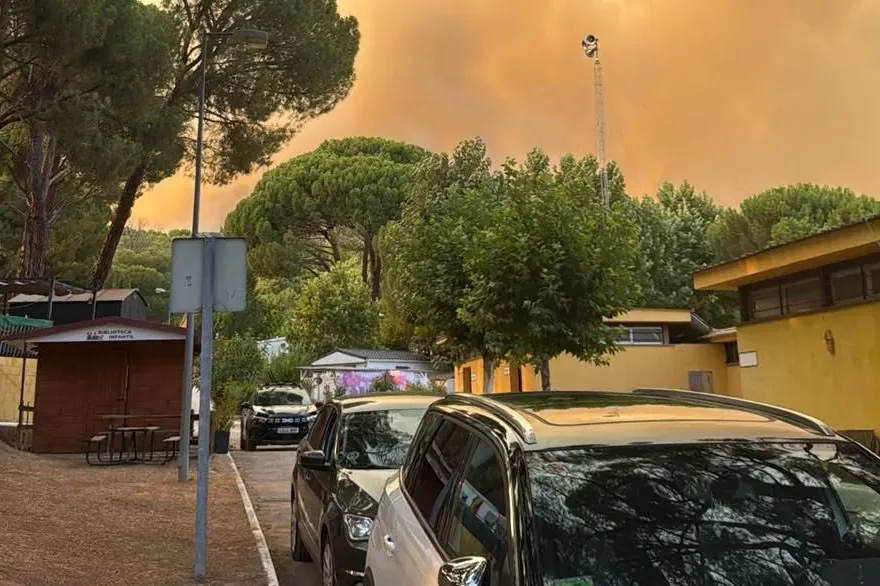
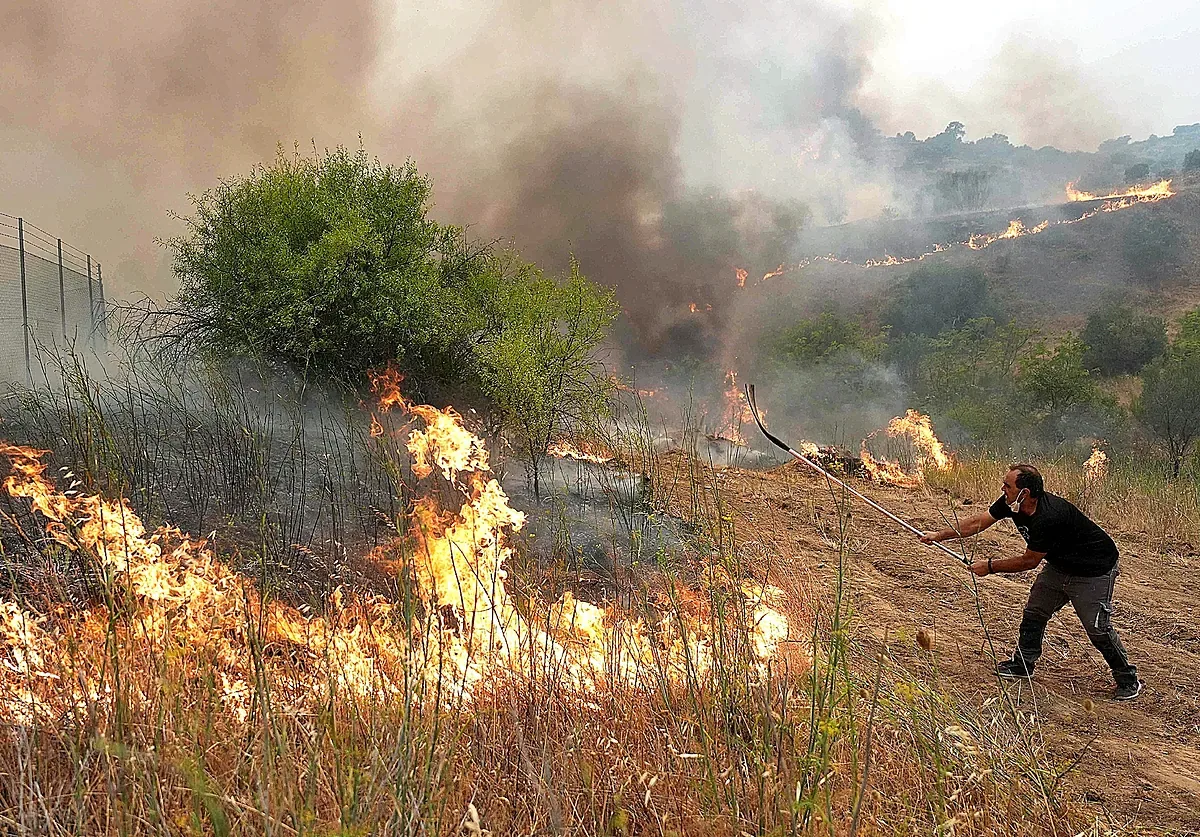
The municipal sports center of Villamanta has become the improvised refuge for hundreds of residents evacuated from Villa del Prado and other municipalities in southwestern Madrid due to the fires that keep the Community of Madrid on edge. Some arrived at dawn. Others have been out of their homes for almost two days between lockdowns and evacuations.
“They evacuated us the day before yesterday. At eleven at night, they told us we could go back because it seemed controlled, but half an hour later they warned us again to leave,” says María Pilar García, from Alicante, married to Amos, from Madrid, who is still unable to understand how quickly the situation changed. “People haven’t slept a wink. Some were on the floor because at first there weren’t even mattresses,” she recounts.
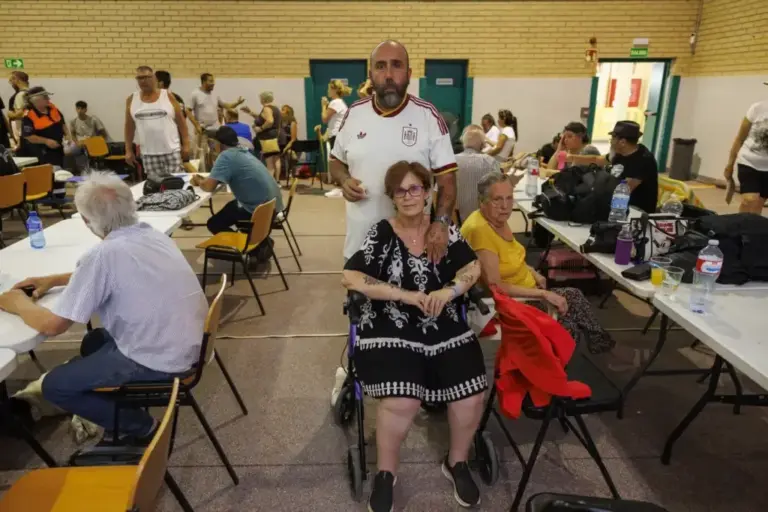
A scene that is repeated in every corner of the sports center, where no one regrets having left something at home. “It caught us completely by surprise. We grabbed the medication, the money, the documents, the girl… and we left,” explains Christian, evacuated with his family. Since then, they only know that, for now, the fire has not reached the core where their home is located. “But we don’t know anything else.”
Next to him, his mother, Ildefonsa, recalls how a relative came to pick her up after receiving the evacuation notice. She can barely walk normally, and leaving the house was a real challenge. Even so, she insists that the care received has been impeccable. “We haven’t lacked anything. Last night there weren’t enough beds, but that was because the UME was completely overwhelmed.”
Four years ago, she suffered a thrombosis that kept her hospitalized for four months, and from which, against the initial prognosis of the doctors, she managed to recover without losing mobility or speech.
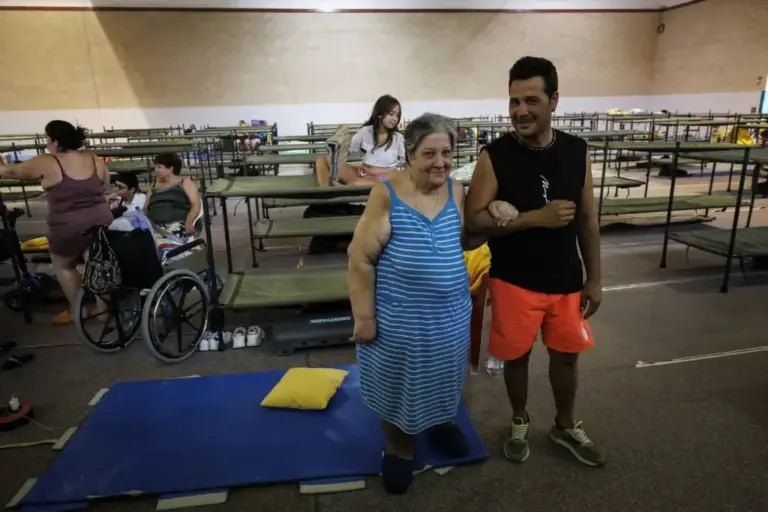
Now she walks slowly, with difficulty. Sitting in one of the chairs at the Villamanta sports center, she counts the hours to return. “Home is always your safe place in the end,” she states.
And behind the thousands of stories impatiently waiting for the flames to disappear, hundreds of neighbors continuously enter and leave with bags, clothes, hot coffee, or food. Miguel Velasco and Ángel Ramírez have been helping for hours to unload, move boxes, and attend to everyone without leaving anyone aside.
Neither of them experiences the tragedy firsthand, but they feel that they could be the ones needing help any other day.
“There’s no more mystery to it. Treat others as you would like to be treated,” Miguel summarizes. “When it’s our turn to need help, we would also want someone to be there.” He admits, however, that he was surprised to see how some neighbors merely observed from the doorway while others kept working. “There were forty kids watching. I would light a cigarette, take two puffs, and put it out because we had to keep helping.”
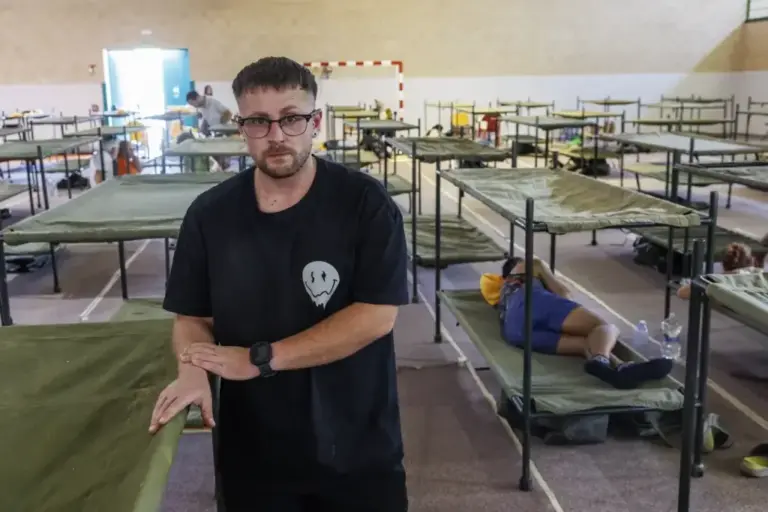
And it is the evacuees themselves who continuously point to those volunteers who, despite their youth, are the first to. “He’s been here since yesterday and still hasn’t gone to sleep,” says Ildefonsa, pointing to one of the young people who continues to distribute water and organize the arrival of supplies. “The young people of this town are surprising me a lot.”
Meanwhile, the hours pass. The displaced depend on the meetings of the Integrated Operational Coordination Center (CECOPI), responsible for deciding when they can return. No one dares to make plans. “Today we are here. Tomorrow we don’t know,” Christian summarizes.
Neither yesterday nor today is there talk of furniture or lost objects. There is talk of returning. Of opening the door of home again. Of checking that everything is still there and that, despite experiencing one of the most devastating fire seasons in recent years, the only thing left is trust.