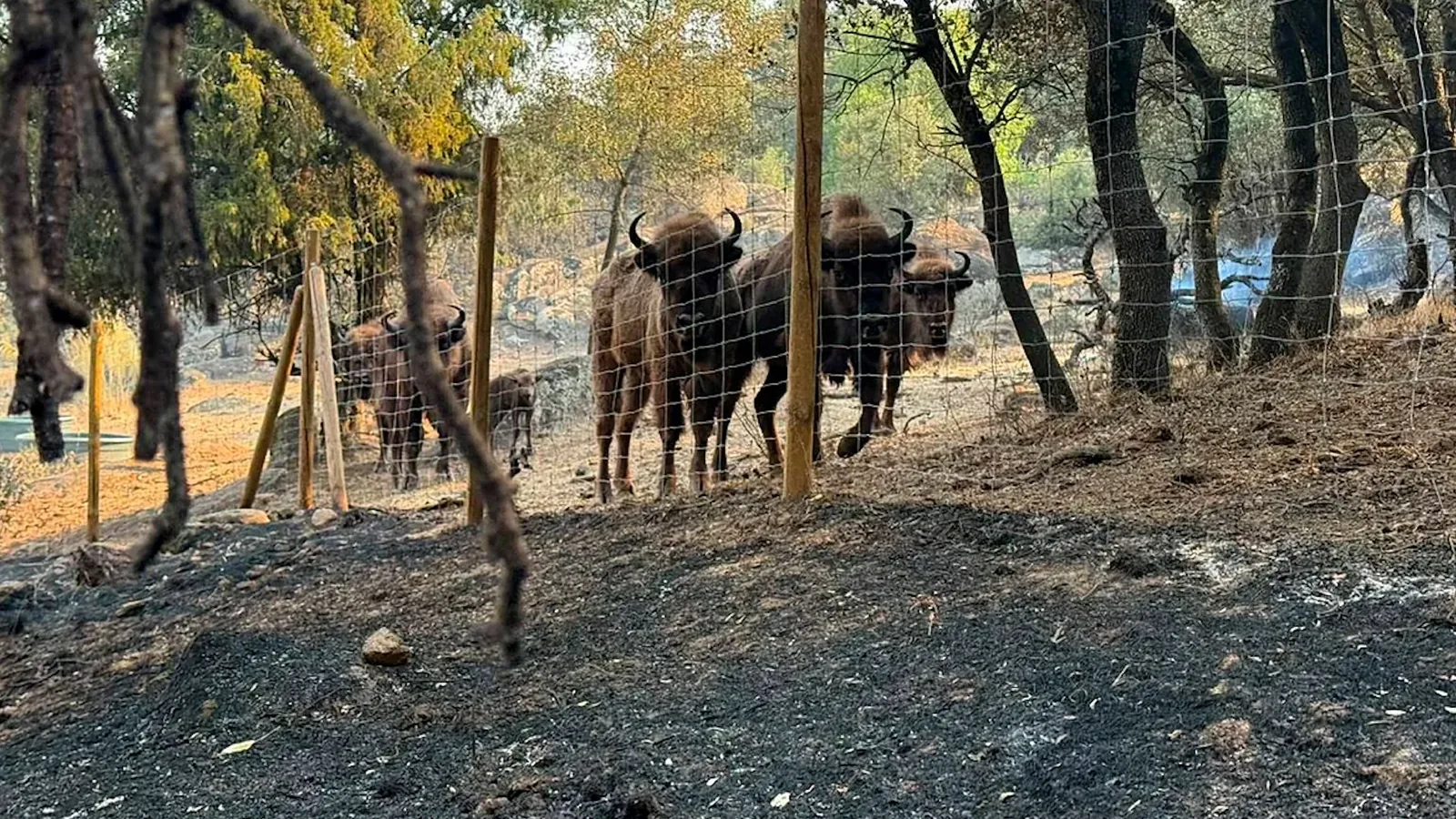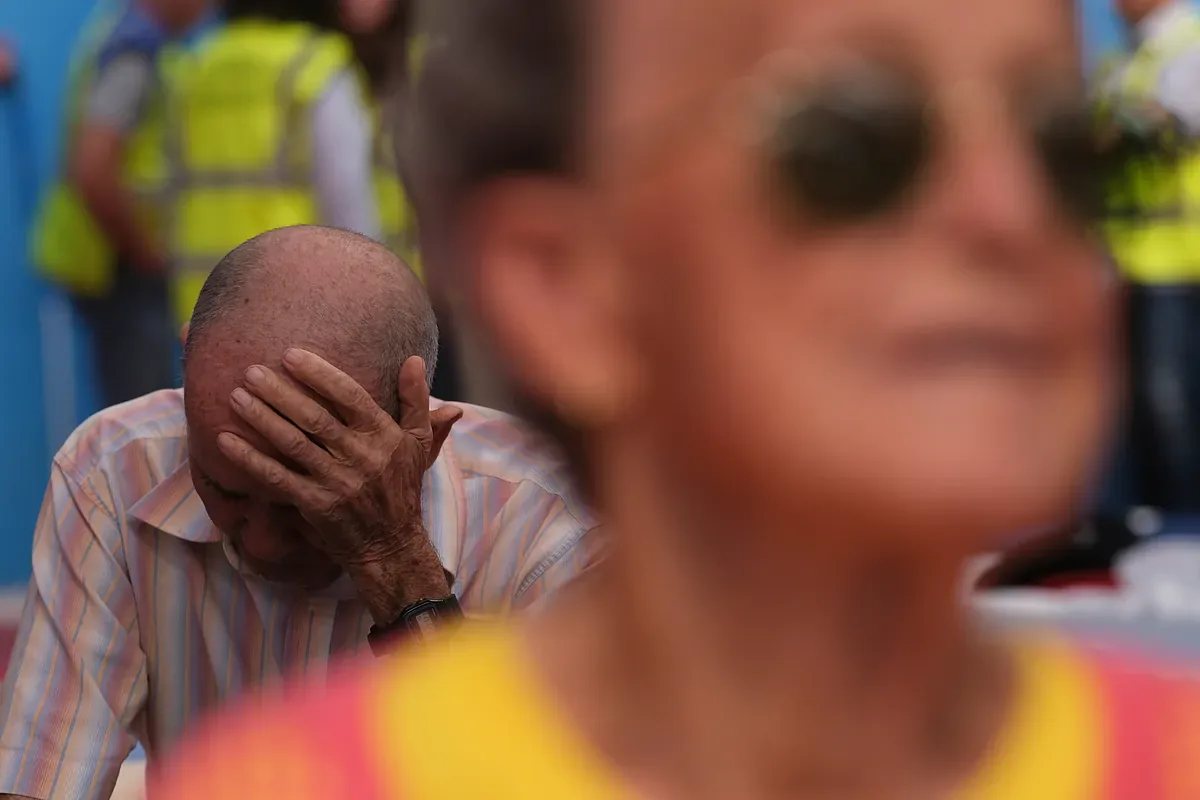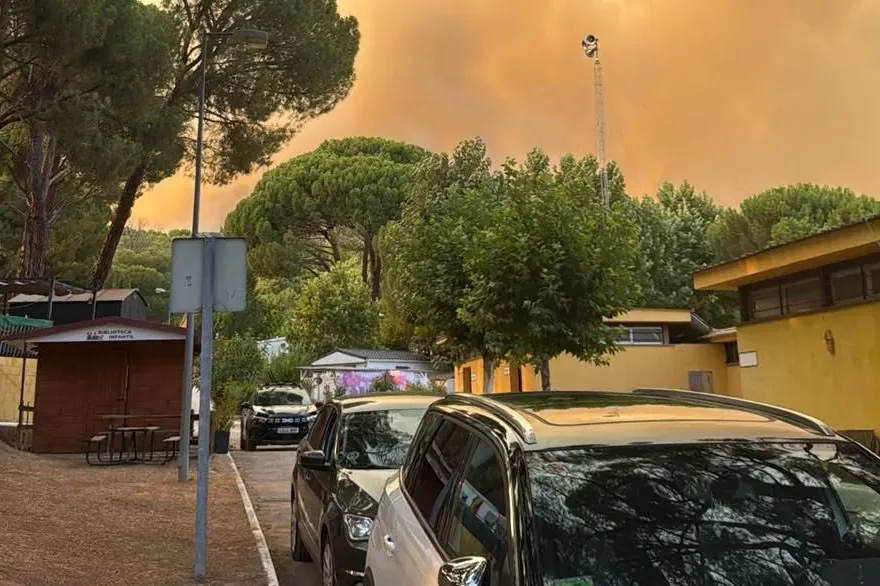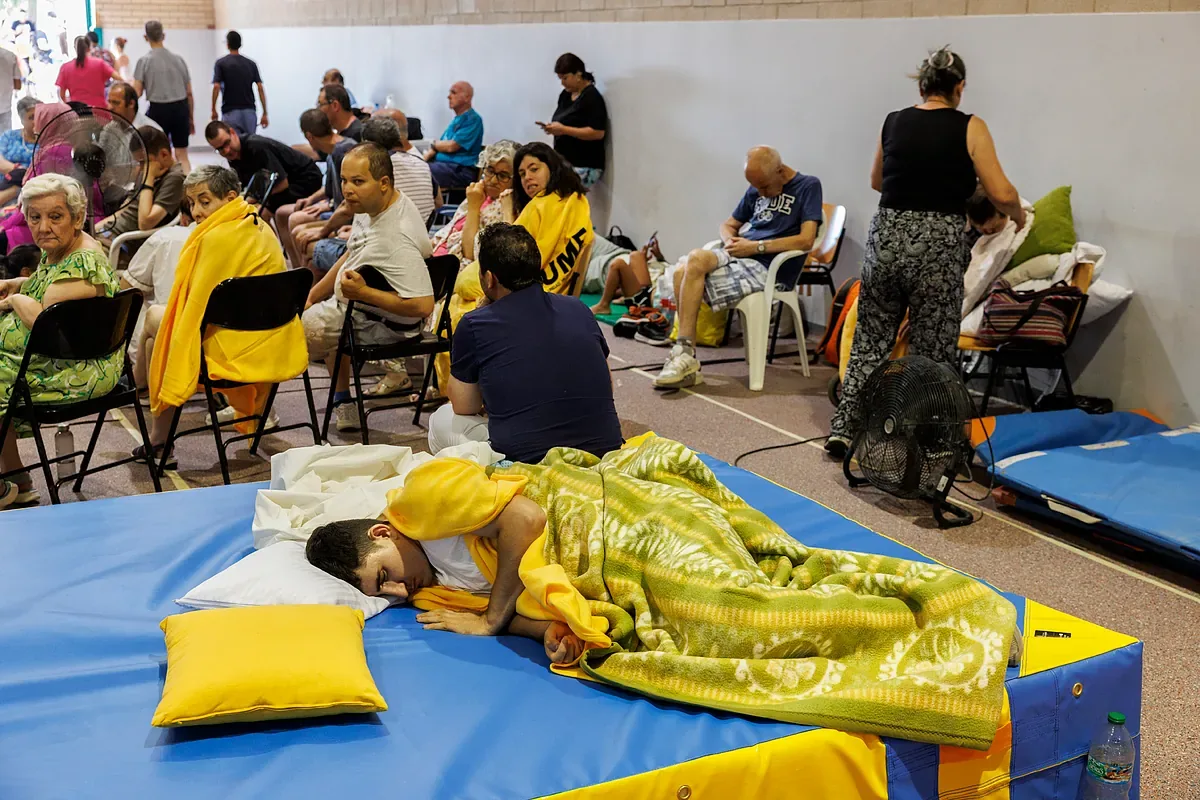





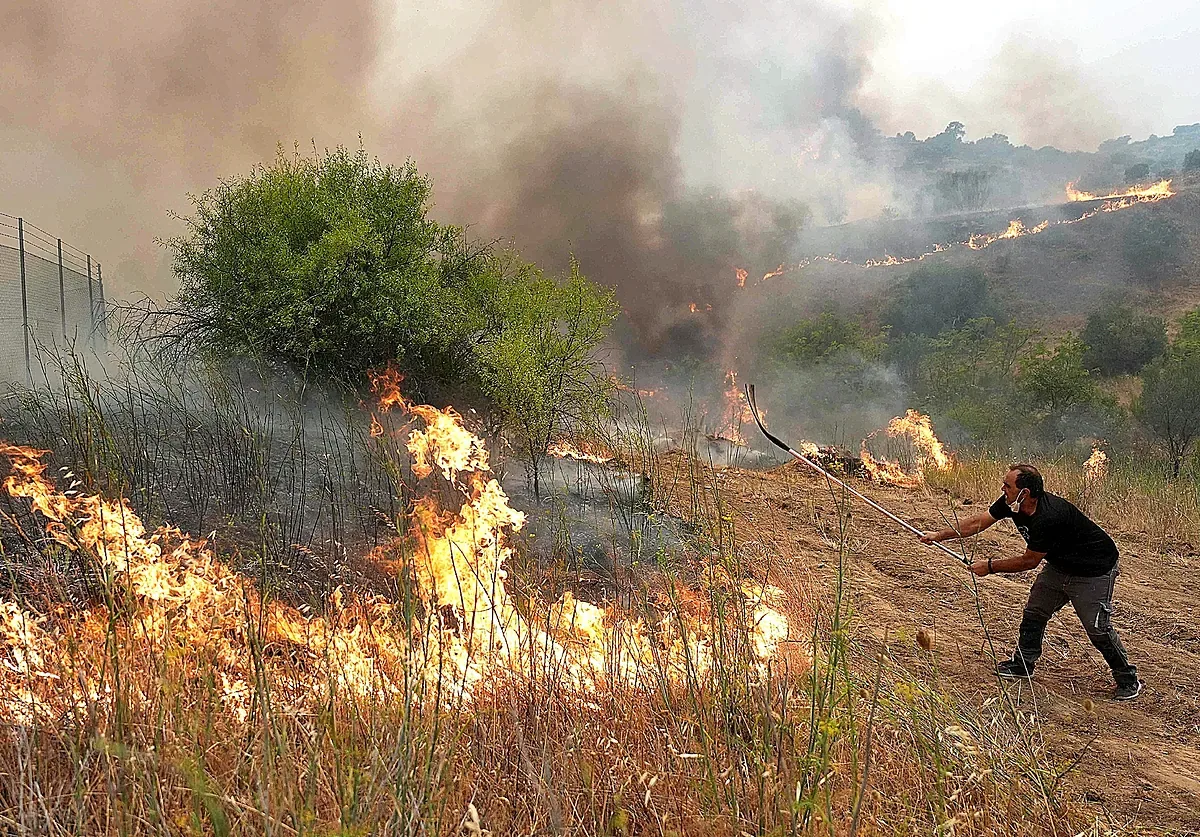
The west of the Community of Madrid and the east of the province of Ávila became yesterday an enormous and announced pandemonium of almost 20,000 hectares burned due to four forest fires, declared in wooded areas of both regions, which at the close of this edition threatened to merge into one and advanced uncontrollably, without even being able to be perimetered, having already caused the evacuation of more than 40,000 citizens -some of whom had been previously rehoused only to be expelled from their homes again-, and another 20,000 confined due to the absolute lack of control of the situation by the authorities, which forced for the first time in Spain’s history the declaration of Level 3 Emergency for fires and the central State took the reins of crisis management.
Most of the affected people, about 50,000, are from the Madrid municipalities in the western sierra of Madrid affected by the evacuations, while about 13,000 are from the Ávila area hit by fires that are feared to merge at some point and create a single front difficult to combat.
It’s not just that the communities of Madrid and Castilla y León could not cope with the fire -Ávila, for example, depends de facto on Madrid according to sector sources: in the province there are barely a dozen firefighters usually active, what is needed is imported from Madrid-. It’s that Spain was forced to activate the European solidarity mechanism, which resulted in the sending of at least two planes from Italy and another two from Greece to try to attack the monstrous fire, which devoured hectares at an unprecedented speed.
The authorities pointed out that these are fires “beyond extinction capacity”. The “most serious in the history of Madrid”, said the President of the Community, Isabel Díaz Ayuso. All that remained was to avoid personal injury and “wait for conditions to improve”. At the close of this edition, the list of 15 affected municipalities and 12 evacuated localities was in crescendo. The collaboration between the central Government and Madrid was, for once, and even with some declarative crossfire, loyal – “perfect”, said Minister Marlaska -, and even King Felipe VI got involved participating from the Balearic Islands, telematically, in the State Coordination and Management Committee (CECOD) of the State Emergency Plan.
But neither the resources could contain the fire, nor is prevention, experts point out, adequate. Not a few, such as the former director general of Civil Protection Francisco Ruiz Boada, demand a National Forest Fire Prevention Strategy that unifies the fragmented action of the autonomous communities. From the Spanish Association for Fire Fighting, it was requested, for example, that the Army be the one to face emergencies of this type, with military means and not with the usual motor pumps, “which are useless with these fires because they must stop every 25 minutes”.
Eyewitnesses spoke of flames 10 and even 15 meters high. The smoke from the two fire nuclei reached Madrid cities like Tres Cantos in the mid-afternoon, more than 90 kilometers away. Sports centers in Villamanta (Madrid) and Cebreros (Ávila) housed thousands of fire refugees, who are ultimately also, in some way, refugees of climate change, mentioned by Marlaska and at the origin of the situation according to all experts.
The fires, which originated in Burgohondo (Ávila), Villa del Prado (Madrid), San Martín de Valdeiglesias (Madrid) and Almorox (Toledo), found perfect conditions: winds of up to 60 kilometers per hour -whose shift at the close of this edition was feared by the authorities for potentially leading them to converge into a single, colossal fire-, temperatures of more than 40 degrees during their first day, Thursday, and an environmental dryness that fire-fighting experts have been pointing out for years as unprecedented.
Read more This is life at a service station when half of Spain goes on holiday
Along with this, what these same experts have been pointing out for years: almost virgin forest masses, neither worked by agriculture nor by livestock, patiently waiting to burn. In Burgohondo (Ávila) that spark was caused by heavy machinery used by two people, whose use was prohibited by the Junta de Castilla y León under these climatic conditions. One of them was arrested and both charged. The fire, moreover, occurred in a place very difficult for extinction forces to access. In a few hours, the front was eight kilometers long, fanned by the wind, and crossed the province.
One of the Madrid fires was caused, according to some sources, by a car ignition, but assistance there, as in Ávila, was totally overwhelmed. As soon as Minister Marlaska appeared before the media, he made it clear that the day would be “critical” and that he could not “be optimistic”. The Madrid Emergency Councilor, Carlos Novillo, was not far behind: “The next few hours will be tough,” he admitted.
Firefighters were so unable to cope with the flames that the Minister of Interior admitted that they were focusing on “the essential, saving human lives” -and even more so after the fire two weeks ago in Los Gallardos (Almería), where 12 people died-, and even the parking lot of the Madrid firefighters’ facilities in San Martín de Valdeiglesias, very close to the San Juan reservoir, could not be saved from the fire.
The two Madrid fires and the one in Almorox (Toledo), the latter having originated on the provincial border, merged in the early afternoon due to the helplessness of the extinction efforts, and around that time the wind began to shift north, as if carrying these three fires hand in hand towards the one in Ávila. At the close of this edition, the great fear was their confluence.
Fires capable of ‘creating climate’
FORECAST. The extreme conditions of the fires in Madrid and Ávila suggested yesterday that one of the fears of fire-fighting experts could come true, especially considering that the weather was expected to help today, Saturday: that the cones would end up creating their own climatic conditions, their own meteorology, with which they would continue to advance despite a context that was initially better.
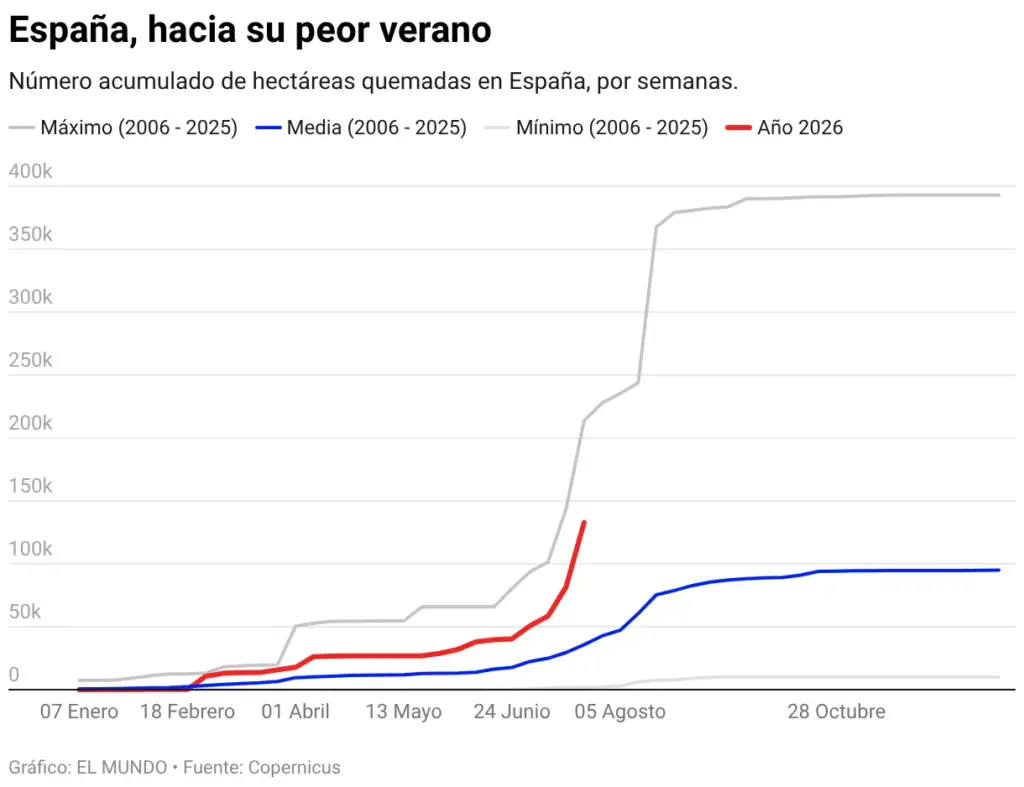
EXTREME RISK. Spain has registered 39 forest fires in the last two weeks, 15 of which have been over 500 hectares, according to European data. Up to 62% of Spain’s surface is currently at extreme risk.
Read more The president and CEO of Plus Ultra resign, investigated for the loan to the airline