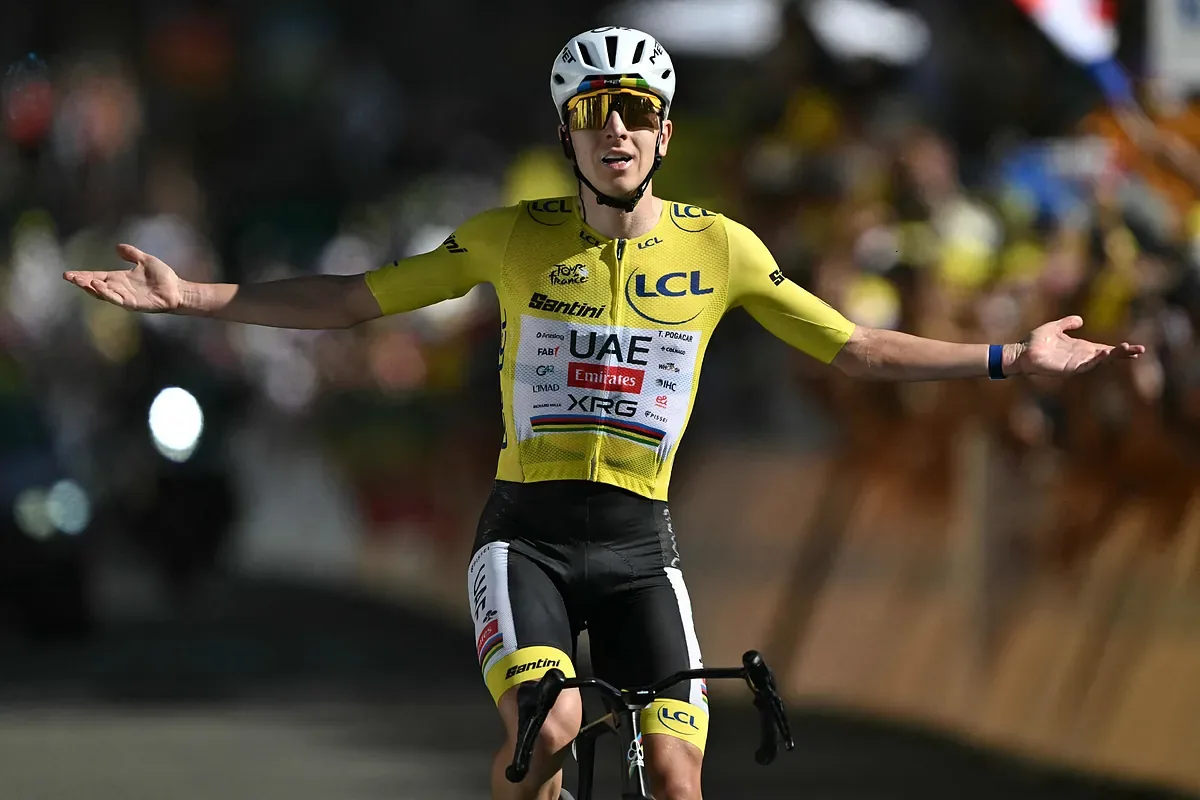




Tadej Pogacar has just won his fifth Tour and is already mentally on his way to the sixth, a number that Jacques Anquetil, Eddy Merckx, Bernard Hinault and Miguel Indurain physically did not reach. None of the four won their first Tour at 21, like Pogacar. Nor their fifth at 27. Not so early in either case.
Pogacar has thus won that double battle of precocity, which would augur new records for him in successive years, if his sporting life proceeds with desirable normality. In it, a sixth Tour, to begin with, seems destined for him. But, referring to the combined chapter of the Grand Tours (Tour, Giro and Vuelta), he has much more work ahead.
He collects six to Indurain’s seven, Anquetil’s eight, Hinault’s 10 and Merckx’s 11. To surpass the Belgian, the supreme reference, he would have to win at least one a year for the next six. The last one already at 33. If he won two, he could halve the deadlines and conclude the succession task at 30. In any case, the challenge is enormous, a cyclopean undertaking, bordering on the impossible. He will face it and, for that reason, we believe he will come to the Vuelta, to continue as soon as possible the pursuit of the still distant Eddy. He is in a hurry. His ambition is unlimited, but not his youth.
Muscles on fire
Since the Olympic Games confirmed the possibilities of the climb to Montmartre (1 km at 6.5%, a fourth-category climb), the Tour replaced the triumphal parade of the last stage with the ascent to the cobbled neighborhood paradise of old bohemia. Last year, in the rain, Wout van Aert dropped Pogacar. This time the organization cut the 133 km of the stage to 89. A good part of the available security forces destined to protect the circuit were sent to fight the fires that are also devastating France. Times were taken at the end of the last lap of the initial circuit of the Champs-Élysées.
Read more The Cuban regime celebrates Rebellion Day without Raúl Castro and with citizen protests
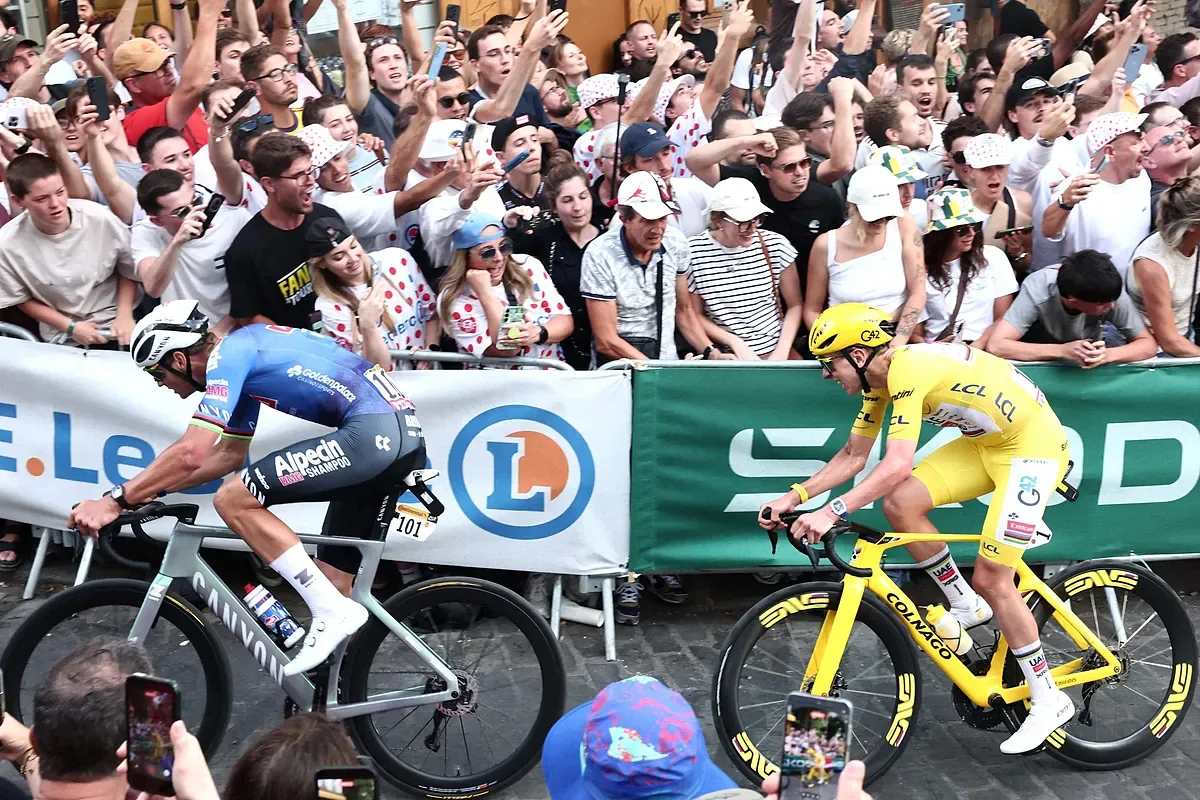
But, while all the qualifying fates were cast, winning in Paris is no small feat. And the greats applied themselves to achieving it. The greatest of them all, Pogacar, put in maximum effort. On the second climb to Montmartre, he broke the race. He took with him Mathieu van der Poel, Remco Evenepoel and Mads Pedersen. There was no more suitable quartet for the occasion on that parcours lined by tens of thousands, perhaps hundreds, of enthusiastic fans. Only the exhausting effort of Decathlon, dragging the group along, could abort the attempt.
On the third climb, it was Van der Poel who shattered a torn peloton. And this time, only Pogacar accompanied him. On the descent and on the final flat, the duo’s struggle against the rest of the world reached maximum intensity. Meter by meter, a small handful of pursuers, gritting their teeth and with muscles on fire, gradually closed the gaps.
With 300 meters to go, Pogacar, exhausted, gave up. Still fast, but at the absolute limit of his strength, Van der Poel seemed to be riding backward, compared to the smoking speed of his pursuers. But he still had space and time to put three-quarters of a bike length between himself and Philipsen.
Read more German Police shoot dead the main suspect of the terrorist attack perpetrated during Berlin Pride
The Tour is over. He and Pogacar will meet again in a year.