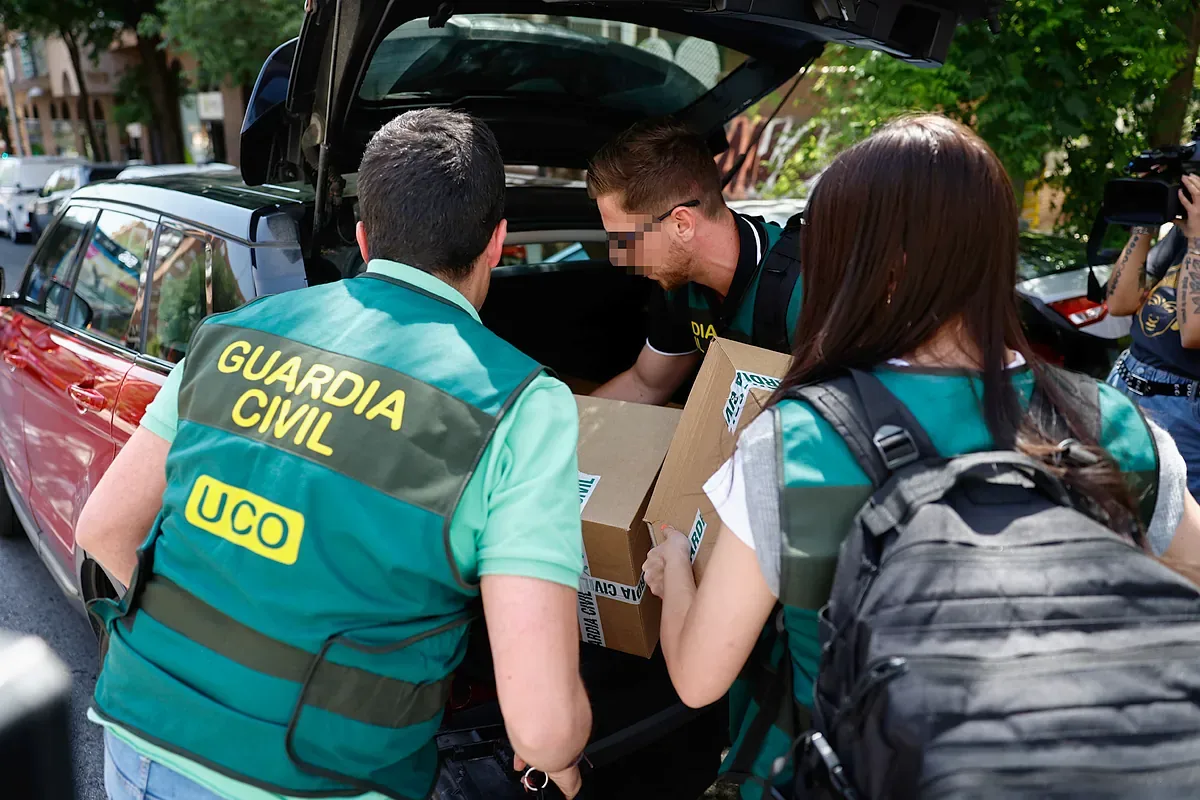


The sewers of Ferraz tried to tie the UCO hands through various means, including opening internal investigations to intimidate its members and direct pressure from the political leadership of the Civil Guard on the content of reports that harmed the PSOE and the Government.
The main UCO report that led to the raids and searches last week places the director of the Civil Guard, Mercedes González, as a key figure in these maneuvers. It also points to her predecessor in the position, Leonardo Marcos, and the deputy operational director (DAO) with both, Manuel Llamas.
According to the report, on December 10, 2024, “the first elements are observed that show that Leire would be passing on to the Director General of the Civil Guard information derived from the apparently criminal activity that at that time was being carried out” against the unit.
As stated in the case file, there were at least three meetings between González and the so-called PSOE plumber Leire Díez. Whatsapps were also exchanged that were deleted because the director had automatic deletion activated. “The director of the Civil Guard is someone I trust”; “Remember that I am friends with the Director General of the Civil Guard,” Díez boasted.
In a notebook seized from the plumber, this note was found: “Internal investigation G.C. for leaks.” Previously, the PSOE plumber had written in her Whatsapps: “This is the way to set up what I want to do with the UCO at an administrative level.”
The UCO emphasizes that, “at least since April 2025, Leire Díez would have begun to prepare a route through the Director General of the Civil Guard” against this unit. These internal investigations materialized, with the key intervention of the director of the Armed Institute. Sources from the investigation explain to EL MUNDO that it was Mercedes González who ordered the opening of three confidential reports to “clarify responsibilities” against the UCO for alleged leaks. Two were signed by the DAO and one directly by her.
At her direction, the DAO appointed two generals as instructors, who were questioned last week. The focus of the confidential reports was placed on two generals, former heads of the UCO, Alfonso López Malo and Rafael Yuste. Lieutenant Colonel Balas was also summoned, whom Leire Díez wanted to see “dead” for being the scourge of socialist corruption.
The agents state that a “discrediting campaign” was launched against the UCO while “knowledge of these facts can be attributed to the Director General of the Civil Guard, at least since May 8, 2025.”
Last Thursday, the Minister of the Interior, Fernando Grande-Marlaska, stated that “the director of the Civil Guard has not had any meeting with any person,” neither “Leire nor anyone else, in any terms.” “The director of the Civil Guard is a genuine person linked to respect for legality, linked to her support at all times for the work of the Civil Guard,” said the Interior Minister in clear defense of González.
Last Wednesday, while other agents were heading to Ferraz to request documentation, Yuste detailed to the investigators the pressures he received while leading the UCO.
The brigadier general explained that on July 12, 2024, he held a meeting with the then director general of the Civil Guard, Leonardo Marcos; with the head of Judicial Police, Alfonso López Malo; and with the deputy operational director (DAO) Manuel Llamas. The reason for the meeting had been a request for emails that the UCO had submitted to the judge of the Hermanísimo case.
The then director general stated that this request was “totally prospective and malicious,” adding that the credibility of the UCO and the Civil Guard was “in the dumps.” The commander demanded that within a week the report on the emails had to be “analyzed and that there was nothing.”
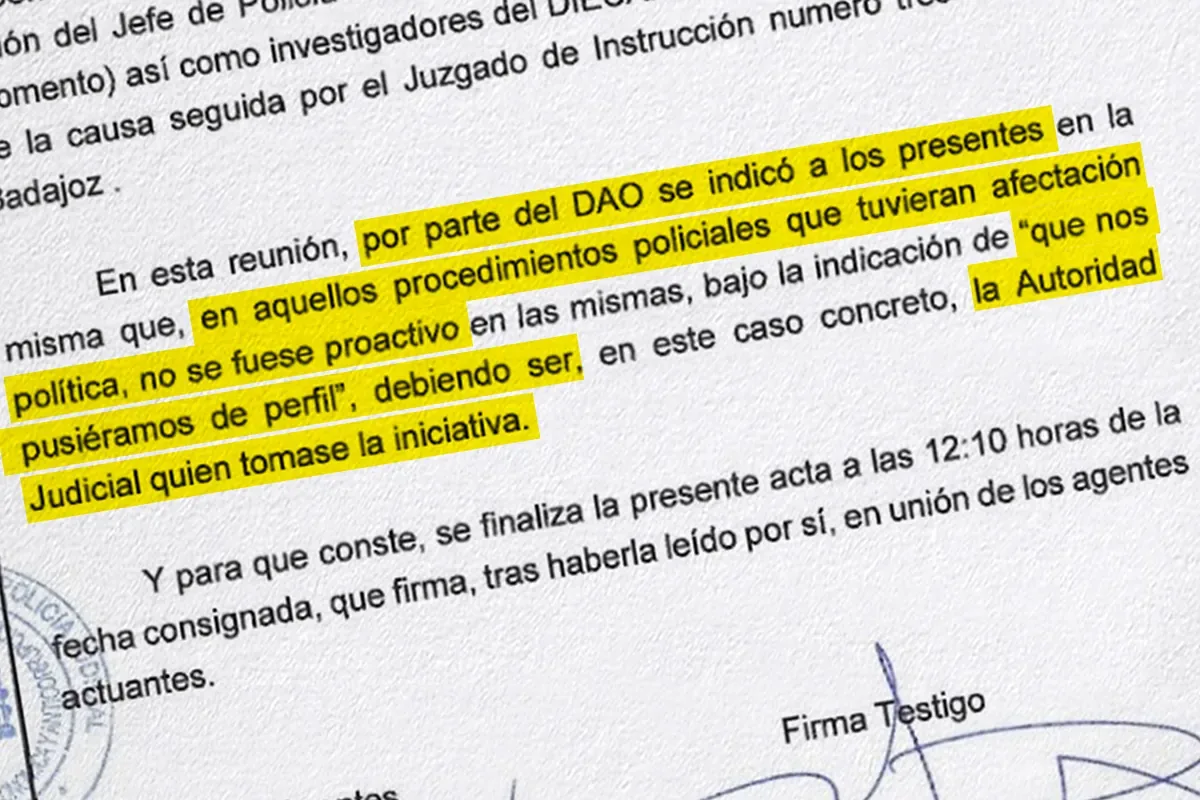
According to the minutes of his statement, two days later the DAO appeared at the premises of his unit. He met with him and agents related to the investigation of David Sánchez. “Those present were told that, in those police procedures that had political implications, they should not be proactive in them, under the indication of ‘that we keep a low profile,’ and that, in this specific case, the Judicial Authority should take the initiative.”
The investigators of the Sewers case also took a statement as a witness from the head of the Judicial Police of the Civil Guard. López Malo recalled the first meeting mentioned by Yuste: “The Director General concluded by indicating that the email report should be prepared as soon as possible, concluding ‘that there was nothing’ and, if UCO personnel had to be left without vacation, so be it.”
A few hours earlier, the commander had been personally summoned to the director general’s office. Leonardo Marcos “told him that he was angry and upset about the report issued by the UCO” about David Sánchez.
In the same appearance before the agents of the unit he had previously led, Yuste was asked about his relationship with several internal investigations opened following information about the content of the investigation that harmed the Government.
Among them, the messages exchanged between José Luis Ábalos and Koldo García published by EL MUNDO. The instructor of one of those files asked him about them, saying he was going to interrogate those responsible for the investigation of the Koldo case. When the witness advised him not to do so, the instructor justified himself by saying that the DAO was receiving “a lot of political pressure” because of those investigations.
Yuste explained that throughout his career he had never witnessed any confidential information of that type, but that three were launched in a few months.
Yuste was also ordered in September 2025 to send the DAO “an organizational chart” of the UCO showing “that part of the structure that has a direct relationship with investigations linked to the President of the Government.” He had to identify “by name its members.” These pressures continued despite the fact that, according to the head of the Judicial Police, the DAO was made aware that the UCO could not have leaked the messages published by this newspaper, since some of them were after the material seized by the Civil Guard.