








The President of the United States, Donald Trump, announced this Monday that he has ordered to stop the bombings against Iran to negotiate an agreement that ends the conflict, but warned that he will resume attacks if the talks fail. “We are in very deep talks with Iran. If they don’t work out, we will return to strong military actions,” the president told the digital newspaper Axios.
When asked how much time he is willing to dedicate to diplomacy, Trump replied: “Not much time. Either they move fast or they don’t move.”
This pause in the airstrike campaign between Iran and the United States has raised hopes of resuming diplomatic dialogue before the Memorandum of Understanding signed just over a month ago derails completely. After two weeks of cross attacks that have caused the death of more than 50 Iranians and two U.S. soldiers, indirect communication between the two countries remains in place, but neither side has taken the initiative to return to the negotiating table, at least publicly.
“We are exchanging messages” with Washington, said the Iranian Foreign Ministry spokesman, Esmaeil Baqaei, after insisting that his country will make decisions about the war according to its “national interests.” Baqaei accused Washington of having entered a war against its interests and of not knowing how to resume the diplomatic path. “The United States will return to the negotiating table when global energy prices rise,” Baqaei said, referring to the global financial storm caused by instability in the Strait of Hormuz, the scene of tensions between Washington and Tehran. The Iranian diplomacy representative insisted that this maritime route “remains closed” and noted that talks continue with Oman to determine exclusive joint management of Hormuz, although he tried to dissociate this dialogue from the peace process with Washington. “The Americans are going through a bad time, they caused it themselves. They did this and now they are trapped,” he said.
The diplomatic window has been accompanied by an exchange of calls between mediating countries and governments affected by Iranian reprisals in the Gulf, with conversations involving Saudi Arabia, Qatar, Oman, and Pakistan.
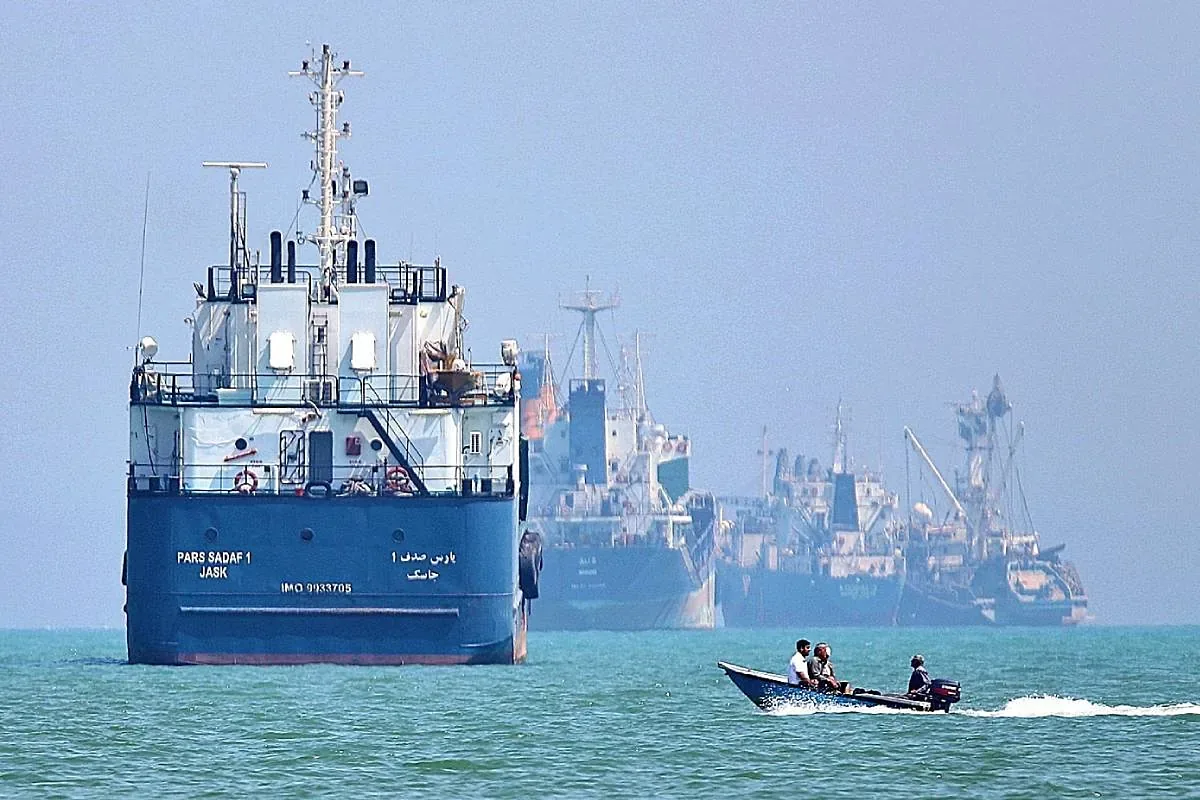
Despite signs of a push to redirect talks, Tehran and Washington have continued to exchange verbal attacks. The U.S. president, Donald Trump, shared on social media Sunday a series of images generated by artificial intelligence showing the seizure of an Iranian tanker and an attack on the Jark oil export terminal, a nerve center of the regime’s crude oil export. Trump also denied reports in the U.S. press that the war against Iran has caused a reduction in ammunition reserves. “We have more ammunition than anyone in the world, and much more than we need.”
Although there is a pause in attacks, tensions continue in Hormuz. Iranian state television reported today that six vessels linked to the United States unsuccessfully tried to navigate an “unauthorized” route in this maritime route. “One of them suffered an accident, Iran forced the rest to return, warning that unauthorized routes are dangerous,” the broadcaster said, without giving further details on the condition of the damaged vessel, supposedly in waters where Tehran placed mines during the war.
The Revolutionary Guard, the elite army corps, has declared that the Strait of Hormuz plays “an important deterrent role against Iran” in this conflict and reclaimed sovereignty over the maritime route again. Over the weekend, fewer than 10 merchant ships transited Hormuz due to regional instability, despite the apparent pause in attacks between Washington and Tehran. Of the total vessels, three were Iranian tankers that left the Strait without incident, according to the maritime monitoring group Kpler.
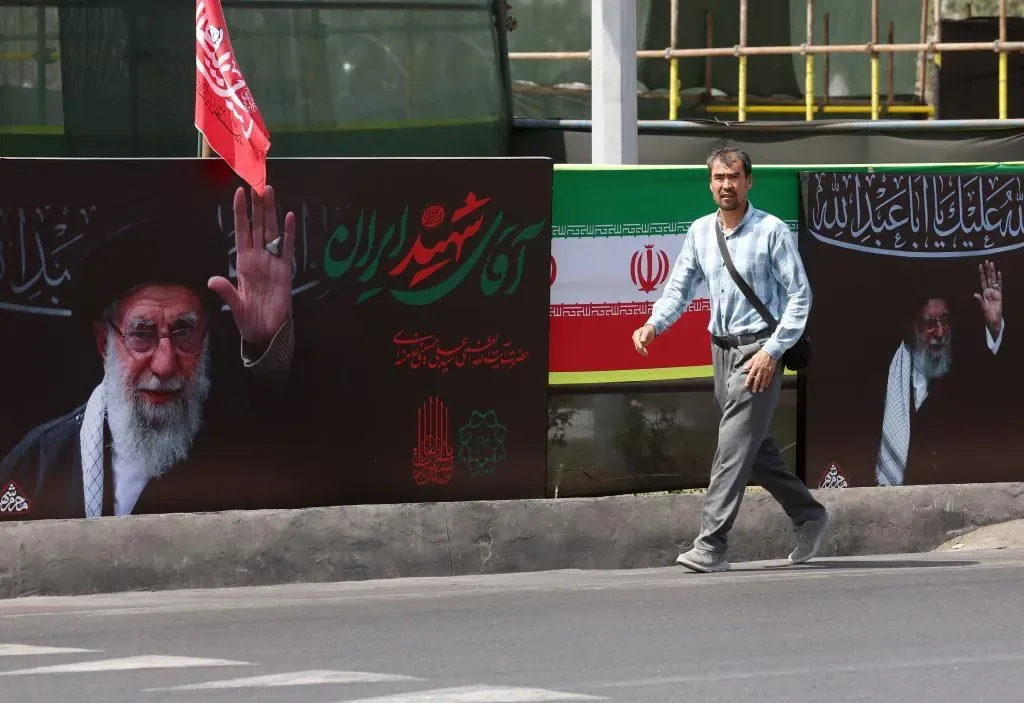
The Iranian Supreme Leader, Mojtaba Jamenei, posted a message on social media referring to the ongoing conflict, warning that the end of the war remains linked to the cessation of the Israeli offensive in Lebanon, one of the conditions Tehran has demanded since the start of negotiations. Jamenei warned that this is a “main condition” for “any agreement that ends the war imposed against the aggressive United States.”
Soon after, the Lebanese army denounced the continuation of Israeli military operations in the south of the country, stating that they prevented its full deployment as stipulated in the ceasefire agreement reached with Tel Aviv. Since March, Israeli attacks in Lebanon have caused the death of more than 4,300 people and displaced a third of the population.
In recent days, the war escalation has moved to other parts of the territory, with the Ukrainian attack on an Iranian ship in the Caspian Sea, as well as clashes between Yemen’s Houthis – supported by Iran – and Saudi Arabia. Riyadh announced this Monday that its air defense systems destroyed drones coming from Iraq, an attack aimed at oil facilities located in the eastern part of the country.
“These terrorist attempts were launched from Iraqi territory and carried out by terrorist militias backed by Iran,” said Saudi Major General Turki al Maliki. Iraqi militias that are part of the Resistance Axis – the alliance of groups operating in the region under Iran’s influence – previously declared their support for the naval blockade imposed by the Houthis against Saudi Arabia and offered help to close the Bab el-Mandeb Strait, the bottleneck that allows vessels to exit from the Red Sea to the Gulf of Aden. The Houthi blockade against Saudi vessels could severely affect Saudi Arabia’s crude oil trade, which had redirected 60% of its exports to ports on the Red Sea following the economic instability triggered by the siege in Hormuz.
Tensions between the rebel group and Riyadh erupted two weeks ago when Saudi Arabia attacked Sana’a International Airport in Yemen – under Houthi control – claiming that an Iranian plane was about to land without the permission of the internationally recognized Yemeni government. The Houthis accuse Riyadh of continuing to support the Yemeni authorities, after a decade of conflict that plunged the country into one of the worst humanitarian crises in the world. In 2022, the rebel group and the current government – supported by Riyadh – agreed on a truce, but tensions have increased amid the regional escalation due to the war in Gaza, Lebanon, and Iran.