




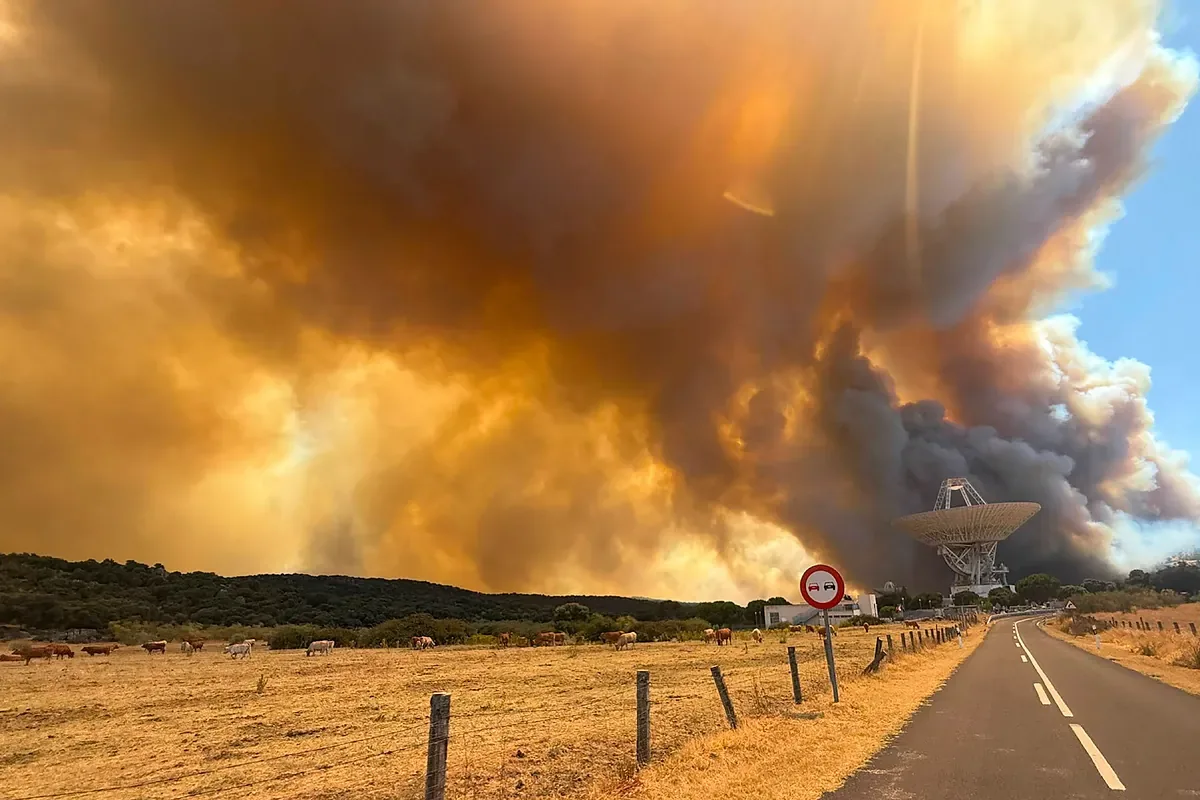
When the flames began to ravage the Western Sierra of Madrid this past Friday, one image stood out above the rest. A 70-meter diameter antenna held firm under a sky almost consumed by a massive cloud of dense, dark, and orange smoke, presenting an almost apocalyptic snapshot. It was the NASA Deep Space Communications Complex, located in Robledo de Chavela. From there, that same afternoon, nearly 90 people were evacuated due to the imminent danger.
The station, one of the three points on the entire planet—along with California (USA) and Goldstone (Australia)—from which humanity maintains contact with missions beyond Earth’s orbit, was surrounded by fire while a large smoke cloud made it disappear on the horizon. But it was all just a scare. NASA itself later confirmed that the center had not suffered “significant” structural damage to the antennas or buildings, and thanked emergency services for their “tireless efforts” to protect the site under “extremely challenging” conditions.
This newspaper was able to verify over the weekend that the fire barely entered the facilities. It burned some low grass in the vegetation surrounding the complex, but no damage is visible on the pavement or any visible infrastructure, a fact that coincides with what the U.S. agency confirmed.
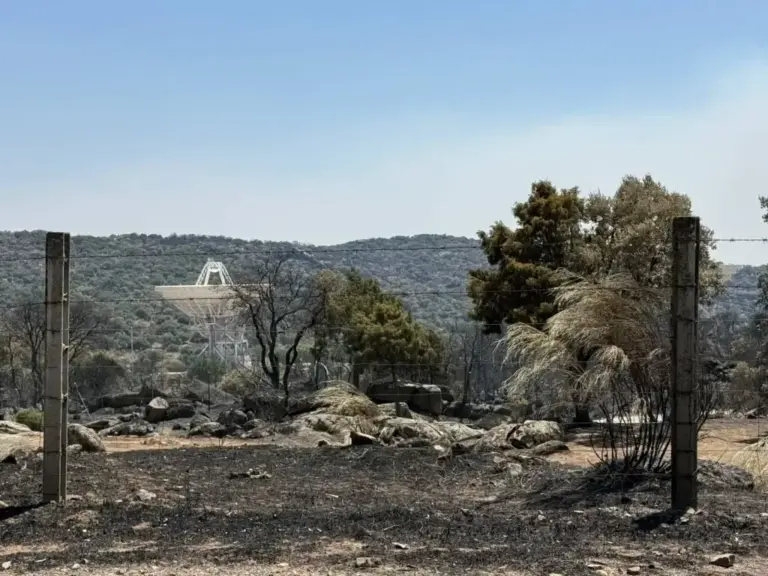
Additionally, on Sunday morning, two fire trucks approached to about 300 meters from the complex to repair an electrical line affected by the incident. While everything is being resolved, the other two centers in the United States and Australia are supporting operations with the spacecraft to ensure that space communications are not interrupted.
Communication between families
What has been more complicated to safeguard is coverage in many Madrid municipalities affected by the fire, which has caused distress and anxiety in families who have not heard from their relatives for hours or, in some cases, days. “I have been unable to speak with my grandfather for 48 hours… I know he is fine, but he was left alone after they confined them in San Martín de Valdeiglesias and I have not been able to go. It is very stressful,” said one of the affected from Brunete on Saturday.
Besides homes and a lot of forest, the flames also took down electrical towers, antennas, and kilometers of fiber optic cable. Aware of what this could mean, almost from the start of this tragedy, communications technicians got to work deploying an operation to recover the networks. “When the infrastructures were damaged, the biggest challenge was to build an emergency network on the fly while repairing the rest. The execution has been very complicated, working against the clock while the fire was still active,” regional sources told this newspaper.
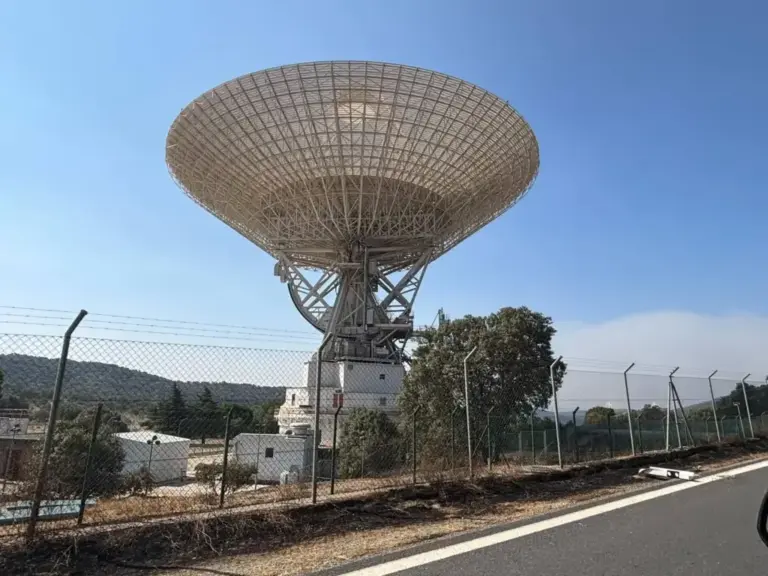
The strategy has been sustained on several simultaneous fronts. On one hand, the continuous repair of fiber optic and damaged base stations, a job that can only start when emergency services authorize access to the area and guarantee it is safe for technical teams. According to the same sources, this is the part that is costing the most: there are sections that have not even been able to start being repaired yet.
Mobile telecommunications units have also been deployed at the Advanced Command Post (PMA) and in the areas of greatest need, reinforcing coverage for the emergency services coordinating the extinguishing. Added to these are satellite connectivity solutions and temporary WiFi points for evacuated people, accessible regardless of their personal mobile operator.
All this machinery depends on permanent collaboration between the Community of Madrid, the PMA, emergency services, and the different operators, who adjust the response almost in real time as the fire evolves. “The clearest example of this adaptability came when the PMA itself had to move from Cenicientos to Navalcarnero. The move forced the immediate deployment of a new mobile telecommunications unit and additional connectivity solutions so that the new coordination center did not lose communication or go out of service for even a single minute,” conclude the regional sources.