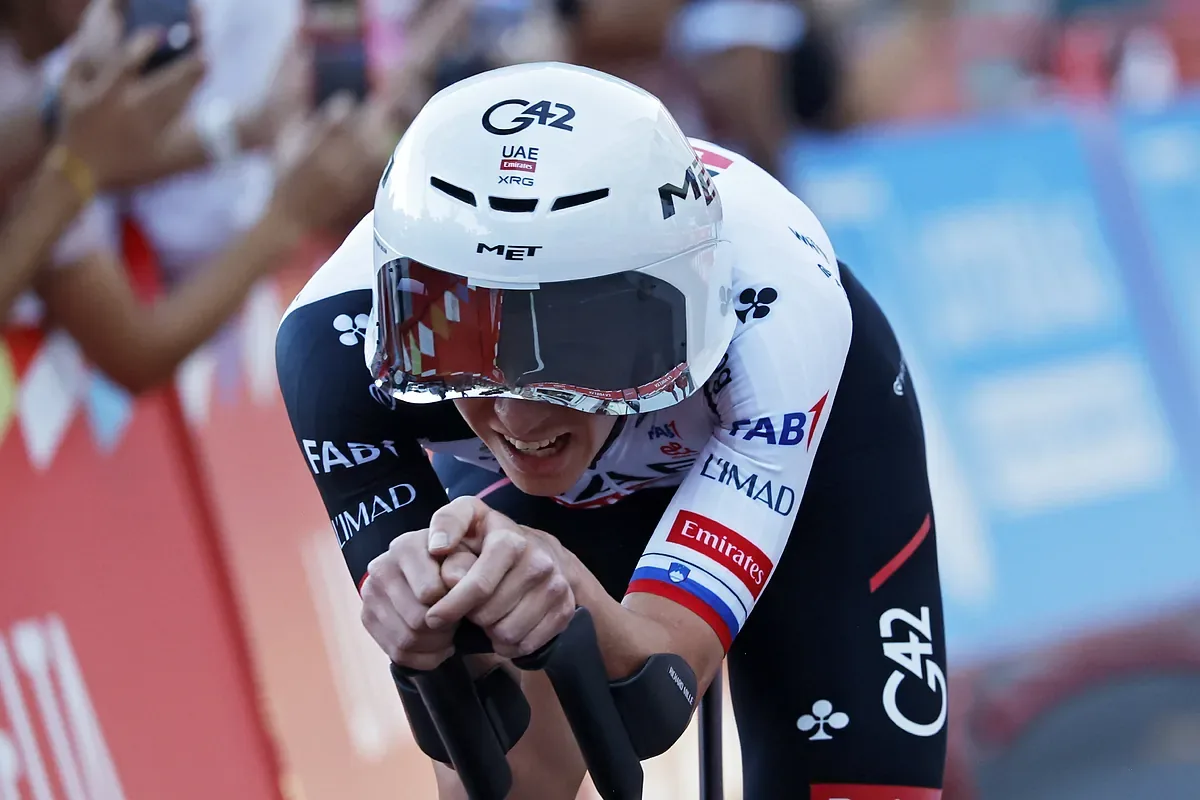






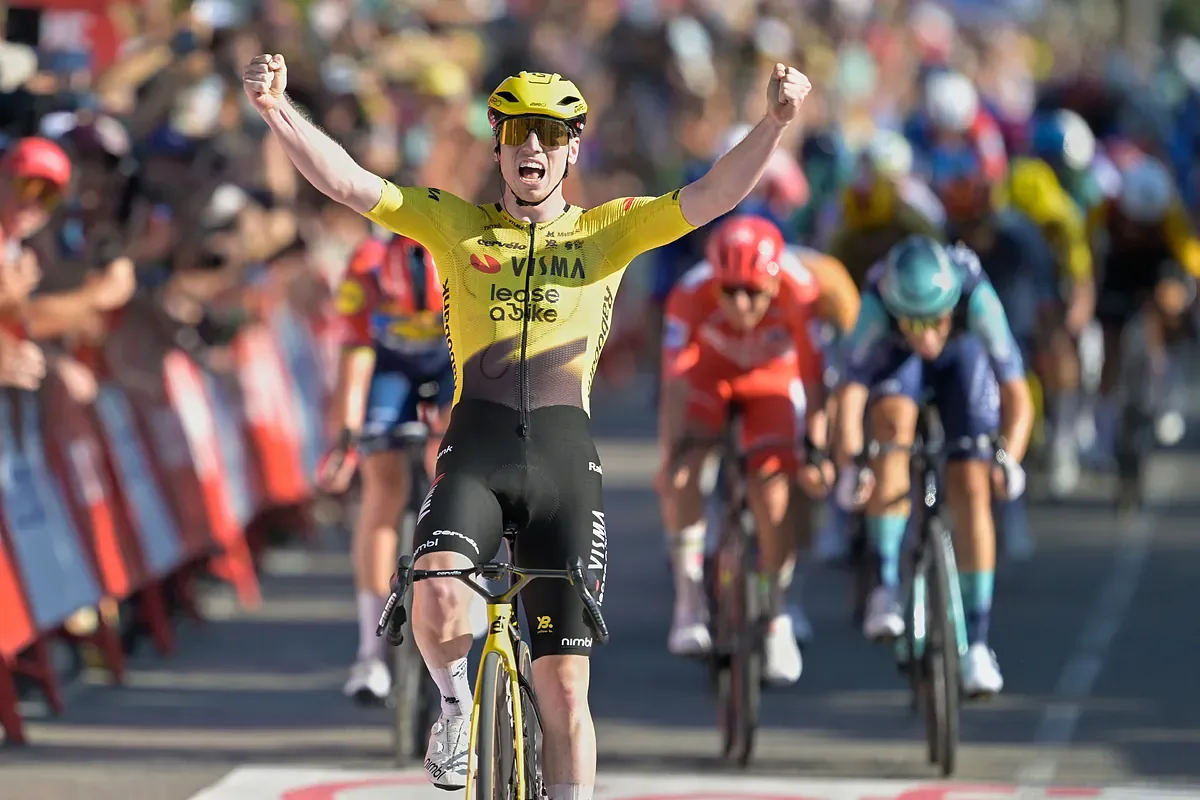
The second stage showed that Pogacar wants to win the Vuelta wearing the red from the start. It can be interpreted in no other way than that he contested the finish on the climb leading to the finish line. He did not ignore the matter and, finishing third in the end, earned a four-second bonus, behind Matthew Brennan, the winner, and the surprising Pau Miquel (Bahrain).
Read more Elche — Barcelona live
A certain logic led to thinking of a stage where a breakaway would triumph or, more logically still, a day controlled by the teams of those sprinters capable of handling a short climb. In other words, Visma with Van Aert, Brennan, and even Laporte, and Lidl-Trek with Pedersen. It was assumed that Pogacar would not get involved in secondary skirmishes and would leave those crumbs to other subordinate stars of the peloton. Whether he would keep the red or not depended on how events unfolded. In any case, he would not fight to keep it. It was not a priority.
But there are no moments of relaxation for those unwilling to let any opportunity pass, however secondary it may be. It is not so much, or not only, a matter of greed or insatiability, but of the self-imposed obligation to respond to that bullfighting shame, to that professional imperative to win everything possible. There are no calculations. There are no nuances. Everything possible. And he can do a lot. And he can do everything. Or almost.
French stage, long, just over 200 km, between Monaco and Manosque, in Upper Provence, broken enough to be classified as medium mountain. A monotonous stage with four men involved in a long breakaway destined to go nowhere: Koen Bowman (Jayco), Diego Uriarte (Kern Pharma), Ethan Hayter (Soudal Quick Step), and Sinuhé Fernández (Burgos Burpellet). The stage was reduced to the last three and a few kilometers.
Read more Norris wins at Zandvoort farewell and Alonso finishes his best race of the year
Hayter, tied on time with Pogacar in the general classification, left his companions in search of the intermediate sprint bonus. The six-second prize placed him as the provisional leader of the race. Van Aert crossed second and secured four seconds. It was clear he was fighting there and would fight there, at the finish, to reach the red jersey. Having achieved his goal, Hayter let himself be caught (he would have been caught anyway) and the race slowed down awaiting those final three kilometers.
With one kilometer to go, Van Aert attacked. Pogacar stuck to him. They did not insist and a large peloton, but without Hayter, faced the last meters. Brennan was a yellow cannonball and we then knew that Van Aert’s move was a distraction, that he was the chosen one by Visma. Pogacar fought it. Brennan and Miquel slipped past him, but he left Pedersen behind.
The third stage, finishing in Font Romeu, has a first-category climb and another second-category climb at the finish, both chained. To deduce that Pogacar can win is anything but speculation. He is so superior that he does not know the wear that affects others to a greater or lesser extent. And without wear, there is no tactic other than victory. The possibility that the Slovenian wears only red from the first to the last day gained strength on the second.