





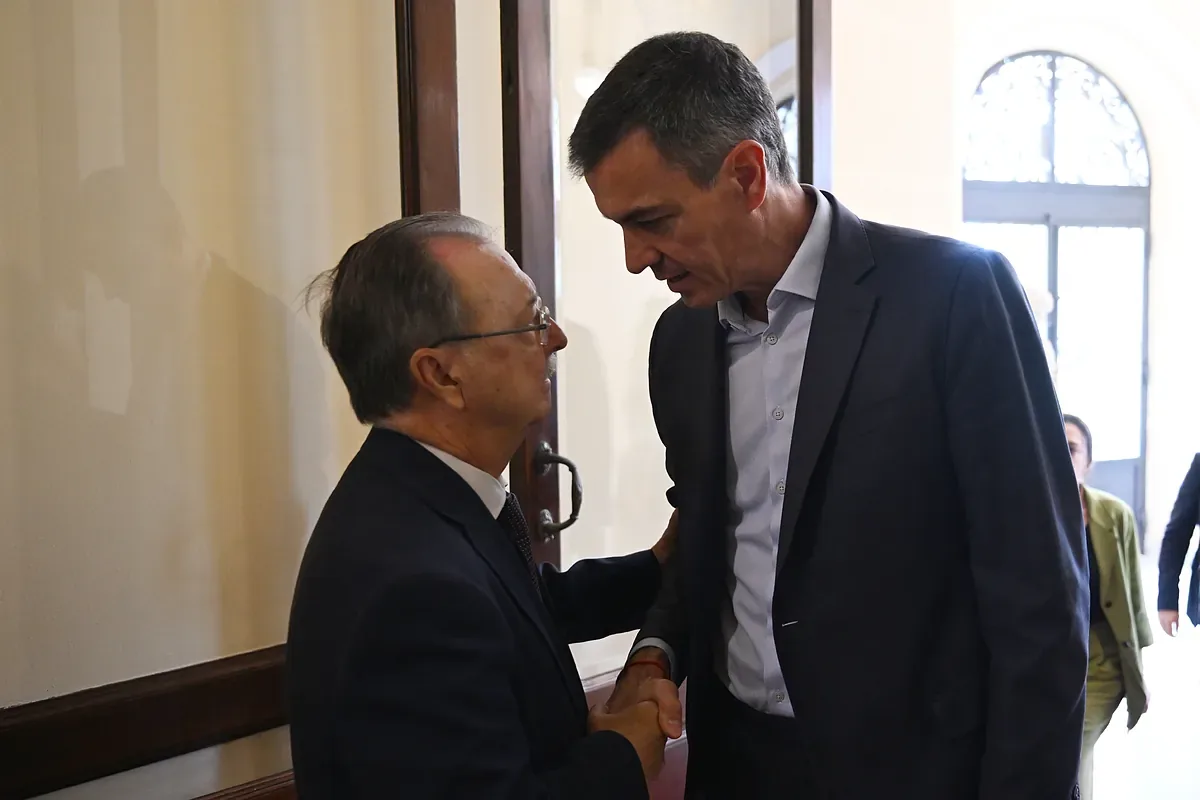
The President of the Government, Pedro Sánchez, has called an extraordinary meeting of the National Security Council this Tuesday to analyze the situation generated in Ceuta following the massive entry of migrants on July 30, which the Government itself then described as an “attack on territorial integrity”. Sánchez used that expression during his only visit to Ceuta, on July 31, before starting a vacation that he ended this Sunday with his return to Madrid.
Government sources have confirmed this information to EFE, previously reported by El País, about the meeting that will be held before the Council of Ministers, the first after the summer break, 26 days after the irregular arrival of tens of thousands of people to the autonomous city, a figure that the Ceuta government raised to 80,000.
The call comes after Sánchez held two videoconference meetings in August to coordinate the Government’s response to the situation in the autonomous city. Both took place on August 7 and 17 and included the participation of several ministers.
The National Security Council is the highest body responsible for assisting the Government on matters related to national security. Its statutes establish ordinary meetings every two months, although the president can call it extraordinarily as many times as deemed necessary. In the case of the Ceuta migration crisis, however, it had not been convened until now.
The extraordinary meeting comes while thousands of people who crossed the border irregularly on July 30 and 31 still remain in Ceuta. Although most returned to Morocco through the same point in the first hours and the Government tried to convey a message of rapid return to normality, the situation in the autonomous city remains complex.
The Government resumes its ordinary activity this week with a Council of Ministers meeting where an economic plan for Ceuta is expected to be addressed and, likely, the appointment of Ángel Víctor Torres as coordinator of the ministries involved in managing the border crisis. These measures come four weeks after the massive entry of people through Tarajal, on the border between Spain and Morocco.
Read more Try to start it, Don Felipe! Try to start it!
The launch of these initiatives coincides with several demands that the PP has been making since the beginning of the crisis. The party leader, Alberto Núñez Feijóo, personally insisted last week on the need to establish a “single command” to coordinate the State’s response. A figure that the President of Ceuta, Juan Jesús Vivas, had already requested before the influx, due to the increasing arrivals of migrants swimming. Torres will likely assume that coordination role, although not under the denomination of “single command.”
The Popular Party has also demanded over the last month an investment plan to make the city more attractive, boost its economic activity, and strengthen its status as a territory of national and European interest. The Government plans to present this plan this Tuesday, hours after the first visit to Ceuta by the economic vice president, Carlos Cuerpo.
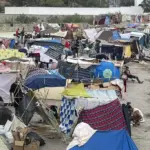
Meanwhile, the Government began last week installing tents to house migrants, after several weeks of disagreements with the Ceuta government over the use of municipal facilities as temporary accommodations. The management of these resources also caused tensions between the Ministries of Inclusion and Health, led by Elma Saiz and Mónica García, and the autonomous city government.
The Government will also begin this week to provide explanations in the Senate about its management of the crisis. After several ministers did not appear last week before the Upper House, where they had been summoned by the absolute majority initiative of the PP, this Tuesday will be the turn of Margarita Robles. On Thursday, Félix Bolaños and Mónica García will appear, while on Friday the round will close with José Manuel Albares, Fernando Grande-Marlaska, and Elma Saiz.
Read more Zapatero, Carmona and Gaspart, the Spanish key to enter the new great economic experiment of China


