





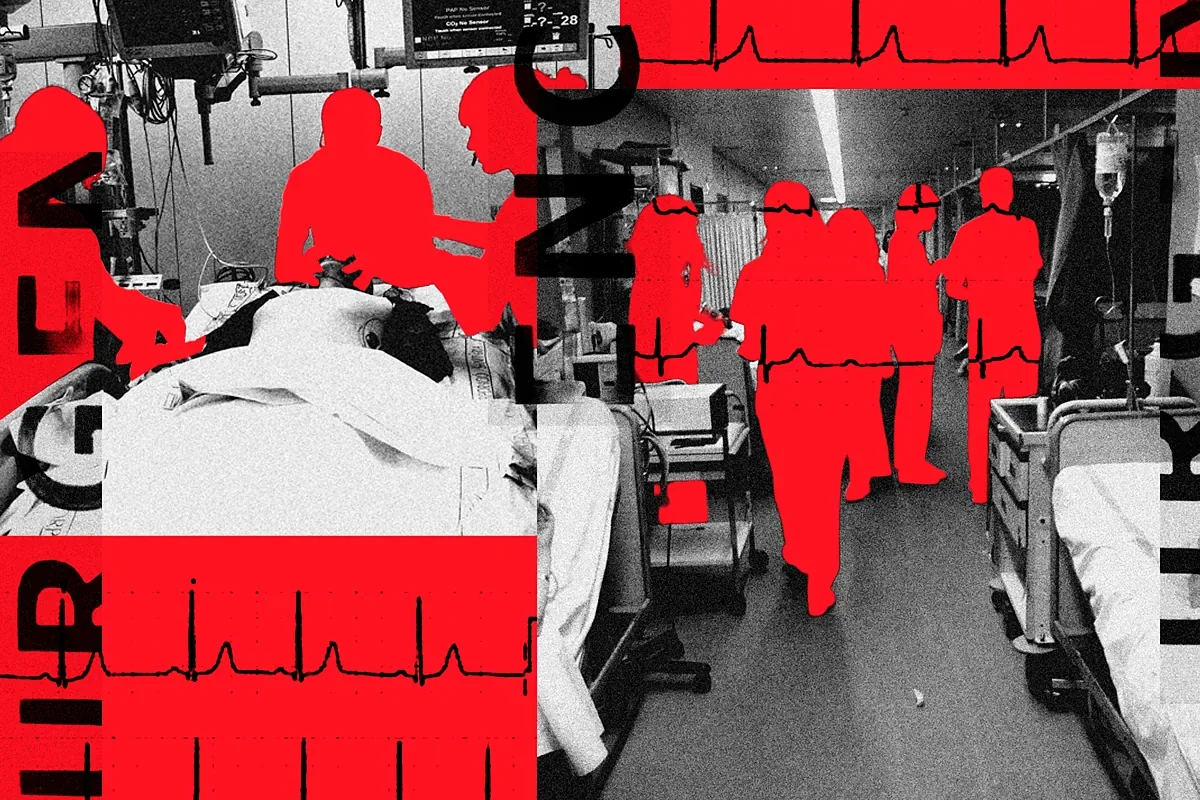
In the hallways of emergency shifts, where time does not pass for the first residents, there is an irregular market known by many but about which almost no one speaks aloud. The MIRs know it well: shifts that change hands parallel to the system. The most sold are weekend shifts and, above all, door and observation shifts. “There are shifts that are paid 250, 300 euros, and others, on dates like Christmas or New Year’s Eve, that can shoot up to 600 or 800 euros for 24 hours,” says to Crónica a fourth-year resident at the Virgen del Rocío Hospital in Seville who prefers to remain anonymous due to possible reprisals. This phenomenon occurs nationwide.
Read more The conviction of Sánchez’s brother, an endorsement of Judge Biedma and the UCO investigation
The exchange, they specify, is closed far from any official circuit: a Bizum, any concept, and the shift already has an owner. Simply, the one who buys the shift goes in replacement of the one who really has it, claiming that it was changed for some family, medical, or other reason. “The buying and selling of the shift is not communicated to any superior. You simply talk to the colleague and ask the one who wants to sell it for the Bizum of what you think your time is worth. Some colleagues ask for 220 euros, others claim 250 and others ask for 400. You then accept if you want to pay that money or not,” explains this resident to Crónica about the operation.
WAY TO EVADE TAXES
In fact, it is all benefits in this black market since, not being controlled by the system, the residents who do the shift instead of the colleague who sells it receive the money evading the high taxes currently applied to shift hours, around 30-40% between IRPF and Social Security. In this regard, once those withholdings and fees are applied, a first-year resident earns per hour in some regions of Spain 7.42 euros net. That is, residents earn more money doing shifts bought in the irregular market than by optionally signing up to do shifts through legal channels.
This opportunity to earn more money in a life context where many of them have to change city and, therefore, pay rent and daily expenses, makes these doctors in training resort to this black market out of economic necessity. “Right now without shifts I earn less than the minimum interprofessional wage and, without intending to offend or discredit the work of others, less than the hospital cleaner,” summarizes a first-year resident from Cádiz in one of the province’s hospitals who also prefers to remain anonymous to talk about the issue.
The period with the highest buying and selling of emergency shifts is concentrated in the first two years of residency. This is due to the “ridiculous” base salary that doctors receive for their ordinary working day —not counting shifts— in their respective hospitals. Internal Medicine, Family, or Oncology residents are the main buyers, since not having shifts in their own specialty, they often depend on this salary bonus to make ends meet.
NO RISK OF BEING CAUGHT
Regarding possible negligence by the shift buyer, one of the doctors at Virgen del Rocío, who has bought around 12 shifts in his four years of residency, assures that “you can say you did a favor for another colleague and nothing would happen. Whether you are on an illegal or legal shift, you get sanctioned if you commit negligence, but the thing is that they cannot discover that you did an illegal shift unless the Tax Agency realizes that you are receiving repeated Bizums of 300 and 400 euros.”
About this, the MIR Spain Association (AME), through its president and precisely R4 of Family and Community Medicine, Jesús Arzúa, confirms the existence of these illicit practices, which he considers “a symptom of a system that often unloads planning problems, staff shortages, and poor healthcare organization onto them. We receive inquiries and testimonies from residents about shift exchanges with informal economic compensation, especially in services with very tight schedules, healthcare overload, or lack of mechanisms to cover incidents.”
“Many tutors know that all this is happening underneath”
Fourth-year resident at Virgen del Rocío Hospital
Future projects during the MIR are another factor that drives doing more extra hours during the first years. “When I arrived from R1 and R2, I was very clear that I wanted to buy a house and saw that the salary was short. At that time, I was more proactive to work more and do more shifts, both taking some legal optional ones and expanding with others outside this legal framework that were like a pirate buying and selling of shifts. I did it to earn more money to buy a house; in the end, it paid off and today I already have it,” highlights the experienced resident from Virgen del Rocío.
And why does the other party sell, giving up that money? All interviewees agree in explaining that due to their specialty and the urgency of the service, some are forced to do up to seven shifts in a single month and prefer not to take on so many. Likewise, they point out that some already have money or few expenses and prioritize free time over income; they prefer to sell or give up shifts to keep only three or four a month and thus live more peacefully. Even if it costs them money. The official holder of the shift receives the official payment and automatically transfers it under the table to the buyer, with the agreed surcharge.
“It is a practice that reflects two problems at once. On the one hand, there are residents who buy them because their economic situation is precarious and see those shifts as a way to supplement clearly insufficient salaries. On the other hand, there are residents who sell shifts because they are exhausted, because they cannot physically or mentally take it anymore, or because they need to free days due to a healthcare load that becomes incompatible with a minimally normal life,” details Arzúa.
The Ministry of Health, asked by this newspaper, sticks to saying that this matter is “the competence of the Autonomous Communities,” but highlights that “no complaint has been received“.
LOSS OF PURCHASING POWER
A recent report by the Granada Medical Union analyzes the remuneration of residents in Spain in 2026 and the cuts since 2009. It mainly highlights the current salary precariousness, large regional disparities, and massive loss of purchasing power.
In terms of figures, the maximum loss of purchasing power compared to 2009 ranges from 8,358 euros/year (18.7%) in the case of the first-year resident doctor to 11,098 euros (19.3%) in the case of the fifth-year resident doctor. The average loss exceeds 11% in all cases. This loss of purchasing power over 17 years has been accompanied by an increase of 2.5 weekly hours, “still in effect in some Health Services.”
“Remunerations are very low for the level of demand and responsibility, differences between Autonomous Communities are very significant, cuts were progressive, and linear increases are insufficient, we need urgent correction,” concludes the document published in April 2026.
“During medical school, I started hearing a lot about the irregular buying and selling of shifts”
Read more The PP predicts a long ordeal for Pedro Sánchez: “The worst is yet to come”
First-year resident in Cádiz
In that parallel market, what is bought is rest, air, one less night in emergencies, that hostile place where, as a first-year resident from one of the most important hospitals in the province of Cádiz, who also prefers not to give her name, says, “they are a horror in terms of quality of life and where we are cheap labor” for the center.
“You are not going to do six shifts a month”, is what a second-year resident at the Virgen Macarena University Hospital —who also wants to hide her name for future consequences— told herself, having decided many times to prioritize her mental and physical health given the psychological burden of having a 35-hour workweek and six monthly shifts; an average of approximately 70 hours per week.
“Economically, obviously it was also profitable for me to do six shifts a month because you had a much more decent salary. But there were months when physically, psychologically, and emotionally I couldn’t keep up that pace of spending more time in the hospital than at home and I sold or exchanged the shift,” she highlights.
The paradox is that the system seems to sustain itself precisely on what it does not regulate. “The problem is that, no matter how much they limit how many shifts we can do, the hospital needs us to do them because there are many services in many hospitals that depend on residents.”
“We are maintaining the Spanish public system based on residents, underpaying them and making them attend patients at indecent hours, with many hours of workload without adequate breaks,” confesses the exhausted second-year resident from Macarena.
CONTROLS AND PRESSURE
In this context, hospitals like Virgen del Rocío in the Andalusian capital, according to a fourth-year resident, have proposed “care controls, with signature and check that each person is in the place they correspond, but they have not gone ahead because, in the end, what interests them is that the gap is covered and that’s it.”
But the problem goes further. Some residents denounce “blackmail” by emergency chiefs in which “they call you to cover a shift that is not yours and, if you take it, they force you to go, something completely illegal.” The Virgen del Rocío Hospital, contacted by Crónica, assures that “the described facts do not correspond at all with the functioning of the center. When, due to an unforeseen incident, it is necessary to cover the absence of a resident on a shift, this possibility is proposed voluntarily.” “In no case is a resident forced to perform a shift outside this training framework nor are reprisals or disciplinary measures adopted for not accepting,” they emphasize from the hospital.
In any case, in all centers, each resident who covers an emergency or specialty shift has the supervision and support of a hospital tutor. This accompaniment is continuous during the first two years and progressively decreases as experience and autonomy are acquired.
Some of these tutors are those who, according to residents, “turn a blind eye” to this irregular market of buying and selling shifts. “I am almost sure they know or suspect that when the one who was supposed to appear does not show up, that shift has been bought or whatever, no matter what excuse you give,” a MIR states.
“In the end, everything falls on the camaraderie among us, on the agreements we make and how we organize ourselves”
Second-year resident at Macarena Hospital
After all, under the weight of the saturation that suffocates large urban hospitals, the system’s priority is not legal order but effectiveness. What matters is that the gap is covered, whether by the resident on shift or by whoever bought the “illegal” shift. “The people who usually buy shifts are good people because they have already done many more than others, and the hospital itself is interested that they are the ones who cover the hole; that’s why they turn a blind eye,” analyzes an interviewed resident.
This silent permissiveness at the first line of supervision is, for the representatives of the collective, a dereliction of duty that perpetuates abuse. Arzúa warns of the seriousness of management and tutors tolerating these exchanges for their own benefit: “When management tolerates these exchanges because they solve a coverage problem, they are transferring a responsibility to the resident that does not correspond to them,” he denounces, insisting that the resident “is not a cheap solution for staffing deficits nor a patch for poor planning.”
NEW MIR DECREE
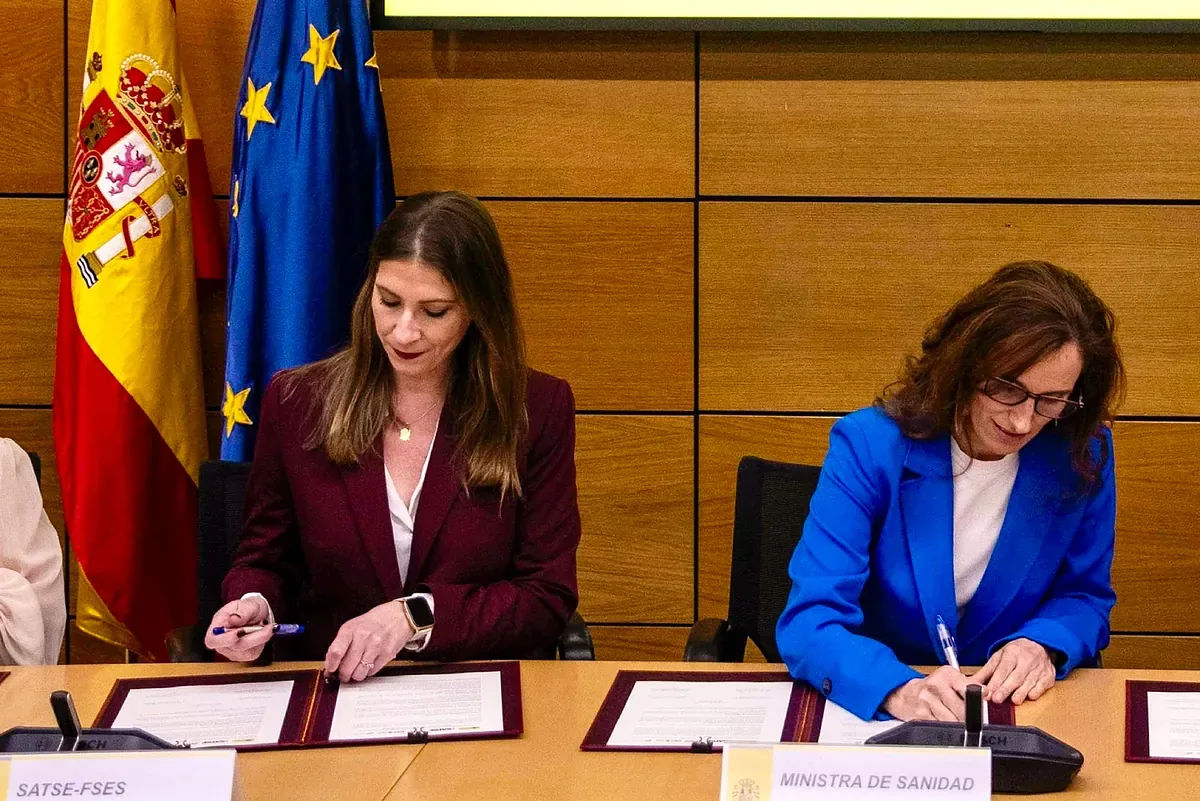
Last Wednesday, the Ministry of Health put out for public consultation until July 22 a draft MIR decree law where, among the most notable proposals, is the establishment of an ordinary 35-hour workweek; a maximum of 17 hours per shift; the general limit of four shifts per month with mandatory subsequent rest; a maximum weekly workday of 45 hours; and an improvement in the progressive salary regime as years pass in residency.
One of the interviewees summarizes the response to this draft law by residents who live their daily odyssey: “It seems like a very nice project on paper, but then I don’t see that they are providing the means, nor the arguments nor the conditions to do it.”
Read more France — Spain today, live | De la Fuente repeats the lineup that beat Belgium, Pedri is left out