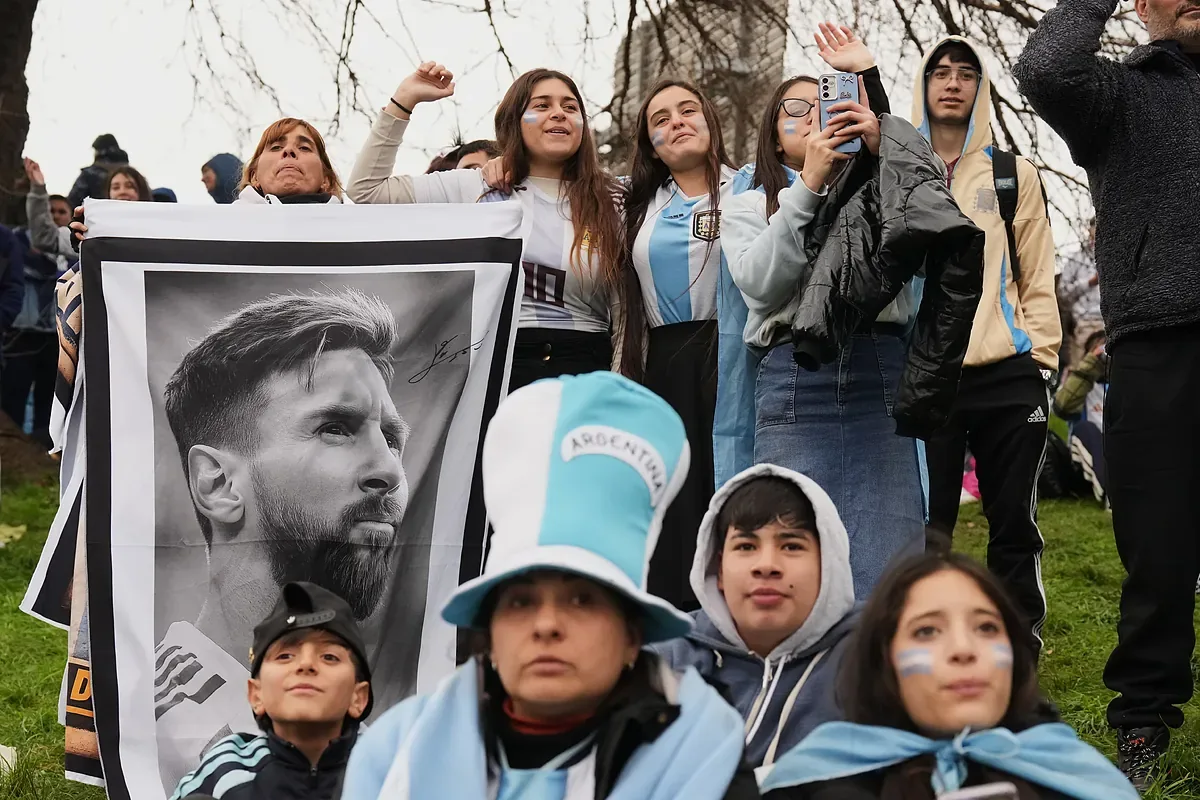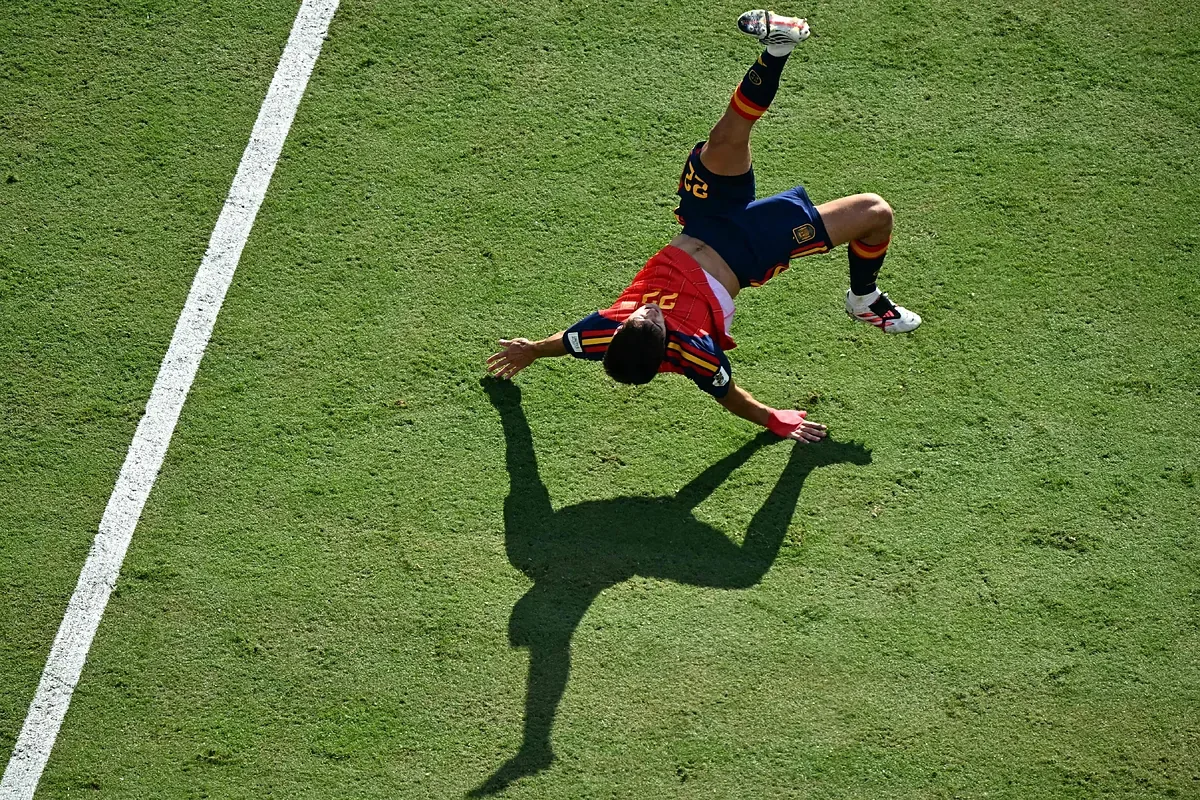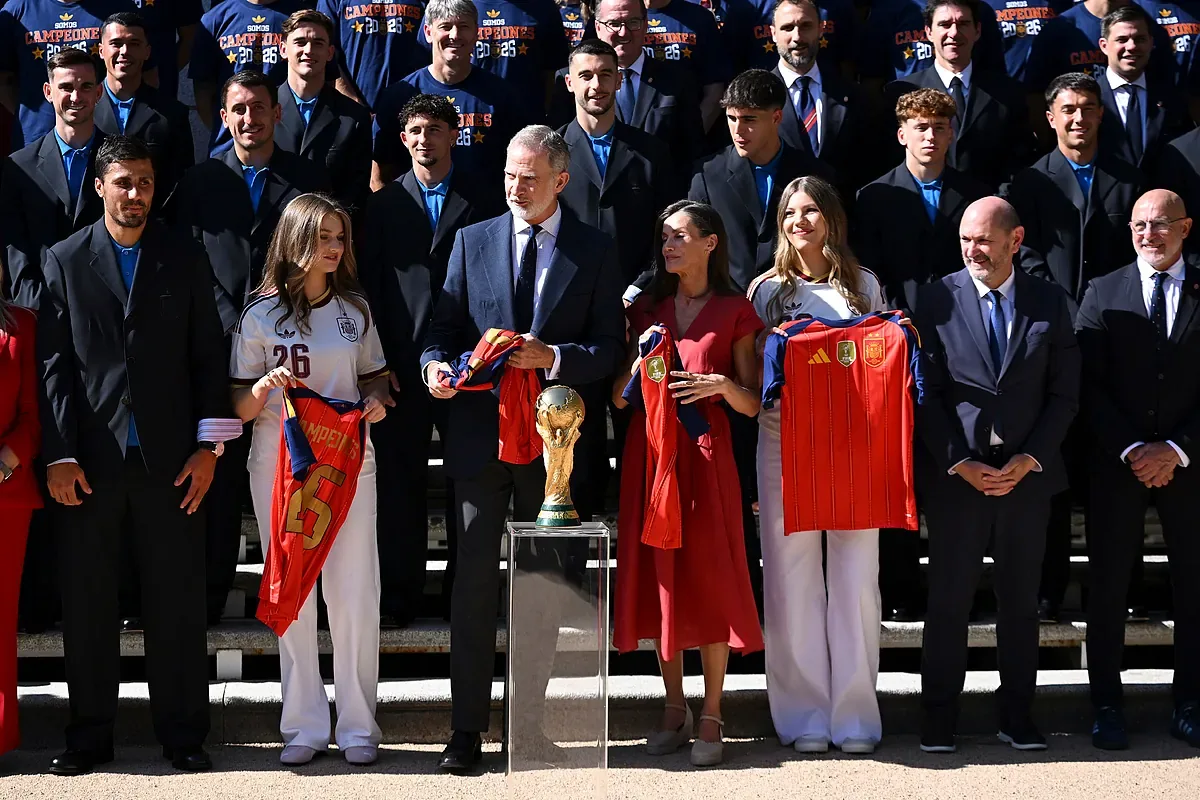




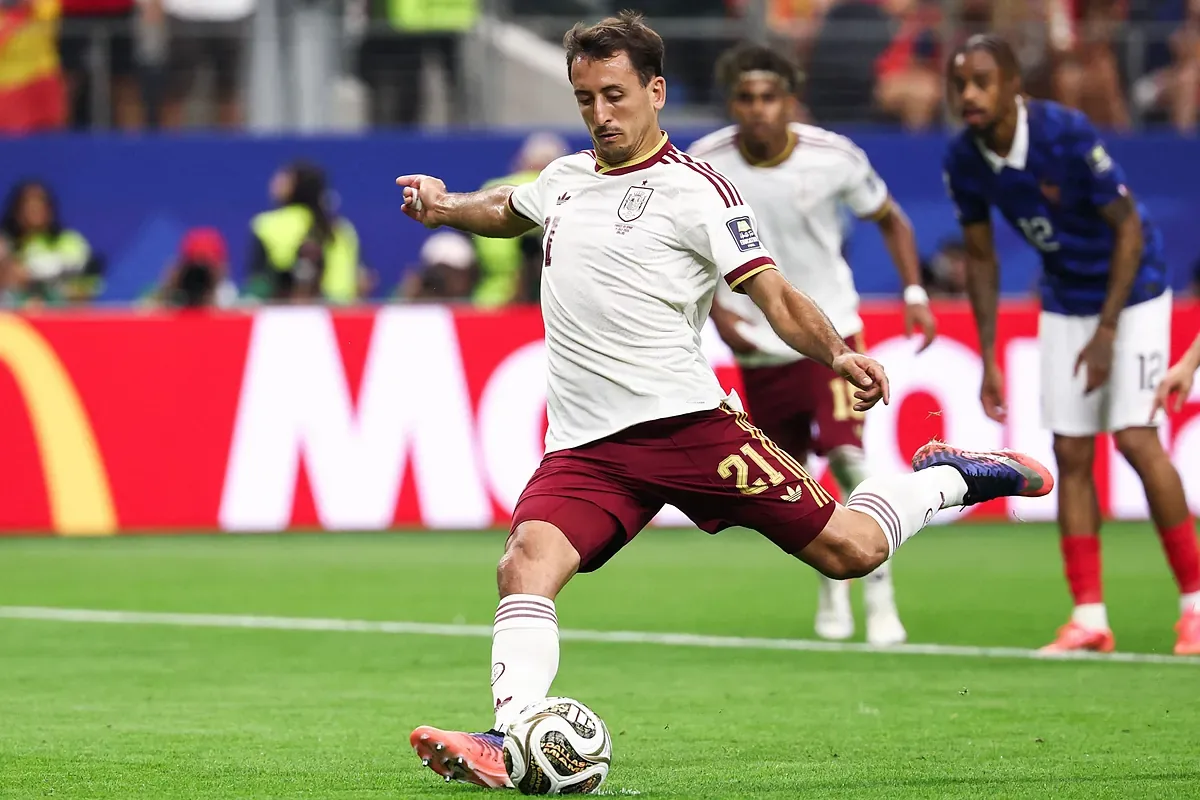
Spain will play this Sunday the seventh final in its history in a major tournament, the second in the World Cup. This World Cup started with feelings, and even anecdotal coincidences, very similar to those of South Africa 2010 and now it will face Argentina or England at MetLife in New Jersey, ready to stamp the second star on its jersey. Of the six previous titles at stake, only one slipped away: the 1984 European Championship. Since then, it has only counted victories. It even won the Nations League in 2023 against Croatia in the penalty shootout, although it escaped against France, controversially, and Portugal, on penalties, in the 2021 and 2025 editions.
EUROPEAN CHAMPIONSHIP 1964: THE DEBUT
Spain, in the midst of a dictatorship, organized a tournament in which only four teams participated. Under the leadership of Luis Suárez, José Ángel Iribar, Marcelino and Amancio, the team of José Villalonga defeated Hungary with a goal in extra time by the Real Madrid legend. In the final, they beat the USSR, with all the symbolic weight that entailed, with a header from Marcelino in the 84th minute (2-1). That Sunday almost 80,000 spectators filled the Santiago Bernabéu.
EUROPEAN CHAMPIONSHIP 1984: PLATINI’S GOAL
It took Spain 20 years to return to a final and it came after a tournament full of doubts. Antonio Maceda scored a goal in the 90th minute against Germany, which allowed Miguel Muñoz‘s team to finish first in the group stage. In the semifinal, they needed a penalty shootout to overcome Denmark after a 1-1 draw in regular time. In that locker room, led by veterans like José Antonio Camacho or Luis Miguel Arconada, Emilio Butragueño, barely 22 years old, was already emerging. The last obstacle for the title was the host, France, with a splendid Michel Platini, who was the top scorer of the tournament, with nine goals in five matches. That final would forever mark the Real Sociedad goalkeeper, who saw the ball slip past him in the 57th minute after a free kick from the Juventus midfielder. Spain, superior until then, was left without a response and received even more punishment when Bruno Bellone took advantage of a counterattack (2-0).
EUROPEAN CHAMPIONSHIP 2008: THE BEGINNING OF THE GOLDEN AGE
In Austria and Switzerland, the brightest Spain in history began to take shape. Luis Aragonés gathered all the talent at his disposal, not without overcoming some controversies, such as not calling up Raúl González. Doubts quickly disappeared when the football of Iker Casillas, Xavi Hernández (MVP of the tournament), David Villa (top scorer), Andrés Iniesta, Cesc Fábregas or Fernando Torres emerged. They did not lose a single match, although in the quarterfinals they overcame Italy in the penalty shootout. In the final, Germany was not a strong opponent and a goal from Torres, scored in the 33rd minute, provided La Roja with its first title after 44 years. Still, Aragonés kept his word and left the bench.
WORLD CUP 2010. CHAMPIONS WITH ‘TIKI TAKA’
Vicente del Bosque took over Aragonés’ project and knew how to perfect it. Despite the frustrating opening defeat against Switzerland (0-1), Spain was unstoppable with that tiki taka football that would mark an era. The team won the remaining six matches, conceded only two goals, and won all knockout rounds 1-0. The same happened in the final against the Netherlands. Casillas made two decisive saves, especially a one-on-one against Arjen Robben, and in the 116th minute of extra time Iniesta appeared to score the goal that made Spain, for the first time, world champion.
Read more Rocafonda surrenders to its idol: «Lamine is Spanish»
EUROPEAN CHAMPIONSHIP 2012: THE MASTERPIECE
With the star embroidered on the chest, Spain swept Poland and Ukraine with its possession and efficiency football. It started with a draw against Italy, but only suffered in the semifinals against Portugal, when it needed to go to the penalty shootout. In the final, the thrashing of the Azzurra was historic, the largest in a continental championship final (4-0). Spain also became the first team to win three major tournaments consecutively. Only Argentina has achieved this since.
EUROPEAN CHAMPIONSHIP 2024: THE MOST VORACIOUS
The group led by Luis de la Fuente overwhelmed in Germany. It achieved a full seven victories, defeating four world champions: Italy, Germany, France, and England. Not only could it boast the best attack, but also one of the most solid defenses in the championship. Lamine Yamal was the great breakout star of the tournament, while Nico Williams, Rodri, Fabián Ruiz, and Dani Olmo definitively reached the European elite. Spain only needed extra time against Germany in the quarterfinals and eliminated England with goals from Nico Williams and Mikel Oyarzabal (2-1). It was the starting point of a new and brilliant generation.
WORLD CUP 2026: SECOND GOLDEN AGE
What De la Fuente built in Germany had to continue in this World Cup. Spain arrived with injury problems, especially Lamine and Nico Williams, the two decisive wingers in the Euro. However, despite the sad 0-0 against Cape Verde, the team reacted thanks to its solidity as a block and its great competitive spirit. Now it reaches the final in New Jersey after leaving Austria, Portugal, Belgium – with agonizing goals from Mikel Merino – and France behind, whose individual talent also had to give way to a team that has gone 38 matches unbeaten.