







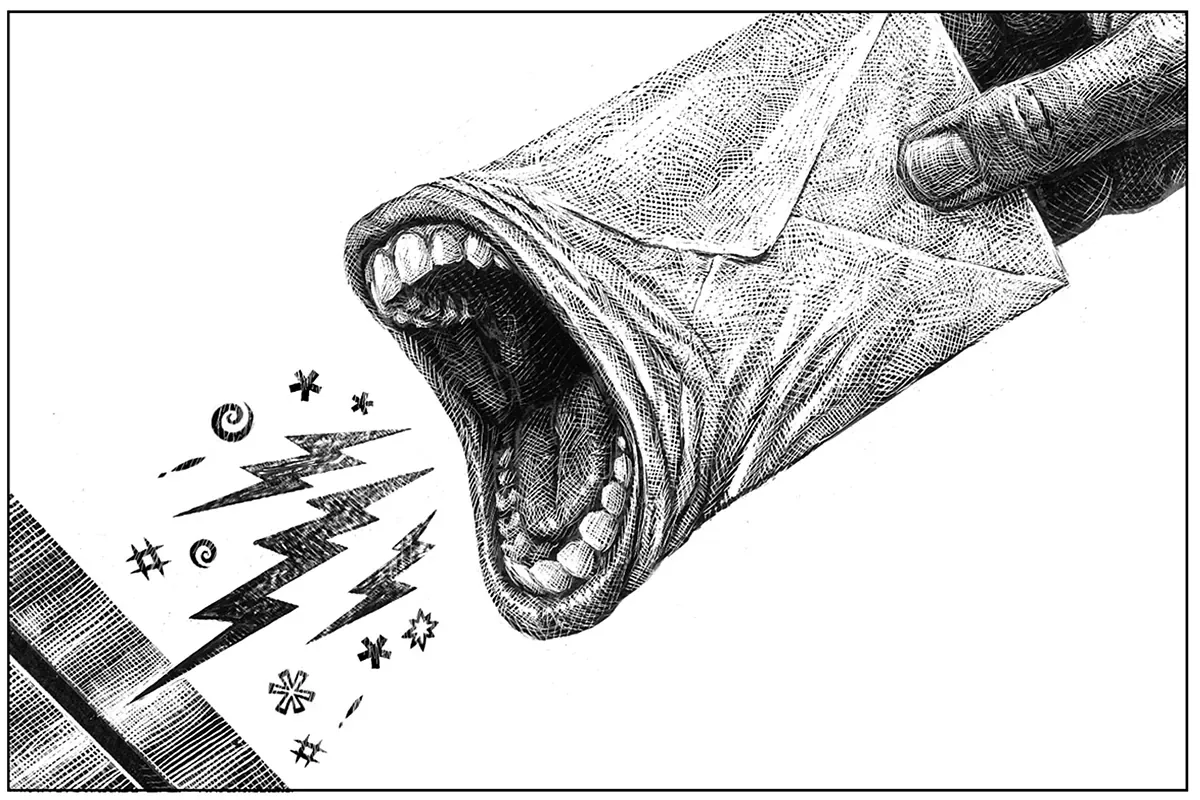
There is a question that every four years we Spaniards ask ourselves with natural mockery: Who are you going to vote for, Manolo?… However, given what we have seen and what we are going to see, the formulation seems incorrect: the question carries an implicit error. In Spain, except for occasional exceptions, no one votes for anyone. Here we always vote against someone, which is not the same. Our Manolos and our Marujas, you and I, go to the polling station without really thinking about productivity, education, public debt, pensions, culture, or foreign policy. We do it ruminating names and surnames of individuals of both sexes whom we long to see pack their bags and take the olive branch. Because the Spanish vote is never a declaration of affection, but a kick in the balls.
We have been like this since Viriato, or thereabouts. We applauded Felipe González, who seemed eternal, with sevillanas until his seams burst. Then Aznar appeared. And let’s be honest: it’s hard to imagine millions of Spaniards dripping lemon water, excited at the prospect of that serious guy with a mustache governing. No one shouted “He’s my man.” We voted en masse against Felipe, against scandals, corruption, ministers, ex-ministers, and the ministers’ friends. Remember?… The dance was beginning.
Then we got tired of Aznar because, like yogurts, rulers have an expiration date: first we see them as competent, then arrogant, then unbearable, and finally we long to wring their necks. The thing is that after we voted against Aznar, Zapatero arrived, whom we also did not vote for because of who he was, but against the other: the photo of the Azores, his government, and all that shabby riffraff. Zapatero looked like a fool – later we learned he was also a scoundrel – but he held on for a while, with the eyebrow and those eyebrow clappers who today go around, forgetful, saying if I saw you I don’t remember. And when despite the rhetoric and good vibes reality began to burn us all, we looked around again. Let’s see who we can screw over this idiot, we said. And Rajoy appeared.
Let’s be honest: Rajoy did not govern Spain because millions of citizens were thrilled by his boldness and charm. He did it because we were fed up with Zapatero up to the bisector, and he governed as expected: boring, apathetic, paralyzed like a hare in front of car headlights, waiting for problems to resolve themselves, die of boredom, or be replaced by more serious ones. And in the end, between paralysis and corruption of his gang, voters looked for someone to bring down his little setup. Pedro Sánchez was taller, handsome, and friendly. No one better to annoy Rajoy and his trash gang. And we embraced Sánchez.
Thus, always against one or the other, we arrive at the present. I don’t know how far we are from the matter, but the thing is clear: when the time comes we will not vote for Pedro Sánchez, but against Feijóo; we will not vote for Feijóo, but against Pedro Sánchez. We will not vote for Vox either: we will do it against the progressives, the separatists, the excess of Moors and blacks, Brussels, the woke nonsense, the Ceuta issue, Brussels, Bildu, Puigdemont, Marlaska, the narco in the Strait, Pablo Iglesias’ ego, his family business, and his legitimate wife. And on the other side, exactly the same will happen: we will vote against Vox, against the penthouse and Ayuso‘s boyfriend, against Trump, against Meloni, against the rich, against Israel, against xenophobia, against Hernán Cortés, against the coup d’état of the evil right and their fascist judges.
Read more Antonelli signs a heroic feat in Monza
Pedro Sánchez, who is a scrupulous hustler but an undeniable political talent, understood that national peculiarity before many others. His voters do not need to adore him; many hate him, I have names and surnames. They just need to fear or despise the alternative. And his adversaries do not need to admire a Feijóo who has been claiming for years that he is ready to govern Spain while Spaniards try to remember, unsuccessfully, something remarkable he has ever said. For both, it is enough to want to see Sánchez out on the damn street or Feijóo far from Moncloa.
And there is the punchline, the tradition set in novelty: it is no longer necessary to excite the voter, it is enough to scare them. The electoral program is secondary; the important thing is to point out the monster. If those win, Spain breaks. If those win, Franco returns. If Vox enters, zombie apocalypse. If Sánchez continues, Venezuela with Begoña as Delcy Barriguitas. And so, millions of citizens will go to vote believing that we are fulfilling our duty, when in reality we are participating in a sordid, low, infamous neighborhood quarrel.
That is why polls should stop asking which party we will vote for and ask: “Who really pisses you off?”… “From one to ten, how much does such a candidate make you want to vomit when they appear on the news?”… “Would you cross the street to avoid greeting them, or would you punch them if you were guaranteed impunity?”… “Would you vote for Ábalos, Cerdán, Bárcenas, Cristóbal Montoro, as long as Fulano or Mengano do not govern?”… “If the king and Pedro Sánchez walked on foot from Sol to Callao, which of the two would arrive alive?”
The answers would allow predicting results better than the usual charades, because that is our true democratic impulse: we do not choose, we evict; we do not reward, we punish; we do not vote for the best, but for who we believe capable of blowing up the one we consider worse. And when we finally discover that our elected avenger is another scoundrel or another wreck, we resume the process: first the illusion, then doubts, then anger, and finally hatred. Back to the polls. Back to saving Spain. Back to knowing who we want to blow up this time. And, well. That is what those sons of bitches have managed to make of us. Or maybe, thinking about it, what we have made of them among all of us.