


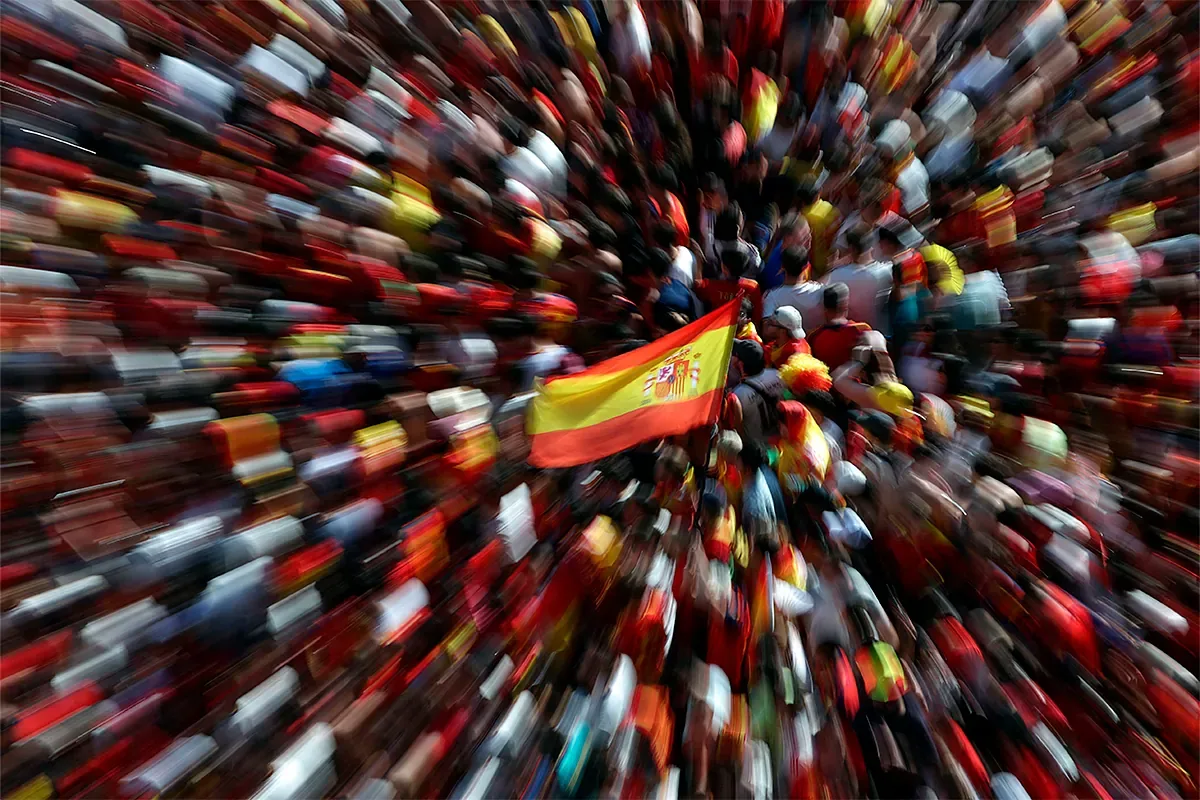
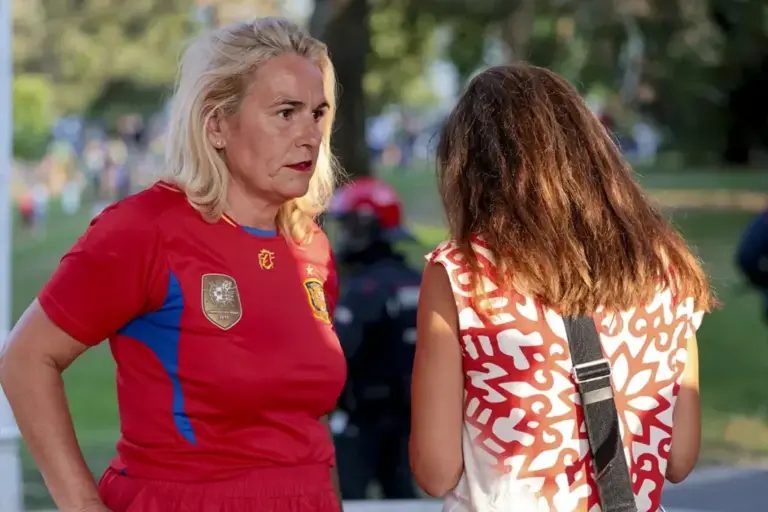
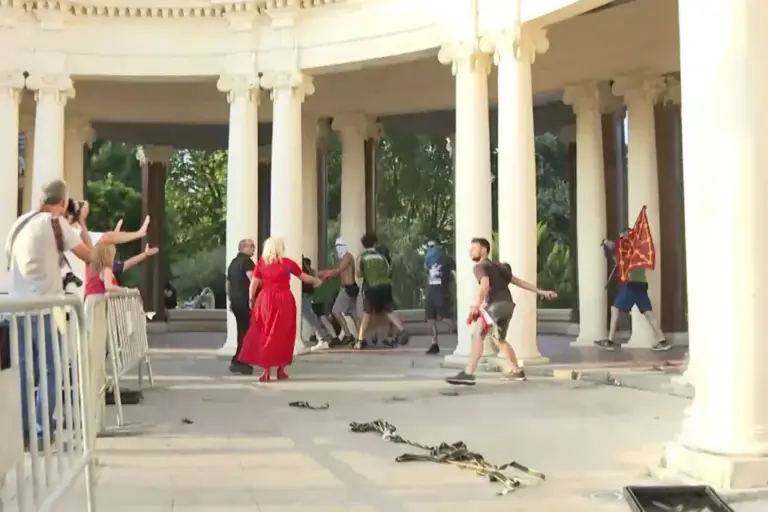
«I was there and I had a natural reaction to defend hundreds and hundreds of people, families and children who were on the other side of the screen. I can’t think of any other way to act. I would do it a thousand times,” explains Esther Martínez (Barakaldo, 1971) in a calm voice. Dressed in red, with a fan of the same color in her right hand, Martínez confronted about thirty radical youths who, barely an hour before the final between Spain and Argentina, were trying to disrupt its broadcast on a giant screen in Bilbao. Martínez is part of the group of non-nationalist public officials in the Basque Country and Navarre who have stood up to a latent threat that showed its fangs when – driven by the sporting successes of De La Fuente‘s National Team – Spanish flags and jerseys multiplied in streets and squares. Political representatives such as Martínez, Maider Etxebarria (Vitoria), Jon Iraola (Eibar), Alejandro Toquero (Tudela) and Eduardo Andrade (Getxo) stood up, confronted the violent ones, removed their symbols, defended that squares and streets are not their property, and proudly claimed football idols who, for playing with Spain, are in the crosshairs of the most radical groups of the abertzale left.
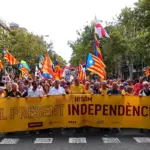
EH Bildu decided on July 10 to fuel protests against La Roja before Luis de La Fuente’s team faced Belgium in Los Angeles. While a vast majority of Basques (72% TV share) were preparing to watch the quarterfinals, Arnaldo Otegi‘s coalition announced its support for the independentist counter-programming against the Spanish National Team, led by a platform called Zazpi Baietz (Seven, yes indeed; for the seven Basque territories).
The explicit support from Bildu at an event held on July 14 at the Santiago bridge in Irún, attended by a representation of the PNV from Gipuzkoa, strengthened radical groups linked to Basque football clubs to unleash all their violence in Bilbao, San Sebastián, and Vitoria with rallies called two hours before the grand final between Spain and Argentina. An exercise in violence against La Roja supporters that culminated weeks of provocations and which only a handful of brave public officials in Euskadi and Navarre wanted to stop, risking their own physical integrity.
FIRST PROVOCATIONS.
The official support of the abertzale left for the protests against Spain fueled the first provocations that had already occurred in municipalities such as Getxo, in whose Algorta neighborhood police sources place some of the ringleaders of the incidents that would erupt on Sunday 19. Eduardo Andrade, PP spokesperson in Getxo, personally suffered the first attempts at sabotage. A young man arrested for his alleged links to Hezbollah led the protests.
«Sitting in a square, with many neighbors from the area, waiting to watch the match against Portugal in a bar that had the TV outside, about 30 radicals arrived shouting “turn off the TV, turn off the TV”, they made a wall so we couldn’t see the screen and even put up a cloth. We could have all started fighting here and a huge brawl would have broken out, but they ended up leaving to pressure other bars,” he recounts. The pressure against bars and restaurants broadcasting Spain’s matches multiplied in the last week of the World Cup.
Vitoria restaurateurs have confirmed to Crónica that radicals “warned” bars in the Old Town not to broadcast the semifinal against France in an extortion round that occurred when players from both teams were about to take the field. After confirming that the intimidation continued with the placement of stickers against Spain, Andrade formalized a strong motion against this blackmail. “The Getxo City Council declares that the right of all people to freedom of expression and assembly is guaranteed, including the right to wear sports symbols, flags or national team jerseys,” he defended in a tense plenary session on Thursday 23. PNV and EH Bildu voted against it, and the initiative condemning the threats failed.
«The problem is that we are like 30 years ago and they don’t let you enjoy or do anything they don’t like. They continue to use violence to try to impose themselves, and these 30 or 40 fools display their violence to intimidate us because they have Bildu’s support; I don’t care if they are from Ernai or GKS because they are all Bilduetarra cubs,” he denounces.
“TXAKURRA”, “FACHA”.
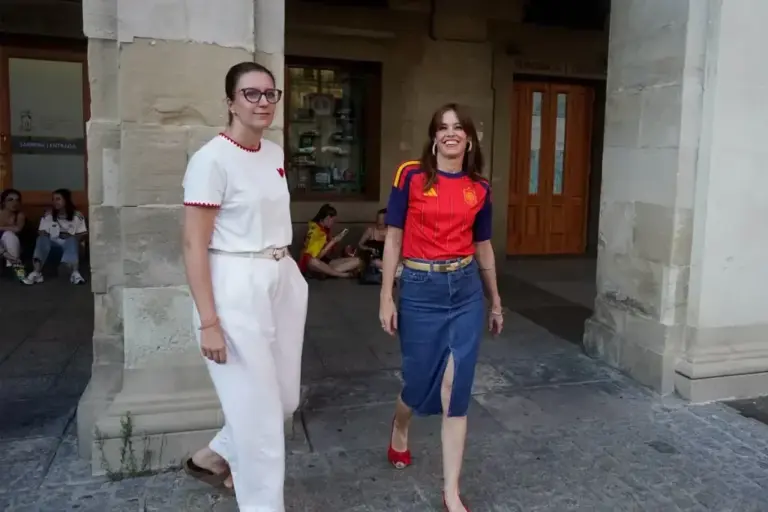
A position shared by Alejandro Toquero, mayor of Tudela and vice-president of UPN. He takes a break during the Santa Ana festivities to acknowledge to this supplement that the abertzale left – very strong in Navarre – maintains its threats. Graffiti reading “Toquero, txakurra“, “Toquero, ‘fatxa’“, insults in the street from individuals who then hide, campaigns by Otegi’s youth in which the mayor is caricatured as Hitler, and the acid sabotage of his private vehicle confirm the animosity of the independentists against the mayor of Navarre’s second most important city.
Despite being targeted, Toquero is clear: “The abertzale left that had dominated the streets and squares is now raging. They have realized that there are more of us, we have always been more, even if they used to make more noise.”
The Navarrese councilman was one of the first in Euskadi and Navarre to intuit that the success of the Spanish national team would enrage the abertzale hordes but could free thousands of fans willing to turn each knockout round into a party. “We knew that Ernai was going to do something, we were prepared for anything, and on the city’s most visited Romanesque bridge they put up a sign, but we quickly detected it, removed it, and threw it in the trash; we didn’t even keep it,” he recounts.
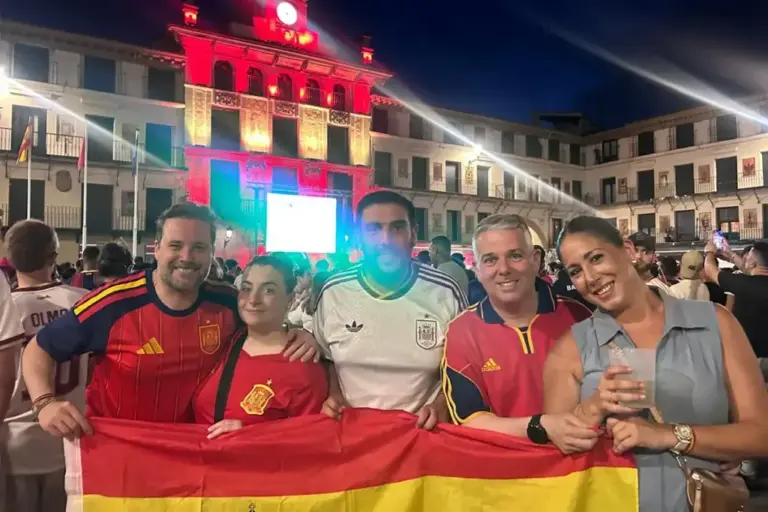
In Tudela, not only were Spain’s last matches watched in the Plaza de los Fueros, but Toquero lit up the Consistorial building in red and yellow in another “detail” that further angered his radical haters.
«The abertzale left cannot accept seeing young people enjoy themselves, with squares completely full in Tudela, Pamplona, or Sarrioguren, because it dismantles their narrative that Navarre is not Spain or that we hate being Spanish. It’s quite the opposite. Now the fear has been lost, and young people have gone out into the streets and enjoyed themselves immensely. They have realized that there are more of us, we have always been more, even if they used to make more noise,” states Toquero, very satisfied after more than 5,000 people celebrated Spain’s victory next to a giant screen. “The next day, Tudela was spotless, whereas any independentist act ends with graffiti and destroyed furniture,” he explains before rejoining his city’s patron saint festivities.
“I GO OUT TO THE WALL ALONE”.
Tudela’s tranquility during the final contrasted with the aggressions and altercations that multiplied in the hours leading up to the match in Bilbao, Vitoria, and San Sebastián. In the three Basque capitals, groups of radicals who are part of the Athletic Club, Real Sociedad, and Alavés fan bases organized marches in favor of the Euskal Selekzioa and against Spain.
The one in Bilbao left little doubt as to its objective: it would end a few meters from Doña Casilda Park, where the Basque PP had decided – as in Euro 2024 – to place a giant screen given the refusal of Mayor Juan Mari Aburto to do so. After almost an hour touring the Biscayan capital, following repeated and serious attacks against citizens wearing Spanish jerseys and flags; the radicals, running, tried to assault the pergola where thousands of supporters were preparing to watch the final.
«Although I have poor close-up vision, I have good long-distance sight, and I detect that they are approaching, so I go out to the low wall. Alone. They were already gathering, and I told them, please, please, leave people in peace and don’t move from there,” recalls Esther Martínez, spokesperson for the PP in Bilbao, who in recent years has risked to reclaim space on the streets for her party after decades under the threat of ETA terrorism.
Promoter of a txozna at Aste Nagusia, paella gatherings in the center of Bilbao, and, of course, facilitating the celebration of the Spanish and Athletic football finals, of which she is a staunch supporter. When Martínez asked the radicals “please” to stop, she still didn’t know what was coming. “The guys I saw arriving started insulting me, but at that moment a flood of hooded men arrived, shouting ‘let’s go’, jumping the low wall, and that’s why I ran after them. I think this has to be contained no matter what,” she recalls. The attack on the screen was brutal.
The manager of the Basque PP, Juan Carlos Castaños – dressed in La Roja for the final – ran to her aid while alerting the Ertzaintza, who, incomprehensibly, did not detect the group of assailants. Radicals threw dozens of bottles and glasses at the screen and managed to disconnect the generator, which was protected by metal fences that also flew against about ten PP sympathizers – mostly women – who responded to the alarm raised by Martínez.
«My concern was not the screen but the children who were there. We already know that they are fanatics, totalitarians, and they exude hatred because you can see it in their eyes, in their gestures. These are people who will unfortunately never know how to live in society, and some will have to reflect on what is being put into their heads,” she denounces. The also general secretary of the Basque PP has already demanded in the Basque Parliament that the Ertzaintza detail the insufficient police deployment that allowed recognized members of radical groups like Jardun to assault supporters dressed in Spanish national team symbols.
ACT OF DARING.
Indeed, wearing La Roja’s jersey in Euskadi was an act of daring until the last Football World Cup. That’s why, when Maider Etxebarria (PSE-EE) appeared before the media on Friday, June 17, wearing Spain’s official jersey, social media lit up with disqualifications from EH Bildu spokespersons, such as its former parliamentarian Unai Urruzuno. “They have insulted me on social media. They have called me a hooligan, a neo-fascist, and criticized the ‘imposition’ of Spanish nationalism.
But the reality is that I have always spoken with respect, also for those who do not feel for La Roja or support another national team,” says Etxebarria from the steps of a plane from Morocco, where she has managed to resolve a long legal dispute with the Tangier City Council. The mayor of Vitoria knows that the discredit campaign will not stop because EH Bildu aims to repeat its 2023 electoral victory to attempt a political assault on the capital of Euskadi.
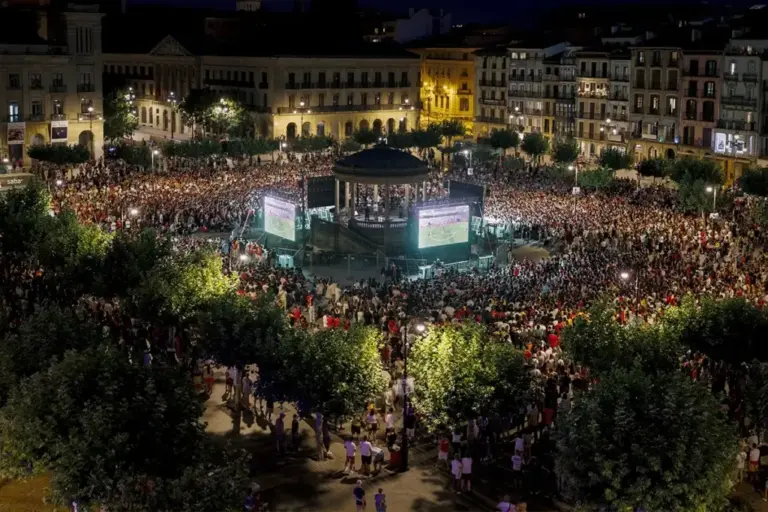
Political support for the abertzale coalition that clashes with the massive backing for the Spanish national team, which was visible during the Final when 13,000 people gathered at the event organized by Etxebarria in Plaza de España. “We cannot let radicals set the pace for a city. There are thousands of people who wanted to watch the National Team – it was proven in the final – and they have the right to watch such an important match in a Vitoria united by sport. Some are still trapped in outdated stereotypes that society has already overcome. What we saw that night was an example of coexistence in a diverse city,” insists Etxebarria, who values the gestures of support from anonymous citizens much more than the radical left’s campaign of disqualifications.
‘FAVORITE SON.
A sentiment shared by Jon Iraola, mayor of Eibar, who wasted no time in countering the PNV’s disdain for the Spanish National Team, in which Basque players have shone, especially Mikel Oyarzábal. Neither the insulting graffiti nor those that disqualified with a “fucking Spain”. Last Tuesday, Iraola managed for Eibar to initiate the procedure to recognize the forward and World Champion as “favorite son”.
«Mikel Oyarzábal has not only reached the sporting elite but has always maintained an exemplary way of being, never losing his connection with Eibar. We believe he meets all the merits to receive the highest distinction the city can bestow and that, furthermore, he is a role model for younger generations due to the values he transmits on and off the field,” explains Iraola, joining the messages of admiration for a player unaffected by the pressures of the abertzale left against those who unreservedly play for the Spanish National Team.
«In Eibar, without calls from radicals last Sunday, the final became a huge peaceful and plural celebration. An extraordinary, festive, and coexisting atmosphere was experienced, with families, young people, and people of all ages cheering together. People with the jerseys of Spain, Athletic, Real Sociedad, and Eibar. We wanted to offer a space to enjoy a historic moment, and I believe it was achieved,” celebrates Iraola with an institutional gesture with which he challenges the abertzale left in Gipuzkoa; the Territory from where he aspires to lead the Basque institutions starting in 2027.