


- Why has Donald Trump’s deal with Iran failed?
- The June memorandum between the United States and Iran was precarious: they gave themselves two months to negotiate a sustainable cessation of hostilities agreement that would address the most sensitive issues, such as Iran’s nuclear program. The modality of opening the Strait of Hormuz, which was to be immediate upon the signing of the June memorandum, would also influence the final regime agreed upon. Furthermore, the US Administration has had to face criticism from Republican ranks regarding what was agreed, and the junior ally, Israel, was also not satisfied with the extension of the ceasefire to southern Lebanon. All of this implied that any conduct by the other party ran the risk of being misinterpreted and causing an escalation, which is what is happening now. In addition, the Houthis are opening a new front. It is hoped that the situation will be redirected with a view to achieving a lasting cessation of hostilities.
- Has Israel’s position been key?
- I have lived in Israel, and for a time, with Benjamin Netanyahu already as prime minister. He sought a military attack on Iran to dismantle its nuclear program for military purposes. He has tried to do this with at least four US presidents. And all of them had rejected it because they knew the difficulties they faced.
- After his failure in Iran, Trump has threatened European allies with NATO reform. Is the Atlantic link at risk?
- Trump is straining it. Although relations will never be the same again, all allies, and I mean all without exception, want to safeguard the Atlantic link, which is very strong. It’s another matter that the European component needs to be strengthened and more investment needs to be made in defense. There are very unfair accusations. For example, when the American side criticizes Europeans using words like «freeloaders». There are European partners who, in relative terms of population, have had more casualties in Afghanistan and Iraq accompanying the US.
- The truth is that the EU faces a double threat. On the one hand, Putin’s Russia’s war of aggression in Ukraine. On the other, the breakdown of the historical commitment to European integration by the Trump Administration.
- The EU is facing both threats well, considering the unfavorable circumstances from which it started. There was no cooperation in the areas, so to speak, of strong sovereignty. Russia’s large-scale invasion began in 2014. But, for example, until 2022, the purchase of weaponry had never been financed from the community budget. Innovation has had to occur on the ground. And it was even less prepared to face a crisis with the US. The EU has to develop its autonomous capabilities against the clock.
- Is control of Ukraine non-negotiable for Putin?
- Yes, but there is no eternal war, especially with such a toll on human lives. The principle of peace always begins with a ceasefire and a freezing of the lines. My experience as a diplomat in conflict zones is that when forces begin to falter or both sides realize they won’t achieve minimal objectives, they seek to salvage what they can. My feeling is that this increase that will occur in the coming months may be the prelude to, finally, a ceasefire agreement in which everyone loses.
- After the last G-7, Trump mocked Giorgia Meloni. He had previously made fun of other European leaders, including Friedrich Merz, Keir Starmer, and Pedro Sánchez himself. How should European leaders approach the relationship with the US president?
- By upholding principles and, at the same time, being firm when something goes beyond usual diplomatic practice.
- In his book ‘Europe: The Other Homeland. Keys to a Shared Identity’ (Siglo XXI Editores), he says he believes in the union of the Twenty-Seven because it is supported by a coherent historical project, many centuries old. Does that mean there is a greater identity and cultural unity than what emerges from community bureaucracy?
- One of the purposes of the book is to show that, although Europe is structured around nation-states, in reality, it is much more robust than commonly thought. Europe goes beyond that structure since the pact between Charlemagne and Pope Leo III. I see echoes of that cooperation in the current affinity between Leo XIV and certain policies surrounding the criticism of the Iran war or the protection of borders with humane treatment towards immigrants. Europe has very deep roots beyond the Brussels bubble. To develop European patriotism, the first thing to do is to have the most accurate knowledge possible.
- And if so, why is the European project considered finished every time a deep crisis has to be faced?
- It is a big mistake to argue that this EU thing is an invention of Brussels globalists and that we have to return to our essences, which are nation-states.
- Yes, but the truth is that we still see much reluctance from member states to cede sovereignty to advance integration.
- That’s true. We are in a permanent struggle, although I confess I am not a federalist. A federalist wants for the EU a regime typical of a federal state which, as such, presupposes a state unity. The EU and Europe have been something different from a state.
- In his book, he approaches the EU from the perspective of three laws: the «iron law», based on periodic invasions from Central Asia; the «silver law», which pivots on the weight of economic and commercial relations in the balance of power. And, finally, the «golden law», based on humanist values. Specifically, related to the iron law, he speaks of the Western bastion as «the last bulwark» against a military risk from the East. Is there a real risk of a Russian attack?
- There is a risk that, so far, has not caused any escalation. Apart from episodes of hybrid warfare, there have been incidents with drones that have flown over some EU countries that perceive this risk very clearly. But there is a basic principle, that of solidarity, which serves not only to receive European funds but also to act jointly in the face of aggression.
- He argues that, geographically, Europe is «a peninsula of Eurasia». Does geography matter more in the course of history than ideology or chance?
- These are values that act in conjunction. Faced with the optimism brought by the end of the Cold War and the end of history described by Fukuyama, a reassertion of geography later emerged with Robert D. Kaplan’s book The Revenge of Geography. Geography is fundamental, but it is not everything. Otherwise, it cannot be explained why Spain, which has a peripheral geographical condition in Europe, occupied a central political position for two centuries. Geographical determinism does not explain everything.
- But Kaplan, precisely, defined Europe as the «benevolent empire». Are we still that?
- He said it in his book ‘Adriatic’, indeed. We are the benevolent empire par excellence. That’s why it acts like a magnet. Otherwise, it wouldn’t be explained why so many people want to come here to live or why even Canada doesn’t rule out joining the EU.
- Doesn’t that prevent us from exercising hard power?
- That is the big question: how to defend soft power, which is the quintessence of the EU, with hard power instruments. It’s a complicated balance, but the former cannot be given up.
- Should we advance in the creation of a European army, as reiterated by José Manuel Albares, Minister of Foreign Affairs?
- It’s a pipe dream. Albares says it as an ultimate goal, but you don’t go from national armies to a European one overnight. The goal is to accelerate coordination and integration to strengthen the European pillar of defense.
- He gives a positive assessment of German Chancellor Merz for his «clear-sighted analysis of what is at stake» and for his «determination».
- Germany is experiencing particular unease with the fall of certainties such as the deterioration of relations with Israel or the US. Also for historical reasons, it is very sensitive to inflation or the impoverishment of the middle classes. Merz makes clear analyses and has the advantage of leading a broad-based government; the success of his reforms, including rearmament, is another matter. For example, the reform of EU governance to make decision-making more agile is feasible but requires patience. His proposal to channel EU accession in two phases, so that it does not involve the immediate incorporation of the entire acquis, is also interesting. This would facilitate the access of countries like Ukraine. In fact, Schengen and the euro could not have been launched without differentiated integration.
- Does the approval in the European Parliament of the regulation greenlighting centers for immigrants outside the EU undermine the values we consider inherent to European civilization?
- The EU is neutral and serves the dominant forces at any given time that make up the Council of Ministers, the European Council, and the European Parliament. Whether or not there is a greater tightening of migration policy does not go against the European project. Everyone can have their preference, but it is not destructive. Whether one agrees or not is another matter. The EU responds to its internal balances.
- But what the average citizen sees is that Merz closes Merkel’s open-door policy, that Meloni sends illegal immigrants to Albania, and that Sánchez regularizes half a million immigrants. That is, each country does its own thing.
- The problem is that migration policy is not 100% communal, which is why clashes are sometimes seen. The policy on which the granting of nationality depends goes to the hard core of sovereignty. There are other issues, such as border protection or visas, that can be shared. The EU is a continuous negotiation. There is no definitive solution.
- Four decades after its accession, how do you assess the EU’s imprint on Spain?
- It has been very important for Spain’s great unresolved problem, which is the coexistence of its different national identities. The participation of regional and municipal governments in European construction, according to their competencies, helps to achieve a harmonious coexistence of the different national sensibilities. Spain is a plurinational reality, it is clear: there are Spanish citizens who do not feel Spanish. But the peripheral nationalities pose a tricky dilemma: they demand that a reality be recognized throughout Spain and do not accept that same plurinational reality within Catalonia, the Basque Country, or Galicia.
- Why is foreign policy not a state matter in Spain?
- A foreign policy needs basic issues to be projected over time and perceived as such by other partners. In the current climate of polarization, it is very difficult. On major issues, for them to be resolved satisfactorily, a basic agreement between the country’s two main forces is essential. And this is said by someone who has been in the diplomatic career for 35 years and has held senior positions with different governments.
- Does the scandal surrounding José Luis Rodríguez Zapatero hinder foreign policy in Latin America?
- I cannot answer that because it is not an area I have dealt with. I do not have all the data to comment.
- He considers France to be the «European sounding board». If Le Pen’s party wins the 2027 presidential elections, would the European project be mortally wounded?
- Perhaps Le Pen is more inspired by a Napoleonic vision than a Gaullist one. But if she wins the presidential elections and accepts this framework, I don’t think there would be a risk for Europe, even if it is a disruptive force. Something similar happened with Meloni.
- What role can the EU play in what you consider the «great question of the 21st century»: the confrontation between the American and Chinese superpowers?
- To contribute in the best possible way to ensure that this rivalry proceeds peacefully. Right now, there are dossiers in which Europe is closer to China than to the current US Administration, for example, regarding the challenges of climate change or multilateralism. But China threatens our industrial sovereignty. You cannot defend free trade if, ultimately, you have a growing trade deficit.
- Given Starmer’s departure, when will the wear and tear from Brexit end?
- As Secretary of State for the EU, I had to negotiate the last year of the withdrawal agreement. When I went to a General Affairs Council meeting, I always wondered how it was possible for British politicians to take this step. Brexit stems from an incorrect understanding of reality. In a populist and exaggerated way, the EU was blamed for all crises. Now they are in a correction phase, and that is a shredder for prime ministers.
Bio
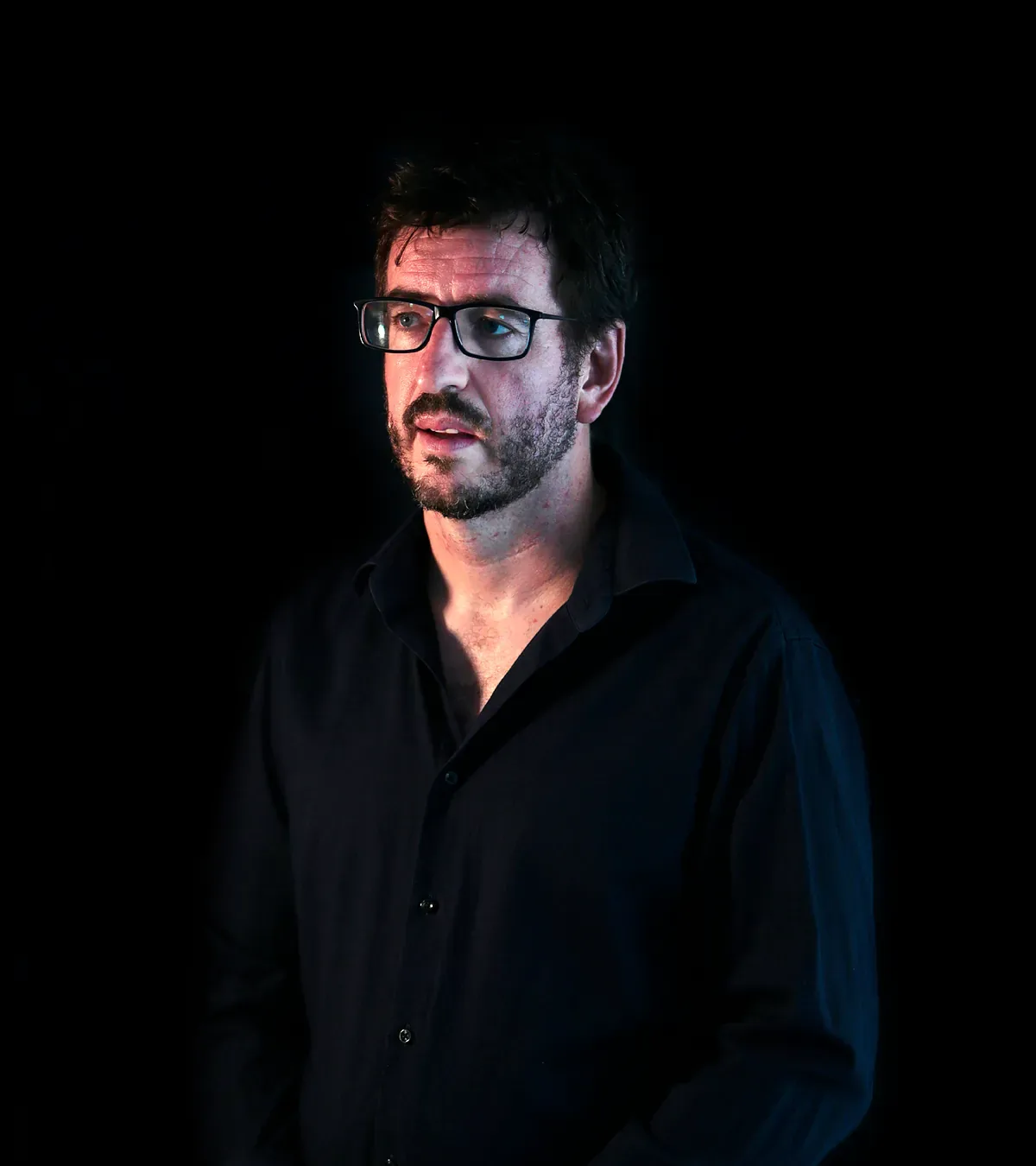
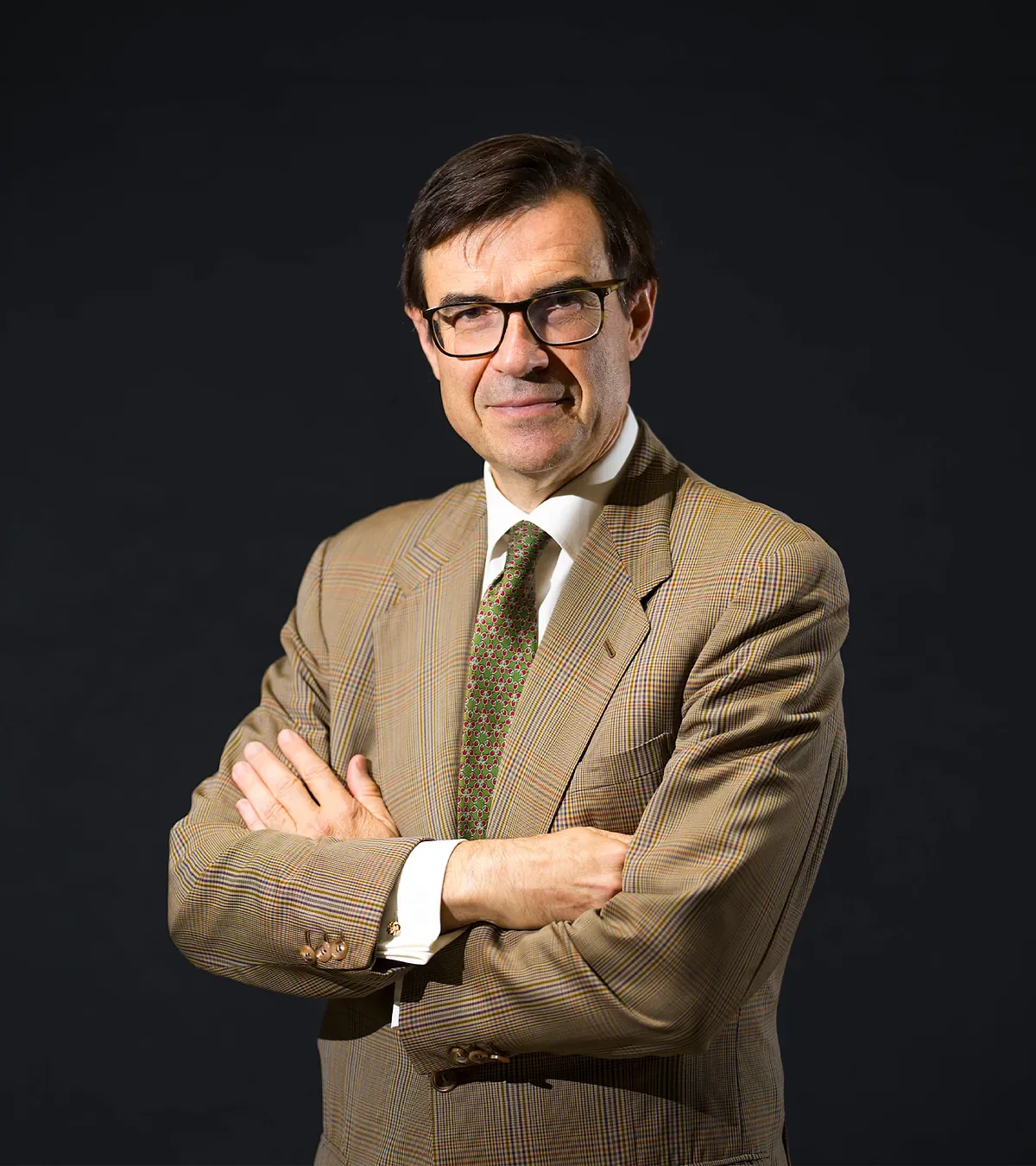
Born in Seville, in 1966. He has served as ambassador to Sudan, Turkey, and Croatia, and has been posted to the Embassies of South Africa, Greece, and Israel.
Author of Europe: The Other Homeland. Keys to a Shared Identity (Siglo XXI Editores). He speaks eight languages.
After serving as Secretary of State for the European Union between 2020 and 2021, he now works in the Directorate General for Spanish in the World at the Ministry of Foreign Affairs.