






A whole load of laundry awaits collection from a white plastic clothesline placed under a porch of a tourist-use house located on Solanillo Street in La Adrada, on the outskirts of the town, on the road that connects this hamlet in the Tiétar valley with Piedralaves. In front of the clothesline, a bench and a table with a plastic tablecloth, on top of which there is a plastic water jug and two glasses, one of them fallen. Around, smoke and a landscape in various shades of gray that have turned what was a paradise into ashes. EL MUNDO is the first Spanish media outlet to access La Adrada, one of the places hardest hit by the Sierra Oeste fire and where 60 residents have been fighting the fire openly for a week, with little training or resources, but with one goal: to save their town.
Upon the arrival of this newspaper, a truck from the Special Firefighters Force of Portugal was leaving after a night of work. They crossed paths with several soldiers from the Military Emergency Unit; specifically, a group of the 35 members of the Second Battalion stationed in the Canary Islands who arrived yesterday to join the firefighting efforts. They were about to start their first 12-hour shift. In the updates they had received, they were informed that everything was “in black”, but they had to be alert for the reappearance of possible hotspots.
Despite the presence of these military personnel, the residents who refused to obey the orders of the Civil Guard and leave La Adrada express on countless occasions their feeling of misunderstanding towards the protocols for extinguishing the fire. But, to understand it, one must go back a week.
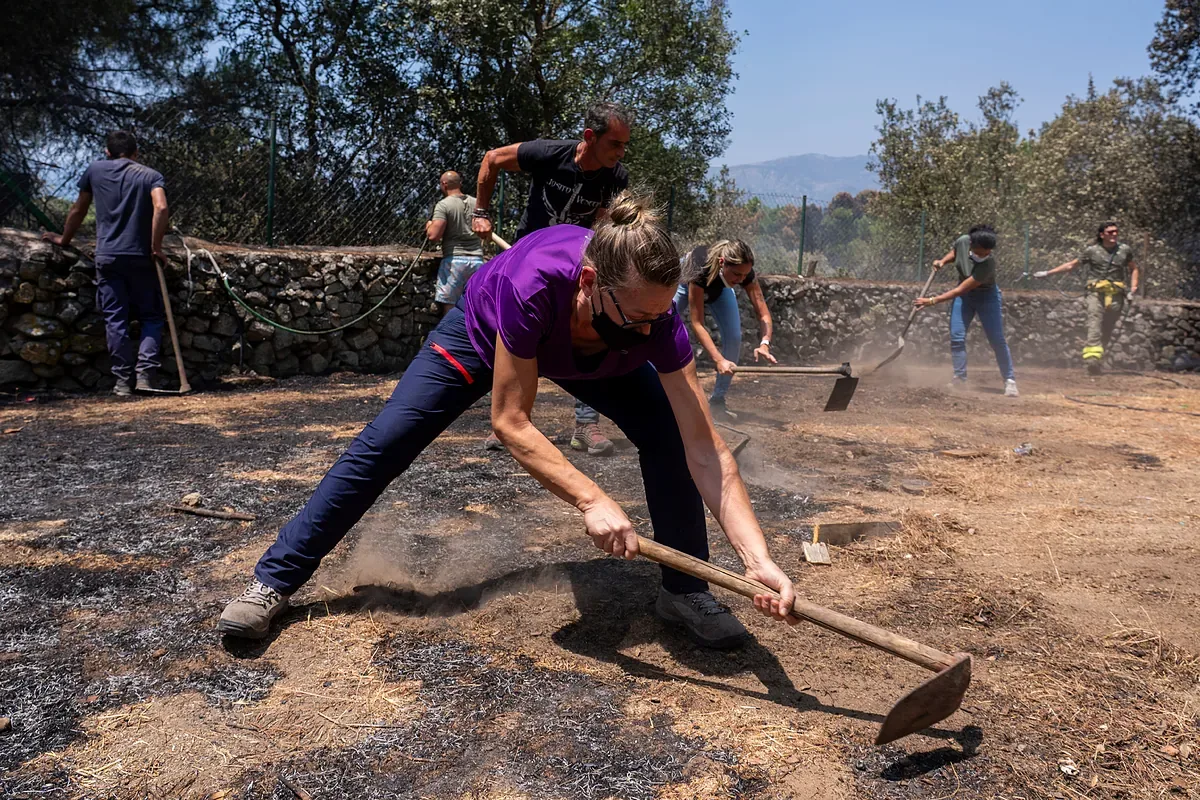
The residents of La Adrada saw the flames crowning the mountains surrounding their town. «We spent three days watching the fire without any personnel or aerial means arriving», says Roberto Alcocer, owner of a dealership in the town and a sort of host for the newspaper. When it was time to evacuate, around 200 people refused to leave the town. Of them, 60 organized through a WhatsApp group work day and night to save a territory that has shaped the memories of a lifetime.
«We ignored everything to make firebreaks between the broom bushes and pine forests», confesses Roberto, who recounts the ordeal they lived through to save their forest, now completely burned. When they learned about the protocol of fighting fire with fire, they refused and even spent the night in the forest. «We told Seprona that they would have to take us out handcuffed, but we were not leaving», he explains. Beside him, Lucía, the veterinarian’s wife, is visibly affected, unable to get out of her mind an image she witnessed when they were going to move a foal to another farm: «The flames came, and I saw my son among the fire. I thought he had burned, but he came out», she explains visibly upset.
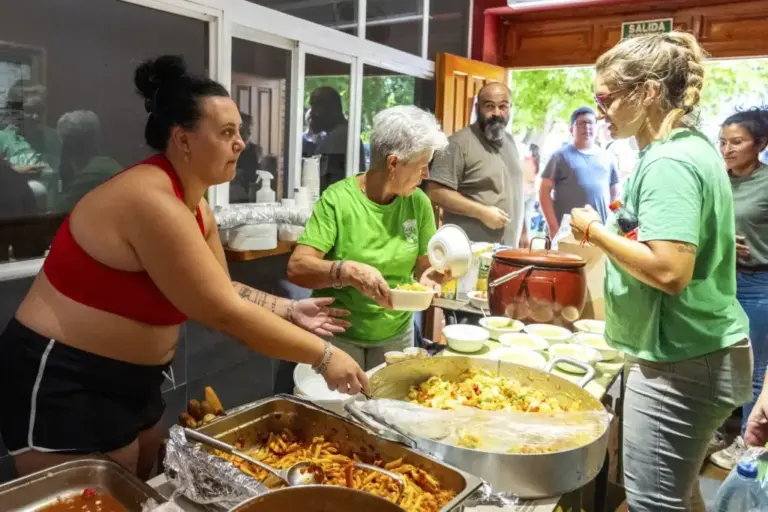
In this town without daily life due to evacuation, there are two meeting points: the Civil Protection hut, which has a truck with a water tank, a fire engine that is several decades old, and a pick-up; and the Town Hall, where a room has been organizedto provide breakfast, lunch, and dinner to volunteers. «At least they can eat something hot». With few supplies, as they are afraid to leave the town and not be able to return, they obtained food thanks to the manager of a supermarket who managed to come on Monday for two hours to provide supplies to the volunteers.
At 11:50 a.m., on the road between Puente Nuevo and Los Gorroneros, a group of three volunteers, including a teacher from La Adrada’s school, tries to extinguish a stump of a fallen tree. They do it with a sprayer filled with water, a shovel, and a mattock. Five minutes later, a Civil Guard patrol from another autonomous community asks Roberto himself for advice in case the fire rekindles at their spot.
Of the 38 members who are part of La Adrada’s Civil Protection WhatsApp group, barely a dozen are working these days. And all share their frustrations around the town hall square. «The entire Tiétar valley has been scorched, and we have miraculously not been scorched ourselves», says an emotional woman. She is not exaggerating. Except for the urban core, everything is burned, and a drive along the road between towns confirms it, with kilometers of pine forests razed, trunks still crackling, and trees suddenly catching fire while others fall.
This was happening 10 minutes after 1:00 p.m. in Entrepajares, in a pine forest where the cicadas seemed to want to prove they have survived, despite forest rangers running back and forth to extinguish smoke and flames. «Today marks 46 years since all of La Adrada caught fire», comments Lucas Mora, a young man in his 20s who installs air conditioners in Ávila and does not know if he will have work when he returns, since the town has had no coverage since the fire started and he has not been able to speak with his bosses.
At 2:00 p.m. they try to eat: there are pots with macaroni, homemade gazpacho, and a potato salad to choose from. Suddenly, a call. Everyone runs to a house on the outskirts of town. There is a fire in a chicken coop; two have died. Some neighbors grab shovels and mattocks; others find garden hoses. They quickly connect them and start throwing water from another house to attack the fire and cool down. On the outside clearing, a tree begins to burn from the inside. A fire truck from Ávila arrives; they ask it to hurry to extinguish the pine tree, which is burning inside in the few areas where the ground is still unburned. They focus on the coop. Rebeca, a nursing assistant who can treat a cut as easily as grab a shovel, makes a request holding back tears: “It’s said that we are saving ourselves among ourselves with garden hoses, because that’s how it is“.