



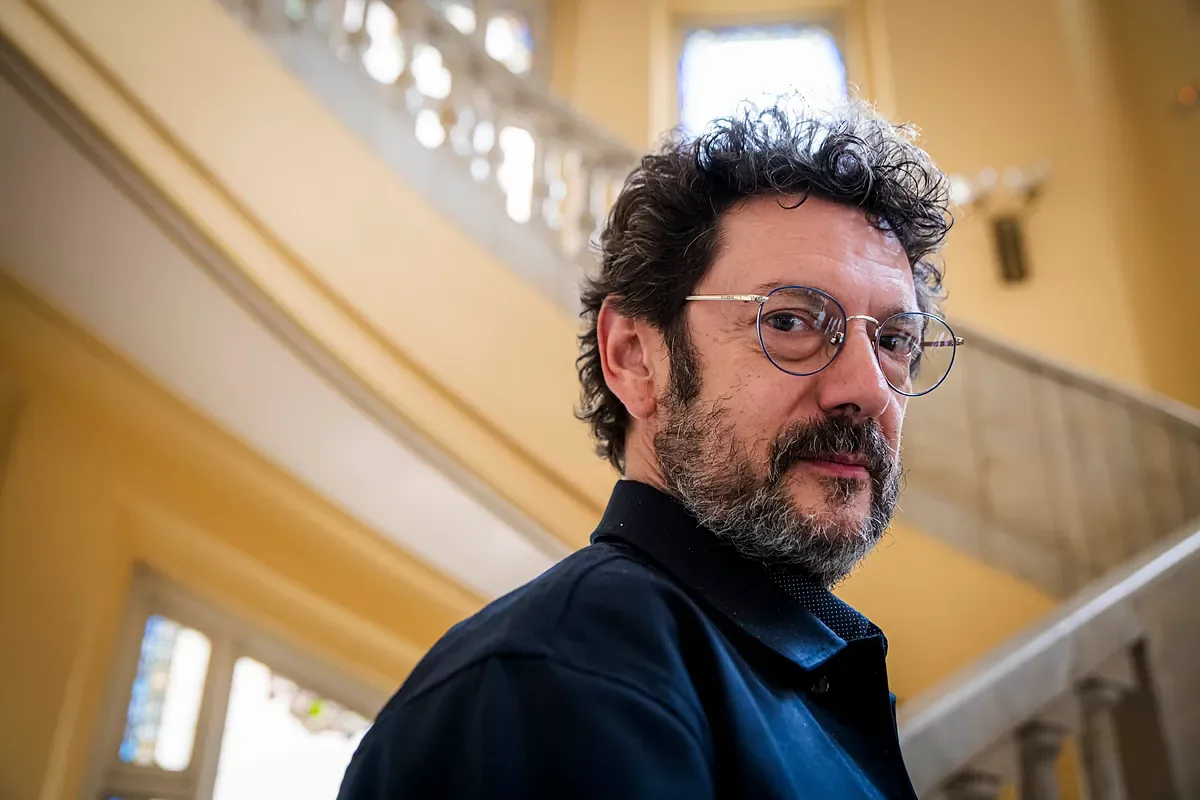
Manolo Solo, actor known for La isla mínima, Tarde para la ira and El buen patrón and winner of a Goya Award, has died at 62, after battling cancer. Solo’s resume (born Manuel Jesús Fernández Serrano in Algeciras, 1964) includes his Goya Award for Best Supporting Actor (Tarde para la ira, 2016) and four more nominations, as well as 55 films, from 2003 to Una quinta portuguesa (Avelina Prat, 2025) and La desconocida, by Gabe Ibáñez, yet to be released.
Read more Morante de la Puebla, gored in the night event in Palma de Mallorca
Solo’s career started late and slowly but managed to resonate with the public during the last decade and a half of commercial success and prestige in Spanish cinema. “For a long time I have bitterly lived because a part of me thought I deserved more. I lived with the yearning to be discovered, for someone to notice me and say: ‘I see something others don’t.’ And I also recognize that on more than one occasion I saw it very close. I remember a script offered to me by Fernando Navarro that excited me a lot. But it couldn’t be. There have been other cases and with each hope the fall was greater. But I have also toughened up and, in fact, I have ended up developing a callus. Let’s say I have accepted it, at the time with a bit of resentment, but accepted it is,” Solo said in an interview published by EL MUNDO in 2025, when he premiered Una quinta portuguesa.
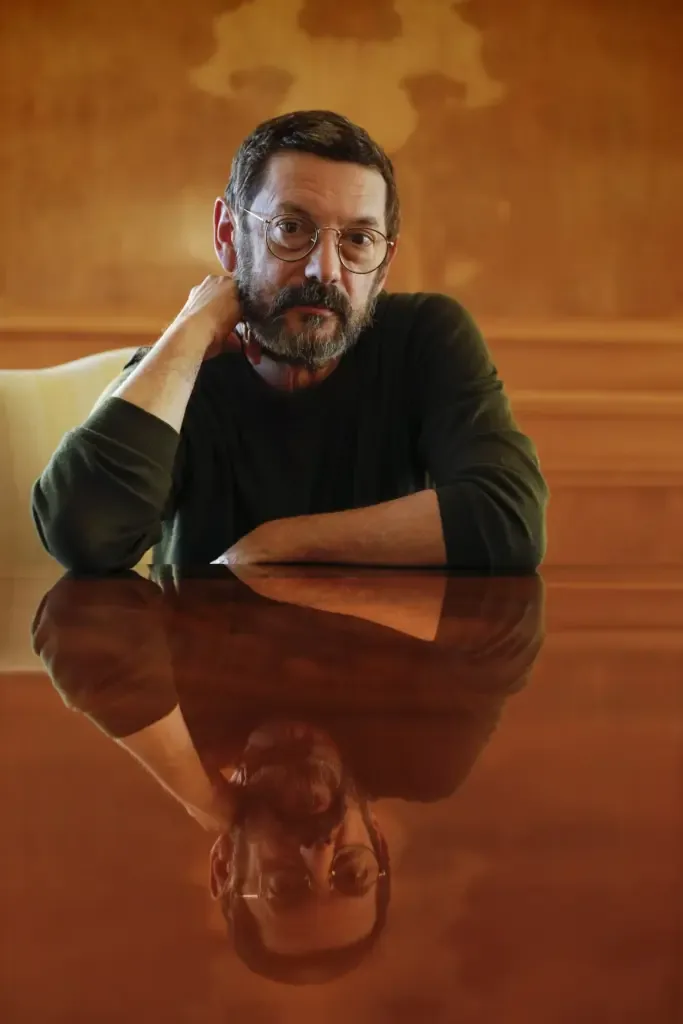
Manolo Solo: “I didn’t do military service and gave up social benefits for theater. I was on probation”
- Editorial: MAR MUÑIZ
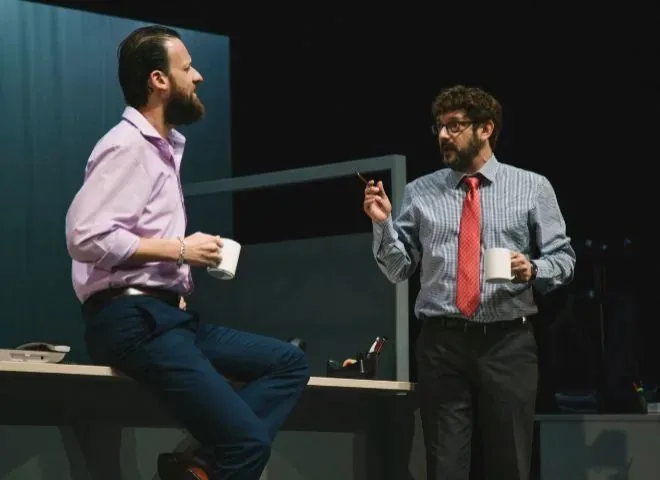
Manolo Solo: “Theater serves as a mirror for us”
- Editorial: MARINA MARCOS Alicante
That film was the keystone that closed the arch: Solo, who had all the attributes to have a career as a character actor like his wonderful Ibáñez in El gran Vázquez (Óscar Aibar, 2010), had specialized in characters who appeared to have a Machadian kindness but hid something dark. The petty manager he played in El buen patrón (Fernando León de Aranoa, 2020), in a comedic key, is an example. The anguished journalist in La isla mínima (Alberto Rodríguez, 2014, perhaps the film that made the public notice him), is another but from the thriller language. In Tarde para la ira (by Raúl Arévalo) he was a delinquent with a broken voice, apparently ridiculous but unpredictable. There, Solo faced Antonio de la Torre, whose career ran almost parallel: one talkative and a bit absurd, the other closed in on himself and permanently on the verge of explosion.
A paragraph from this newspaper’s review of La desconocida, by Pablo Maqueda, the film in which Solo played a hateful sexual harasser, summarizes his specialty: “Suddenly, an actor so prone to stand out as the first among those who come after, is simply a guy who (badly) sings Julio Iglesias. And in the rawness, discomfort, and lack of tuning with which he conducts himself, he definitely seems the first of all, the most uncomfortable of all and, therefore, the most revealing, the closest, each one of us. Even if it hurts. The opening sequence bursts onto the screen as a nightmare usually does at five in the morning. Raw and without bothering to ask for permission. It is just the beginning of a journey to the dark depths where dreams, myths, the abject, and what best defines us dwell.”
Read more Milei closes the borders to those who «hate» Argentina
However, there was another Solo waiting, an actor more like Nani Moretti than Dennis Hopper. Una quinta portuguesa, and before that, Cerrar los ojos by Víctor Erice, and Anatomía de un instante (where he played Manuel Gutiérrez Mellado) allowed Solo to shed that tension and present himself as a figure from another time, more innocent, upright, sweet, and luminous: “It touches me that someone sees light in me,” the actor said in the EL MUNDO interview. “It is very common for casting directors, producers, or filmmakers to recognize a certain viscosity in me. Anyway, there are many ways to embody a luminous character. Light alone is not interesting. In fact, darkness without nuances is more attractive than just light… A luminous character with a dark side is something beautiful. And a dark character who shows the pain that brought him there and can make you sympathize with him, even understand him, is also a marvel. What interests me are the ranges; pure colors are useless. Being a comic villain can be very fun, but nothing more.”
Solo’s interviews always included interesting information: “I have worked DJing, I have been a messenger… I started dedicating myself to this from the age of 35 and yes, I had times when I was about to return to Seville because I couldn’t pay the rent. But in the end, something always came up or a friend lent me 500 euros. Now I consider myself privileged,” he said in YO DONA in 2024. In EL MUNDO he explained his alias and revealed with it his longings and vital torments. “Manuel Fernández didn’t seem like a suitable name to succeed in the music world, which is where I wanted to succeed when I was 17 or 18 with my group Relicarios. And I chose Solo. The fact that I was fatherless since I was 15 days old influenced. Now, honestly, I am a bit ashamed. It seems quite childish to me. It’s a very blatant way to attract attention. Very puerile and, besides, it’s ugly. That Manolo rhymes with Solo is terrible. I remember I have tried to change it once. At least, keep Manuel. But no way. I also tell you that even if I had called myself Ziggy Stardust… I don’t know if all this about the surname hasn’t ended up being a self-fulfilling prophecy.”
Read more UEFA will boycott the World Cup as long as Infantino’s privatization plan goes ahead