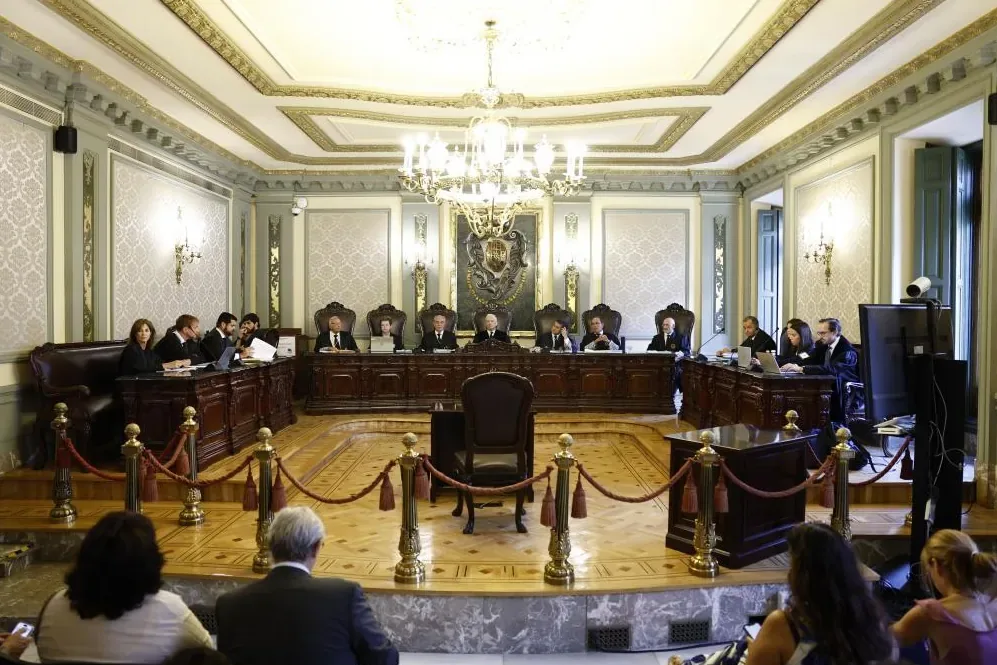










The Supreme Court has annulled several points of the new Immigration Regulation, approved at the end of 2024. It endorses its general structure but strengthens the protection of minors and families and removes some restrictions on regularization.
The Contentious-Administrative Chamber has ruled on the appeal filed by several organizations defending the rights of migrants. The ruling partially upholds the appeal, annuls various regulatory provisions, and confirms the validity of much of the reform promoted by the Government.
According to the Chamber itself, the ruling affects some of the most sensitive issues of Spanish migration policy such as family reunification, residence of relatives of Spaniards, the situation of foreign minors, integration, and the rights of applicants for international protection.
The ruling annuls one of the most restrictive aspects of the regulation: the automatic denial of residence authorization for relatives of those who already have nationality due to the mere existence of a criminal record. It considers that this contradicts the doctrine established by the EU Court of Justice.
From now on, the Administration must carry out an individualized assessment of each case when especially protected family rights or situations related to European citizenship are at stake. The Chamber indicates that circumstances such as the seriousness of the crime, the time elapsed, the family situation, or the interest of minor children must be weighed. This means that each denial must be justified and the decision can be judicially reviewed.
“The existence of a criminal record cannot operate as an automatic cause for denial, but the competent authority is obliged to verify whether that person constitutes a real, current, and sufficiently serious threat to a fundamental interest of society, weighing the nature and seriousness of the crimes committed, the time elapsed, the subsequent conduct of the interested party, the strength of ties with the Member State, and the best interests of the minor children,” states the Chamber.
“Best interests of the child”
Regarding minors, the court considers it contrary to the “best interests of the child,” which must govern all legislation, to prevent access to certain residence authorizations simply because the minor was married. It understands that this restriction could harm precisely those in situations of special vulnerability, such as victims of forced marriages.
It also annuls restrictions that could harm minors born in Spain when they had made justified departures from the national territory, reinforcing a more favorable interpretation for the protection of childhood.
Read more Catalonia needed housing and Puigdemont gave it an amnesty
Additionally, it declares illegal a regulatory provision that softened the obligation of administrations to provide immediate attention to unaccompanied foreign minors located in Spanish territory. The ruling recalls that such attention constitutes an unconditional legal obligation.
Likewise, it annuls the rules requiring that certain guardianship or protection relationships for minors must have been established according to Spanish law. According to the Supreme Court, Spain is obliged to recognize child protection measures agreed upon by authorities of other States when established by international agreements. The Regulation could not automatically ignore those family situations. Therefore, the decision will facilitate the recognition of certain family situations created abroad for residence purposes in Spain.
The Supreme Court also annuls the prohibition that prevented temporary employment agencies from participating in the hiring of foreign workers for seasonal activities. It considers that the Government introduced this limitation without sufficient legal coverage and without adequately justifying the general interest reasons supporting it.
Finally, the Supreme Court declares illegal the obligation imposed on certain foreigners to interact exclusively electronically with the Administration. It understands that the Regulation did not sufficiently justify that all affected had the means and capabilities necessary to obligatorily use telematic procedures.
Other points that had been appealed are indeed endorsed by the Supreme Court. The court supports the Government’s decision to prevent applicants for international protection from simultaneously accessing integration authorizations while their asylum application is pending. It also confirms that the time spent in Spain as an asylum seeker cannot be counted to meet the required period for certain integration modalities.
The new system created for relatives of Spanish citizens is validated. It rejects the existence of an obligation to fully equate this regime with that of relatives of EU citizens who have exercised the right to free movement. It also considers acceptable the visa requirement for some relatives abroad and certain rules on access to residence.
Read more The CJEU ruling on amnesty will not immediately resolve Puigdemont’s exile