








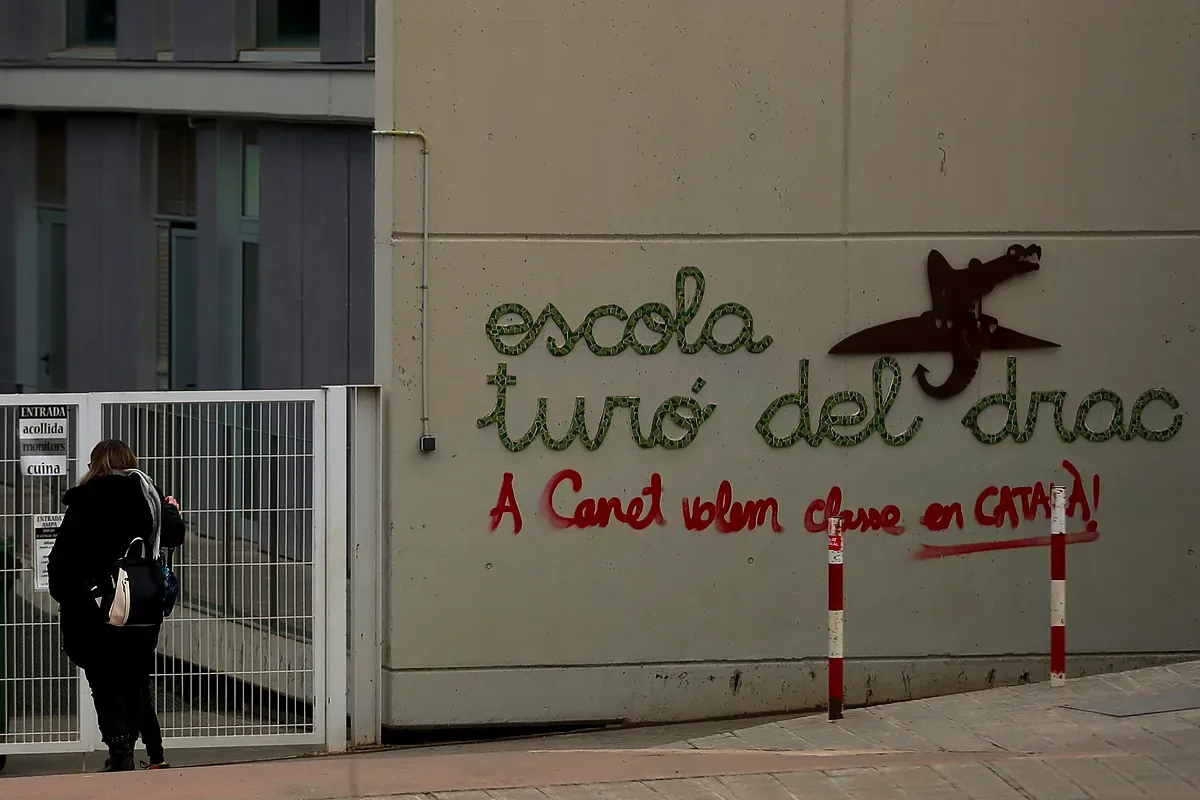
New judicial setback for the Generalitat’s linguistic immersion model. The Supreme Court has annulled the exclusion of Spanish on the signs of public schools and institutes in Catalonia. Specifically, it invalidates a section of the document related to the organization and management of educational centers for the 2022-2023 school year, which established Catalan as the language to be used.
Read more Catalonia needed housing and Puigdemont gave it an amnesty
“[…] The signage of the center’s spaces is in the Catalan language; in Occitan, in Aran, and in Catalan sign language if applicable, which are the reference languages of the educational system. The presence of other languages in the physical space of the center (walls, signs, etc.) is limited to the productions of the students. […], established the Generalitat in its management plan for public schools and institutes.
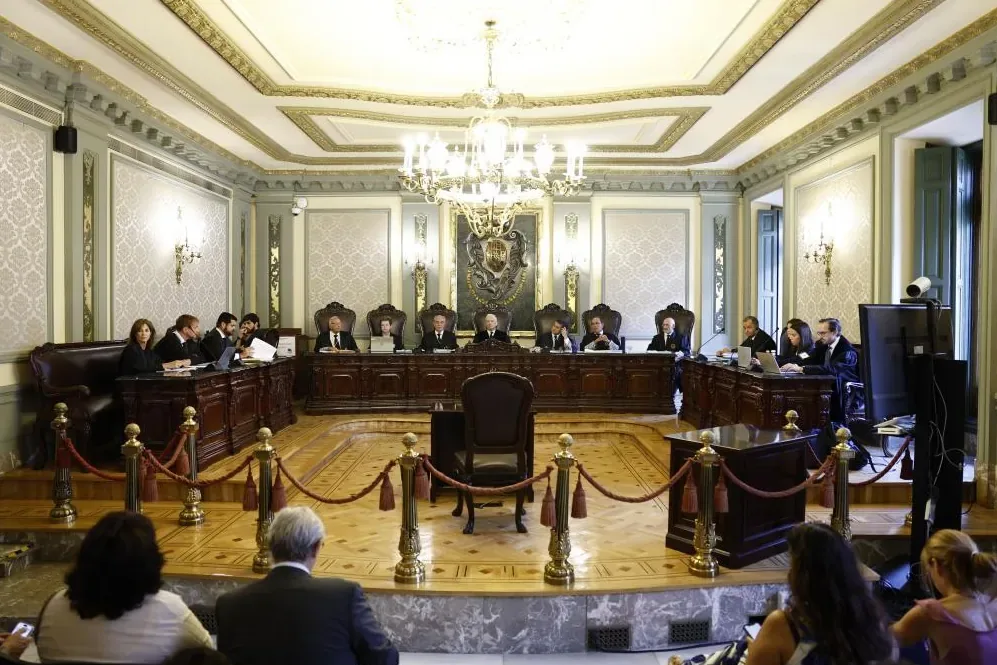
Now, the Contentious-Administrative Chamber of the High Court has reviewed the case following an appeal by the Assembly for a Bilingual School – after a ruling by the Superior Court of Justice of Catalonia that did not annul it – and asserts that excluding the use of Spanish in publicly funded educational centers is not lawful.
Specifically, the court points out that teaching cannot be limited to what is transmitted in the classrooms, nor to textbooks and other teaching materials, and that the physical space where educational activity takes place cannot be considered as something completely separate and unrelated to it, an argument used by the Generalitat.
“The configuration of the facilities of educational centers is indeed the “stage” or the “landscape” of educational activity and, consequently, forms part of it. Perhaps not the most important part; but a relevant part, which should not be disregarded”, states the Supreme Court ruling on the language of signs and posters in schools and institutes.
Read more The CJEU ruling on amnesty will not immediately resolve Puigdemont’s exile
And it adds: “It is not the same, for the purposes of the vision of things transmitted to students, a physical space where signs and posters are only in one of the two languages of the corresponding Autonomous Community. In short, the language used in the signage of educational centers is not irrelevant to teaching”.
The consequence of this, for the court, is that the exclusion of the use of Spanish in the signage of publicly funded educational centers negatively affects the vehicular language of teaching or, if preferred, restricts its normal potential.
Likewise, the ruling highlights that “Spanish is an official language throughout Spain, which means – among other things – that it is a language that cannot be excluded in communications between public authorities and citizens. Well, the signs and signals that allow orientation in buildings belonging to the Administration – such as, without a doubt, public schools and institutes – constitute a way of communicating with individuals who access them. Hence, it cannot be said that they are unrelated to the regime of linguistic co-officiality. This means that excluding the use of Spanish for these purposes is not respectful of article 3 of the Constitution, not to mention that it may introduce an unjustified difference in linguistic treatment for the purposes of article 14 of the same constitutional charter”.