



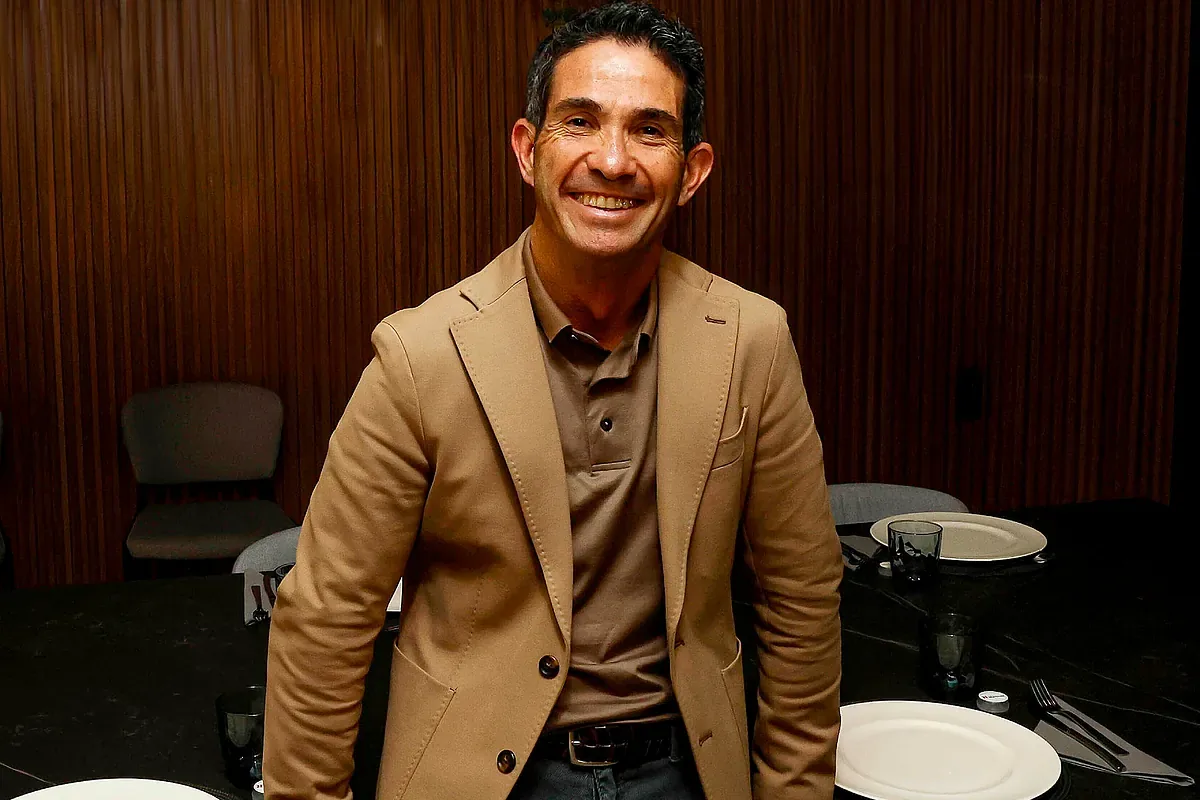
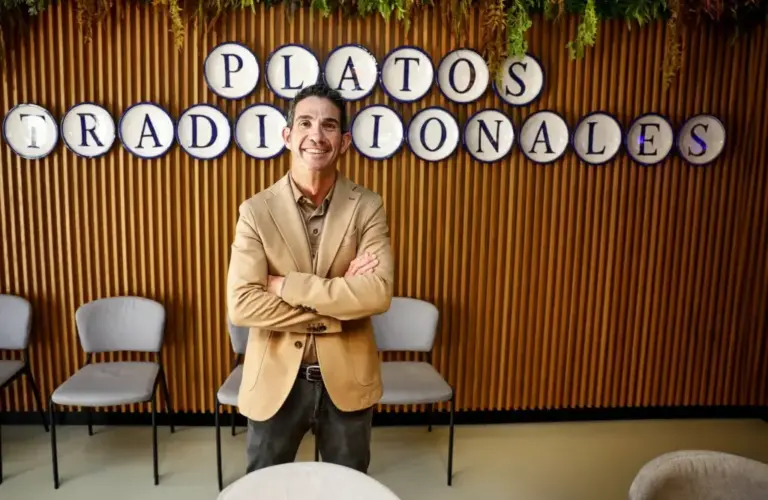
Raúl Martín has been leading Familia Martínez for more than a year and a half, one of the family groups behind the change in consumption habits in Spain. Their rices, gratins, and roasted chickens respond to an increasingly consolidated trend: we have less time to cook and resort more to prepared dishes. The group combines this business with fresh meat and feeds more than three million people every day. Platos Tradicionales supplies Mercadona with much of its baked products, while Embutidos Martínez produces about 950 tons weekly of minced meat and fresh sausages. The challenge now is to grow without losing profitability, at a time when geopolitical tension is again pressuring raw material and packaging costs, and the group is undertaking an investment of 150 million euros. Martín receives Actualidad Económica to talk about costs, Mercadona, innovation, and the future of an industry competing for something increasingly scarce and valuable: the consumer’s time. Because, despite all the technology, there is one rule that does not change and remains decisive in the food business: the food has to taste good.
Read more A double physical and legal barrier in the sea of Ceuta: deters and allows hot returns
- The consumer has less and less time to cook, and prepared dishes are gaining ground. Are we facing a temporary change or a definitive transformation of consumption?
- Structural, without a doubt. Already 75% of consumption occasions in Spain are resolved with a prepared dish. The Platos Tradicionales division was born in 2006 because we already saw that need for convenience, and the pace of life has only accelerated since then. But convenience alone does not sell. Many consumers buy our products without even knowing they contain no colorants or preservatives; they buy them because they taste good, not for that attribute. That is the point. In the last ten years, technology has allowed a huge leap in quality. Today it is no longer enough to make a correct product. It has to be really good, because if not, the consumer does not repeat.
- So, does taste weigh more than healthiness?
- Taste is the main driver of purchase. Healthiness is an added value. That does not mean we do not work a lot on the composition of the products, on the contrary. But first, it has to be liked. If the consumer tries a lasagna and is not convinced, they do not buy it again.
- If the prepared dish is already so integrated into consumption, how much room for growth does the Spanish market have?
- Still a lot. That need for convenience with which the company was born has not stopped growing, and I do not think it will. There is room for everyone. Gastronomy will remain, and there will still be moments to cook or go out to eat, but during the week the need is different. A lasagna that costs 2.75 euros, with a profile very similar to a homemade product and that you prepare in three or four minutes, is a very competitive solution. In reality, the consumer is not buying a lasagna; they are buying time.
- But that growth also has a limit, and it is in costs. How much margin does the industry have to absorb new increases without passing them on to the consumer?
- There are increases we cannot absorb because they are determined by external factors. We already saw this with the crisis caused by the war in Ukraine. Between 2022 and 2023, the industry price index rose by 30%, compared to 13% inflation. Both the industry and retail made a huge effort to contain that impact and not pass it entirely to the consumer. Our strategy is based on three pillars: quality, service, and price. Maintaining the first two requires being very efficient. And we are very clear that we want to keep growing, but always without losing profitability.
- Profitability also depends on how raw materials evolve. What impact is the war in the Middle East having, and which costs could be most affected if it prolongs?
- We are noticing the impact, especially on packaging. And if the conflict prolongs, the pressure could also reach protein, especially through fertilizer prices. That is what worries us most in the medium term. If we look at what happened with Ukraine, we know a geopolitical crisis can end up affecting the entire cost chain. Then we saw increases of up to four times in some energy supplies. We do not expect something so extreme to repeat, but we do know that the longer a conflict lasts, the harder it is to contain its effects. For now, we are managing it, mainly thanks to supplier diversification and long-term agreements. But there is a very clear red line. If costs keep rising, there comes a point where no efficiency can absorb everything.
- And how does a company prepare so that this volatility does not end up becoming a supply problem?
- The lesson from Ukraine was clear: do not depend on a single supplier. That is why we diversify, close long-term agreements, and continuously approve new suppliers. We see it with pork or beef, where a supply disruption changes prices from one day to the next. That is why we always have an alternative ready. In the end, a cost increase can be managed. Running out of product, no.
- And while they shield supply, they are undertaking an investment of 150 million euros. What are they preparing with that outlay?
- We are preparing the company to grow. Since 2018 we have invested 320 million euros, and now we add another 150 million in two very important projects. On one hand, we are expanding the Platos Tradicionales plant with an additional 20,000 square meters, mainly for roasts. On the other, we are building a 27,000 square meter logistics center in Torrent, with capacity to manage more than 600 tons per day. It is not just about producing more. We need to gain capacity, efficiency, and logistical muscle to accompany the growth of our clients. In this business, if demand grows and you do not have the capacity to respond, you lose the opportunity.
- An important part of that new capacity is linked to Mercadona. To what extent does a client of that size condition Familia Martínez’s investment decisions?
- Mercadona is our best client and has a huge market share, but we do not invest thinking only of one client. We invest because we see a growth opportunity in prepared dishes and because we need capacity to respond to that demand more efficiently. The relationship with Mercadona is also very demanding. They ask us for quality, service, innovation, and reaction capacity. That forces us to always be one step ahead.
- But such a close relationship also generates dependency. Is it a risk they want to reduce?
- In 2020 we bought La Pila. The goal was clear: to have other channels, food service, catering, semi-prepared, and not depend on just one. There they make products we use in our plants, like chicken cubes for chicken curry, and La Pila also sells to other retailers. Different business models. But they complement each other. Our goal is not to reduce our relationship with Mercadona, but for the group to have more capabilities and more growth avenues.
- How do you compete with delivery?
- More than competing, I would say we coexist. We are in a transformation process where the boundary between models is increasingly blurred. People buy at Mercadona and eat it immediately, just as they would with a home delivery order. Our capacity to produce 800,000 gratins a week with the highest quality and food safety is what allows us to keep up. Delivery will continue to grow, and that line will narrow even more.
- Who has more weight in innovation, the supplier who develops the product or the distributor who knows the consumer?
- It is a combination. We bring industrial, technological, and product knowledge, and Mercadona has very deep consumer knowledge. When you combine the two, you can develop products that a few years ago were hard to imagine. We have launched the first non-pasteurized baked lasagna and the new arroz en llanda [valencian tin], which is baked in a metal tray suitable for microwaves. These are products that require a lot of innovation behind them.
- And how much capacity does the consumer have to change a product already on the market?
- A lot. We have feedback before and after each launch and a process to address customer comments within 24 hours. Mac & Cheese is a good example. Some vegetarian people bought the product because the bacon was not sufficiently identified. Although it appeared on the label, we decided to make it more visible and modified the packaging. That direct contact allows us to detect problems and react very quickly.
- And what role does technology play in this whole process?
- It is fundamental. Innovation in food no longer consists of inventing a technology from scratch, but knowing how to combine different technologies to make possible what was not before. That is our advantage. The first non-pasteurized baked lasagna or the baked rice in a metal tray suitable for microwaves are not simply new products. Behind them are industrial processes, technology, and knowledge that allow delivering a high-quality solution to hundreds of thousands of consumers. And that is the key, that technology does not stay in the factory but translates into something the consumer values. A product that tastes good, is easy to prepare, safe, and has a competitive price.
- What is already underway that will change what we eat in Spain?
- Right now we are closely following an Israeli startup working on cultivated meat for the European market. Things like that come out of Kilómetro 0, our innovation center, the most important in southern Europe, with 40 partners and more than 2,000 startups in the pipeline. Our job is to see today what the consumer will have on the plate tomorrow.
- And how is that product innovation transferred to packaging?
- Packaging is part of the product. We have also been very innovative in this area. We were among the first in Spain to use a wooden tray from certified forest and also work with cardboard and metal. Each format responds to a specific need. If a product has to be cooked in the microwave, you need packaging that allows it. That is why we look for solutions that reduce plastic use without losing functionality, quality, or safety.
- Europe wants less plastic, but changing packaging costs money and not all materials serve the same purpose. Is legislation being made without considering how the industry really works?
- I think more common sense is needed. We have reduced plastic use and work with wood, cardboard, and metal, but each product needs a different package. If we want it to be microwavable, for example, the packaging has to meet that need. Regulation should listen more to the industry and understand how each product really works.
- They have invested, grown, and diversified. What is the next step for Familia Martínez?
- Grow without losing profitability, that is the goal. We have a considerable investment plan, and the focus is on covering growth in all our categories, both in prepared dishes and fresh products.