





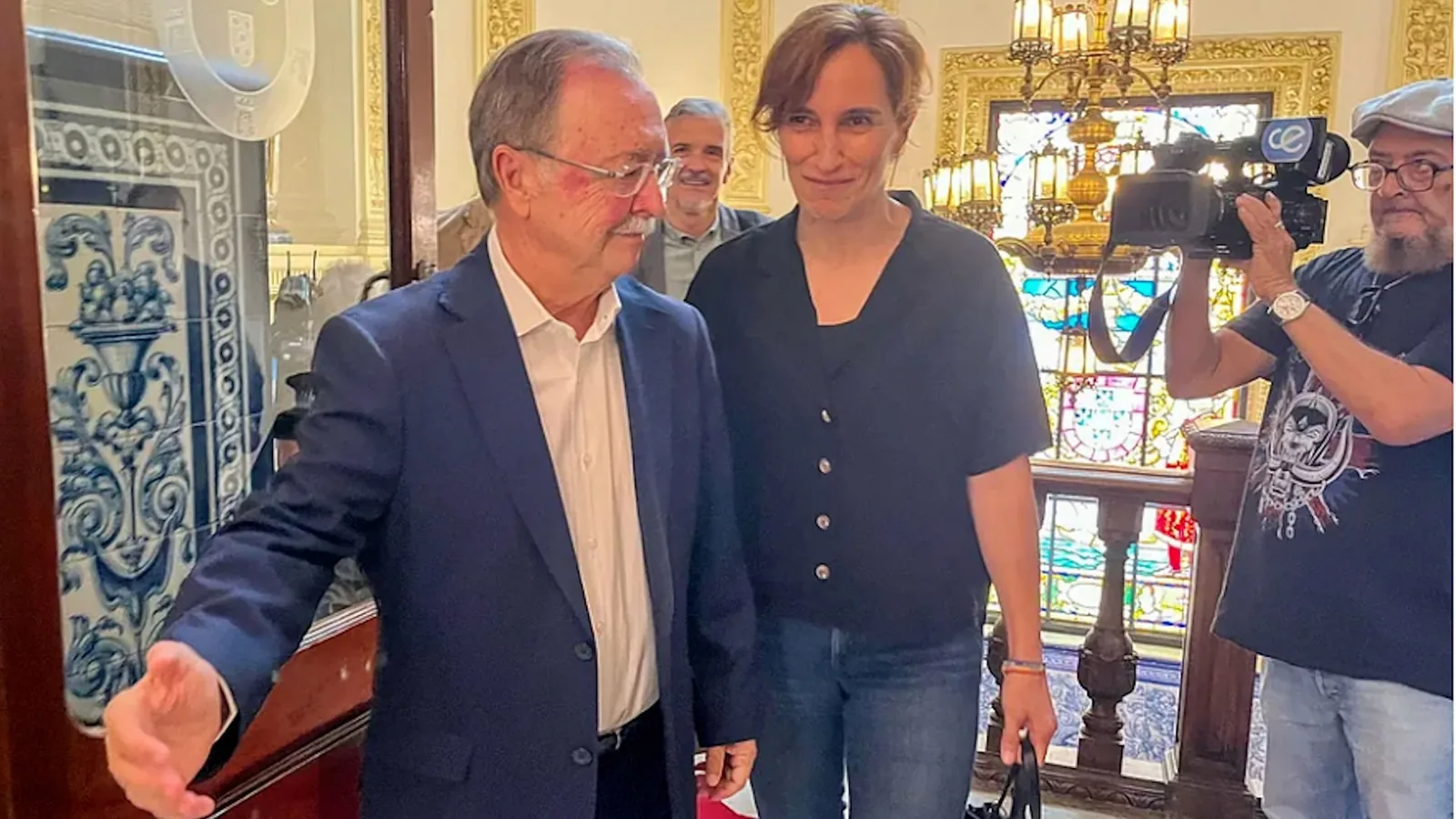
The delicate institutional balance that had been maintained during the unprecedented crisis in Ceuta following the arrival of 80,000 people in irregular situations has ended up collapsing. The president of the autonomous city, Juan Jesús Vivas (PP), reproached the Minister of Health this Monday for going to “give lessons in humanity and solidarity” after Mónica García stated that “migrants do not bring diseases” and that they can now contract them “due to the unsanitary conditions” in which those who have not been returned to Morocco live.
Read more The Colombian Housing Minister on the hot seat for a weekend trip amid the earthquake tragedy
Up to eight members of the central government, including Pedro Sánchez within 24 hours of the entry, have traveled to Ceuta to try to convey an image of loyal cooperation between administrations, visible in measures such as the creation of 1,500 new reception places in tents, announced 18 days after the influx. While last week he promised that all immigrants would be returned, this measure implies that he acknowledges the impossibility of that happening in the short term. On the contrary, he assumes that he will have to take care of the immigrants who have been living in poor conditions on a beach in Ceuta for two weeks and are seeking asylum. And this shift from Moncloa came alongside the first major institutional clash.
Although Vivas had been raising the tone of his demands to Moncloa — the latest being to warn that he will report the situation to the Judiciary — he had not engaged in a direct confrontation until this Monday, with the Health official in the spotlight. He called García’s behavior “absolutely incorrect”, after the minister, during her official visit to the city the day before, had tried “to shift and evade responsibility by blaming the regional government.” “And I stick with ‘incorrect,’ because I feel like saying other things,” added the popular president, in a press conference.
In turn, García herself emphasized this Monday the criticisms of the Ceuta government for not being “agile enough” to enable safe and healthy spaces for the thousands of people who have not yet been returned to Morocco. In an interview on TVE, the Sumar politician, who will testify voluntarily on August 27 in Congress, urged Vivas to do “basically” what he claims was done in the precedent of the massive crossing in 2021: “To house all these people in order to have control and a controlled public health situation.”
The one tasked with trying to mediate the clash was the Minister of Inclusion, Social Security and Migration and official spokesperson, as well as a member of the socialist quota in the coalition leading the government. Asked about this matter after holding a meeting with the Ceuta leader, Elma Saiz avoided controversies and focused on highlighting “the collaboration between administrations,” which is what, she emphasized, “the citizens expect” from the political class in an emergency of this nature.
The parade of central government authorities in Ceuta began with Sánchez on July 31 accompanied by the Interior Minister, Fernando Grande-Marlaska, who stayed until Saturday. The following five days saw no representative from Moncloa on an official visit to the autonomous city, a drought that was interrupted by the stay between August 6 and 8 of the Youth and Childhood Minister, Sira Rego, just before which one of the two schools announced to house the 1,898 unaccompanied foreign minors in the city was enabled.
Read more Firefighters find an unidentified body in an irrigation ditch in Torrefarrera (Lleida)
Since then, the cadence of visits has been practically one minister per day, which the PP has likened to something “more like an August photocall than a government managing a crisis.” Many of them were received with whistles and boos. The only one who faced the protests of the Ceutans outside the official car was the Defense Minister, Margarita Robles, who heard firsthand the feelings of a population “fed up.”
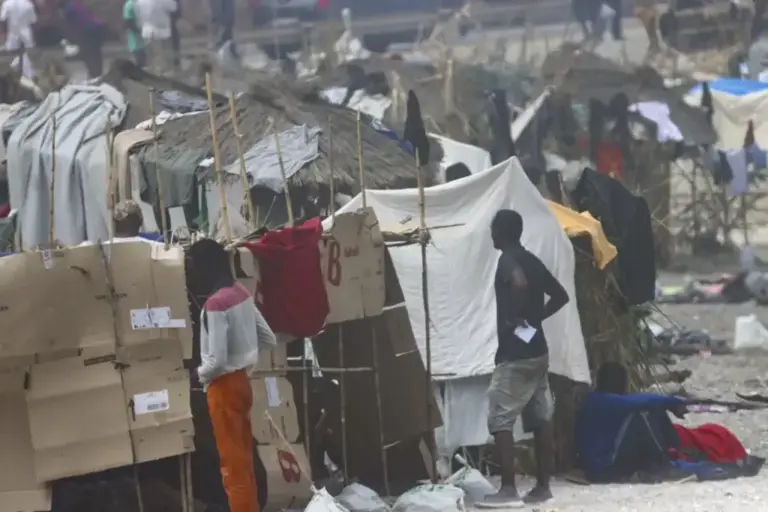
Vivas, in turn, accused Sánchez’s government this Monday of having tried to “whitewash reality” in the first days of August by stating that the city had recovered “normality” in 48 hours and that only about 2,500 foreigners remained of the nearly 80,000 who had entered, practically the entire registered population. His government raises that estimate to between 8,000 and 11,000 immigrants while Marlaska acknowledged last Thursday on his second visit that the figure could be around 5,000.
Moncloa has also been modulating its message as the situation has become entrenched and the installation of shanties on the Trampolín beach has multiplied. Last Tuesday, the Foreign Minister, José Manuel Albares, announced that they were working with Rabat so that “every last person who has entered Spain irregularly returns to Morocco,” a tough message that the Interior Minister qualified the next day by excluding asylum seekers who meet the requirements from that return.
The 1,500 new reception places announced this Monday will be located in three state-owned spaces — the equestrian facilities, the old football field of the Cavalry barracks, and the El Guano space — while the fourth, the parking lot of the bottleneck, in Loma Colmenar, is owned by Ceuta.