




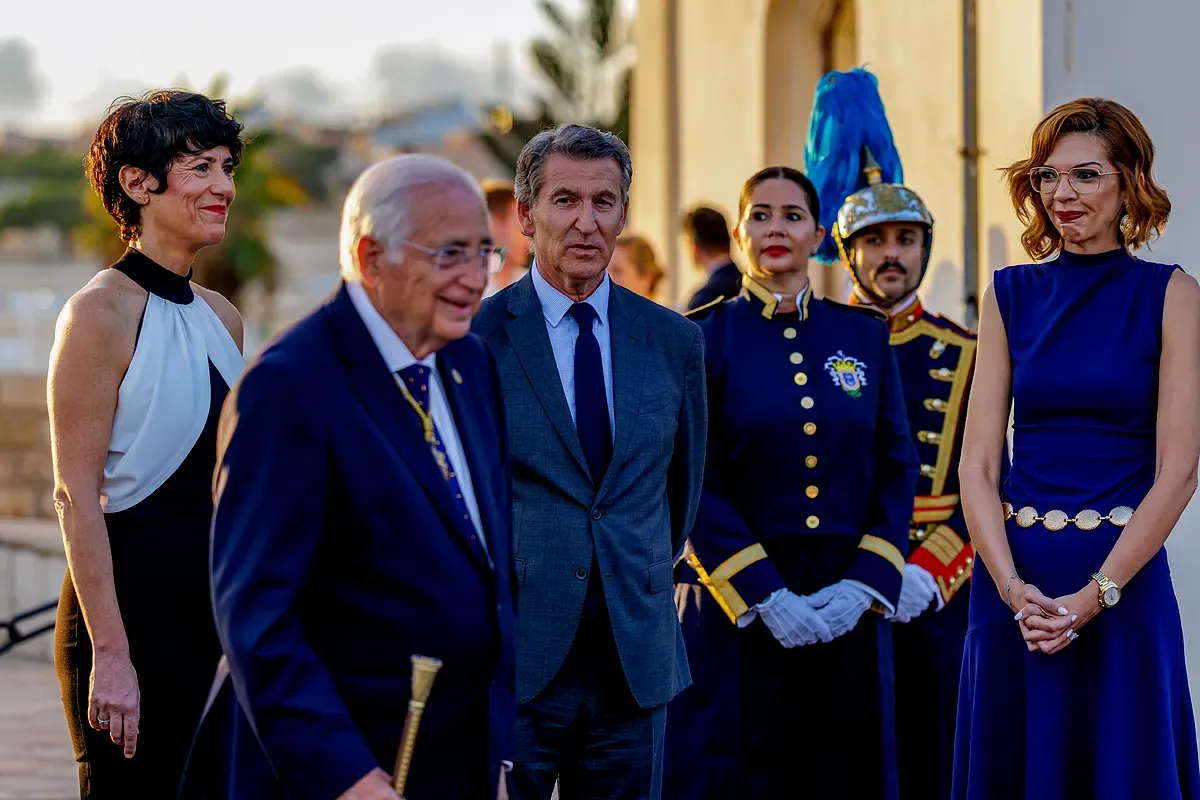
The victory of the Spanish PP in the European Parliament on Thursday is the story of a stand-off. A double stand-off, in fact. Alberto Núñez Feijóo twice refused the intention of Manfred Weber, president of the European PP, to postpone the vote on the resolution about Ceuta until October, due to insufficient support and the text not being “mature” enough, which was ultimately approved. The European PP risked a harsh defeat, but the Spanish delegation prevailed and pushed hard to emphasize the Europeanness of Ceuta and Melilla, according to the reconstruction of the negotiations made by EL MUNDO from popular sources.
In the end, and after quite a few unforeseen difficulties, they succeeded. In extremis, that is. The European Parliament resolution in support of Ceuta – and against the actions of Pedro Sánchez – was hanging in the balance until 9:30 a.m. on the 17th. The sufficient majority for the text to pass was secured, therefore, two and a half hours before the vote. The negotiation, led by the Spanish PP delegation in Brussels, had at least three critical moments that were overcome because the Spanish populars stood firm. Two with Weber and one in the negotiation with the conservatives, liberals, and the far right.
In the European Parliament, resolutions are usually brought to the Plenary when they are already well negotiated and their viability is clear. This was not the case, for several reasons. First, that within the European PP itself the situation in Ceuta was not fully understood. Second, that the decision to blame Morocco and criticize Pedro Sánchez’s management ruled out any pact with the Social Democrats of the S&D, led by the Spanish Iratxe García (PSOE). Third, that the Spanish government had successfully explained its position to the left-wing groups. And fourth, that Morocco orchestrated a strong lobby operation, sending emails to MEPs to influence their vote. How? By exonerating itself and committing “to readmit all affected persons”.
With that prior scenario, the EPP president, the German Manfred Weber, told Feijóo that the text was not sufficiently “mature”. “Let’s take it to the next Plenary,” offered the Bavarian, who has an excellent relationship with the Spanish delegation. Feijóo replied with a cordial but firm refusal: “No, this is crucial for Spain and Europe, it is very serious and cannot wait,” he said, according to sources familiar with the contacts. He added that the wave – which he calls an “invasion” – had occurred in July and that the citizens of Ceuta could no longer wait.
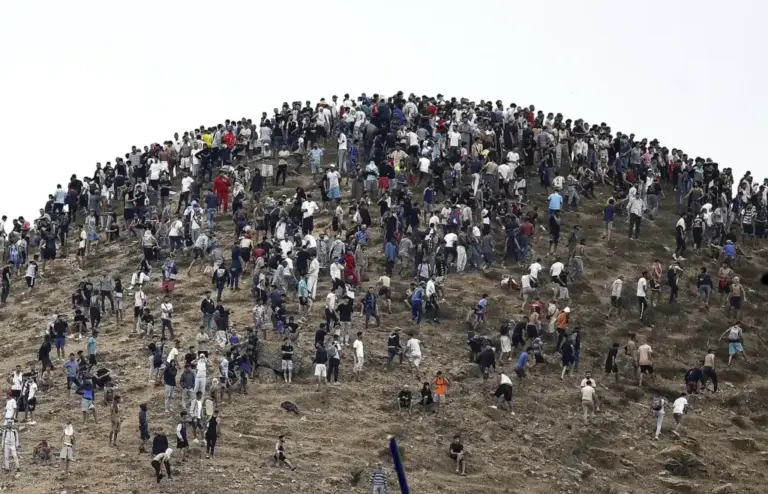
Weber, who will visit Ceuta this Monday along with Feijóo himself, did not want to lose the vote but agreed to the request of the Spanish opposition leader and told him “go ahead”. The responsibility fell on Génova, which had the hardest part: to secure that majority that was not in sight. Feijóo entrusted it to Esteban González Pons, spokesperson for the Spanish populars in Brussels; Dolors Montserrat, secretary general of the European PP; and Alma Ezcurra, MEP and deputy secretary of Sectoral Coordination of their party.
One of the problems they had in selling the merits of their resolution to MEPs was the word “invasion“. “In Spain, we have accepted its meaning, but in other countries the translation shocked them,” recount community sources from the Popular Party. “So, colleagues were informed about the declassified reports, the ministers’ hearings, the already known information, etc.”
Six other resolutions were presented: achieving a majority of votes was impossible if each group supported its own. From Monday to Wednesday, a period was opened to try to close a joint resolution. Usually, in that time frame, a text is agreed upon with a minimum pact (the EPP with S&D and the Renew liberals, and, variably, the Greens). But there was no agreement from the start, “because talking about Ceuta without omitting criticism of Sánchez’s government management is impossible,” they say in the PP.
Then, Iratxe García tried a joint resolution of the entire left to be voted on before the EPP’s (a joint text has priority). But she failed: once the deadline passed, the left failed to present a joint resolution.
Directly blaming Morocco was a “friction” element to reach a prior agreement with the groups to the right of the European PP, and criticism of the Spanish government was also a factor for the liberals, sources acknowledge. “At this point, it was strange to vote on seven resolutions, because none would pass,” they recount.
Midweek, there was little hope of approving any of the texts. Then, Weber again proposed to Feijóo, for the second time, to postpone the vote by a month, and the Spaniard reiterated his refusal, as it was a “crucial” matter. “Spain’s position must be stated, even if the vote is lost.” It was “very risky,” explain the Spanish PP, “because losing the resolution would have been a defeat for the European PP.”
400 CALLS TO OVERCOME THE RABAT ‘LOBBY’
Then Feijóo insisted: “Let’s vote”. And he asked Montserrat, Ezcurra, and Pons to work to convince as many MEPs as possible that it would be a “tragedy” for the people of the autonomous city if the European Parliament did not now approve a resolution in their support. Ceuta would have been relegated, once again, to a secondary role.
The entire Spanish delegation of the Popular Party then mobilized. The 22 MEPs made more than 400 calls. Each contacted several others. “If you can’t vote in favor, abstain or don’t vote,” they told them. They even secured blank votes from two Danish S&D parliamentarians: Niels Fuglsan and Christel Schaldemose. And also that others did not vote.
In parallel, negotiations began with the other political groups. “We told them this transcends parties and is important for Europe. And the reaction of the Conservatives (ECR) was very good, they said they would support with amendments.” “Then the Patriots could have brought down the resolution and fueled Euroscepticism, but they were favorable.” The same with the liberals, “even though they are mostly Macron’s people, who visits Spain next week,” sources add.
Feijóo’s team began to breathe a sigh of relief, but it was not all done. “There was a difficulty, and that is Thursdays always have fewer people in Strasbourg, because return flights are moved forward. That’s why one of the things we asked everyone on Wednesday was how many people each delegation would have the next day,” they detail. They realized many Greek MEPs would return to their country before voting. They convinced them to delay their flights. And in Giorgia Meloni’s Conservatives, ECR, 20 would be missing.
They had to fight hard. On Wednesday afternoon, it was not secured. The European PP strategy meeting ended at 8:30 p.m. Then, their three lieutenants called Feijóo: “President, it can be done.” The PP leader replied: “Come on, come on, it’s not the PP, it’s Spain!“
On Thursday morning, calls continued at a frantic pace. It was “very difficult” at that hour, the populars admit. But the final sprint worked and at 9:30 a.m. the Popular Party achieved the white smoke. “At that hour the majority is closed. And the vote is at 12.” In extremis is little, in Brussels terms.
After achieving it, Dolors Montserrat got emotional. It has been one of the toughest negotiations she remembers and she fought especially hard. Alma Ezcurra then called the president of the autonomous city of Ceuta, Juan Vivas: “President, we did it.”
They voted in favor of the resolution, besides the EPP, the Patriots of Santiago Abascal and Marine Le Pen, the Renew liberals, Giorgia Meloni’s Conservatives, a dozen non-attached members, and the vast majority of the sovereigntists.
Feijóo’s stand had the desired effect. On Monday, he and Weber will parade their victory through Ceuta, and say it is not their triumph, but that of the Ceutans.
“The most important document for Ceuta and Melilla since the EU exists”
“Yesterday’s European Parliament resolution is the most important document Ceuta and Melilla have achieved since the European Union exists,” and it serves so that “everyone in Europe knows that Berlin, Vienna, Madrid, Ceuta, and Melilla are equally European.” So forcefully expressed, yesterday, the president of the Popular Party, Alberto Núñez Feijóo, during a visit to the city of Melilla. After praising Manfred Weber – his “Bavarian friend” – the opposition leader to Pedro Sánchez assured that the resolution is “a firm, clear, and calm voice in favor of the southern border being as protected as the eastern border.”
He said this at an event alongside the president of that autonomous city, Juan José Imbroda. “We have achieved that they vote in favor of the position of Ceuta and Melilla while the Spanish PSOE deputies voted against. The PSOE has worked harder to defend that Greenland is part of European territory than to defend Ceuta and Melilla and, therefore, Spain, and that cannot be allowed,” he added. “What would Mr. Sánchez need to be outraged, that Trump invaded Ceuta and Melilla?” he concluded. Juan José Imbroda thanked the dedication of the Popular Party president to “the most vulnerable part of Spain.”