




Pedro Sánchez considered the Ministry of Defense dispensable. He stated this in a now-famous interview in EL MUNDO before coming to La Moncloa. An argument that may have responded at the time to the populism of the moment, but was made by someone who would later become Prime Minister. Despite those words, the facts have ultimately shown that the work of the Armed Forces is essential both nationally and internationally. In Spain, to guarantee security, and abroad, to fulfill commitments made with the European Union and NATO.
In the assessment of his management in Defense matters, Sánchez will go down in history as the president who increased the budget allocated to this ministry the most, while publicly resisting doing so and turning that department into a battering ram of his political strategy, with confrontations with Donald Trump or Benjamin Netanyahu, to the point of breaking channels with the powerful Israeli military industry.
Sánchez has balanced Spain’s international commitments with his political narrative and, at the same time, appeased his government partners. While he maintained a harmonious military relationship with the Joe Biden administration, the arrival of Trump and Europe’s shift toward more conservative positions have placed the president in an uncomfortable position, although he has exploited it nationally.
However, compelled by the context, he has tripled the spending of the portfolio he once considered dispensable. According to NATO data, in his first budget he allocated 11.172 billion euros to Defense. During the first two years of his term, the increase was moderate, but the Russian invasion of Ukraine forced the government to increase investment, despite initial reservations from Unidas Podemos, then a government partner, and later from Sumar.
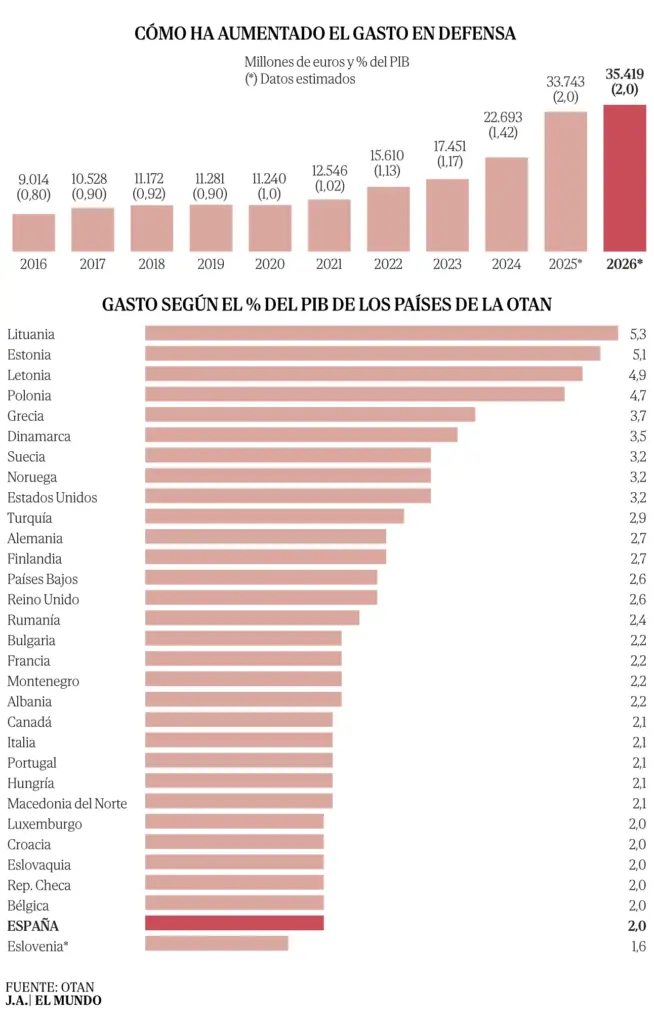
In 2020 Spain allocated 1% of its Gross Domestic Product (GDP) to Defense. Since then, the percentage has been growing until last year NATO certified that the country had invested 33.743 billion euros, equivalent to 2% of GDP. Three times more than in Sánchez’s first year leading the government and double the amount at the start of the legislature.
But that acceleration is far from the figures of NATO partners. Spain remains at the bottom in spending. And it has resisted going beyond that 2%. The most significant episode occurred during the 2025 NATO summit, when countries agreed to raise basic spending to 3.5% and 1.5% for security investments, and Sánchez assured Secretary General Mark Rutte that Spain could meet the capabilities without increasing the agreed percentage. Will he be able to comply or is he simply buying time? “He may have met part of the objectives with that budget this year, but the committed capabilities are being incorporated gradually and later more will have to be allocated,” a military officer familiar with the objectives explained to this newspaper.
Without the capacity to approve new Budgets, Sánchez maintains the spending increase through credit transfers from the Ministry of Finance to the Ministry of Defense and with investments channeled through the Ministry of Industry, responsible for managing the Industrial and Technological Plan.
Currently, the Ministry of Defense manages 79 modernization programs, of which 35 correspond to the Special Modernization Programs (PEM) promoted through the plan approved in 2025. According to a brief press release from the department itself, “this portfolio of programs will continue to grow during the coming years.” The same statement announced “the incorporation of 15 new Special Modernization Programs planned for 2026.” These projects will begin to be tendered from September and their approval is scheduled before December 31. They will represent a new increase in Defense spending, although their content is still unknown and “there is not yet a closed list.”
These programs are not enough to cover the deficiencies that the Armed Forces detect daily and that generate uncertainty in the barracks. The most important is the shortage of ammunition. There are units where bullets are lacking and there are also problems with missiles. In air defense, Spain currently has three Patriot batteries with 18 launchers. One remains permanently deployed at the NATO base in Turkey and was used to intercept several missiles that Iran launched against allied territory during the war with the United States. The government has invested more than a billion euros in acquiring four new batteries, but they will not be available until 2030. In addition, the PAC-3 interceptors they use, developed by Lockheed Martin, are expected to suffer new delays due to material shortages affecting the U.S. industry following conflicts driven by Donald Trump.
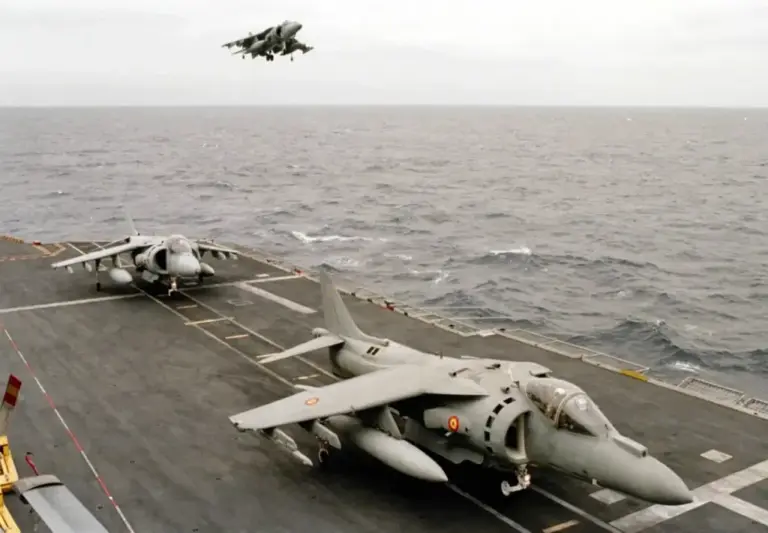
Precisely, the American Lockheed Martin also manufactures the F-35 fighters, the only aircraft with vertical takeoff and landing capability that the Navy considers can replace the British Harrier. Spain faces the countdown of aircraft in service since October 1976. Maintenance teams are looking for ways to extend their service life until 2032, even resorting to buying parts from Harriers retired by other countries. But these solutions are only a patch against the risk that the aircraft carrier Juan Carlos I will be left without an embarked air wing. A threat that is already becoming real.
Defense sources attribute the refusal to acquire the F-35s to delivery delays accumulated by Lockheed Martin and deny that it is because it is an American plane. Currently, 15 NATO countries operate this model, which remains the only real alternative for the Navy. And even if Spain decided to buy it immediately, it is unlikely to be incorporated before 2032, the date when the Harriers’ service life will end. “Without an embarked air wing, our naval power projection capability over land will be affected and with it our deterrence capability.”
To this vulnerability is added another: the absence of an embarked anti-drone system. As one of the consulted sources graphically summarizes: “We are killing flies with cannon shots.” Last May, Airbus and the Navy successfully completed a tactical test in Rota with an H135 helicopter and two unmanned aerial vehicles, Airbus’s Flexrotor and Alpha Unmanned Systems’ A900, integrated through the HTeaming solution. Meanwhile, DRIS systems are being developed to protect future F-110 frigates. However, when drones are already part of the battlefield, Spanish ships still lack a specific operational system to face them.
The Air and Space Force also faces priority challenges that should absorb much of the budget increase. The first is to resolve the future of the sixth-generation aircraft planned within the FCAS program, initially conceived as a joint development between France, Germany, and Spain. That project has been practically blocked after France demanded to lead the design of the aircraft alone. Although the three countries continue to seek a formula to avoid duplications, there is still no solution. In addition, the Air Force demands “a modern, deployable, and permanently combat-ready aerospace force, capable of acting quickly and effectively in any scenario, flexible, technologically advanced,” as stated in the Air and Space Force Vision document, presented a few weeks ago in Madrid by the Chief of Staff of the Air Force, General Braco.
According to consulted sources, the Air and Space Force must invest in greater “digitalization for aircraft maintenance,” which would allow “anticipating failures and breakdowns” and thus “raising the operational rate.” They also consider it a priority to strengthen unmanned combat systems and increase investment in the space field. However, the most urgent need lies in infrastructure. The Air Force has five high-availability bases, including Torrejón, Zaragoza, and Morón, as well as 10 deployment bases. The goal is to reinforce the ammunition depots and modernize all of them to guarantee a reaction capacity and interoperability in line with the demands of the new strategic scenario.
The increase in the Defense budget has allowed accelerating investments that remained postponed for years, but the Armed Forces maintain that the economic effort has not yet resolved some of their main deficiencies. Added to what is committed to NATO, the coming legislatures will force whoever governs to increase spending in the coming years, an idea very far from the first Pedro Sánchez.
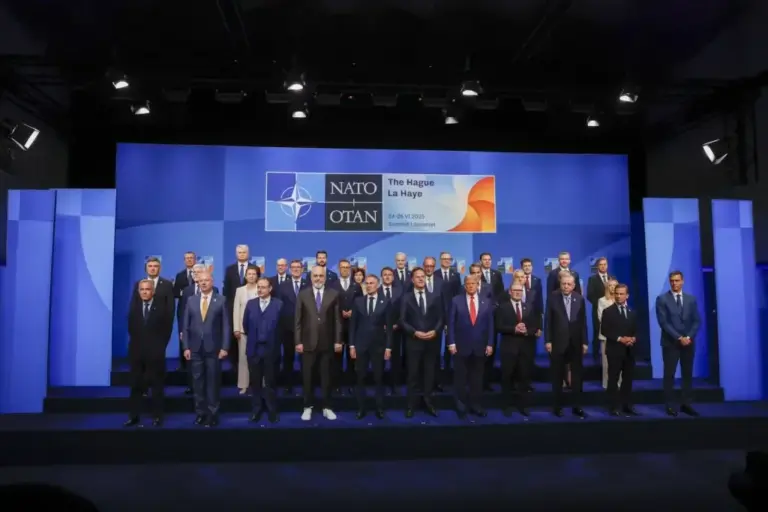
Sánchez, in NATO’s corner
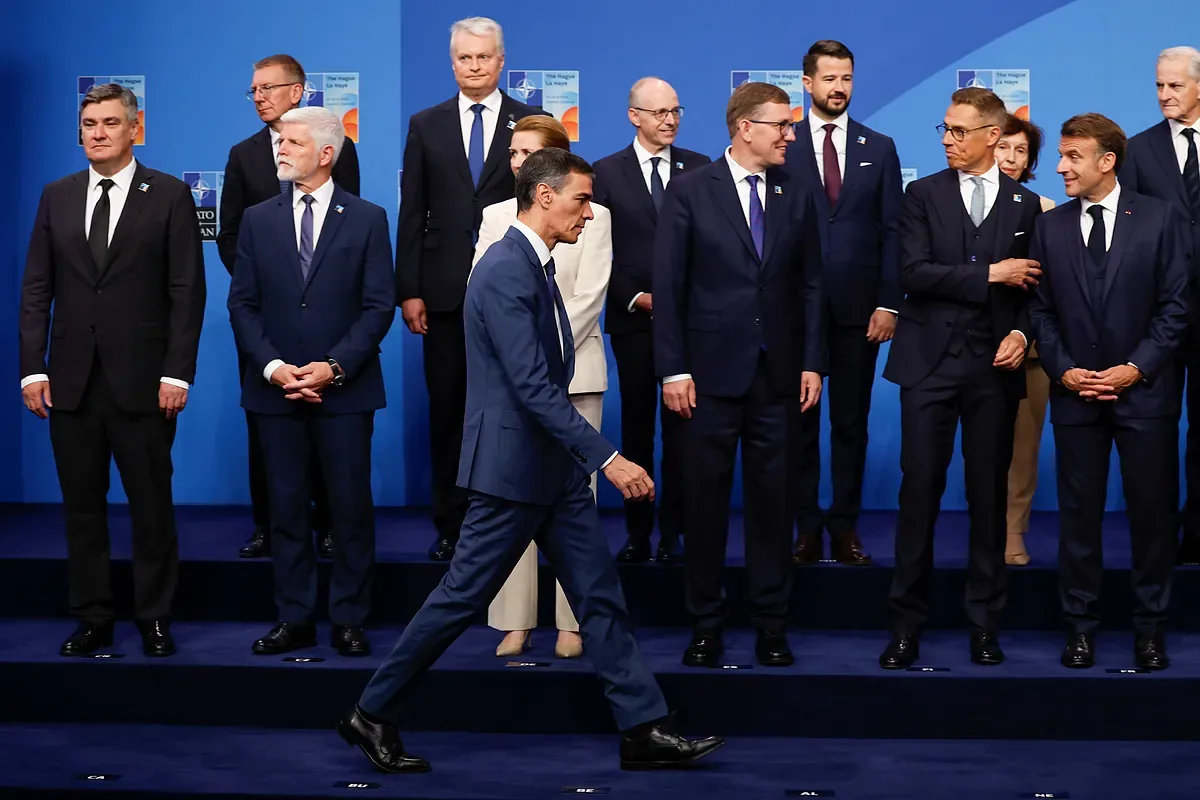
During the NATO summit held in The Hague on June 24 and 25, 2025, Pedro Sánchez appeared in a corner of the family photo, apart from the other leaders and far from Donald Trump and Mark Rutte, who are in the center of the image. NATO explained that they lined up alphabetically, following standard protocol rules. It is, in any case, a metaphor for the Spanish president’s loneliness, who refused to increase Defense spending to 5% of GDP, becoming the only member of the Atlantic Alliance to refuse that percentage. Unlike the attitude maintained in other international meetings, at the start of that forum he was seen especially behind and barely talking to other colleagues, while everyone else talked and greeted each other before the plenary began. He did not even engage in conversations during more relaxed moments, as if wanting to display his dissent. In the end, he signed the agreement but said Spain would only allocate 2.1% of GDP to military spending, which caused a clash with Trump.
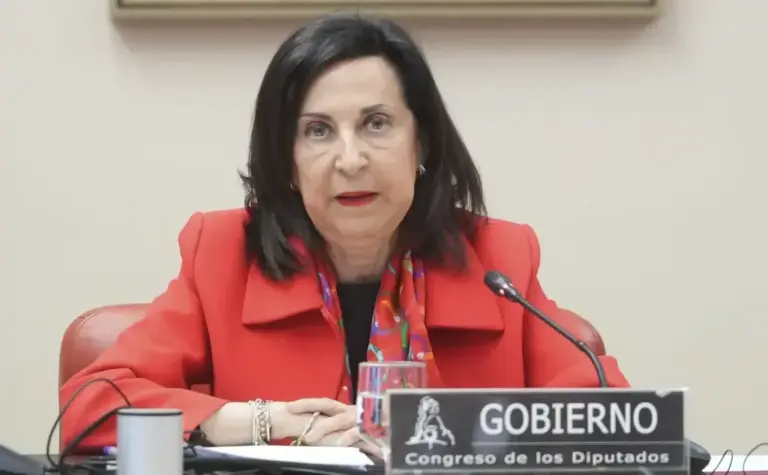
Rebellious Minister
Margarita Robles
2018-… She is, along with Planas and Marlaska, the only minister who has been with Pedro Sánchez from the beginning. Robles, without a PSOE membership card, often goes off-script from Moncloa, which causes her to be sidelined in appearances after the Council of Ministers and in other events.
Read more “Ceuta cannot be the Albania of Spain”