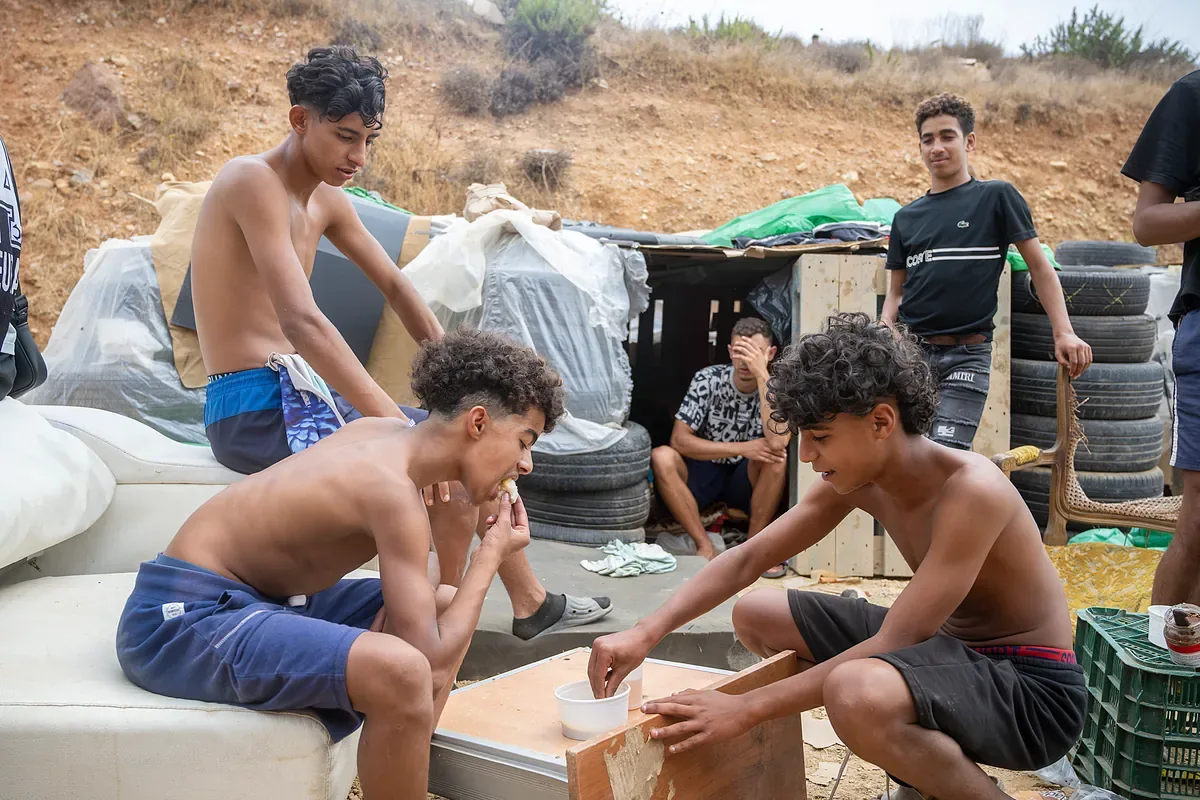




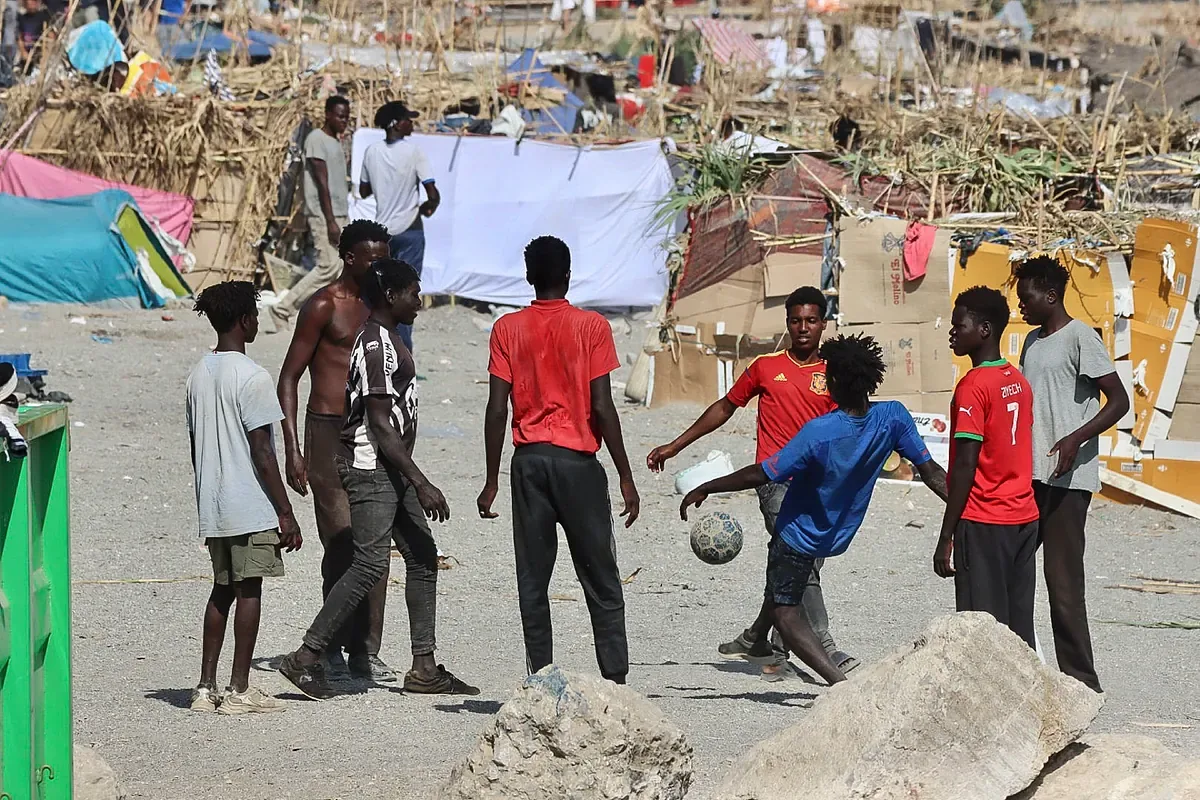
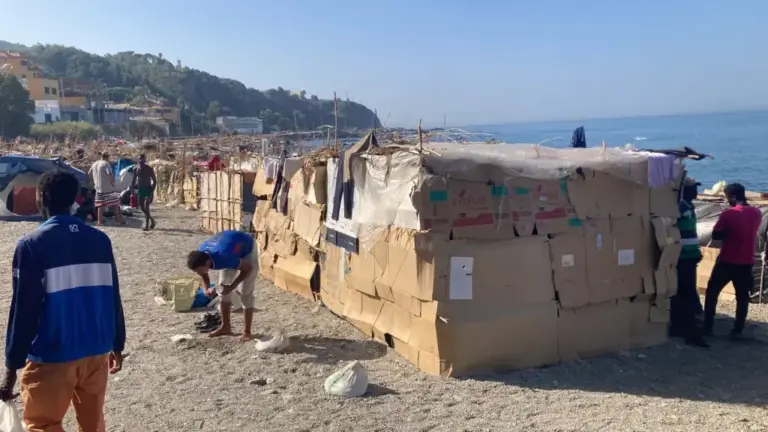
In a corner of Europe that turns out to be, ironies of fate, in Africa, scenes typical of the exoduses of the wars of the 20th century are unfolding these days. A shantytown of no less than 100 huts fills the beach – a new irony – of the Trampolín, in Ceuta, with sub-Saharans and North Africans bathing in the sea, cooking on rudimentary stoves, playing barefoot football, relieving themselves wherever they can, and every afternoon performing a harsh ritual to receive a meager food bag. In an industrial estate, that of Tarajal, women and children are crowded together surrounded by excrement, waiting either for an uncertain future or an outbreak of cholera.
They are all over the city: in parks, sidewalks, hills. They occupy bar terraces in groups, leaning on one who asks for a token coffee. They wander aimlessly. They smile, the sub-Saharans, at passersby. They approach supermarkets, guarded by the Army as if a Netflix dystopia were being filmed.
The people of Ceuta, a community forged in hospitality over centuries, watch them. The city’s population doubled on July 31. There were 80,000 inhabitants and another 80,000 people arrived. The city closed up like an oyster and shut out the visitors, which caused about 70,000 to return to Morocco, but another 8,000-10,000 decided to play hard for a dream: to obtain asylum and reach the Peninsula.
It was a competition of endurance. The migrants, to fight hunger. The people of Ceuta, to see how long they could hold out closed off.
“And what happened was that we went back to living a half-normal life, they stayed there, and now look at what we have,” says Mari Ángeles Romero, 60 years old, on the terrace of her house, in the La Colina development. The living room of her detached house, decorated with the heads of the moose her husband hunts, literally hangs over the Trampolín beach. A small Calcutta has come to be built before her eyes, “in barely three days,” she complains.
And here comes the fear that has been spreading through the city in recent hours, with the political deadlock pointing to a long stay of the migrants in the Ceuta limbo, both sides stuck in the debate that runs through Europe and the planet: to welcome or to close. To accept that we were all migrants at some point, or to close the door of a West that is not exactly thriving either.
“They want to leave these people here, it’s very clear,” says Mari Ángeles. “They want to hide the problem under the rug as they did before in the Canary Islands with the unaccompanied minors, and make us swallow them. We cannot be Spain’s Albania, and stay here with them. It’s absolute madness. This is going to explode.”
Ceuta fears becoming – even more – the backyard of Spanish immigration, like Albania is for Italy according to Giorgia Meloni’s plans, at a time when rich countries store their surplus human material in other poor and subcontracted ones: the United Kingdom planned to send migrants to Rwanda and Sweden places its prisoners, for a fee, in Estonia, for example.
200 meters from La Colina, the luxurious development where Mari Ángeles lives, another wild contrast of this Ceuta that explains this era so well: next to the CETI, the Temporary Stay Center for Immigrants, where migrants who have applied for asylum usually spend the night before traveling to the Peninsula, a public equestrian center that on Tuesday hosted a protest against reception.
“It’s unreal,” says Álvaro de la Riva, a 44-year-old Ceutan, at the protest. “We want to integrate, we know we live in a place that has always received a lot of immigration… But this is of an incredible dimension, they don’t fit. And we don’t know who they are. A friend from Castillejo [Fnideq in Morocco, on the other side of the border] tells me that many of them may not be clean. The first days we couldn’t believe what was happening. Now, going on three weeks… Doesn’t the Government realize it’s unsustainable?”
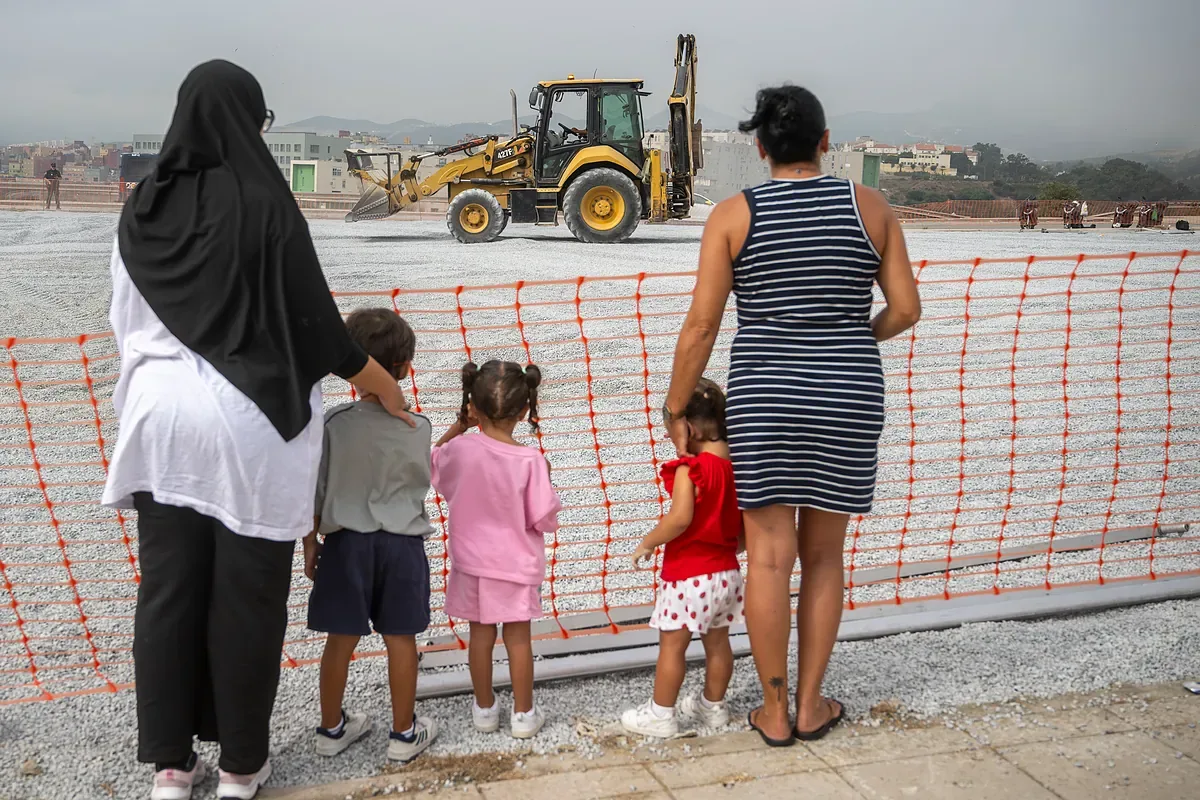
The protest, which takes place while several thousand people receive their food bags at the Trampolín after a long police ritual that actually seeks to tame them, tries to prevent the equestrian center from hosting one of the four structures the central Government is promoting so that Ceuta does not become something that, in the eyes of visitors, is bordering on: a first-rate humanitarian and health problem.
“But if you give them that, you’re creating a textbook call effect,” says the woman from the beginning. And if you don’t give it to them? “Well, they have to leave.” However, every little corner of Ceuta already houses a hut made of cane, three ropes, and two pieces of cloth, even with its small unofficial TV set where about 100 Moroccans shouted yesterday “Long live Spain!”, “Sorry, Ceuta!” and “We want a future!”. In recent days, more than 400 requests have already been denied, which has produced barely about thirty returns to Morocco.
And in the middle of it all, Nuhaila Handaz, 30 years old, thinks about her horse. “We had been preparing the ground for the new track for a year, and today they took it away to build that center.” Nuhaila wears a hijab and is Muslim, but also Ceutan. She is also an educator in an NGO, she herself has attended to the migrants. But personally, she has another opinion: “They have to leave. All of them.”