


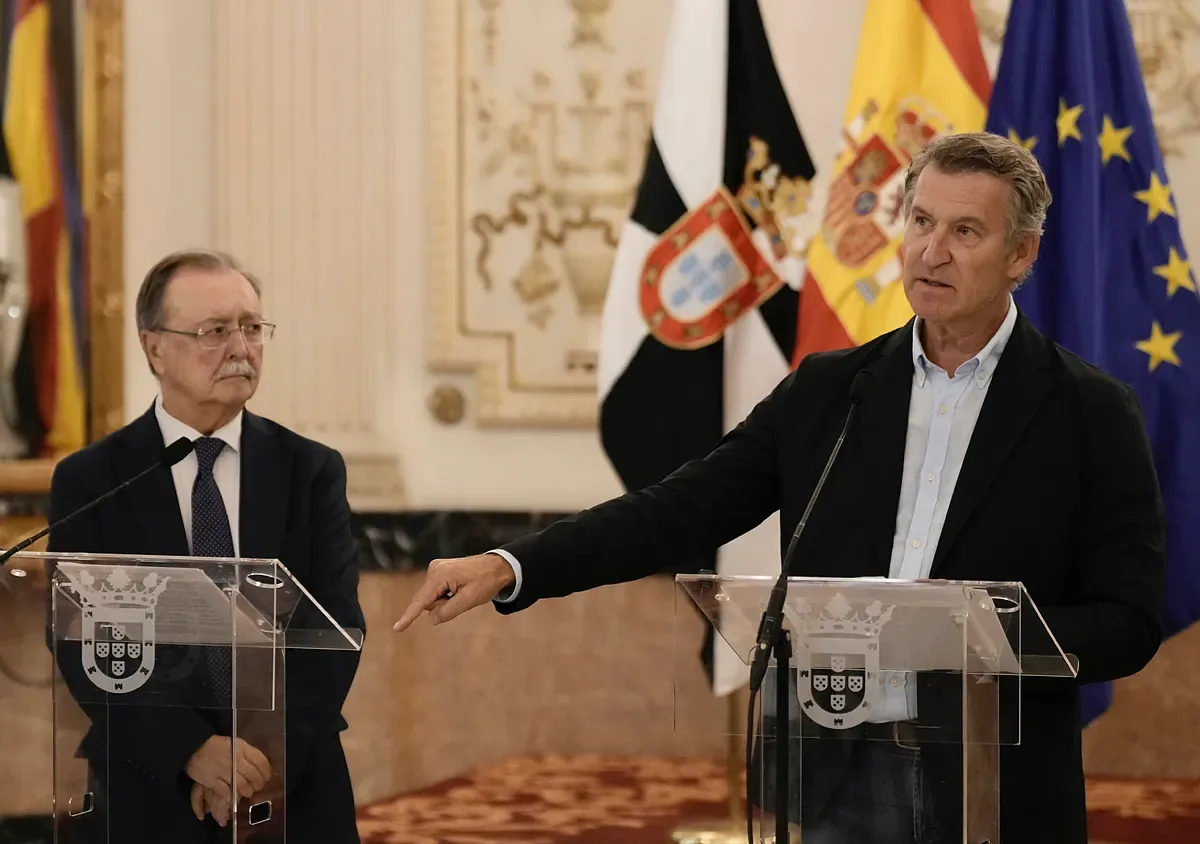
The opposition plays, on the political board, with the trump card of making promises that can later be forgotten when it takes power. However, there are some positions that define a party, and that accompany it from one bench to another, whether it is in opposition or in Moncloa. This is the case with those affecting a third party, such as Morocco. And, thus, it is the case of those made yesterday by Alberto Núñez Feijóo, leader of the PP and whom all polls have outlined, for months, as the candidate with the most chances to preside over the Government in the next legislature.
Read more The Police evict 4,000 Sub-Saharan and Maghrebis from the Trampolín beach in Ceuta
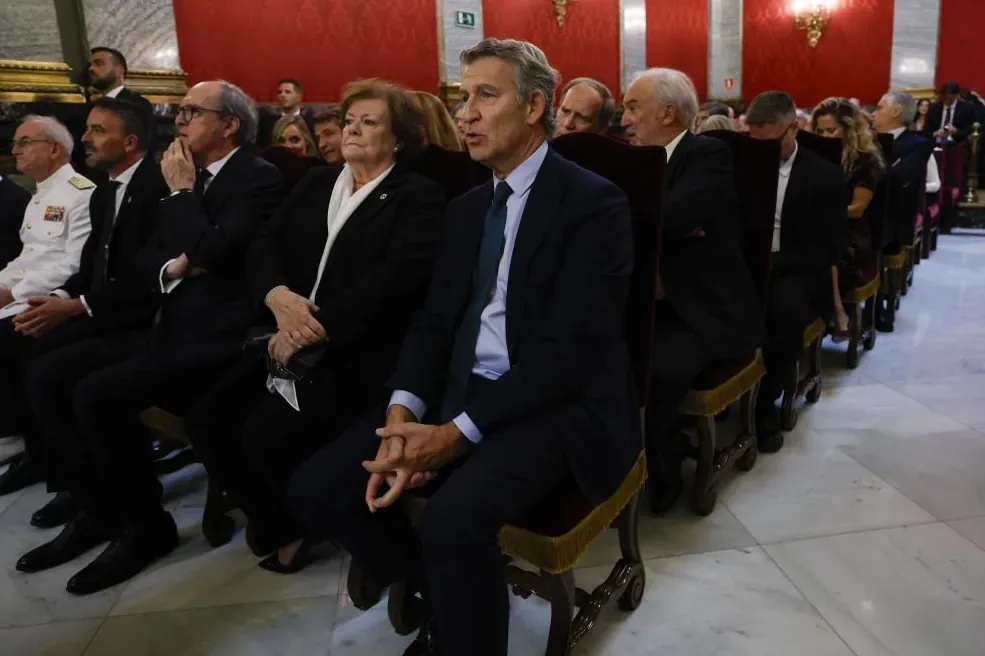
In the three weeks that have passed since the irregular entry of 80,000 people into Ceuta through Morocco, the Government of Pedro Sánchez has at all times avoided making any reproach to the neighboring country. Aware that words poorly received by Rabat could have worsened the situation, the ministers have limited themselves to praising cooperation with their counterparts to resolve the crisis, without commenting on whether Morocco could have played any role in the avalanche. Feijóo did, however, do so yesterday from Ceuta: “What happened here on July 30 corresponds to what the European regulation defines as instrumentalization. Whether by action or omission, the movement of tens of thousands of people from Morocco to the European Union was facilitated.”
And, if only one minister, the Defense Minister, Margarita Robles, has made a firm claim of Spanish sovereignty over Ceuta and Melilla – “they are very Spanish,” she said -, Feijóo yesterday raised that stance. He did so after referring to “statements by ministers and other high-ranking Moroccan officials that do not help at all” – the Justice official of Rabat hinted that the sovereignty of both cities is a “pending” matter. Addressing them, the opposition leader stated: “The Spanishness of Ceuta and Melilla is not negotiable. And it is not negotiable not for years or decades; it is not negotiable for centuries.” And although Feijóo said he had “no interest in seeking any enemy,” he warned Rabat: “You will understand that we cannot act under blackmail or threat.” To that string of statements, which are in themselves a position that commits the PP if it reaches La Moncloa, is added that Feijóo outlined in his horizon strengthening the breakwater of El Tarajal “to prevent the maritime border from being crossed by swimming.”
The popular leader was not always so forceful regarding Rabat during this crisis. In fact, his party avoided directly blaming Morocco until a week ago and now still maintains certain balances: it censures Sánchez’s “secret diplomacy” with the neighboring country, but at the same time takes refuge in Rabat’s offer to host its minors to demand this resolution. However, the symbolism of Feijóo’s statements yesterday is above that combination, as they are commitments that bind him if he reaches La Moncloa. And, with him, Spain.
Read more Israel plans the construction of a death corridor for Palestinians with a spectator stand
If the Government has been very measured in its words about Morocco these days, it is because it already knows what the neighboring country can do in the face of a diplomatic clash: in 2021, the reception in Spain of the leader of the Polisario Front triggered the largest irregular entry of people from Morocco to Spain since the Green March. “There are acts that have consequences and must be assumed,” said the ambassador of Rabat to Europa Press then.
But the PP, despite the forcefulness Feijóo showed yesterday with Morocco – and which other leaders of his leadership had been advancing in recent days -, also knows what it is to manage a territorial incident with the neighboring country from La Moncloa. It happened in July 2002, when a detachment of the Royal Gendarmerie of Morocco occupied the islet of Perejil (in the Strait of Gibraltar). At that time, José María Aznar was governing, whose Government then entered into a diplomatic clash with Rabat, but with the support of the opposition and Europe. Finally, Spanish troops evicted the Moroccans. A decade later, members of the Coordination Committee for the Liberation of Ceuta and Melilla placed a Moroccan flag on the rock of Vélez de la Gomera – Spanish territory in North Africa, halfway between the two autonomous cities -. It was the Government of Mariano Rajoy that managed that incident.
Despite this, Feijóo did not avoid being forceful with Morocco yesterday. Nor did he avoid stating, a few days ago, that his first trip as president will be to the neighboring country. It was for Felipe González, Aznar, José Luis Rodríguez Zapatero, and Rajoy. Sánchez, on the other hand, went first to Paris.