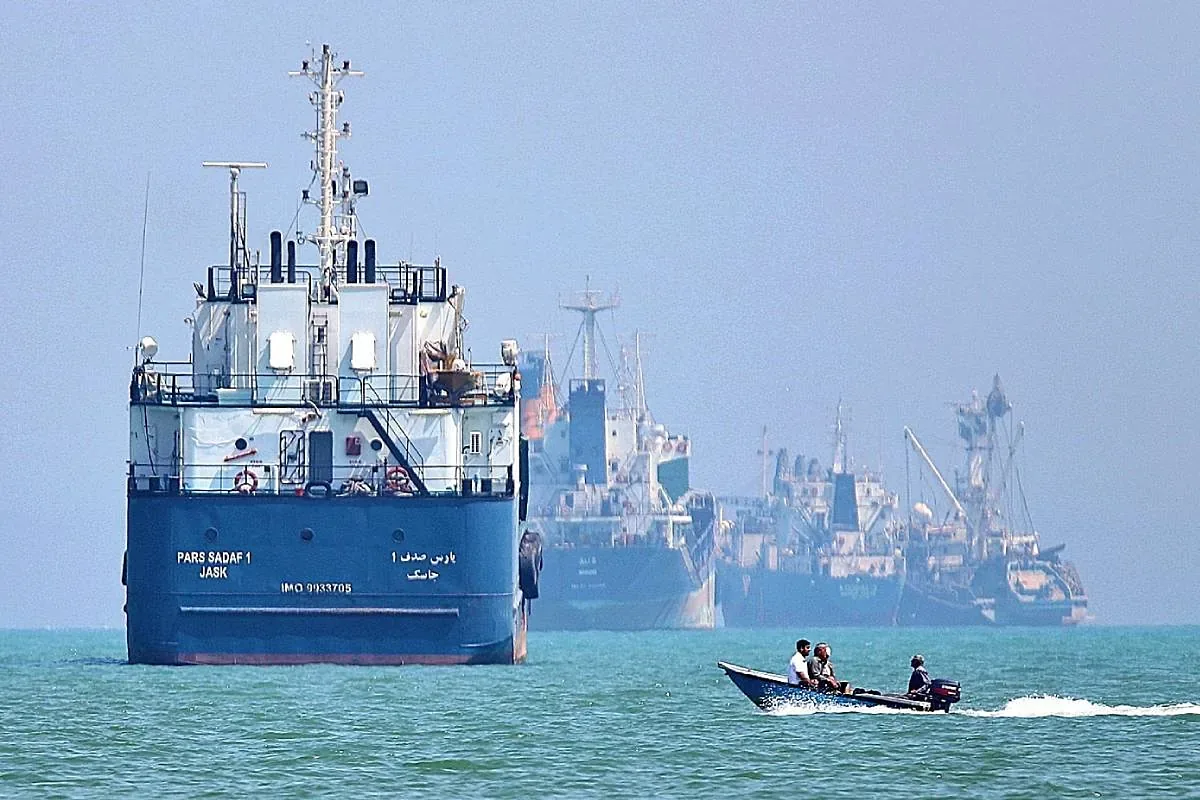









Amid the most serious military escalation between Washington and Tehran since a ceasefire was declared, Donald Trump has threatened to take control of the Strait of Hormuz, the epicenter of regional tensions. “We will stay in the Strait and probably manage it. We will become the guardians of the Strait,” Trump said in an interview with Fox News. “Maybe we’ll call it the guardian angel of the Strait, and we should be compensated for it,” he noted. Subsequently, he announced that the US will charge a 20% fee on cargo transported to all ships under its protection in the Strait of Hormuz and the reinstatement of the blockade of Iranian ports.
In recent hours, the US military has launched attacks against more than a dozen Iranian cities, which the regime responded to by striking US bases in Kuwait, Qatar, Bahrain, and Jordan. A US bombing of a water pumping station in Mahshahr, on the southern coast of the country bordering Kuwait, caused one death and damaged infrastructure in the area. Later, the Mehr agency reported two more deaths in a nearby city, Abadan.
Once again, the towns along the Strait of Hormuz bore the brunt of the US assault, with bombings on the coast of Hormozgan, Bandar Abbas, and Qeshm Island, a heavily militarized strategic point that dominates the entrance to this maritime passage. Tehran launched a series of retaliations last night that have not ceased so far, forcing the authorities of Bahrain and Kuwait to warn their populations to stay home until further notice. In Jordan, the remains of four missiles fired from Iran fell in residential areas without causing casualties, according to authorities.
The region is holding its breath ahead of the sixth day of clashes in a week that threatens to resume war. The Iranian regime states that the Memorandum of Understanding—signed between both parties and establishing a roadmap to resolve the main obstacles of the conflict—is in a “crisis phase,” while US President Donald Trump has signaled a desire to end negotiations. “This is not a military confrontation,” said Iranian Foreign Ministry spokesman Esmaeil Baqaei today, emphasizing that his country “does not attack” the neighbors of the Persian Gulf, but “defends itself”. “Countries in question should be urged to immediately stop allowing the United States to use their territories as platforms for aggression against Iran,” Baqaei declared.
Arab media have dubbed the negotiations as the “Memorandum of Misunderstanding”, a play on words describing the diplomatic attacks and differences that have developed since the signing was formalized in mid-June. In a further step toward military escalation, the Iranian Revolutionary Guard, the elite army corps, announced yesterday the closure of the Strait of Hormuz until further notice, after attacking a vessel using an “unauthorized route.” The United States, for its part, denies that there is a de facto blockade of the maritime route.
Read more A top-level template, that is, without Moroccans
The escalation has also moved to Yemen, where a tanker was attacked by six small boats off the southern coast of the country, in the Gulf of Aden. Sana’a International Airport, in the country’s historic capital, suffered a Saudi airstrike, supposedly to prevent the landing of an Iranian plane, supporter of the Houthi militia, which controls northern Yemen. The group’s military spokesman, Yahya Saree, denounced the “blatant aggression” by Saudi Arabia, which “has ended a period of de-escalation,” threatening new actions in the region. The Houthis have jeopardized maritime trade in the Red Sea since the start of the war in the Gaza Strip, in an attempt to force Israel to halt its offensive against the Palestinian enclave. During the Israeli-American war against Iran, they have threatened to block Bab el-Mandeb, another crucial maritime passage for international trade.
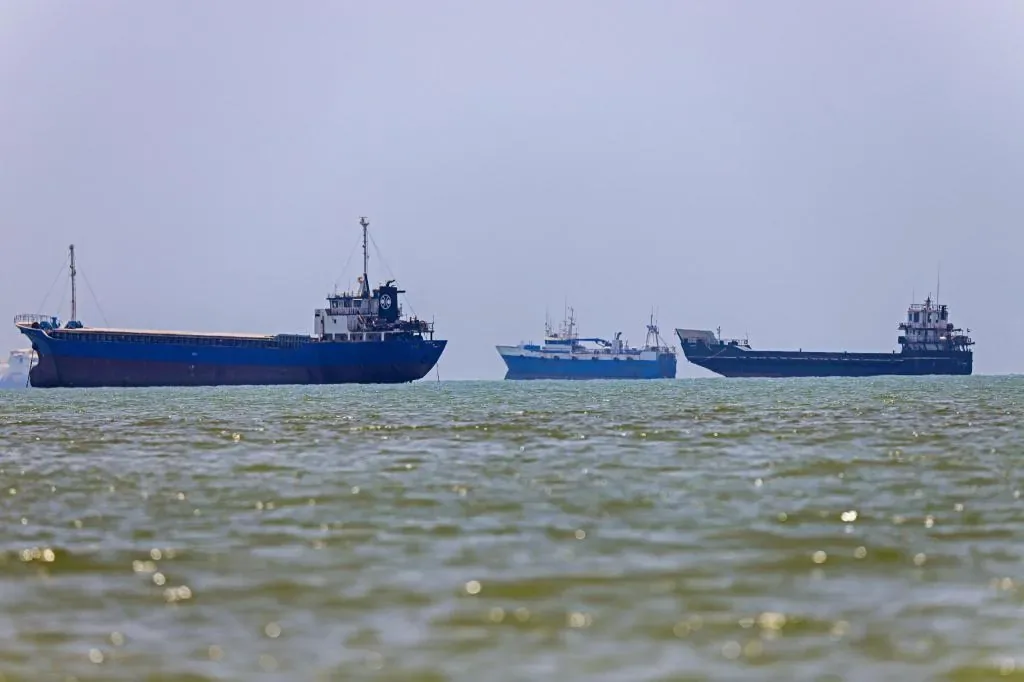
Tensions have caused a new drop in maritime traffic in the Strait of Hormuz, which has not returned to normal despite the ceasefire declared in April. Six ships have crossed in the last 24 hours, reaching a new low since Washington and Tehran agreed to negotiate their differences to end the conflict.
The current escalation erupted over differing views on the management of the Strait of Hormuz after its reopening. Tehran demands to maintain its sovereignty over the passage and protested the route established by the UN to evacuate stranded ships through Omani waters, asserting that the memorandum contemplates its exclusive management of traffic through this route. Meanwhile, the US clings to the UN plan and claims an open passage and a quick return to normality.
Read more The PP defends Rajoy after the complaint about «racism» from France: «They are sarcastic columns»