






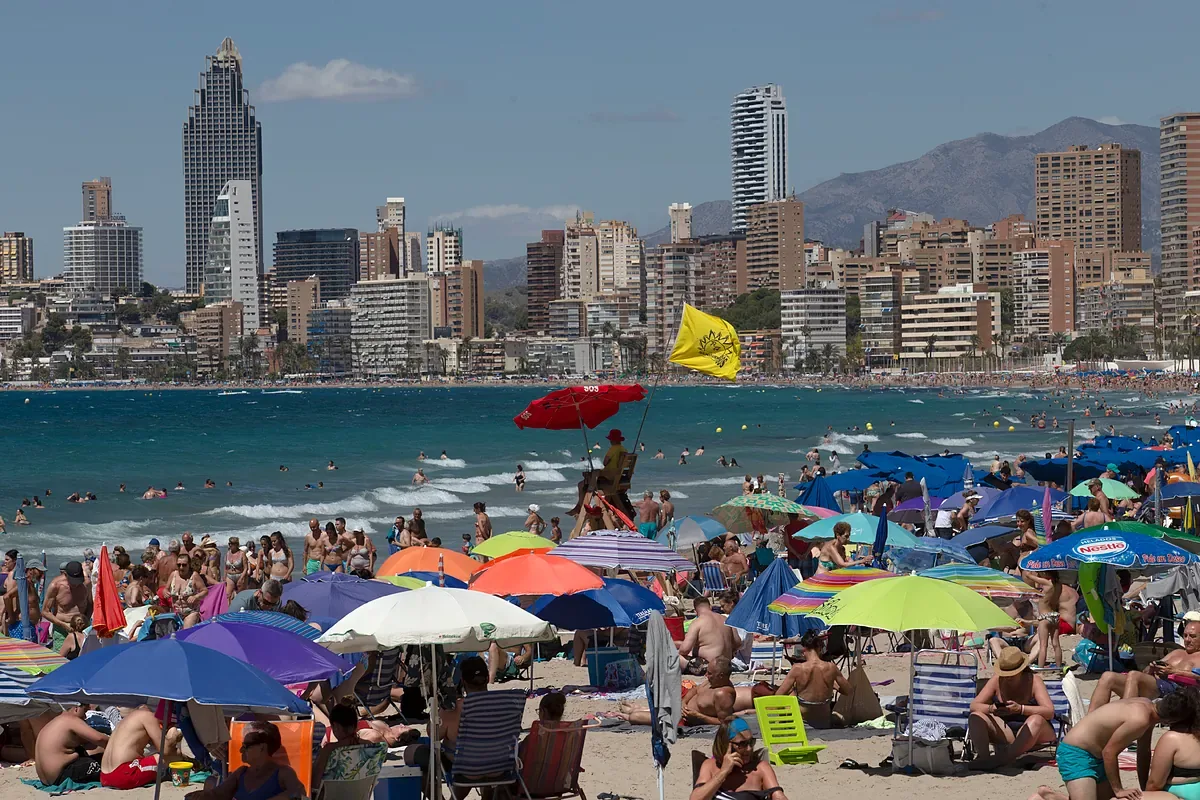
The end of the holidays means for many people the beginning of the search for a home in that dream destination. No one said that summer loves don’t also take the form of a house. Nor did anyone say they are cheap. In fact, the reality of the Spanish coasts shows that prices are increasingly higher and yet, demand remains so persistent that second homes and vacation properties are taking ground from primary residences in many parts of the Spanish coastline, thus complicating access to a home for the local population.
Read more A magnitude 7.2 earthquake shakes the Peruvian region of Ayacucho
These are some of the conclusions of the report Housing on the Coast 2026 prepared by the real estate consultancy Tinsa by Accumin, which also notes that prices remain on the rise due to the scarcity of supply. By parts: the value of housing in coastal municipalities, excluding provincial capitals, stood in the first quarter of 2026 at 1,992 euros per square meter, 13.5% higher than a year earlier and in line with the 14.5% increase in the national average. Within this market, the specific segment of vacation housing on the coast stands out with an estimated average value of 3,150 euros, 11.6% higher than the national average.
Tinsa emphasizes that this price increase is raising the effort to buy a home in coastal areas up to 40% of disposable income, compared to the recommended 35%, revealing difficulties in access to housing for the local population compared to the greater prominence of the vacation segment. “The effort reaches the most critical levels in the Balearic Islands (59%) and on the coasts of Málaga (57%) and Alicante (46%),” the analysis highlights. “The Spanish coastline is growing increasingly unevenly. While the purchase effort nationwide remains close to balance, access to housing reaches high tension levels on the coast, and critical in several stretches, where the merging of primary and secondary residence products prioritizes the higher profitability offered by the vacation segment,” explains Cristina Arias, director of the consultancy’s Research Service.
One of the most striking aspects of the analysis points out how in the coastal market the concentration of activity in the second home segment is consolidating, which increasingly merges with and replaces the primary residence product. In this regard, areas identified as a single market, without differentiation between primary and secondary residence, increase from 8% to 20%, and in 61% of the areas, the second home distorts the primary residence market by raising prices and reducing the available supply both in new construction and second-hand, and both for sale and rent (compared to 54% the previous year).
Read more The hikers’ unknowns in the Andic case: «irrelevant» despite crossing paths with Jonathan
“This situation points to a worsening of access to housing for local demand, which is being pushed out of the coast due to the greater purchasing power of vacation housing demand, the higher profitability offered by seasonal rentals, a scarce new construction supply mostly oriented to the vacation segment, and second-hand housing that is transforming from regular use to tourist use,” highlights Andrea de la Hoz, senior analyst of the firm’s Research Service.
The report analyzes more than 250 municipalities on the Spanish coast grouped into 51 zones (22 provinces) on the peninsula and the islands. In 77% of the scrutinized zones, second home prices still have room to rise (compared to 94% the previous year), while in the remaining 23% signs of slowdown and locations reaching maximum price values for the current demand profile are noted. These zones are located in Barcelona, Tarragona, Mallorca, Ibiza, Formentera, Murcia, Almería, Málaga, Cádiz, Gran Canaria, Lugo, and Asturias.
Read more The biggest challenge for large food companies: people who no longer want to eat