





In a test kitchen in Omaha, Conagra executives recently gathered around plastic trays with eggs, potatoes, and sausages heated in the microwave. One by one, they lifted a container of cheese sauce and poured the liquid, forming a slow orange stream.
Ashley Lind, head of behavioral sciences at Conagra, studied the breakfast bowl in front of her. She wondered: was it satisfying?
No one had tasted the food yet. And that was precisely the goal: Conagra is trying to design products that are appealing even to people who do not want to eat.
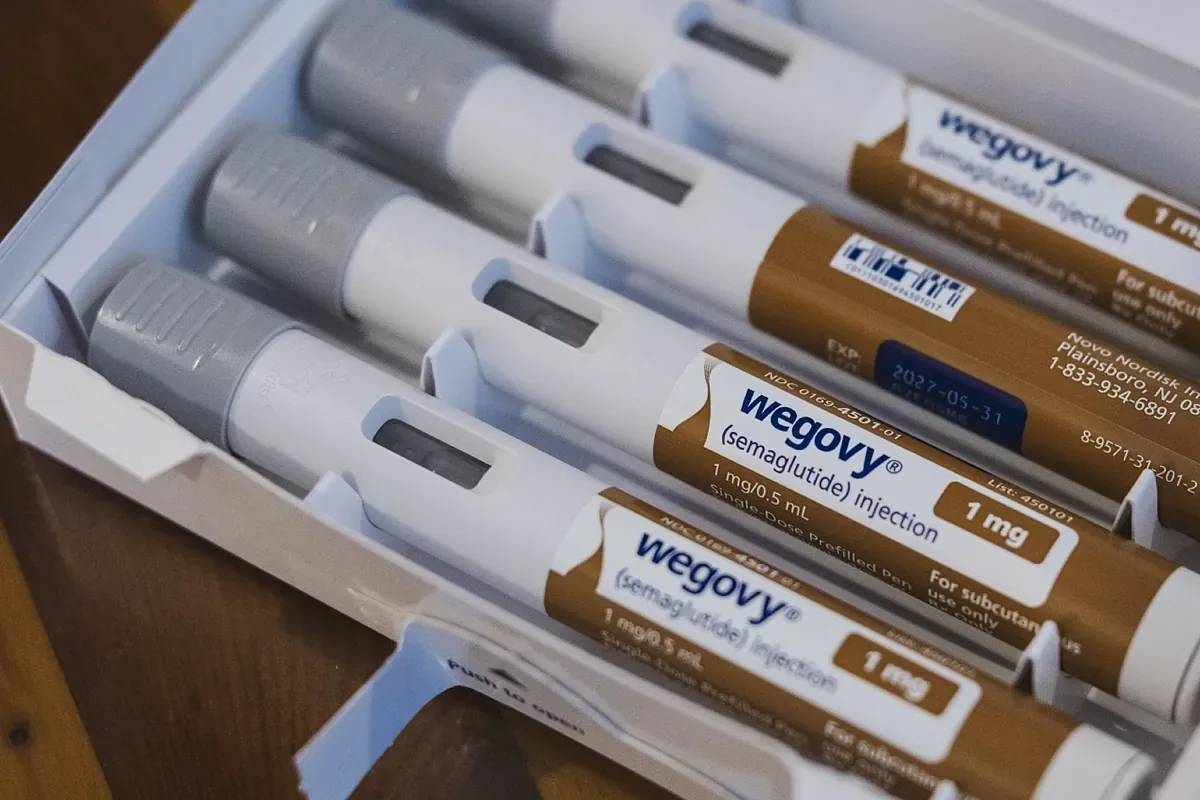
The tasting was one of dozens of tests that the maker of Slim Jims and Hungry-Man prepared meals is conducting with an eye on the dilemma posed by GLP-1 weight-loss drugs. The ability of these medications to make hunger and satiety disappear threatens to disrupt the sector’s growth model, in which success has often consisted of selling as much food as possible.
For decades, food companies have followed a proven strategy: satisfy consumers’ palates with sugar, salt, and an ever-expanding range of flavors. Perfecting products to satisfy cravings and encourage enjoyment has led critics to accuse food makers of hooking consumers on food and snacks much like nicotine hooks smokers, and of fueling an obesity epidemic.
But for the largest U.S. food manufacturers, winning over GLP-1 users presents a completely new challenge.
“They just lose the craving, the desire to eat,” said Bob Nolan, senior vice president of growth sciences at Conagra. Since these drugs became popular in 2023, Nolan and his team have been closely analyzing credit card data, social media posts, fast-food menus, and late-night delivery orders to decipher which foods might still appeal to GLP-1 users and why.
Up to 55 million Americans, or 15% of the population, are expected to take GLP-1 drugs by 2035, according to Morgan Stanley forecasts. KPMG estimates that users consume about one-fifth fewer calories while taking these medications.
JPMorgan predicts that GLP-1 treatments will reduce the food and beverage sector’s annual revenue by between $30 billion and $55 billion as early as 2030, a figure equivalent to three to five times Conagra’s current annual sales.
Big food companies are already in a tough spot. Consumers, affected by persistent inflation, are tightening their belts. Some have set aside processed foods and opted for fresher products found in the outer aisles of stores. Others lean toward premium alternatives from smaller companies or cheaper store brands.
Many executives and boards in the food sector initially adopted a “wait and see” attitude toward these drugs, according to former employees of companies like Kraft Heinz and Kellanova, now owned by Mars. Some food makers have created internal task forces and commissioned studies while betting that adding protein and fiber to existing products will protect their brands.
Since one in five U.S. households now has a GLP-1 user—double the number at the start of 2025, according to PwC—it is increasingly difficult to ignore these drugs.
“It’s one of the deepest changes we will ever see,” said Barb Stuckey, an executive at food research and development company Mattson, whose clients include major food companies like Conagra.
A new drug
The first versions of GLP-1 drugs were approved by the FDA in 2005, initially for treating type 2 diabetes. These drugs mimic a natural hormone responsible for functions such as insulin release, slowing gastric emptying, and suppressing appetite.
Their effectiveness in promoting weight loss catapulted their popularity. Ozempic was approved in 2017, followed by Wegovy, Mounjaro, and Zepbound. U.S. spending on GLP-1 drugs soared from $13.7 billion in 2018 to $71.7 billion in 2023, according to the American Medical Association.
At the end of 2023, then Walmart U.S. president John Furner mentioned in a Bloomberg interview that appetite suppressants made consumers buy “slightly fewer calories.” Following this, shares of major food companies plummeted.
A few months later, Mattson, the California-based food development company, gathered a focus group of GLP-1 users who had lost ten pounds or more since starting the drugs.
“It was almost like I was eating polystyrene,” Pennsylvania food broker Brian Merwin told the group referring to his first months of meals after starting Wegovy. “Nothing really tasted good. I almost had to force myself to eat.”
A well-documented side effect of these drugs is dysgeusia, which can cause a metallic and unpleasant taste in the mouth. Richard Doty, president of Sensonics International, a company dedicated to taste and smell evaluation, said the scientific community has yet to figure out why GLP-1s alter taste.
For weight-loss drug users, not only do flavors lose intensity, but in some cases, spicy or fatty foods can cause discomfort and indigestion, Doty noted, who is also a professor at the University of Pennsylvania’s medical school and previously led its Center for Smell and Taste for more than four decades.
“Certainly, if people don’t enjoy eating as much, they’re not going to buy as much food,” Doty said. Among his company’s clients are food companies conducting taste and smell tests with GLP-1 users.
Turning to chefs
In a kitchen filled with stainless steel elements at Conagra’s research and development lab in Omaha, Holly Faivre and other company chefs experiment with basil, parsley, lemon, and a touch of white wine to give a special touch to a frozen meal. Faivre said the secret to families’ favorite recipes is often a large amount of fat, salt, and sugar.
Those ingredients, precisely, are unappealing to those taking weight-loss drugs. Strong spices could be another way to enhance flavor, she noted, but for the delicate constitution of GLP-1 users, they are not a good option either.
Instead, Conagra bets on the appeal of comforting and nostalgic flavors. “Everyone has their mother’s meatloaf or grandmother’s roast chicken, but how can we make this tick all the boxes for GLP-1 users?” she wondered.
When Tom Frain, Conagra’s vice president of culinary innovation, first heard about the growing adoption of GLP-1s, he imagined he would be tasked with designing “rabbit food” based on kale and fiber supplements. Instead, he said GLP-1 users seem to want foods that feel familiar, just in smaller portions and with more protein.
Doctors recommend GLP-1 users increase their protein intake to avoid muscle loss that comes with rapid calorie reduction. Increasing this nutrient is a frequent topic of conversation among users on social media, something Conagra has been closely monitoring.
Frain, a trained chef, is now working on “hero protein” projects, such as macaroni and cheese with buffalo sauce that provides 40 grams of this nutrient. To make the protein stand out, Conagra designed a custom marinade and added grill marks to chicken breast slices.
A frozen burrito prototype with the same amount of protein was discarded because the tortilla couldn’t hold that much filling.
A new “protein-enriched” recipe for Duncan Hines’ chewy chocolate brownie mix from Conagra consists of adding a cup of whipped cottage cheese and a swirl of peanut butter. The combination doubles the dessert’s protein content and also increases calories.
The chefs serve their creations to Nolan and Lind, Conagra’s consumer experts, and other employees, freshly taken from the microwave or oven and often in the same disposable container that consumers would find on store shelves. Nolan explained that the company stopped using focus groups years ago after a series of products were wildly successful among test participants but failed in the real world.
Now, Conagra relies on its own employees to evaluate prototypes on behalf of the average consumer. Some of them take GLP-1s, Nolan explained.
Lisa and Josh
The decrease in cravings and urges of GLP-1 users poses a special challenge for snack displays in convenience stores and supermarket checkout areas, where consumption usually occurs within 30 minutes of purchase.
To continue catching consumers’ attention, Conagra is conducting word association studies to discover which words and phrases best capture attention without sounding too clinical, such as “good source of fiber” and “high in protein.”
General Mills has turned to a different source to better understand GLP-1 users: a “digital persona” based on artificial intelligence, created from consumer interviews, social media information, and sales data, to which employees pose questions via a computer screen.
“Lisa” represents a woman in her thirties or forties with a long history of dieting. Since starting weight-loss drugs, she eats less, often small meals throughout the day. Protein and fiber are her main priorities, and as she balances work with family, she looks for ready-to-eat meals with controlled portions.
General Mills said Lisa’s reactions to new product ideas echoed those of real consumers. This helped the company develop solutions in a fraction of the usual time, including a new brand tailored to GLP-1 users that will launch soon.
General Mills noted that GLP-1 users share some needs and behaviors with another of its personas. “Josh,” a gym regular and “protein maximizer,” said a bar had to contain more than 15 grams of protein to be part of his daily “combo.” Based partly on that information, General Mills plans to test a new protein bar under a new brand called Prot Edge.
“They’re here to stay”
Stuckey, the Mattson executive, handles requests from some of the country’s largest food manufacturers seeking to reduce the size of their products or enrich them with protein or fiber. With few exceptions, she said, they do not openly target weight-loss drug users.
Conagra, for example, does not yet consider users to generate enough demand to justify GLP-1-specific products. For now, the company seeks to integrate GLP-1 users’ needs into the general preferences of the growing number of health-conscious consumers. Last year, the company launched “GLP-1 Friendly” labels for its Healthy Choice frozen meal line, which already met some of the users’ requirements.
Kraft Heinz, the condiment giant, is focusing not only on GLP-1 users but also on other household members, whom executives refer to as “adjacent to GLP-1”. The company is turning to influencers and other figures to suggest ways to add a special touch to home-cooked meals, for example, adding their dipping sauces to protein-rich foods.
Since these drugs are so new, there is also no clear answer on how long the average GLP-1 user will continue taking the medication. Early studies indicate that patients generally return to their usual eating habits after stopping the drugs.
However, new pill versions of these drugs—which were previously administered by injection—and expanded health plan coverage are expected to make them more accessible and affordable. Abroad, cheaper generic versions are already hitting shelves.
Some analysts believe food companies will likely be the most affected by GLP-1s in the near future, and that people who consume many snacks will also be the first to adopt these drugs. While those who eat less may eventually turn to GLP-1s over time, any change in their food purchasing habits would probably have a smaller impact on sector sales, analysts say.
Conagra’s team is already formulating products for 2028, keeping an eye on new obesity drugs currently undergoing patent processing.
Nolan, Conagra’s demand scientist, has seen gluten-free, vegan, ketogenic, low-carb, and fat-free diets rise and fall in popularity over the years. GLP-1s, he says, are different.
“Think of all the famous brands you see advertised today: there could be another 200 like these in five years,” Nolan said referring to GLP-1 drugs. “They’re here to stay.”
Content licensed from The Wall Street Journal. Translated from English by Gabriela Galarza