




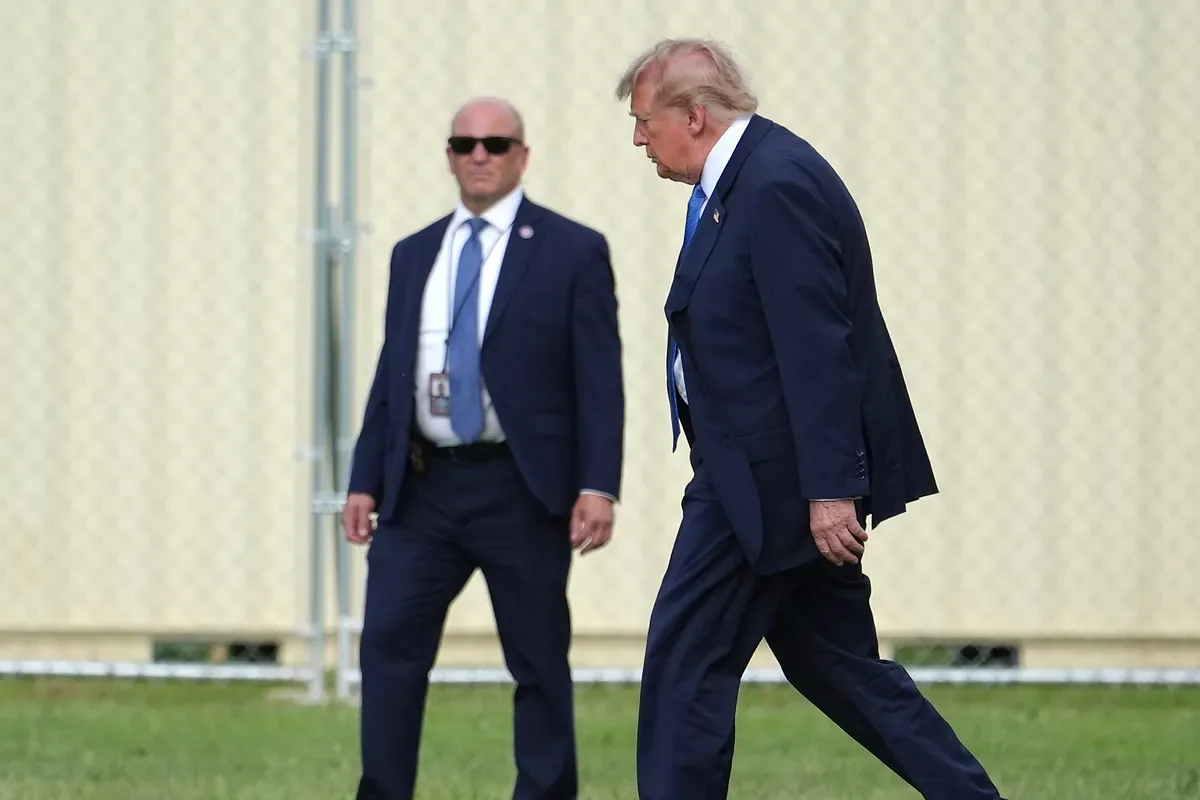
President Trump confirmed Friday night that the US had reached an agreement with Venezuela to secure control of a large part of the oil reserves of this Latin American country.
“Under my orders, Secretary of State Marco Rubio and Secretary of War Pete Hegseth, in close collaboration with the highly respected interim president of Venezuela, Delcy Rodríguez, and through a partnership with the private sector, have secured US majority control of more than 65 billion barrels of proven oil reserves in Venezuela, at no cost to the American taxpayer,” the president declared on social media.
The country’s oil industry has fallen into widespread chaos after years of mismanagement during the regimes of the late Hugo Chávez and former president Nicolás Maduro.
Since Maduro’s removal in January, Trump has pressured US oil companies to invest money in the country to boost oil production. However, many have been reluctant to do so.
Friday’s deal would give the US a foothold in some of the most promising oil and gas fields. The country claims to have about 300 billion barrels of proven reserves, the largest in the world. In comparison, the US has about 46 billion.
Trump also claimed the deal would substantially reduce gasoline prices for all Americans. He and his team have been trying to strengthen energy security in the Western Hemisphere, while the war with Iran has blocked a large part of the world’s oil and gas through the Strait of Hormuz.
The details
Rodríguez, interim president of Venezuela, has granted a private company — a joint project of the US government and a Venezuelan private operator — a 100-year lease for the oil fields, according to a US official. The entity would become the second largest company in the world in proven reserves, only behind Saudi Aramco.
The US government would have a 55% stake, split between equity ownership and oil production. As the company increases production, the oil would help replenish the US Strategic Petroleum Reserve, the official added.
The context
Direct US involvement in foreign oil production is unusual. During World War II, the Franklin D. Roosevelt administration created a state-owned company to obtain foreign reserves and tried to buy a US company that had concessions in Saudi Arabia. But the initiative ultimately failed.
Friday’s deal could help reassure US companies that are hesitant to risk capital there. Chevron is about to close a deal to make a major investment in Venezuela’s oil fields, The Wall Street Journal reported Friday. However, many others, including ExxonMobil and ConocoPhillips, have been reluctant.
Some companies have indicated they would need security guarantees and reform of the country’s legal and commercial framework to consider entering the market. Venezuela’s oil production has been slow to recover since Maduro’s removal. It currently produces around 1.1 million barrels a day, a figure roughly in line with last year’s.
The reaction
The news of the talks sparked a wave of criticism among some sectors of the Venezuelan opposition who have been pressuring the US to pressure Rodríguez to call elections. The Trump administration has played a key role in overseeing Venezuela’s oil industry since it ousted Maduro and replaced him with Rodríguez.
“An illegitimate interim government with an illegitimate hydrocarbons law has no legitimacy to close this unconstitutional deal,” wrote Ricardo Hausmann, Harvard University economist and former Venezuelan government official, on X. “It will be a fiasco for all involved, starting with [Secretary of State Rubio].”
Venezuela’s constitution states that the country’s oil fields belong to the Venezuelan state and cannot be transferred to another owner, posing a possible legal obstacle to any deal granting the US government control of the reserves.
Content licensed from The Wall Street Journal. Translated from English by D. Lema.