





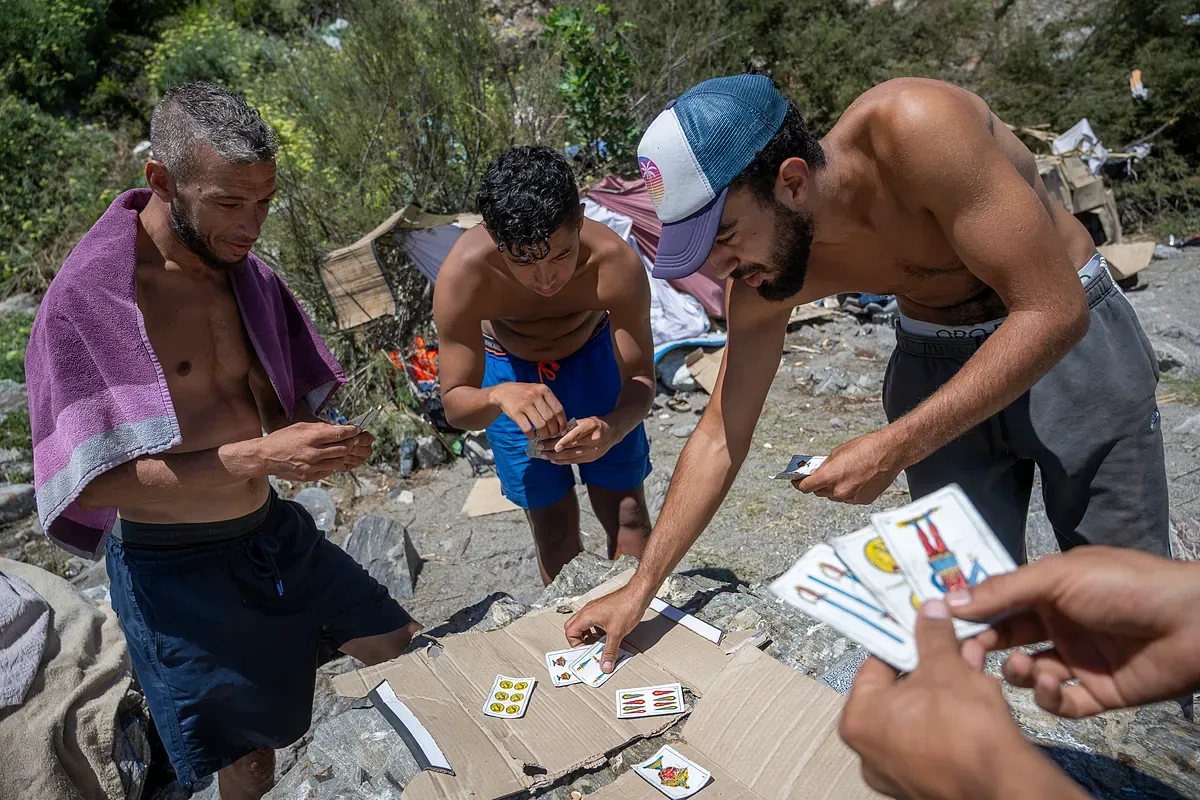
It is lunchtime, the August heat presses down and Ayoub Darkaoui, a 16-year-old barber, lounges under an umbrella dressed in a green Real Madrid tracksuit. His group has taken advantage of an old platform on a rock to set up their camp, with just a mattress, a chair, and an old checkered rug. «We are five little brothers», he mumbles in very limited Spanish about his improvised family of barbers and seamstresses from Tangier, all Real Madrid fans.
Read more Italy extends travel controls from Spain for 15 more days due to the Ceuta crisis
– Do you like Mbappé?
– No, no, Vinicius!
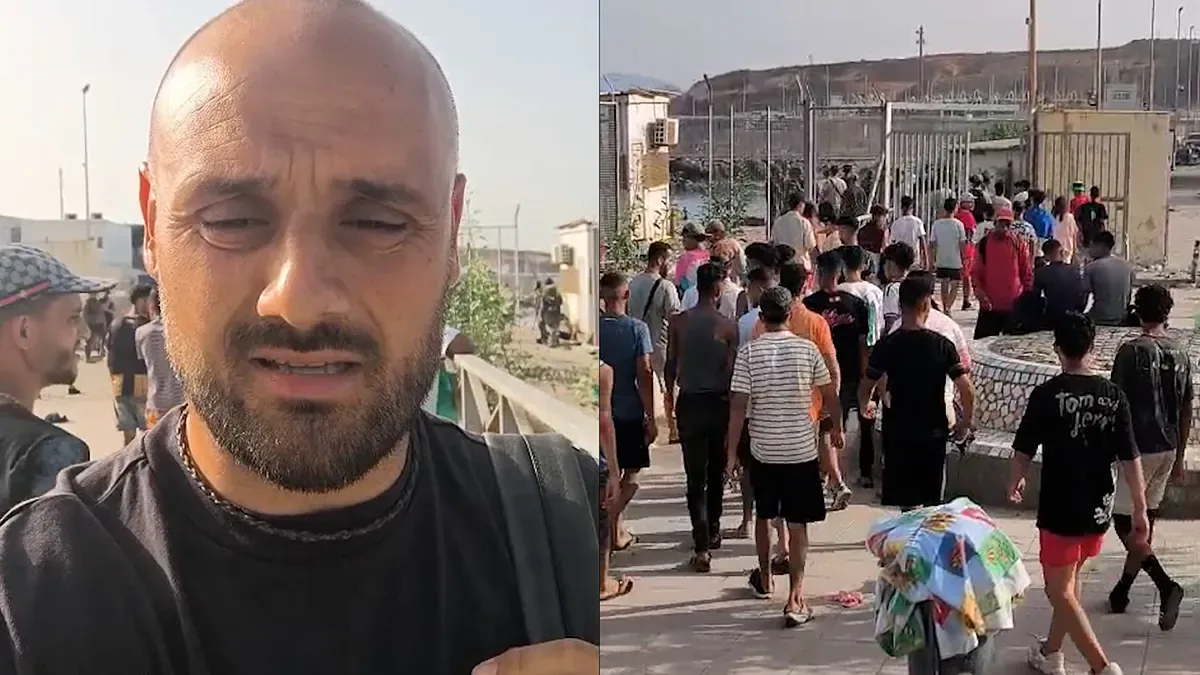
From this makeshift viewpoint, you can see two kids doing somersaults and laughing as they jump from the islets into a turquoise sea. The cove is deserted except for about fifteen young people spending the afternoon here. It is a paradise of tranquility that looks like an influencer’s account. Although the scene ignores what is happening around: the nearly 10,000 immigrants crammed in inhumane conditions in the 19 square kilometers of Ceuta, the size of Madrid’s Casa de Campo.
But the kids gathered here seem capable of squeezing moments of happiness even in the filthy limbo they have inhabited since crossing the border a month ago. They spend the day dozing, splashing in the sea, and waiting for the authorities to take charge of them. They do so with hardly any information about their rights and likely fate: they seem unaware that all, except minors and a handful of asylum recipients, are condemned to expulsion.
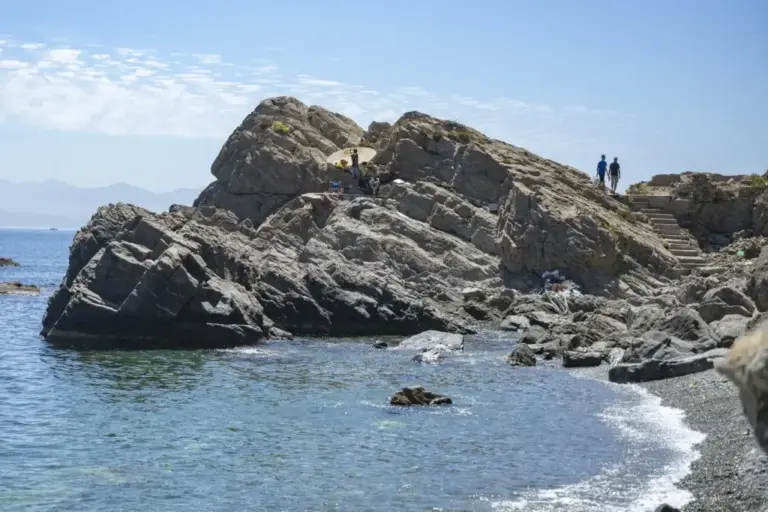
Metres below, in some stalls on the sand, we find Kamel, a 29-year-old Algerian, leader of a group that has settled here since day one in this cove, located next to the old women’s prison. They are six or seven Robinsons who have built a camp divided into several areas: clothesline, kitchen, and some mattresses to sleep on, as well as a place where they play cards. They show exquisite manners when receiving visitors: when we sit on the rocks to chat, one of them hurries to put a cardboard as an improvised chair.
Kamel is a sharp guy who tells in impeccable English about his journey over the last few years. From Algeria, he came to Austria through Turkey, where he worked as a cook and got a girlfriend. In 2024, the police sent him back to his country and since then, he has been obsessed with returning. The big jump a month ago caught him in Morocco and he did not hesitate to cross the border for the second time.
– Why do you stay in Ceuta?
– Life here is hard, yes, but it’s worth trying. We are not leaving here: Europe is better than Africa!
Read more The cry of Ceuta’s women disarms Sánchez
Hours later, he writes via WhatsApp to thank for the visit and share the latest news. «An hour after you left, some soldiers came and beat us», he says. «They hit me hard on the leg, but I’m fine».
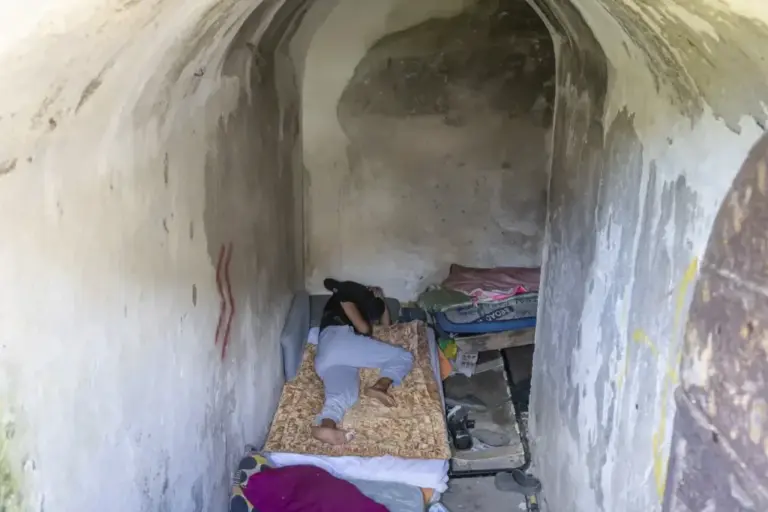
Up on the hill, movement is detected. Hidden among the undergrowth is a pipe barely a meter in diameter. Peeking his head out of it, in the darkness appears Said, 22 years old, rubbing his sleepy eyes. Around him, mattresses, slippers, and blankets pile up. «We sleep here during the day because at night they come to beat us», he explains with gestures, while four companions appear at the back of the tunnel. «Club, club, club», they all nod, using one of the few Spanish words they all know.
The beach, thus, has become a small oasis for the gang during the day. It is also used as a refuge by Yasien, 20 years old. After several failed attempts in Spanish, he uses Google Translate to tell his story: he is from Taounate, south of Alhucemas. Being the eldest son, he has worked since he was 10 to support the precarious family economy, focused on olive cultivation, but on the 30th he crossed to Ceuta with one goal: «To fulfill my dream, God willing».
His eyes fill with tears when he shows photos of his family on his phone. His father is seriously ill and he doesn’t know if he will see him again. But he is convinced that sooner or later, they will give him refugee papers: «Sánchez, Sánchez», he murmurs. When we explain that his likely fate is expulsion, since he is Moroccan and of legal age, he is stunned, as if the information does not fit his plans. Before saying goodbye, he insists on exchanging Instagram accounts. On his profile, there is a pink heart next to the word walida: an affectionate way to say mother. And, in his username, he sports a change since landing in Ceuta. Now, next to his name, there is a little Spanish flag.
Read more The Police detect in Ceuta 10 radical Islamists who had already been expelled