



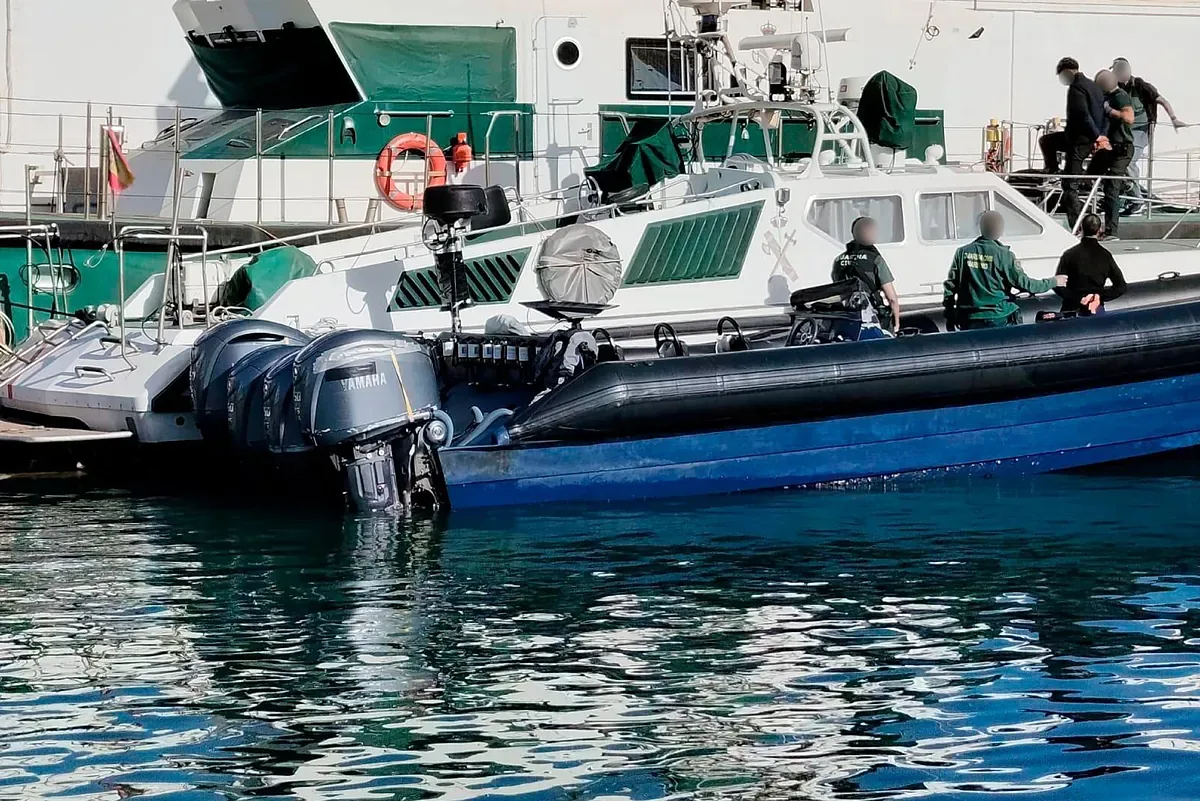
Arrivals of taxi-pateras or narcolanchas on the coasts of the Region of Murcia, with dozens of immigrants on board, have become a constant and continuous event during the summer period. The latest occurred on the afternoon of last Friday, when the Government Delegation reported the interception of a boat with 23 immigrant persons on board, 45 miles southwest of the Cabo de Palos coast.
Read more Van Aert achieves his second stage victory on a route that was shortened due to high temperatures
It was the third episode in the week when vacations ended and also a month, August, which has been marked by the recurring appearance of this type of motorized boats that, although usually common in this summer period, have increased exponentially this year.
The alert was raised on August 19, when, around noon, one of these boats arrived at Cala de Barco, in Cartagena, while bathers and tourists, enjoying a summer day, watched fearfully and incredulously at what they were seeing. Just a few meters from the shore, the people who had been transported there jumped into the water to swim quickly to the beach without any police device preventing it. Numerous videos circulating on social media attest to this.
In total, according to the Government Delegation, there were 62 people, presumably of Algerian nationality. 45 men, two women, and 15 minors, all male, who were located by the Guardia Civil, attended by the Cruz Roja, and handed over to the Policía Nacional.
Three days later, the Guardia Civil again detected another boat at Cala Dentoles, in the Calblanque Regional Park (Cartagena). This time, the number dropped to 49 people: 39 men, one woman, and nine minors, also male. And as in the previous occasion, all were located, attended, and handed over to the Police.
Faced with this situation, the president of the Region of Murcia, Fernando López Miras, conveyed his dissatisfaction to the president of the Government, Pedro Sánchez, through a letter he made public on his social networks on August 24.
In that letter, the popular leader expressed to the head of the Executive his “concern” about the arrival of these boats without “any control” and without an “adequate response” from the competent authorities to guarantee border security and control.
Furthermore, López Miras insisted on the demand for more resources so that the Guardia Civil could perform its duties, as the only patrol boat available to tackle the “unceasing” arrival of “illegal motor boats” was unavailable due to a breakdown.
He concluded that letter by expressing his concern that the “invasion” suffered in Ceuta could cause “the thousands of immigrants who did not achieve their goal of staying (…) to seek alternative ways to leave.”
All criticism then pointed to the Government delegate, Francisco Lucas, who, in response, accused the regional president of “using immigration to generate social alarm, scare the population, and cover up his incapacity” and regretted that the regional leader linked what happened in the autonomous city with this other phenomenon. The next day, the Delegate requested a meeting with López Miras to jointly address irregular immigration, but the meeting was rejected.
On August 27, the regional president held a Government Council in Cartagena, which was also attended by the city’s mayor, Noelia Arroyo, where both met with representatives of police associations and the Guardia Civil.
The mayor and the president conveyed their concern to public opinion and asked the central Government to activate “the necessary resources, including military ones, to monitor [the coasts] with a deterrent effect“.
Subsequently, on the 28th, the Government Delegation announced the repair of that semi-rigid S-40 boat, which remained broken down; the continued presence of a Guardia Civil Offshore Vessel, “exclusively for the Region of Murcia,” and the reinforcement of a Medium Sustained Navigation Patrol Boat sent from Barcelona.
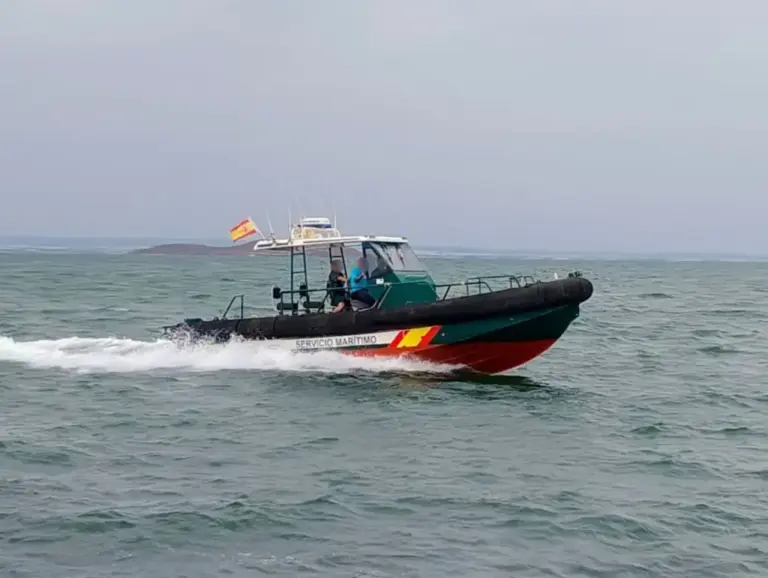
However, after another interception at Cala Dorada, one more at Cabo Cope (Águilas), and the seizure of a boat near Monte Cenizas—an operation in which the two skippers of those boats were also arrested—the most worrying episode occurred on September 2: three Guardia Civil officers were injured after being rammed by one of these boats.
An incident, still under investigation, that exhausted the patience of the regional president, who did not hesitate to directly point to Francisco Lucas and the Ministry of the Interior for their “inaction.” “What else has to happen for the Government of Spain to provide the Guardia Civil with the necessary means to fight the mafias safely and with guarantees?” he asked on his X profile, while expressing his solidarity and support to the injured officers.
“They overwhelm us. They are organized gangs that have professionalized and handle a lot of money. They are several steps ahead of us. With the lack of personnel we have and the means, which are neither what we need nor adequate, we find ourselves a bit overwhelmed, both at sea and on land,” says David Aguilar, spokesperson for the Guardia Civil union, Jucil, in Murcia.
Read more Who are you going to vote for?
He explains in a conversation with EL MUNDO that these boats, used both to transport people and drug shipments, are large, specifically “about six or seven meters long” and with many horsepower. “Translated to the sea, we would be talking about a high-end sports car: a Ferrari or a Mercedes,” he adds.
Still, he details that, in recent weeks, after the latest interceptions, the organizations would have changed strategy, moving to use smaller boats, “disposable,” with a small engine and in which even the person driving is one of the immigrants trying to enter the country. “They are not going to stop coming. They will change their system; now we will have to see what method they use,” explains Aguilar.
These organizations also have no fear of entering a beach where there are people if they consider it necessary, an action that could cause harm to the civilian population. “If they feel harassed or cornered, they do not hesitate. They do not care. If they have to enter at speed because they are fleeing, they do not hold back. They have no shame or scruples,” he emphasizes.
Regarding the possibility of another tragedy occurring, Aguilar is very clear: “If sufficient means are not provided, it can happen. I am sorry to be so pessimistic, but unless a remedy is put in place—that is, providing adequate protective equipment and giving clear and concise orders of action—I believe there is a possibility of regretting some tragedy.”
From Jupol Murcia, the National Police union, Francisco Moreno shares the same concern about the situation. “Cartagena has the personnel it has, and many Public Security officers have to be diverted to help Scientific Police colleagues or the Temporary Foreigners Reception Center (CATE) to identify all the people arriving on the coast. The more police officers dedicated to this issue, the fewer remain on the street,” he says in a conversation with this newspaper.
In this regard, he explains how good weather conditions are always an incentive for the arrival of these taxi-pateras. “People do not feel safe. You are with your family, on the beach, and suddenly a boat arrives, and people start jumping and running. Children—and anyone—get scared. It is normal. It has become a feeling of impunity of these mafias that is alarming.”
“We are concerned that there is no fear, no respect, and that the principle of authority of the National Police and the Guardia Civil has been lost. We are very worried about that feeling [of impunity] and the lack of legal support,” he says while calling for an increase in staff numbers, more resources, and clear action protocols.
Procedure
Once on land and identified, the defense of these immigrants sometimes passes to the public defenders of the Illustrious Bar Association of Cartagena, who interview them at the CATE to analyze their situation.
Later, according to José Manuel Cubillas, second deputy of this institution, the Government Delegation notifies them of a return resolution prohibiting them from entering the country for a determined time. This document can be appealed.
The execution of that return, always to the country of origin, depends on whether it is accepted by the foreign government. After 72 hours of stay at the CATE without the possibility of return, these people could move freely while awaiting the enforcement of the sanctioning file.
The skippers of the boats detained by the Police would presumably be responsible for committing a crime and could face prison sentences with different aggravating factors depending on the conditions in which the trip took place: refueling underway, presence of tobacco, lifesaving elements, or, in some cases, deaths.
Additionally, Cubillas states that, this August, legal assistance has doubled compared to last year at the same time and emphasizes the need to repair the road leading to the CATE located in Algameca Chica due to the possibility of unwanted accidents.
An explanation
ANSWERS. Fernando López Miras demanded yesterday that Pedro Sánchez disclose the information from the police report that, according to the President himself in the Congress of Deputies, warned of the arrival of immigrants by sea to the Peninsula and the Balearic Islands. “The Region of Murcia demands answers,” said the Murcian president.
ACTION. The Government Delegate, Francisco Lucas, has confirmed that he will appear before the media to explain what happened on September 2. He has also assured that new reinforcements will be announced soon and highlighted the work of all police forces in this area.