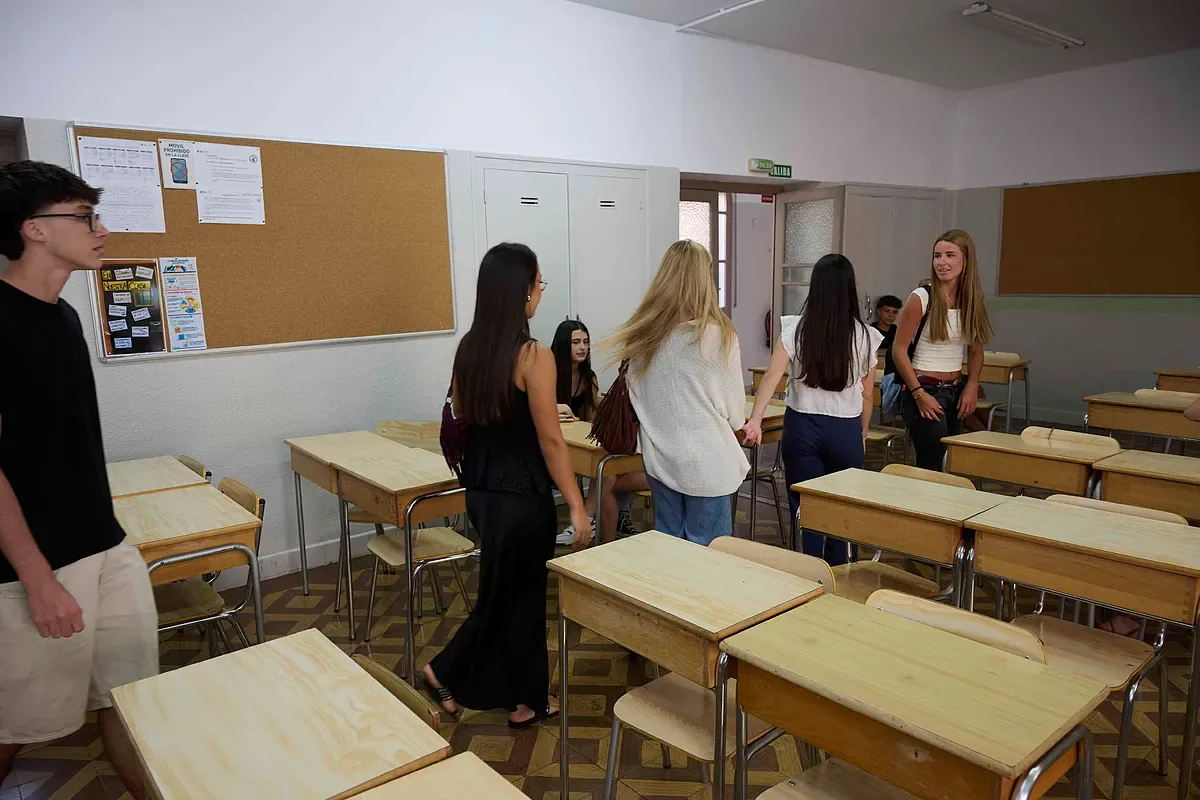






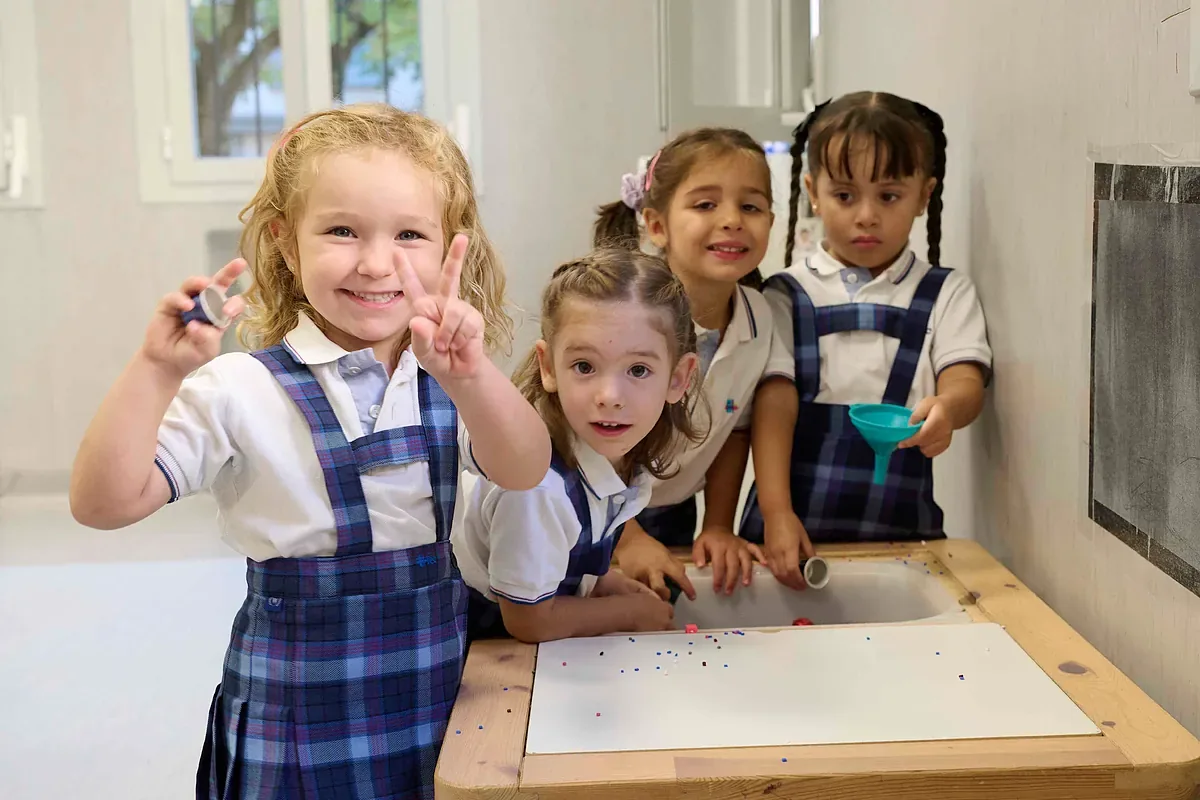
About eight million students are making their return to classrooms across Spain this week. Navarra was the forerunner with the start of classes last Friday. Today, schools in Madrid and the Basque Country follow, and in the coming days, students from the rest of Spain will return, starting tomorrow with Catalonia, Castilla-La Mancha, Aragon, Murcia, Cantabria, and Ceuta. A new school year begins marked by the insecurity felt by families in the autonomous city following the influx of immigrants; by the discontent of teachers across Spain over the insufficient response from the administration for increasingly diverse and complex multicultural centers; and by the tug of war between the Government and unions over the reform of the teaching career. Also characteristic of this new school year is the fear of the autonomous communities about a worsening of academic results in the PISA report, the most famous educational study in the world, which the OECD will publish tomorrow, Tuesday.
This test, which evaluates the competencies of 15-year-old students from 91 countries in Reading, Mathematics, and Science (to which Foreign Language and Digital Competence are added in this edition), will be a real challenge to the educational policy of Pedro Sánchez’s Government and the implementation of the Lomloe or Celaá Law by the autonomous communities (12 of which have governments including the PP).
In the previous edition, 2022, the Government blamed the drop in results—the worst in history in Science and Mathematics—on school closures due to Covid. But this time it will have to take responsibility for a law that since 2020 has lowered standards by allowing, among other things, passing the grade and obtaining the ESO diploma without limits on failed subjects. Additionally, the age cohort evaluated for PISA 2025 has already studied for two years under the Lomloe curriculum, which promotes reducing concrete knowledge to prioritize attitudes and relegates memorization while encouraging practical applications.
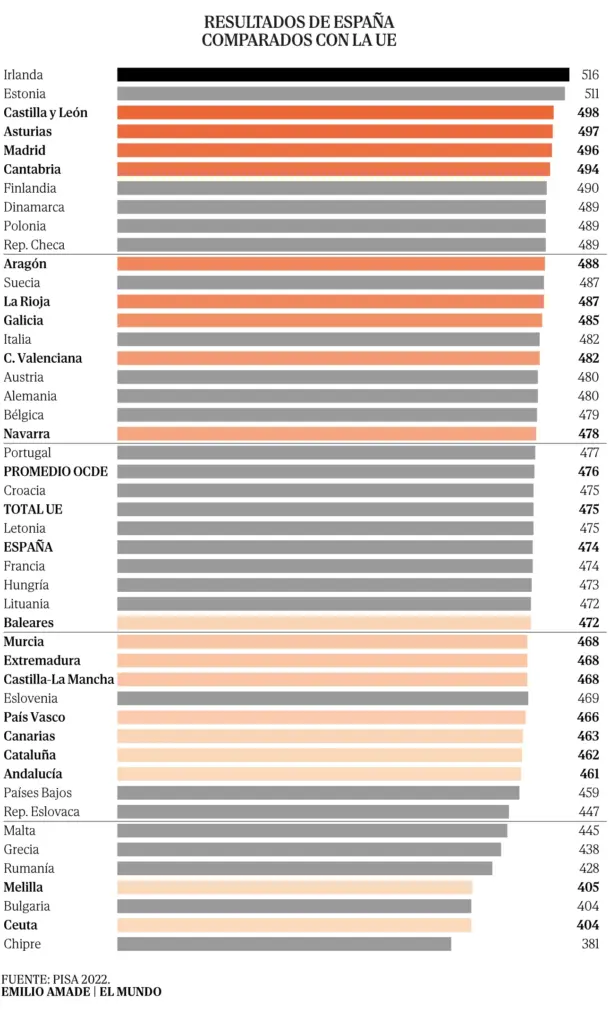
Everything points to this model, combined with the possible effect of the widespread use of screens in learning, not having contributed to improving our position in PISA, which in the last edition was already below the OECD average in Science, below the EU in Mathematics, and below both in Reading. The autonomous governments consulted by this newspaper are uneasy because in June those responsible for PISA provided them with technical guidance including some embargoed information about their own territories. The communities are not authorized to release the results before tomorrow at 9:30 a.m., but several have commented in petit comité that they have not improved, without going into details.
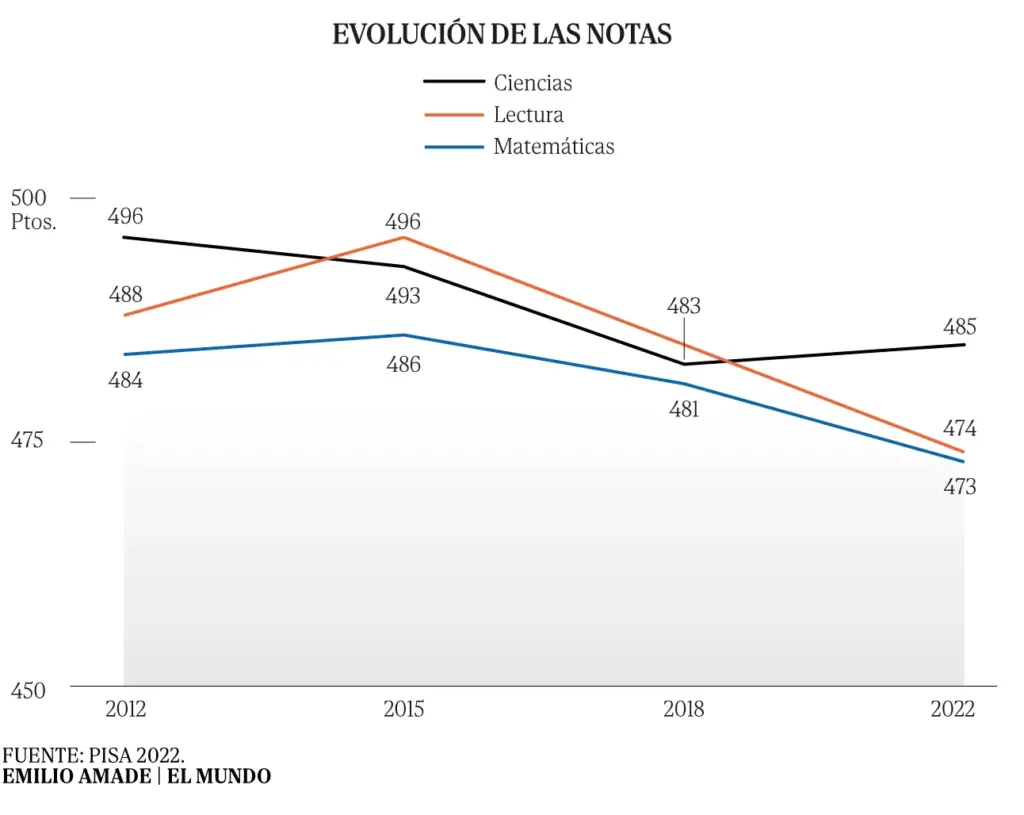
“We are worried; our estimate is that there will be a widespread decline and that almost all autonomous communities will fall again, just like European countries, except for exceptions,” say sources from an autonomous community that has traditionally had good scores. The forecast in other regional governments is similar, and there is an atmosphere of “nervousness” and “unease,” according to various sources, ahead of another setback in this test.
“A significant decline is expected in all communities, and it seems that the OECD will not experience an upward rebound either,” other educational sources point out. “The hypotheses being considered are two, compatible with each other. The first is that school closures due to Covid have changed the way education is viewed and some scars remain: it is likely that students carry gaps because programs to recover lost learning have not been effective. The second hypothesis is that lower demands on students, not only in Spain but in other countries, caused by moving away from traditional teaching of reading on paper, doing exercises and dictations, and writing by hand, have contributed to worsening results. This facilitation would have the scent of Lomloe.”
Of all PISA territories, Spain is the country that has traditionally had the largest sample of students (around 30,000), because each of the 17 autonomous communities participates with an expanded representation of students. It is, therefore, one of the highest payers for participation: the price paid by each autonomous community can be around 200,000 or 300,000 euros, which adds to a similar amount funded by the Ministry of Education. This indicates the importance given to the study in our country, which has also acquired great social and media relevance because until now there has been no other state evaluation that allows diagnosing the system and comparing different territories.
All this puts pressure on the autonomous communities, which do what they can to look as good as possible in the snapshot. The furthest advanced has been Catalonia, excluded from this edition by the OECD for leaving out 23% of students from the sample, precisely those with the worst performance, when the rules do not allow an exemption rate higher than 5%.
We now know that the Department of Education gave a talk to school principals to explain the type of students they could exclude from the exam: newcomers who did not master Catalan or those assessed by teachers as “intellectually disabled,” a category that included not only those with physical and mental disabilities but also “emotional,” a concept ambiguous enough to exclude students of all kinds. What the department did not specify is that this exemption could not exceed 5%, so principals excluded all students they considered.
The Ministry warned the Generalitat up to seven times, which did not correct the situation. Nor did Inspection validate the samples, as had been done in previous editions. Instead, the Government kept the error hidden for 15 months until this summer, just before the holidays, when it disclosed it, initially blaming the school principals. On August 31, it announced the dismissal of the number two of the Department and the opening of a file against three officials. Catalonia’s data will not appear in the international report but will be included in the Spanish report, along with a footnote indicating that they are not representative of reality. If the sample had been done correctly, the data would be worse.
The Basque Country is another region that has also tried to overshadow the data. It has reduced the sample size to the “minimum,” when it traditionally had the largest in all of Spain, which prevents detailed analysis of some issues, such as the effects of language policy. In this edition, 56 schools with 2,310 students participated, according to the Public Sector Accounts of the Autonomous Community of Euskadi. This is almost half the number of schools and 35% fewer students compared to PISA 2022.
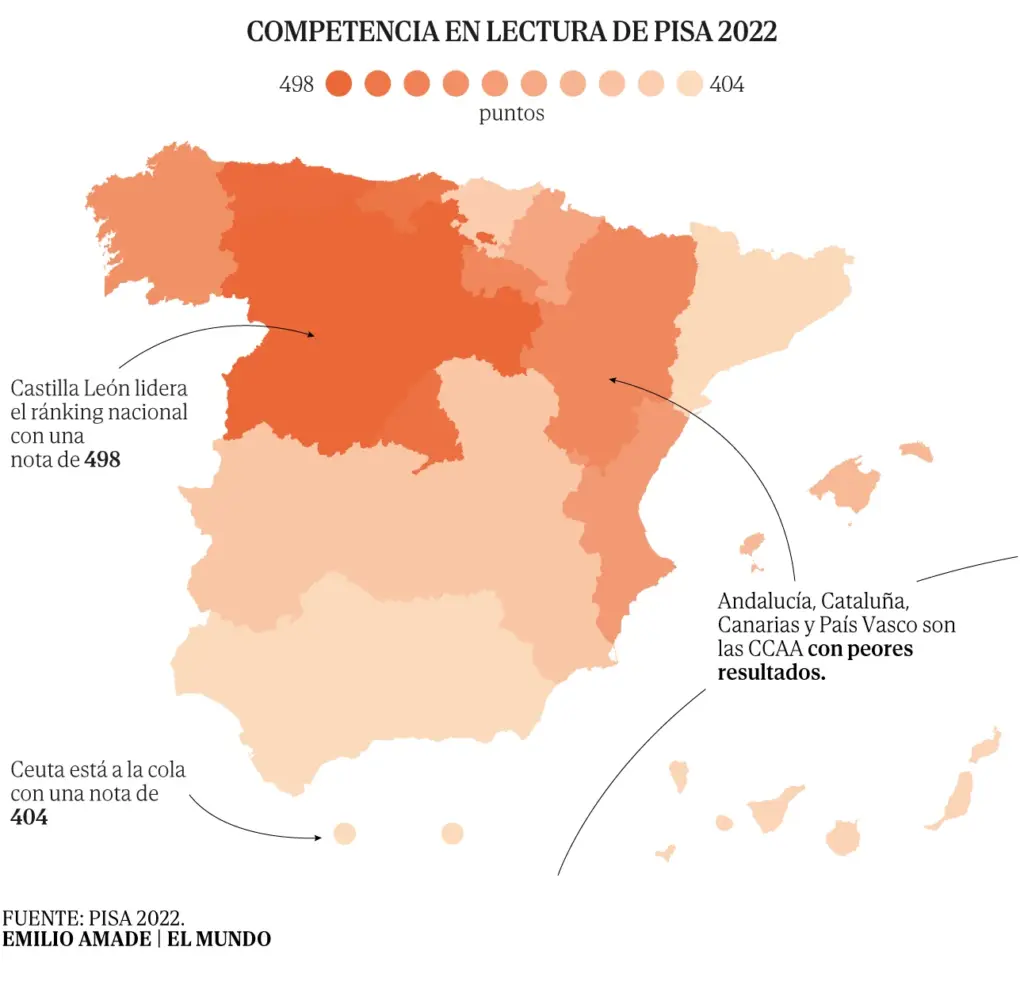
It so happens that Catalonia and the Basque Country are the autonomous communities that worsened the most in the last edition. In the case of the Basque Country, it made its own report in PISA 2022 but ultimately did not want to publish it. It also decided not to participate further in the international PIRLS report after ranking as the worst region in Spain in 2016. It is a more subtle statistical blackout than Catalonia’s but produces the same effect: hiding the failure of two educational systems where learning is mostly done in a language different from the one the student speaks at home. In a demographic context where there are increasingly more immigrants in classrooms who do not master the vehicular language, PISA is a ticking time bomb for the Administration.
Catalonia and the Basque Country have alarmingly increased their percentages of 15-year-old students who do not reach the minimum competencies to manage in life, while reducing their rate of brilliant students. This has also happened in most regions and countries (except Asian ones). Finland, the paradigm of good educational practice at the origins of PISA, back at the beginning of the century, has gone from having 8% of low-performing students in 2009 to 29% in 2022, while outstanding Finnish students have fallen from 22% to 9% in this time, according to philosopher and educator Gregorio Luri, who explains that this problem is also occurring in Spain: “One in four Spanish students is in the two lowest bands of PISA 2022, which means they do not have the minimum competencies, and this is a disaster.” The general trend in most autonomous communities has been to increase the number of low-performing students while high-performing ones have decreased.
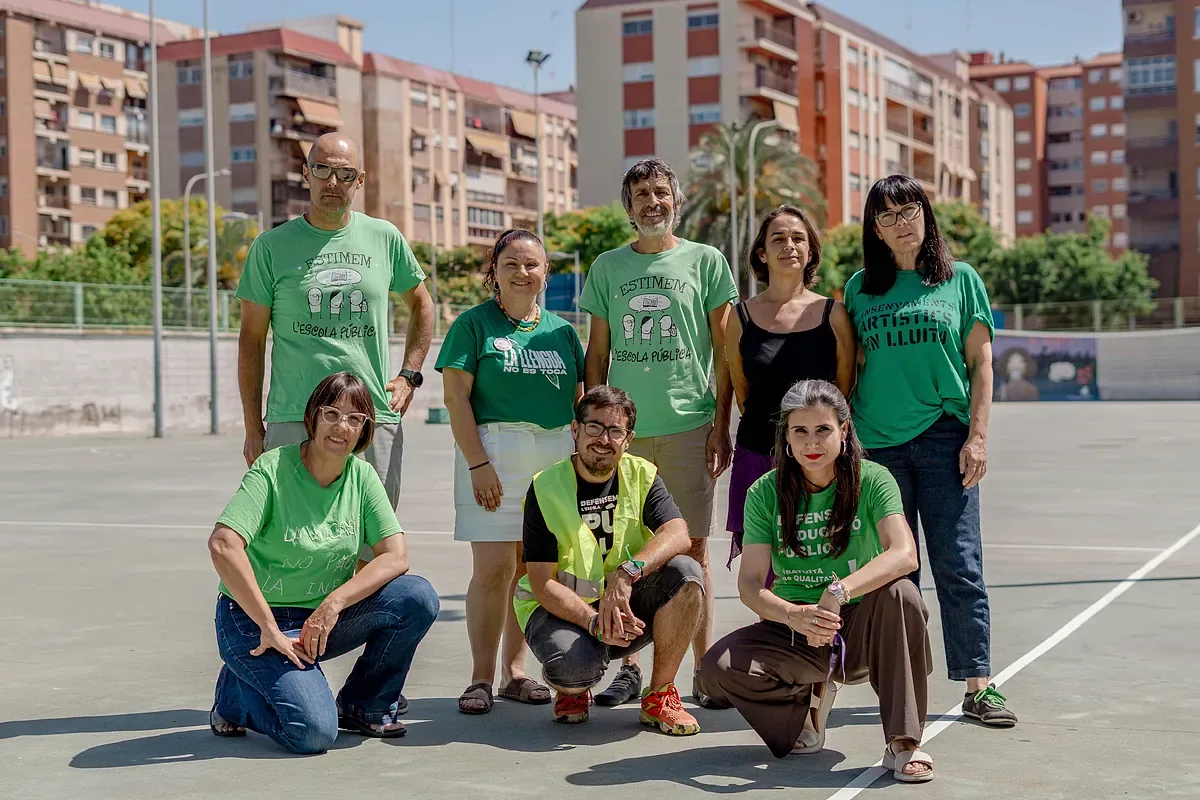
All experts know that having good teachers influences student results, but the Government has delayed its reform of the profession as much as possible. And opposition parties have not been present in education during this legislature either. Predictably, and after a reduction in ratios in a bill now dependent on an agreement in the Congress, the Ministry will begin negotiating the teaching career this month, although no one expects it to conclude because these reforms cause much wear and tear and elections are just around the corner. Meanwhile, teacher discontent is more intense than ever, and a fall of protests is looming in Catalonia, Madrid, or the Valencian Community, while CSIF has called for mobilization at the national level. A strike has been called in Catalan classrooms for tomorrow.