



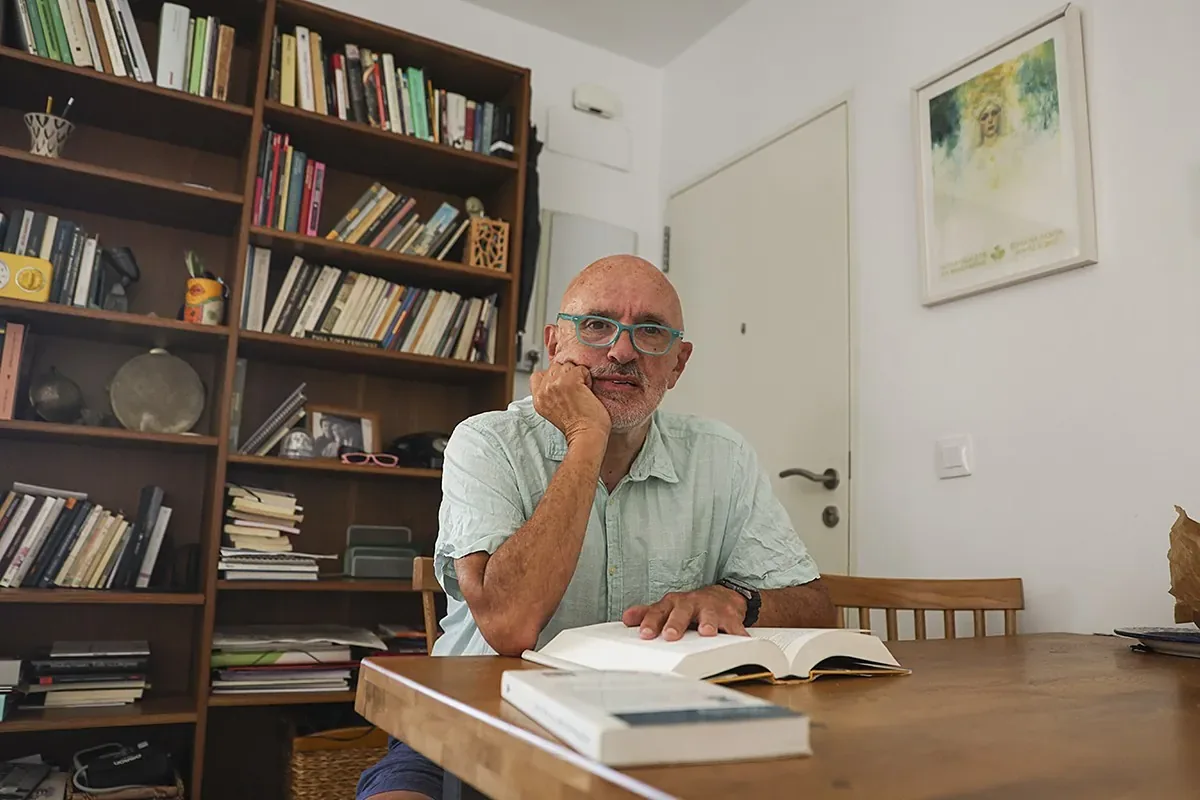
Francisco Garrido Peña is an epically untamed and dissident soul until Morocco is mentioned, and more than Morocco, to kings Mohamed VI and Hassan II. It happened to him 20 years ago when King Juan Carlos and Doña Sofía visited Ceuta and Melilla, and he was the only deputy to question that trip by presenting several parliamentary questions. And it happens to him now, when Crónica asks him what he would think if King Felipe VI were to show up in the Autonomous City to offer comfort to a people who are on the front line resisting the consequences of a hybrid attack launched by Morocco, according to the Spanish Police, without the Government seeming able or willing to defend it.
Things have changed so much that, in that autumn of 2007, with the ineffable Rodríguez Zapatero governing, the PSOE decided not to renew deputy Garrido on the lists just for daring to ask if the Executive was aware of the “negative repercussions” that the trip would have on relations with Morocco. And things have changed so much that he considers that in this international situation, that trip should not take place because it could lead to a confrontation with Morocco.
“The situation now is more sensitive. Now I am much more afraid of the negative consequences that a visit of that nature could have when what Morocco wants is to create tension. I do not believe that Morocco is interested in or can aspire to occupy Ceuta and Melilla. Among other things because it does not have the capacity to occupy them militarily and because economically it is very difficult for it to do without those focal points... But an escalation could get out of hand and could lead to a military conflict.”
Just hours after making this analysis, the President of the Government, who had until that moment refused to schedule the visit that King Felipe promised to the Ceuta president, Juan Jesús Vivas — according to some analysts, because he remains a hostage to the Paiporta syndrome — appears in Congress to announce that it will be good for the monarch to approach the Autonomous City in the coming weeks. He also reveals that the Moroccan ambassador, Karima Benyaich, was called for consultations after the incursion on August 21, although hours later it was discovered that the ambassador was not present and that the meeting was with the chargé d’affaires of the diplomatic delegation.
“He must have agreed with Morocco on the visit, I hope. Even so, I believe that the public policies that the Ceuta population needs and demands depend on the Government, not the king, who, as we all know, reigns but does not govern,” the professor clarifies after the president’s change of opinion.
— And if the visit were not agreed upon, would it be irresponsible?
— Yes.
THE QUESTIONS THAT PUT HIM IN THE SPOTLIGHT
Francisco Garrido Peña holds a PhD in Philosophy of Law and is now a professor at the University of Jaén. He was the confederal spokesperson for The Greens and a deputy in the Andalusian Parliament and, when his party decided to run in the elections alongside the socialists, he was elected deputy in the General Courts under the promise that some policies would be developed that never happened. He was the founder of the Parliamentary Association in defense of Animals, and brought the Great Ape Project campaign to Congress, even presenting a bill that did not prosper because his socialist group colleagues never approved it. The questions he posed to the government supporting the visit of King Juan Carlos I to Ceuta ended up putting him in the spotlight.
From his point of view, these visits are “untimely.” Twenty years ago they were because they could affect “the coexistence between the two peoples.” At that time, he explains, Morocco’s alliance with the US was not problematic because the Republicans governing from Washington “followed a normalized pattern within the schemes of bipartisanship.” It is worth remembering that 20 years ago, the Moroccan king showed his anger over the visit of the kings to the two autonomous cities whose ownership he claims by suspending bilateral relations and calling his ambassador to Rabat for 65 days, and only calmed down after the Foreign Minister Miguel Ángel Moratinos rushed to give him explanations with a letter from President Zapatero in hand.
THE CRAZY PATTERN
And it is also worth remembering that after the invasion of the Perejil Island by the Moroccans, the North American administration, Republican like Donald Trump but light years away from his incendiary behavior, acted as an effective diplomatic mediator in resolving the conflict.
“Not now,” the professor continues. “Now, the American pattern is a crazy pattern, it is a neo-fascist pattern with which any little game like the one we played with Perejil, that barbarity… is much more dangerous. Diplomatic relations must be scrupulously cared for because it is a priority for peace and stability in the area. Those who do not want peace or stability are Trump and the Republicans of the United States, who recognize, sponsor, and foster all conflicts that may develop in North Africa and Southern Europe,” he states.
“Considering the discourse that the king of Morocco is making, who is practically and empirically allied with the entire reactionary world arc, including Israel, the best thing is to ease tensions rather than increase them, and the king, who has no competence to resolve the situation in Ceuta and whose figure has a symbolic purpose, could be used by the Alaouite monarchy as a kind of affront,” he points out.
Professor Garrido Peña warns about the delicacy of the situation, about the possibility that in a moment of loss of control an armed conflict could arise, and recalls that the military have long had a response designed for this extreme situation.
“I don’t know if you know the Ballesta plan,” he illustrates, “the Ballesta plan is an old plan designed by the High Command of the General Staff to defend Ceuta and Melilla and what it proposes in all scenarios is an advance of 100 kilometers inland into Morocco to defend them, given the impossibility of doing so from the El Príncipe neighborhood, and that would imply bombing and would have repercussions in international politics. Aside from the fact that it would be very good for the PP and Vox.”
A BET ON REALPOLITIK
The position of the former deputy of The Greens, once embedded in the socialist lists, seems timid when compared to the boldness with which he has led his own life, standing up to dictatorships and overcoming limitations.
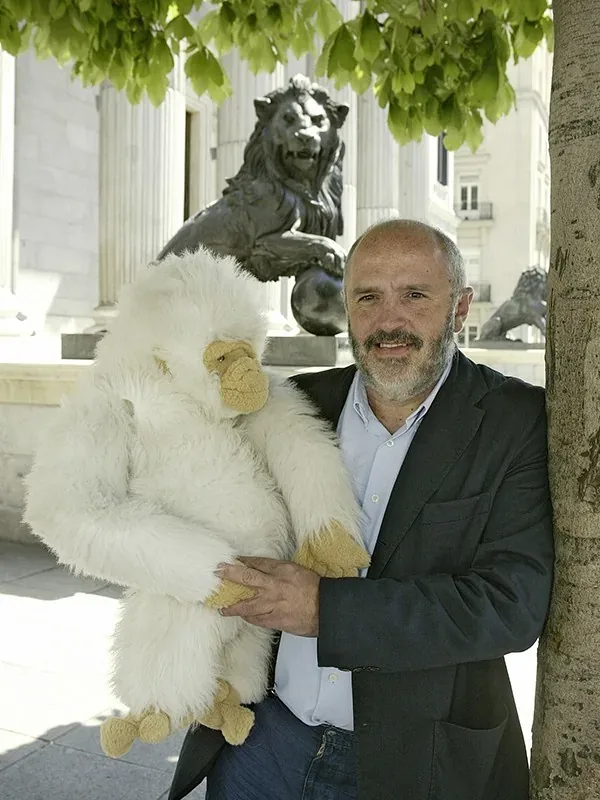
He founded and was secretary general of the Communist Youth of Andalusia, called the first gay demonstration in Madrid, was arrested by East German police in Berlin for displaying propaganda in favor of communist dissidents of the communist regime, and was expelled from Cuba and declared a persona non grata by the Castro regime for his support of the Cuban dissidence. He deserted the Spanish army, was subjected to two courts-martial, and left Spain to return posing as a Belgian journalist under whose identity he lived for 10 years, the time it took for his sentence to be prescribed.
So it is hard to understand the appeasement policy he proposes regarding the king of Morocco, a dictator who has fluctuated his diplomatic policy out of interest even aligning with Israel and who ignores all UN pronouncements on the Sahara, which was another of the battlefields of the former deputy’s youth and on which he has changed his opinion to align with that of Pedro Sánchez’s Government.
“Diplomacy,” he argues when asked about the need for Spain to respond with dignity to the attack by the Alaouite king, “sometimes has somewhat uncertain paths. It is not about proclaiming truth or lies but about achieving positive objectives: the effect of social coexistence, the effect of social progress, the progression of rights and all the items that can guide any kind of progressive policy.”
Regarding how surprising it is to compare his personal political journey with his current realpolitik attitude towards Morocco, former deputy Garrido explains that one must not only see the historical context but also the biographical one.
“Back then I was in internal discussion with Stalinism, I knew there was a huge authoritarian faction, which at that time was dominant in the world left, and there was a controversy raised by a democratic left that wanted to review the authoritarian past of the Stalinist left. Also, in those years we lived in the Cold War and we were not as we are now. Before we were in a situation of domination according to imperialist logic. Now, the US is betting on chaos and destruction. The Cold War was not so serious. And finally, there is the fact that we all change,” notes former deputy Garrido. Well, except regarding the King and Morocco.
Read more Moncloa and Ferraz question the impartiality of the judge investigating the Ceuta crisis