







A decade ago, Asturias did not stand out in the PISA report. It was in an average group, around the regional average, alongside the Valencian Community and Castilla-La Mancha. It has steadily gained positions and in this edition it is first in Spain in Reading, third in Science, and fourth in Mathematics. The key to the rise lies in its plan to reinforce reading comprehension and mathematical competence. The number of students per classroom has been reduced, and children who have difficulties receive free extracurricular classes in the afternoons at the schools themselves. Additionally, the Ministry of Education has appointed specialists in these two subjects who visit schools to provide additional training and advise teachers, taking measures if deficiencies are detected.
“The reinforcement of Mathematics and Reading is key, it is fundamental for the whole school to function,” explains Dolores Bueno, Director General of Educational Inclusion and Organization of the Asturian Government (PSOE). “We select the schools whose students have obtained the worst results in the diagnostic evaluations of 4th grade of Primary and 2nd grade of ESO and give them more Language or Mathematics teachers to work on improving competencies. They are our representatives in the schools and make improvement proposals. The idea is that teachers always have a reference point.”
The shock plan implemented by the Asturian Government shows three things: that more support must be given to teachers – PISA warns that Spain has worsened –, that evaluation improves academic results, and that educational reforms do not require great inventions. “In Asturias, there is no madness to say that the previous system is worthless and to want to change everything,” states César Suárez, director of the Montevil public institute in Gijón.
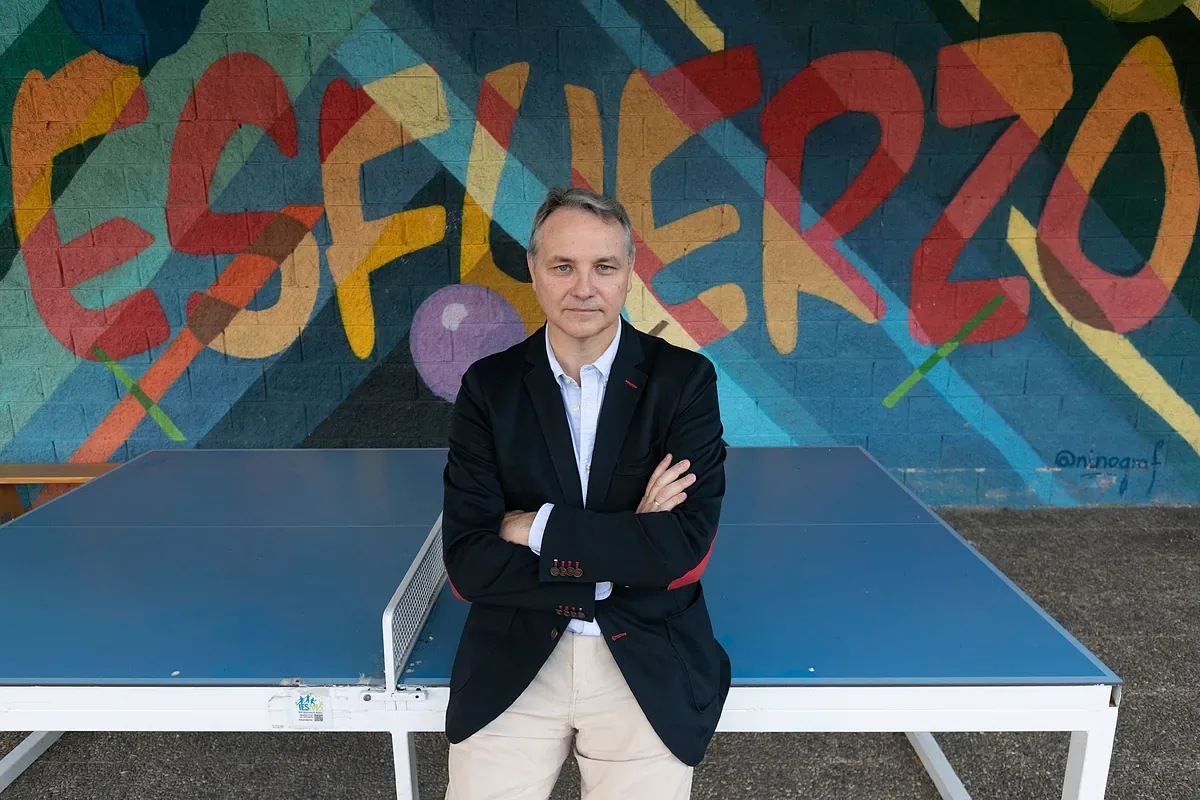
This English teacher, president of the Association of Secondary School Directors of Asturias (Adespas), agreed to be photographed in the schoolyard, in front of a mural painted with the word “effort,” a term that has been taboo for many educators, who mistakenly associated it with having to memorize the list of the Visigoth Kings. PISA now tells us that Spanish students must make more effort, and this director agrees. He also calls to “not discredit knowledge, because it is absolutely essential.”
The publication last Tuesday of the OECD report, which reveals the Spanish educational catastrophe with the worst results in its history in Language, Mathematics, and Science, has confirmed, on one hand, that the Government should have taken more seriously the reinforcement plan for core subjects that Pedro Sánchez announced in 2024 and, on the other, the ineffectiveness of some innovations, such as screens, relaxed demands, and supposedly entertaining methodologies for students. Everything points to a return to basics, the path already taken by other countries, with more hours for core subjects, more pencil and paper, and more mental calculation. The Lomloe or Celaá Law of 2020 established a misunderstood competency model where the practical application of content and the student’s attitude matter more than the knowledge itself.
“It’s not that Lomloe removes knowledge, but it focuses on other issues, and I think that is a mistake,” says director César Suárez. “Teachers are transmitters of knowledge above all else. Also of attitudes, but the first thing we have is knowledge. The Asturian Ministry of Education has the vision that knowledge cannot be discredited,” he adds.
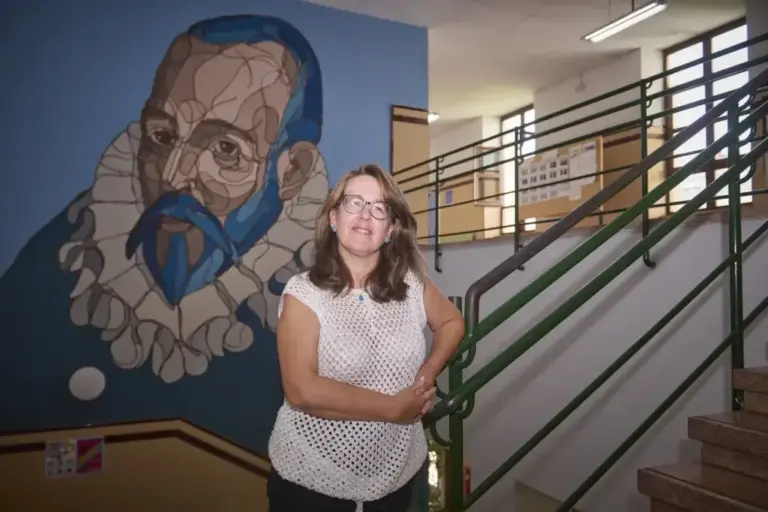
Her words are fully shared by the other two directors interviewed for this report, who belong to the Community of Madrid (first in Spain in Mathematics and Science and second in Reading) and Castilla y León (third place in all subjects), both regions governed by the PP.
Madrid has displaced Castilla y León from first place after making all kinds of reforms to resist the changes of Lomloe. It focused on concrete knowledge, recovering those more traditional contents that had been removed from the national syllabus, while betting on maintaining numerical grades and honors and trying to reduce the state possibility of passing a course and obtaining the ESO diploma without limits on failing grades.
“Demand with support is the pillar of educational success, both go hand in hand. You cannot pity a student; you have to ask them to make an effort, but at the same time you have to be by their side and give support,” considers Encarnación Mainez, director of the Cervantes public institute in Madrid, a school with many immigrant-origin students who achieve excellent results.
The institute is known for the importance it gives to national and international Mathematics Olympiads, in which a high proportion of its students compete. It also offers bilingualism and the International Baccalaureate, programs not followed by all students but that “set more demanding goals that can be pursued.”
Read more The police transfer hundreds of migrants from Ceuta to a newly equipped facility
“As a public school, we have the obligation to be a social elevator and to ensure that a student’s origin determines their future as little as possible,” emphasizes this mathematician, who also points out other premises: “Knowledge and reasoning are not enemies; you have to apply, but you also have to memorize certain things. On the other hand, syllabuses must be rigorous and are made to be completed. For this, coordination between teachers and departments is essential. Finally, the teacher must be a specialist in the subject they teach and be able to demonstrate authority: students must have order and know who is in charge. That does not mean they are afraid, but that they know who organizes the class and what will be done and achieved in it.”
Castilla y León, for its part, promotes dictations and regular reading, bets on the use of libraries, and, above all, insists on free extracurricular reinforcement classes within the schools themselves, like Asturias. However, it is the only region in Spain that opens schools and institutes during July to give classes in small groups.
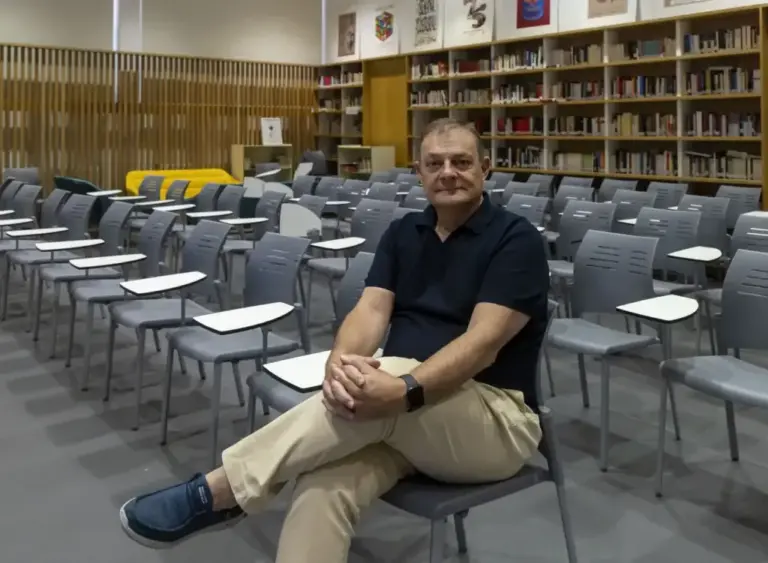
The Lucía Medrano public institute in Salamanca is open from early morning until 10:00 p.m. From 4:00 to 6:00 p.m., they give reinforcement classes to students who have difficulties. “Depending on the day, they have two hours of Mathematics, two hours of Language, two hours of English, or two hours of Study Techniques and Motivation. For those who live in other towns, the Ministry provides free transportation in the afternoons. The teachers are very well chosen and are paid in addition to their regular hours. These kids, who even come from other towns, improve a lot,” explains Ángel Torijano, the director of a school attended by students of 33 different nationalities.
“The key to educational success lies in the support of the Administration, and this is evident in that there are resources to help students with difficulties and that teachers are cared for, who perform better if they are happy,” says Torijano.
At Lucía de Medrano, teachers have 17 teaching hours (usually 18), which are reduced to 16 hours when they turn 59. They update their qualifications within a permanent training program and are helped by math mentors provided by the Ministry.
A final very important element is the importance parents give to their children’s education. Asturias is, according to PISA, the region with the highest family involvement index, followed by Extremadura, La Rioja, and Castilla y León. Torijano is clear: “The good thing about the rural world is that students make much more effort to get ahead.”
The predictive effect of low performance
Madrid, Asturias, and Castilla y León were the only regions that in PISA 2022 did not increase their low-performing students in Mathematics, but rather reduced them.
In 2025, however, all the Autonomous Communities have shot up the number of students who do not reach level 2 out of 6 and therefore do not have the minimum competencies to manage in life. From a quarter, they have gone on to represent a third in Mathematics and Reading. Also, all except Castilla-La Mancha have fallen in the overall ranking. This region, precisely, is the one that has grown the least in the rate of low-performing students.