








The progressive sector of the General Council of the Judiciary (CGPJ) is committed to starting negotiations with the conservative sector to renew the four vacant positions in the Criminal Chamber of the Supreme Court (TS), according to legal sources reported to EL MUNDO.
Read more The right does not get complacent: Sánchez is struggling but not defeated
In recent days, the progressive group has conveyed to the conservative bloc that they must sit down to negotiate the positions left vacant by the retirements of judges Miguel Colmenero, Ángel Hurtado, Andrés Palomo and Juan Ramón Berdugo.
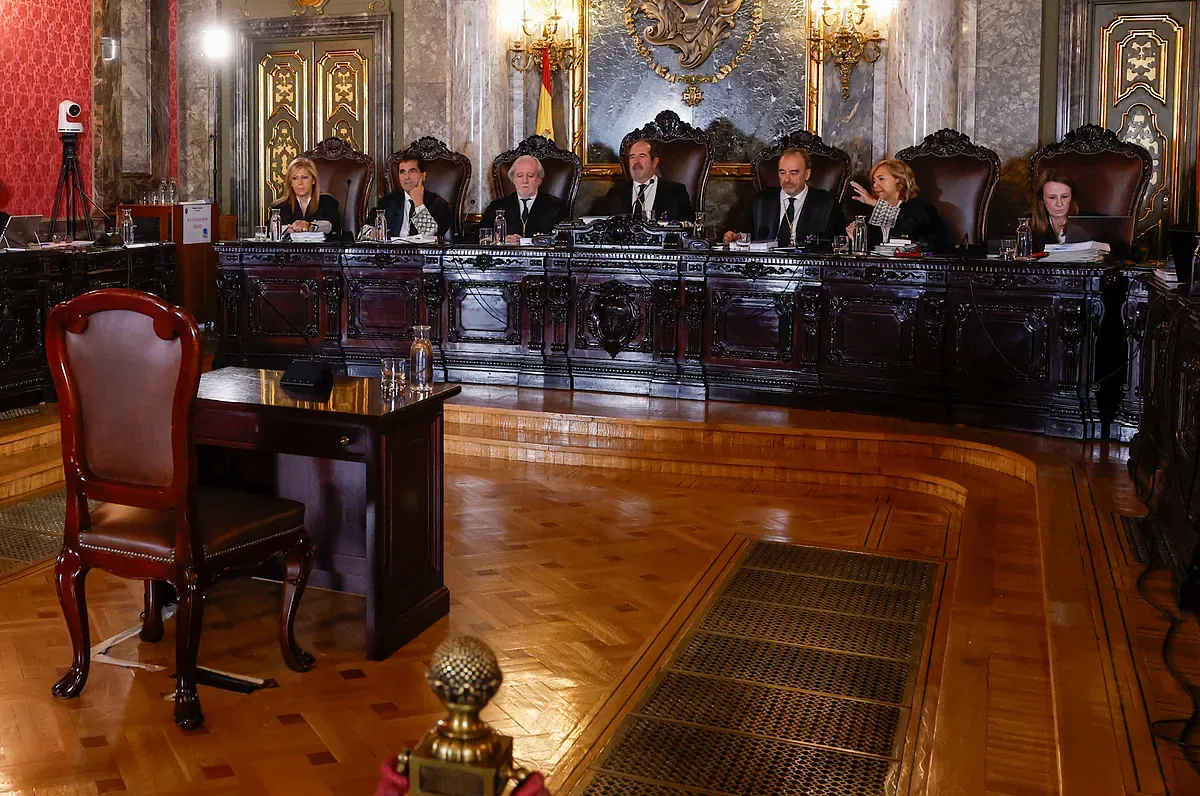
The Second Chamber or Criminal Chamber is a body of special importance as it investigates and tries members of the Government and parliamentarians – the former minister and former PSOE Organization Secretary José Luis Ábalos – and other high-profile individuals with special public relevance such as Álvaro García Ortiz, former Attorney General of the State.
For all these discretionary appointments of Supreme Court judges, the agreement of a qualified majority of the Council members is required, that is, a minimum of 13 votes. This circumstance forces progressives and conservatives to agree on all these appointments. However, so far, negotiations have not taken place. In fact, the position of Judge Colmenero, for example, has been vacant since 2023.
Meanwhile, the new judicial year has started with mutual reproaches between the progressive and conservative members, who claim that the former strictly follow the postulates of the Ministry of Justice led by Félix Bolaños and are disloyal to the rest of their colleagues and to the president of the Supreme Court and the CGPJ, Isabel Perelló, by issuing continuous statements aimed at conditioning their actions – the latest before the opening of the Judicial Year.
This climate of mistrust and mutual accusations does not favor the negotiation of such sensitive positions as the vacancies in the Criminal Chamber, sources from the judges’ governing body indicate.
On the other hand, the conservative sector of the CGPJ is not willing to allow a distribution of the four positions that would enable the appointment of government emissaries in the Chamber chaired by Judge Andrés Martínez Arrieta.
It is an open secret that the Executive regrets the lack of progressive judges in the Second Chamber, a body that in recent years has caused notable setbacks for the government of Pedro Sánchez. It did so, for example, when it opposed granting pardons to the leaders of the procés or when it criticized the ad hoc reform of the Penal Code to favor the separatist leaders or, more recently, by not applying the Amnesty Law to the crime of embezzlement of public funds related to the illegal referendum of October 1.
Also when it convicted Álvaro García Ortiz for a crime of revealing reserved data of businessman Alberto González Amador; a decision that forced the Executive to appoint a new Attorney General despite its staunch defense of the accused. Or when last June it sentenced former minister José Luis Ábalos to 24 years in prison for nine corruption offenses, highlighting the cooperation that businessman Víctor de Aldama had provided to Justice.
Furthermore, the Supreme Court’s Criminal Chamber is the one that urged the National Court to investigate cash payments at the Ferraz headquarters – the piece of the alleged irregular financing – and also the collection of alleged illegal commissions for rigging public works from the Ministry of Transport, where the former PSOE Organization Secretary, Santos Cerdán, is also indicted.
The Government knows that, unlike the Constitutional Court or the Prosecutor’s Office, the Supreme Court is the link it has not managed to control and, for this reason, any appointment in the Criminal Chamber is absolutely decisive.
As this newspaper reported, among the candidates to fill the general and specialist positions are National Court judges José Ricardo de Prada, Eloy Velasco, Joaquín Delgado and Enrique López, former Minister of Presidency and Justice of the Community of Madrid.
Of the 27 applicants, only six candidates are women. The current president of the High Court of Justice of Extremadura, María Félix Tena, National Court judge María Fernanda García Pérez, and Dolores Hernández Rueda, current head of the Inspection Service of the General Council of the Judiciary, among others, have applied for a position in the High Court. The candidates’ hearings before the Qualification Commission began last week and will resume today.
Read more Five detained and several injured after a drug speedboat crashes into a patrol boat in Almería