






Yesterday’s meeting of the Central Electoral Board (JEC) was the most “tense” and “divided” since, at least, January 2020, when the pro-independence leaders Oriol Junqueras and Quim Torra were disqualified amid a polarized climate full of mutual distrust. Monday’s debate was less political and more technical, but equally controversial: it involved diving back into the controversy over the grandchildren’s law and, above all, the Ministry of Justice’s instruction that extends its effects.
Read more Feijóo will revoke nationality from immigrants who commit serious crimes
The Supreme Court’s decision to provisionally suspend the voting rights of people naturalized through this route – children, grandchildren, great-grandchildren, and even great-great-grandchildren of Spanish emigrants – until it resolves the substance of the matter, sparked a bitter controversy within the body responsible for overseeing elections and enforcing electoral rules.
Six members of the JEC voted in favor of filing a reconsideration appeal to express their “disagreement” with the Supreme Court’s decision, and seven voted against it. That institutional clash was narrowly avoided. “This issue has divided us in half like never before,” sources from the Board say.
In fact, during the meeting, criticisms of the Supreme Court’s decision were heard… from three Supreme Court judges. According to sources consulted, they were Pilar Teso, who is precisely in the same room (the third) and in the same section of the Supreme Court now analyzing the grandchildren’s law; Concepción Ureste, from the Fourth Chamber; and Javier Hernández, from the Second Chamber.
In the heat of the debate, Professor Francisco Javier García Roca, proposed as a JEC member by the PSOE, stated that the Supreme Court’s decision is “creating chaos.” Members from the conservative sector countered that, in any case, the chaos has been caused by an instruction from a general directorate of the Ministry of Justice that extends the scope of the regulation.
There were harsh verbal exchanges and criticisms of the Supreme Court for the “many defects of its order.” “Any jurist” can see them, one of the JEC members even said. Other jurists defended that the order is “difficult” to apply, due to the number of people it affects, but “what the Supreme Court is trying to do is to bring order.”
Read more The pending vote and vetoes among partners condition the return of the left in Sweden
In that context, another close vote took place, on whether to execute the Supreme Court ruling “in its terms” or to introduce some exception to those precautionary measures. Direct execution of the order was chosen, with eight votes in favor and five against.
The heated debate also addressed a fundamental concern: the potential risk of “lack of defense” for thousands of affected people “without having had the opportunity to present allegations.” The idea of “massively notifying” all of them was discussed, but the institutional thesis prevailed: “We agreed that, if applicable, that would correspond to the Supreme Court, not the Board.”
The Electoral Census Office sent its official report “just before the meeting” of the JEC, without material time for detailed analysis. As a result, the Board has scheduled the next deliberation for the following Thursday. This accelerates the deadlines set by the Supreme Court. The new JEC instruction could be ready by early October.
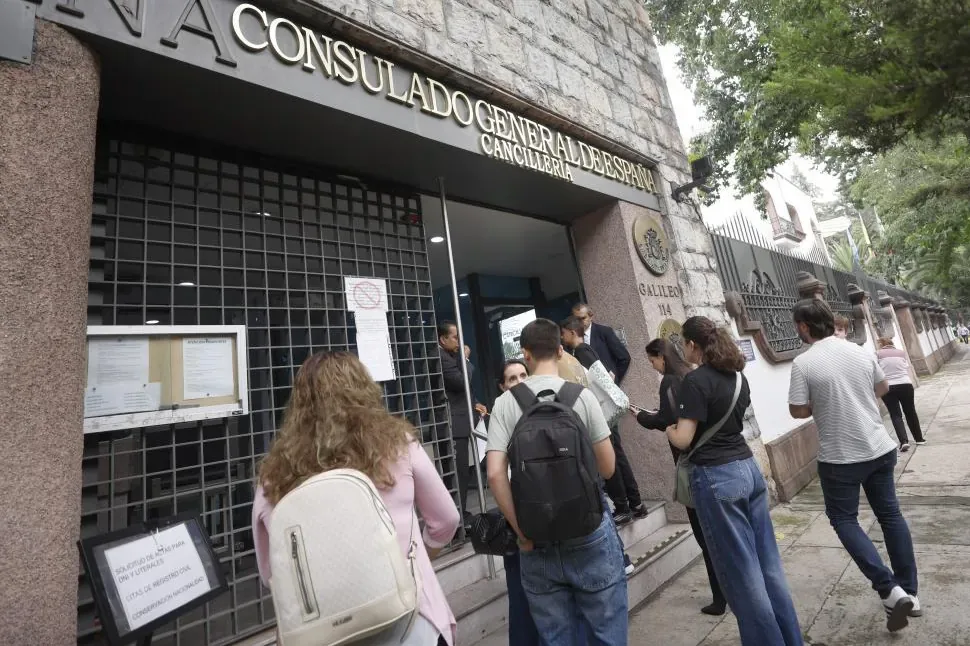
And what does the Census Office say? It clarifies that there are hardly any cases in which the naturalized person does not prove a place of residence in any constituency and the consulate assigns one ex officio: “It is the voter who indicates, in any case, the municipality in which they request to be registered for electoral purposes, without registrations being made ex officio in practice.”
Read more Storm in the debt markets: US bond soars and Spain’s exceeds 4% for the first time since 2013