



There was already dynamite stored. Explosive charge. Danger. Warning signs. The Supreme Court’s decision to suspend the voting rights of those who had obtained Spanish nationality thanks to the facilities of the so-called grandchildren law – in reality, it is the Democratic Memory law of October 2022 – has triggered the cartridges. There is great unrest in La Moncloa and Ferraz that is not hidden. Ministers like Óscar López and Óscar Puente, as well as the PSOE spokesperson, Montse Mínguez, question the “impartiality” of some judges, those who rule contrary to the interests or opinion of the Executive, whom they even label as “patriot-saving judges” or “lone wolves”.
It is difficult to gauge the level of anger. The bar is very high, it accumulates over time and causes a sustained clash over time between Government and Justice. Mutual reproaches exchanged. Some questioning certain decisions; others asking for respect for those decisions and for the questioning to cease, as was seen in the speeches of the high judicial authorities at the opening of the judicial year. The white flags are full of holes.
For the Minister for Digital Transformation and Public Function, Óscar López, the Supreme Court’s decision on the ‘grandchildren law’ is a “outrage” and a “democratic abuse,” going further by considering that there are judges who “insist on toppling the Government” and “who are patriot saviors.” He even went so far as to say in an interview on TVE: “There are lone wolves who answer Aznar’s call.” The term “lone wolf” is usually used to designate terrorists who act alone, following, however, certain orders or directives.
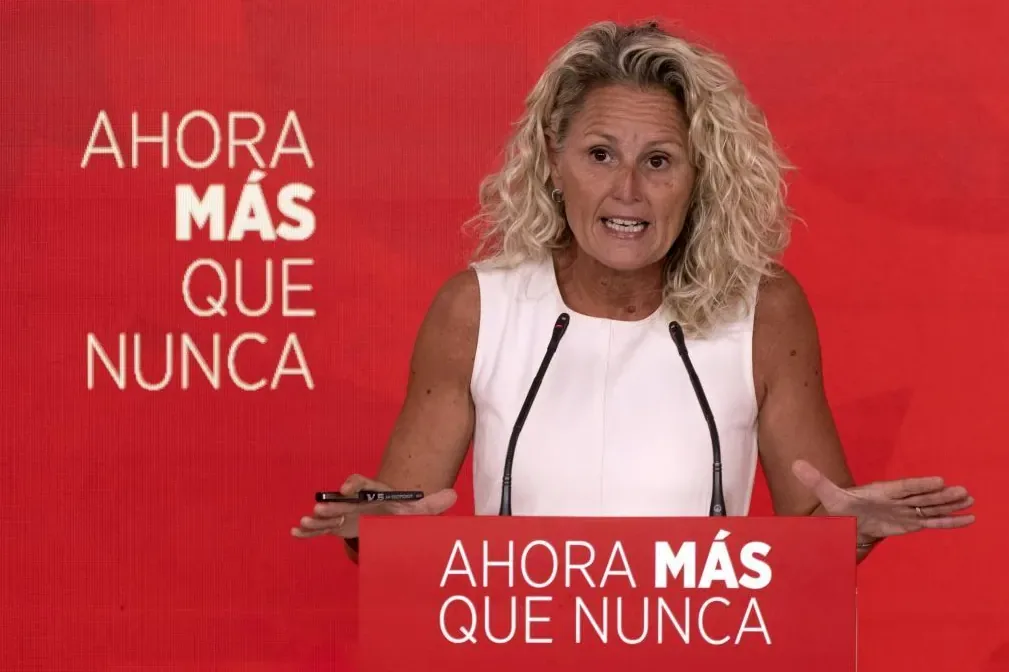
This idea has been supported by Ferraz. “I will not say it in their words, but we have eyes on our faces and we are seeing what we are seeing,” corroborated Montse Mínguez, socialist spokesperson, after the socialist leadership meeting. “We ask Justice for independence, but independence does not mean immunity and Justice should at least appear to be independent. The rapporteur – of the Supreme Court decision that suspends the grandchildren law said he preferred Feijóo to be president and thus start repealing Sanchist laws.”
It is this flank that the socialists use to question the actions of Antonio Narváez. For Óscar Puente, Minister of Transport, the Supreme Court has caused “perplexity in the legal field” and refutes his thesis that “there is a sector of the Judiciary that wants to do politics” so that PP and Vox come to government. He has shared the reflection of his cabinet colleague, López, speaking of “patriot saviors” who “have that vocation to save Spain” from something that is not very clear. Puente and López usually act as Government spokespeople to point out those positions that Pedro Sánchez cannot pronounce. This strategy is also used with Judge María Tardón, who is investigating the Ceuta crisis and who was a PP councilor in the Madrid City Council.
For Puente, moreover, the Supreme Court is not competent to know anything related to the law nor the instruction that later developed it,” but issues “a verdict in the form of a precautionary measure suspending a fundamental right against an instruction and a law” that “has not been appealed in due time and form.” “The vote is sacred, it depends on nationality and we are very concerned that the Supreme Court says it fears it will affect ‘the electoral result desired by the Spaniards.’ But what is that result? Nobody knows. It will have to be voted,” Mínguez argued.
Among the socialists there is already a more or less widespread feeling that some judicial cases advance faster than others, referring to those that affect them taking off earlier while others that may affect the PP “age.” And that feeling of “persecution” that is encouraged from Moncloa and Ferraz is something that does resonate among their bases, in a context of weakness due to the management of the crisis in Ceuta.