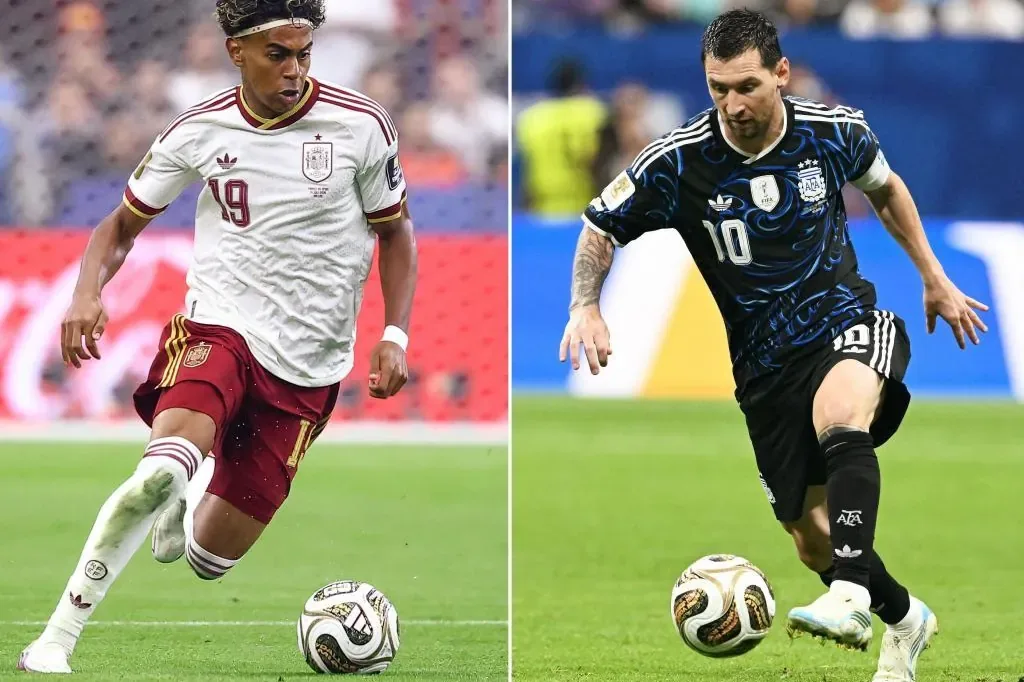



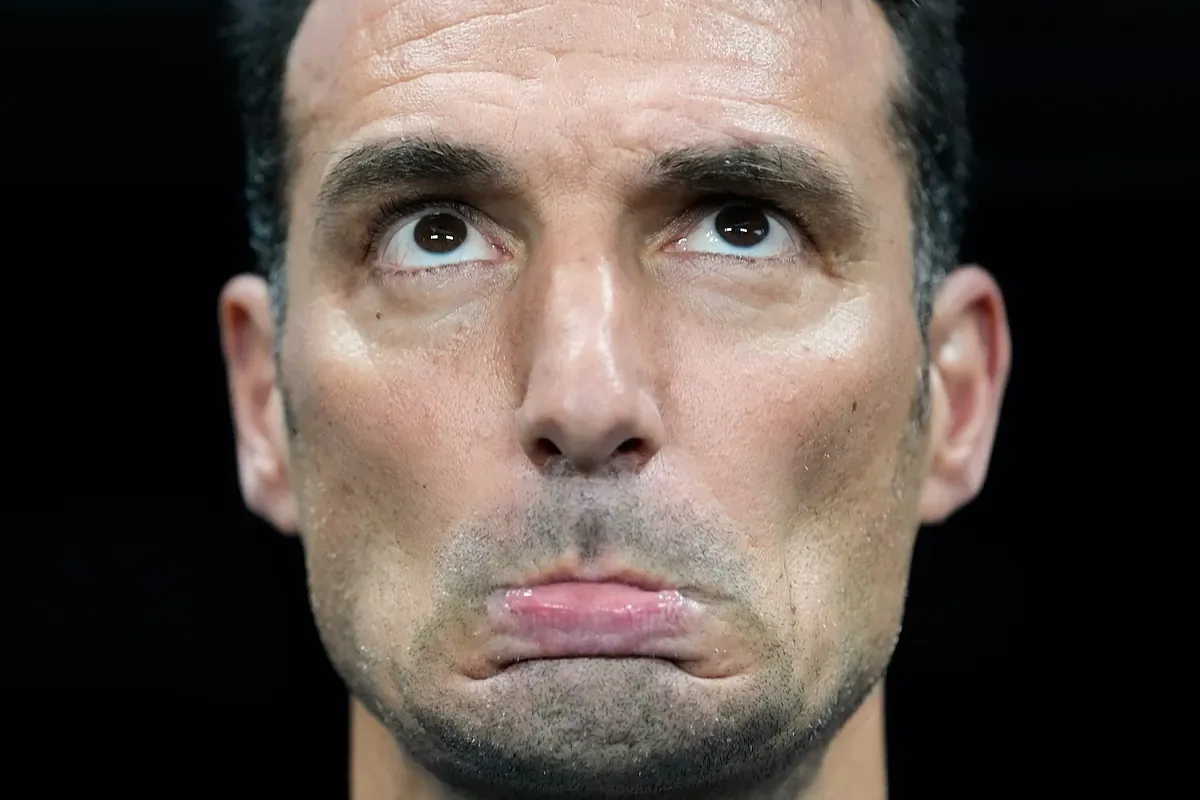
A Lionel Scaloni (Pujato, 1978), the members of his coaching staff and the players of the Argentine national team affectionately call him La Llorona for years, as a result of the few reservations the coach has about showing his feelings. «I always get emotional. They already call me ‘La Llorona‘, but I don’t care,» he said after coming back against Egypt in the round of 16. On Wednesday, after being reborn again to beat England, he barely shouted. He closed his mouth, pressed his lips, and his eyes reddened. It is his way of being, acting, and leading. An emotion as a banner that he has passed on to his players, Messi first, with the historic final against his mentor De la Fuente‘s Spain on the horizon.
Read more Waiting for Lamine: «We have come this far, now it’s your turn, kid»
Scaloni has cried on the bench, in field-side interviews, in the press room, and in the locker room. He has not held back for a second. «What a group of players, brother,» he replied, unable to speak, in the post-match talk after the quarterfinals against Switzerland. «That’s it, sorry. I can’t look at you, I’m very emotional. I have to go,» he told the journalist, powerless before the tears.
It was not the first time. «Here comes La Llorona,» jokes Walter Samuel. His wife, Elisa, always says that a few years ago, during the birth of their son, he opened his eyes for a moment and saw the doctors together, looking down. Her husband had fainted from emotion. The nickname La Llorona arose from the technical talk in the locker room just before the Qatar World Cup final. «The worst technical talk of his life», the players admit. In the documentary ‘The Scaloni Method‘, the albiceleste players detail that speech full of interruptions and tears. «He did it his way. Sometimes you don’t need to say much,» said De Paul.
“And he starts to cry”
In the Lusail locker room, Scaloni began to explain the lineup. «He tells us: ‘The team is going to play like this, I don’t know. Fideo (Di María) on the left, you’re going to cause a huge mess for Koundé, the match is there. You’re going to kill him. Well, and I don’t know…’. And he starts to cry,» recounted Dibu Martínez. «Cry and cry, and when he wanted to speak, worse,» he adds.
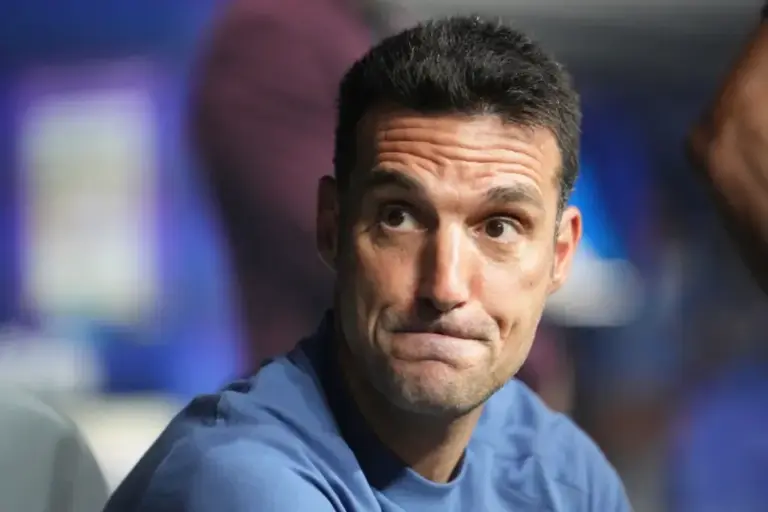
«When he was going to speak, but couldn’t, he tells Pablo (Aimar): ‘You speak, you speak’. I don’t know if anyone ended up saying anything,» Messi recalled with laughter. «Walter (Samuel) didn’t want to either. But Scaloni conveyed what he wanted,» said De Paul.
His bond with the locker room is intense. «He doesn’t command, he accompanies,» they admit in the albiceleste. As if constantly thanking the opportunity he has been given. Scaloni landed in the national team with no experience in club football and with just a few months in Mallorca’s youth teams, others as an analyst for Sampaoli at Sevilla and the national team, and a stint managing Argentina U-20.
The doubts at the start
He arrived at a very turbulent moment, just after the round of 16 elimination in the 2018 World Cup against France and after a series of confrontations between Sampaoli, some assistants like Beccacece, and other players. Scaloni, who maintained very good harmony with most internationals after his time with the national team, was the peacemaker of many arguments and ended up gaining weight in that group.
Therefore, after the tournament in Russia, Tapia, president of the federation, appointed him as coach provisionally. Messi, after announcing in Russia that he was leaving the national team, returned in March 2019 and the albiceleste finished third in the Copa América that year, confirming Scaloni in the position after the «no» from several experienced coaches, such as Pochettino. From there, what you already know: champion of the 2021 and 2024 Copa América and the 2022 World Cup.
The ‘professor’ De la Fuente
In Scaloni’s rise to the elite, Luis de la Fuente has his point of importance. In 2017, the now Spanish coach was one of the Argentine’s teachers in the UEFA Pro Courses organized every year by the Spanish Football Federation in Las Rozas. The albiceleste coach was part of a generation that also included Andoni Iraola, now Liverpool coach; Manuel Pablo, former Deportivo de La Coruña player, and former Real Madrid player Redondo.
«I have a special relationship with Luis because he was my teacher at the coaching school. When we became world champions, I had a very nice talk with him and I think it helped him. I’m not saying it arrogantly, but it’s true. We know each other well and it makes me happy to see him in the final, just as it makes me happy to see Spain, since you know I live there and have Spanish family,» the Argentine said at the Atlanta press conference after beating England.