




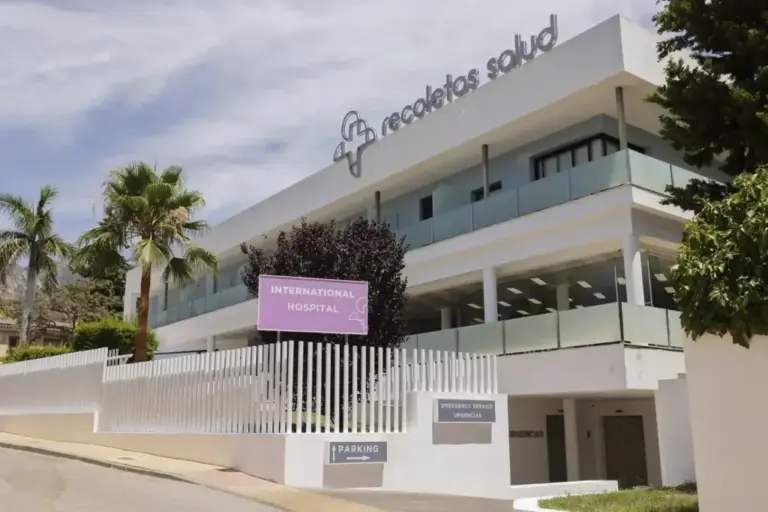
The hospital appears after turning the bend of a residential street. It is an area away from the hustle and bustle of Marbella, but close to the urban center. The surroundings share the calm of Fontanilla beach, located a few meters away. The taxi stops at the entrance. The valet approaches and opens the door before the reporter reaches the inside handle. “Welcome!” he exclaims, smiling. It seems they take very seriously making everyone who comes to the medical center feel special. Such meticulous treatment can even make those unaccustomed to it feel uncomfortable.
But patients of Hospital Recoletas Salud Marbella are precisely looking for that kind of attention. Personalization is part of the service: from choosing the menu to the possibility of selecting the surgeon who will perform the intervention. “Here they are treated like kings”, says one of the workers.
The facilities are spacious, well-lit, and decorated with works of art. The place became operational last October and still smells new. There is no one waiting in the waiting rooms. “We schedule the patient for the exact time they will be seen, and they will be in consultation for at least 30 minutes,” says the managing director, Carmen Rodríguez. Today, a “heart-healthy breakfast” is offered in the cafeteria.
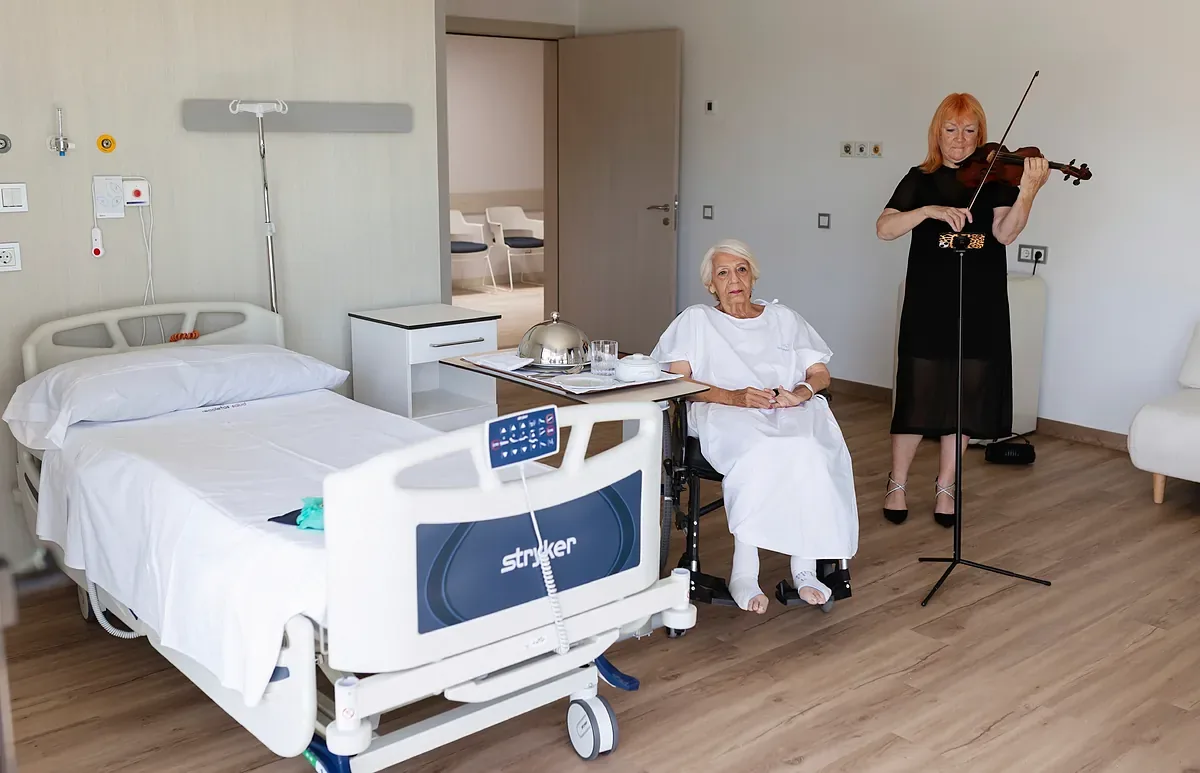
“I came in here dead and I’m leaving alive”, asserts Elena, an 86-year-old patient who is about to be discharged. Last Christmas, she suffered a fall that left her hip and femur broken. She was operated on in Córdoba, but the wound became infected, and she ended up in a nursing home with the suggestion to go to a physiotherapist. “The pain was terrible; every time I went to the physio, streams of blood and pus came out,” she recalls. Her odyssey ended in Marbella, where after two weeks of hospitalization, they managed to cure her infection.
“The care has been wonderful. The professionalism, dedication, closeness, and human quality have been a great support for me and my entire family,” she gratefully says. Afterwards, she enjoys a few minutes of music, another service offered by the hospital. The artist Alison Harling takes out her violin and starts playing in Elena’s room. Tears escape her eyes, and she clarifies that it’s “because it’s so beautiful.” She asks her sister to give her “a little tip”. But Harling rejects the 100 euros they offer her. “I have experience playing for the elderly in residences and for palliative patients, and I see how it improves their mood. Music is very important for bringing out emotions,” shares the violinist.
Personalized hospital stay
The violin is not an isolated detail. The way this center operates is called a boutique hospital, a model that combines highly specialized healthcare with a personalized experience, designer facilities, and state-of-the-art technology. The center’s philosophy is to adapt the hospital stay to the needs – even whims – of each patient “without sacrificing medical rigor,” as pointed out by Dr. Manuel Muñoz, one of the center’s leading cardiologists and a member of the management team. Rodríguez maintains that it is “the only one of its kind in Spain.”
Ultra-rich for a day: my luxury life in Spain’s most expensive mansion
- Writing: ANDROS LOZANO Marbella (Málaga)
- PHOTO REPORT: MARTÍN MESA
According to the hospital management, their patients have a high purchasing power profile —hospital admission starts at around 500 euros per day—, demanding privacy and the highest quality. They receive numerous international patients. The doctor adds that these are people “very concerned about their health and disease prevention.” They are patients who seek to make their hospital stay as comfortable as possible. “Marbella is the perfect city for a boutique hospital“, says Rodríguez.
Among the advantages they offer, Rodríguez mentions the concept of an “open hospital”, where a specialist from another center, even from outside Spain, can come to Recoletas Marbella to operate, consult, or give a second opinion if the user requests it, provided that doctor’s schedule allows it and with the patient’s commitment to assume that additional cost. “Recently, a woman arrived at the Emergency Room who fell and broke her hip. She wanted a specific specialist, who did not work at the hospital, to operate on her. It was a Saturday at 11 at night, and we had to activate the entire protocol for her to come. In the end, we succeeded,” the manager illustrates.
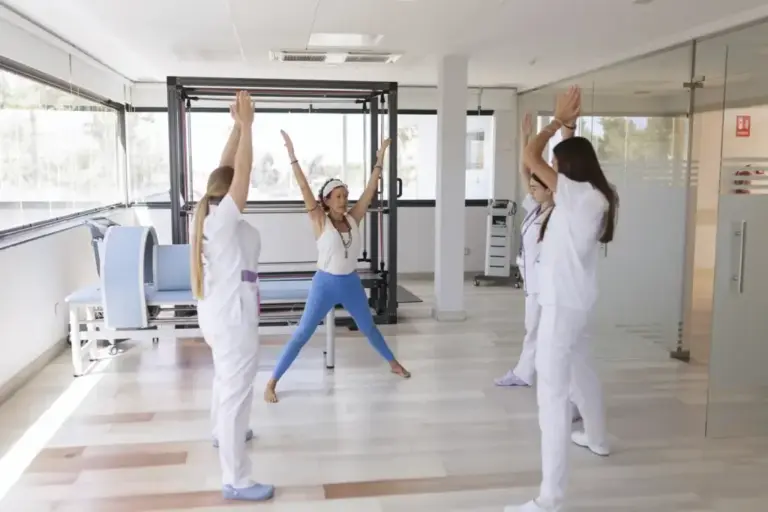
The most common requests are gastronomic, when a patient craves something not on the hospital menu. “Perhaps they want a dish from the Marbella Club; well, if their doctor authorizes it, we go and buy it for them,” state Rodríguez and Dr. Muñoz. Some sick, but vain, individuals have requested hairdressing services. Others have enjoyed personalized yoga classes. “If they cannot move because they are bedridden, we work on relaxation, positive thinking, and moving the body in one way or another depending on the pathology. Everyone can practice this ancient philosophy so that the person connects with themselves and feels good, one of the keys to their healing,” explains Sol Jiménez, the yoga instructor.
Read more The PSOE leadership accepts Zapatero’s explanations: “We maintain our support”
But not all wishes can become orders. The healthcare and management team has had to learn to say “no” to several patients. They already have several anecdotes. Rodríguez recounts one of them. “There were two who became friends and asked for a bottle of champagne because they wanted to celebrate being discharged the next day. I had to go and tell them no, and explain that this is a hospital, that we provide all facilities for them to be comfortable, but that we couldn’t go that far.” Or that patient who wanted to travel from Ibiza to Marbella in a medicalized plane to be treated there without the necessary health authorization.
Safety before desires
“We always maintain what is most important, which is patient safety from the moment they walk through the door until they leave. Safety in all senses and at a medical level is fundamental,” emphasizes Dr. Muñoz. “Even if we have a care component with a very VIP patient experience quality, patient safety comes first. This is not a hotel; this is a hospital,” concludes Rodríguez.
Opened less than a year ago, Recoletas hospital focuses its activity on all medical-surgical specialties. The building has 20 private rooms inspired by the comfort of a hotel —four of them suite-type—, as well as operating rooms and an imaging diagnostics area equipped with state-of-the-art technology. In the Emergency Room, there are only seven boxes because the goal is to transfer the patient to a room as soon as possible.
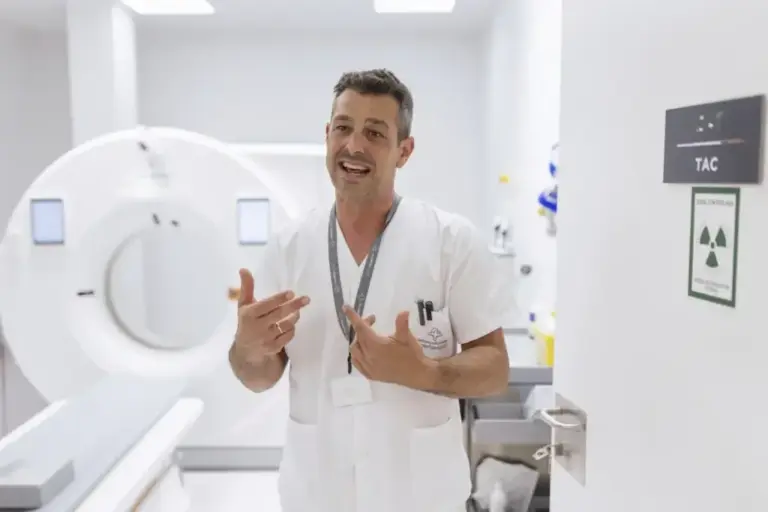
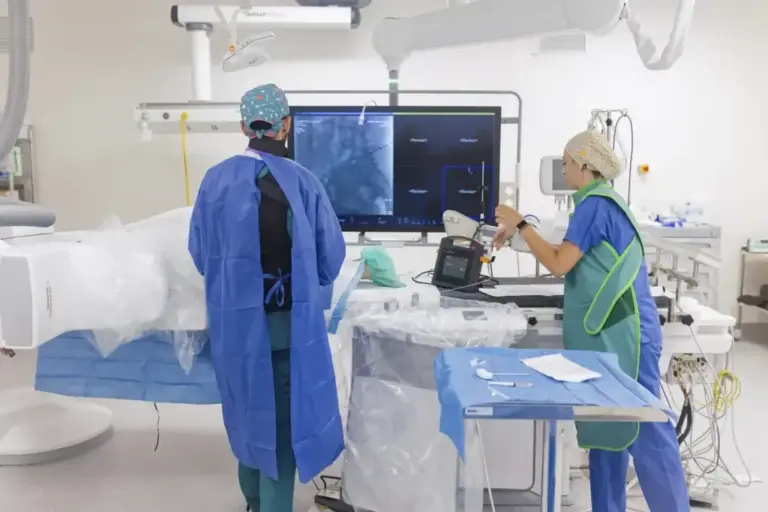
Technology is one of the main attractions for both specialists and patients. The imaging diagnostics area was created from scratch and features high-end equipment, including a three-tesla MRI and a spectral energy CT scan capable of obtaining more precise images while reducing radiation. Healthcare technician Antonio Galindo, one of the service supervisors, assures that in his 25 years of profession, he had never worked with equipment of this level. “This hospital understands excellence as a commitment to each patient, not as a generic promise. That’s why we have opted for the most advanced technology,” details Dr. Eduardo Molina, head of the Hemodynamics Unit.
Vanessa, 50 years old, is another patient who has been in this healthcare complex. After going through another private hospital where a pulmonologist told her she had “anxiety,” the Marbella center found the correct diagnosis: bilateral pneumonia caused by bacteria. She was hospitalized for about a month. “The care and attention are very close, very personalized. They are attentive to you at all times, even for food, letting you choose what you want to eat each day. It’s fantastic,” she describes.
“Thanks to them, I am alive. Thanks to the great professionalism of the medical team, nurses, assistants, and orderlies. All caring for me with great closeness and humanity. It’s premium care,” Vanessa continues, highlighting the cardiologist’s work: “Dr. Muñoz goes above and beyond for his patients. I have never met a doctor like him, who, when faced with a problem, dedicates all the necessary time to solve it, accompanying the patient at all times in the most professional and human way possible.”
Anita‘s experience, at 65 years old, was similar. She had “a broken vertebra and another crushed, already reaching the spinal cord.” At a center in Malaga, they told her that doing anything to her spine was like “nailing a nail into a flan”. With no alternatives, her back pain was increasing and already prevented her from walking, leading her to a wheelchair. Until a friend recommended she seek treatment in Marbella.
Anita was operated on in January. “The pain stayed in the operating room”. The rest of her experience was as this boutique hospital promises: “The attention was 10 out of 10. The treatment, unbeatable.” Like Elena and Vanessa, she left the place with her health recovered. After all, “this is not a hotel; this is a hospital”.