







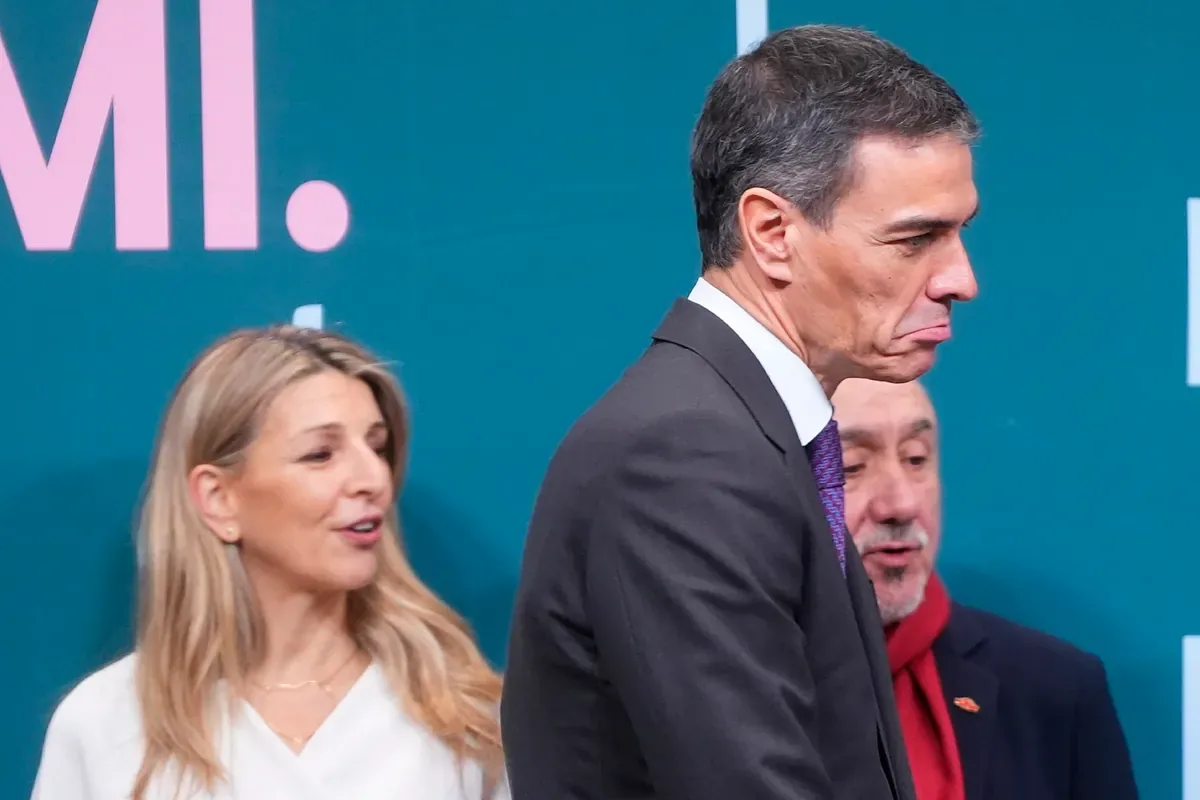
The extension for the operation of the Almaraz nuclear power plant has opened a rift in the coalition Government, on a front where the partners had shown unity, even in the most crucial moments, such as the blackout. But this Friday, following the announcement from the Ministry for the Ecological Transition, Sumar has reacted with a notable load of accusations against the PSOE for its absolute opposition to extending its activity until 2030.
The party still led by Yolanda Díaz highlights its split with Pedro Sánchez and points out that it is “a decision serving the oligopoly that hinders the energy transition and mortgages the citizens.” Sumar accuses its partner of having yielded to the pressures of companies in the sector and the positions of the right and far right, supporters of nuclear power.
“The maintenance of the nuclear park responds to corporate pressures and not to technical, environmental, or economic competitiveness needs,” summarizes the Government’s minority partner in a critical statement.
From the ranks of the alliance that includes IU, Movimiento Sumar, Más Madrid, and Comunes, their “most absolute disagreement” is emphasized, and the PSOE is accused that its decision, published this Friday in the BOE – it is unknown whether with Sumar’s knowledge or not – represents “a profound breach of the commitment expressed for years to the citizens.” In other words, going against the Government coalition’s own agreements.
In Sumar’s opinion, “continuing to exceed the useful life of these infrastructures postpones real decarbonization supported by renewables and imposes unacceptable costs and risks on society, as well as increasing the price of energy.”
In its statement, full of accusations, it also points to “failures in safety matters by Iberdrola, Endesa, and Naturgy” and predicts that “the costs of extending the useful life of the [Almaraz] plant will fall on public coffers and mortgage budgets and, with that, the resources allocated to citizens.”
“Wasting time and money on infrastructures that have already completed their useful life cycle is a waste and a scam to the citizens,” it states emphatically.
Read more The war in the Middle East forces Australia to rethink its energy dependence
“Every euro we spend keeping infrastructures alive that should be closed is a euro we are not spending on boosting our security, sovereignty, and energy independence with renewable energies. Renewables are the key to our economic and energy future,” it says.
Sumar’s energy model focuses on “security, sovereignty, and energy independence” limited to “renewable energies,” overlooking that the blackout recorded last year occurred precisely due to an imbalance between renewable and traditional sources, such as nuclear.
In that sense, it denounces “the constant concessions to the energy oligopoly,” which, says the minority partner, “continues to have privileges instead of obligations.” Thus, it censures the PSOE for “following the path of the right and far right” and for being “on the side of those who deny climate change and want to delay the energy transition as much as possible.”
“It is difficult to understand that we continue maintaining obsolete infrastructures instead of promoting a solar present with greater sovereignty, more economic and political democracy,” it summarizes in its note.
Faced with the clash within the Government, Sumar proposes its own roadmap and urges the PSOE to follow that line. It demands, it says, “to maintain the agreed closure schedule” with Pedro Sánchez, keep the taxes applicable to the nuclear park and require that the fees cover the real cost of waste management and dismantling without passing it on to citizens, channel investments towards storage and integration of renewable energies, audit ENRESA’s accounts and demand transparency in transfer prices of vertically integrated companies, request direct subsidiary liability from the companies owning the plants, and approve an economic and productive transition plan for the Almaraz area that guarantees industrial diversification.


