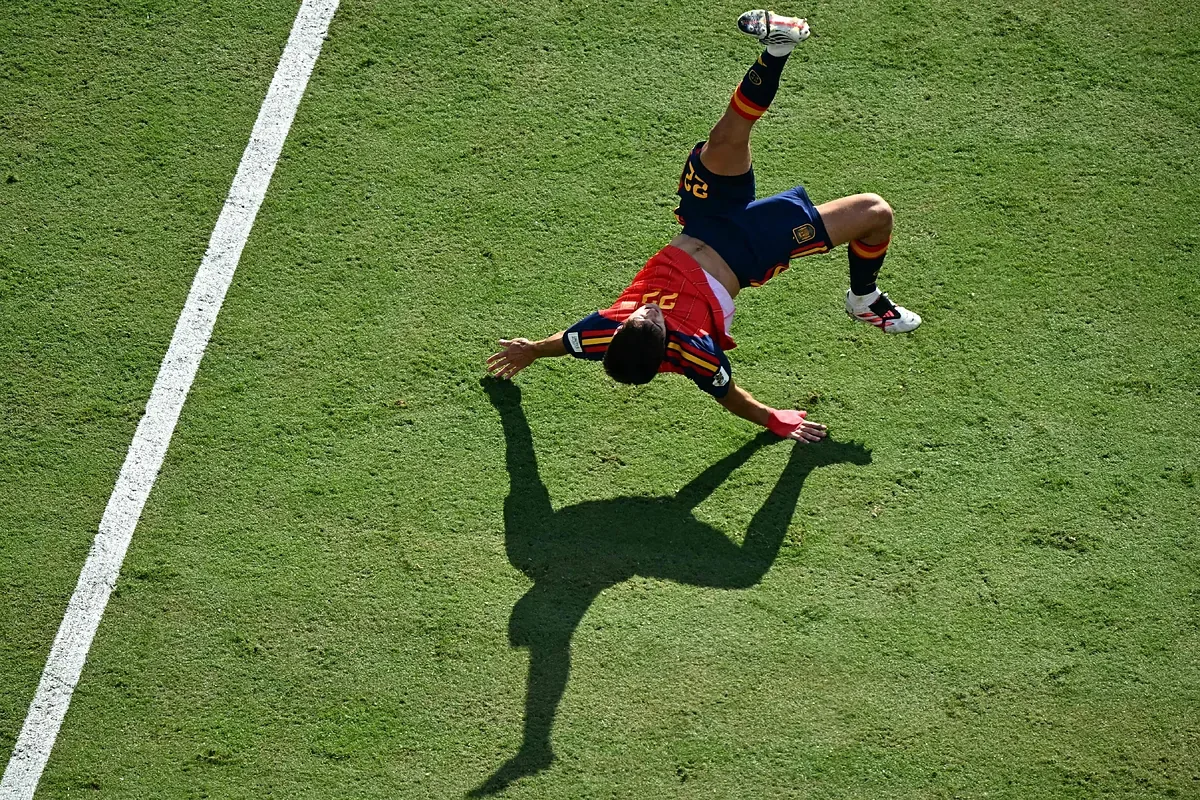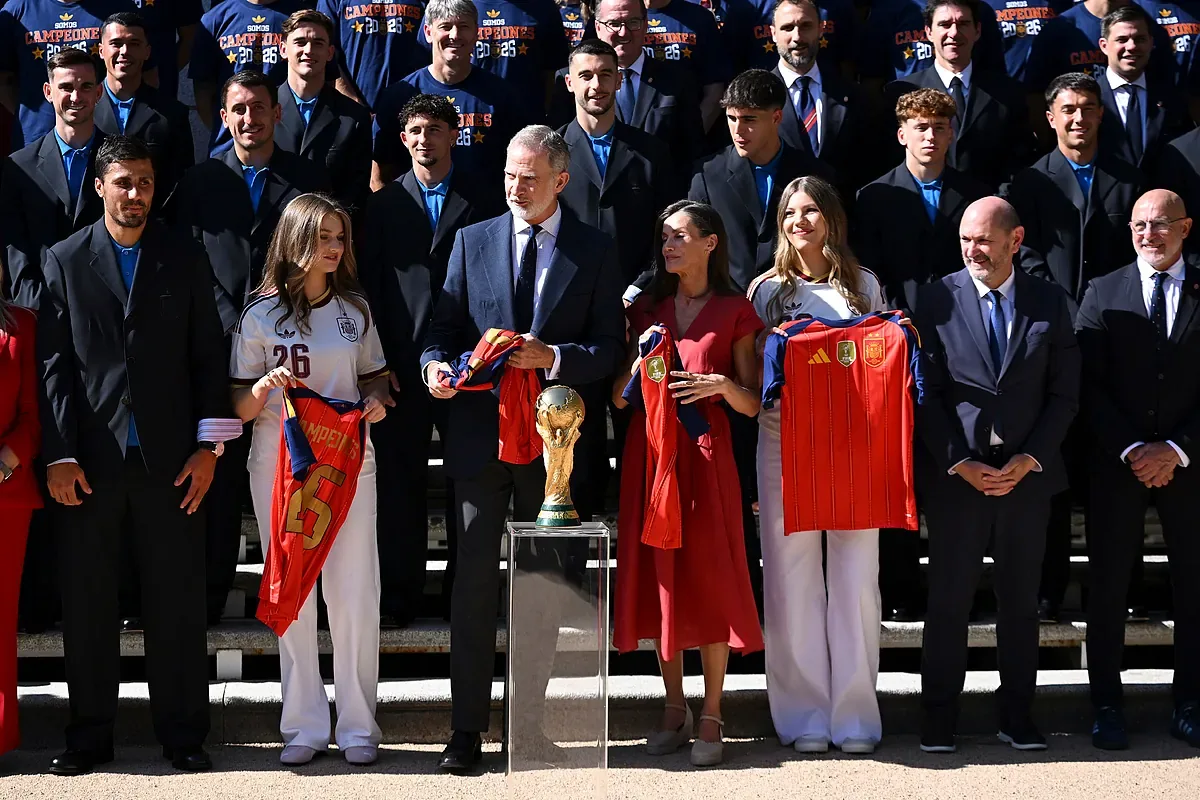





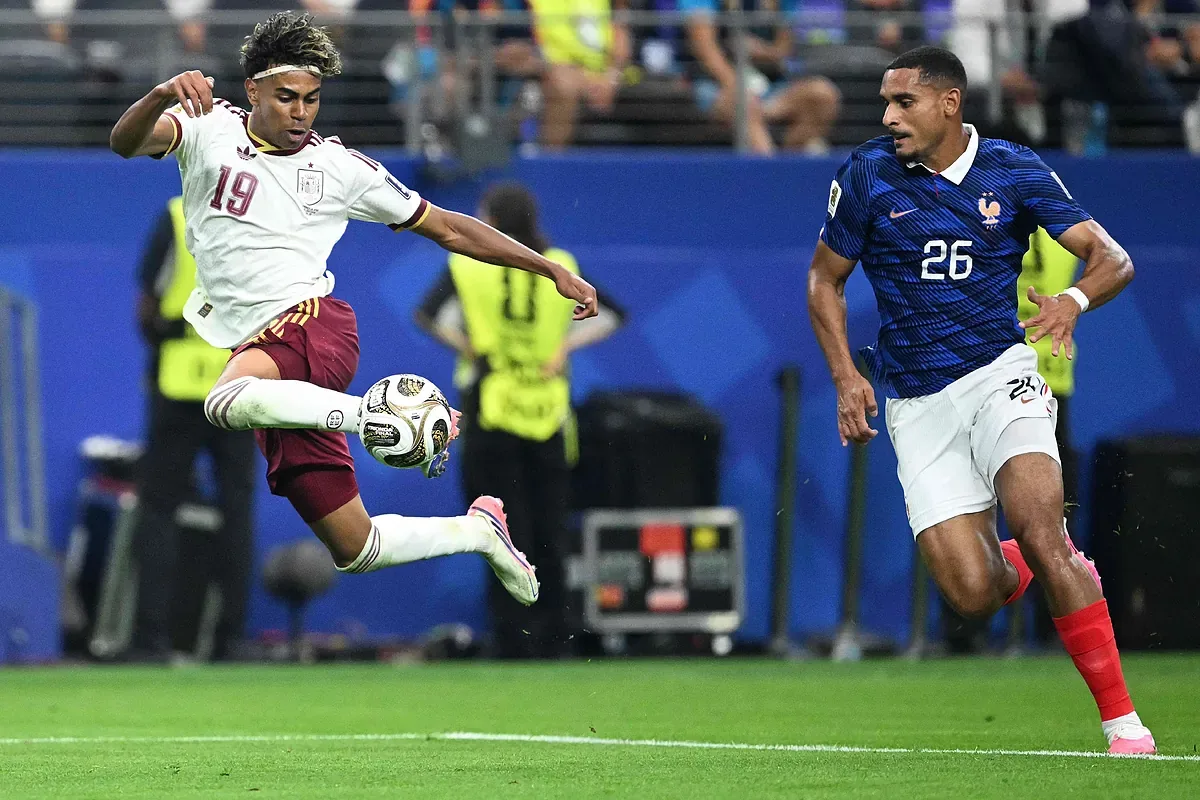
The hours following Spain’s victory over France in the World Cup semifinals saw in Dallas—a warm, affectionate city hosting nine matches of the tournament—the comment from outsiders (many) and locals (few) was the same: “What a team!”. They referred, both in a downtown bar and in a club on the outskirts, to Spain, whose players were scattered around that same city with their families. Luis de la Fuente has allowed a relaxed regime in the camp and with the ticket to the final in hand, the least he could do was give free time to the protagonists of one of the nights, late in the state of Texas, that will forever remain in the history of football and Spanish sport.
Read more The natural, biological process of amnesty
The numbers matter less. In fact, the official ones are misleading, since according to FIFA, Spain had little possession for what Spain usually has (45%), shot the same number of times as their rival (10), and France shot more on target (three to two). It doesn’t matter. In football, numbers offer clues, but the eyes say much more, and the world watched, astonished, an insulting superiority of Spain over France, crystallized in an undeniable 0-2 that rightfully places itself on the podium of the best matches of the national team in its entire history. Dallas joins its name to cities like Kiev, Vienna, Durban, Querétaro, Valencia, and Gelsenkirchen, other legendary settings in the golden book of our football.
WORLD CUP 2026 SEMIFINALS
“We won by being ourselves, playing to find free spaces, knowing that if we found the free man and overcame their first line of pressure, we could play comfortably. We had to find the spaces behind their players who pressed first. It was the players who interpreted it brilliantly because no matter how much you tell them these things, if they are not able to discover those spaces, the paper and arrows are of little use.” These are De la Fuente’s words in the AT&T Stadium press room to explain, football-wise, what happened in Dallas, and since the 0-2 is very recent, it is not worth explaining it again.
EURO 2012 FINAL
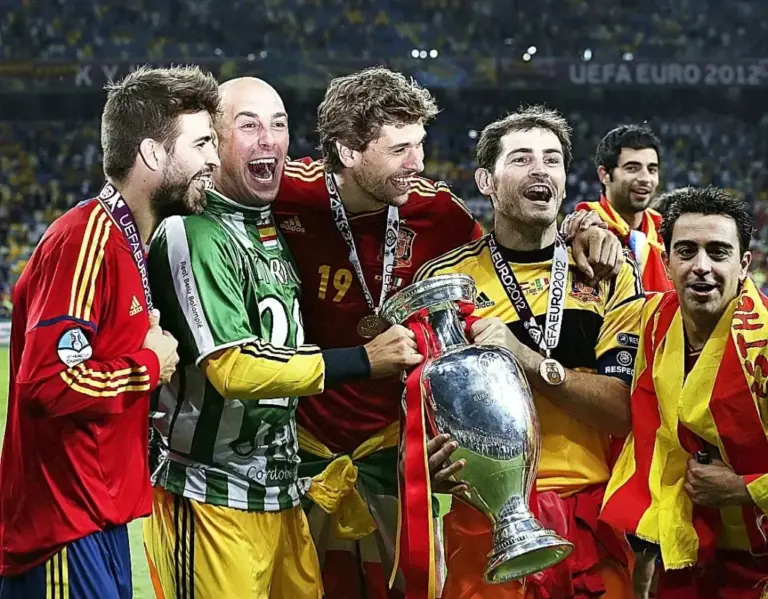
Match played in Kiev on July 1, 2012, was considered, until Tuesday, as the sublimation of the Spanish style of the last two decades. After having drawn against the Italians in the group stage, having suffered along the way to that final (the team had to resort to penalties against Portugal in the semifinals), that night in the Ukrainian capital will be forever remembered for the tremendous dance of the Vicente del Bosque team. It was a hymn to football, in front of more than 63,000 spectators, with goals from David Villa, Jordi Alba, Fernando Torres, and Juan Mata. “We dominated, moved the ball quickly, and created many chances. It was a perfect match,” summarized Iniesta. Casillas ended up telling the area referees to blow the final whistle: “Respect for Italy!” demanded the captain for a Nazionale that suffered the rigors of one of the best teams of all time.
EURO 2008 SEMIFINALS
On June 26, 2008, at the Ernst Happel in Vienna, Spain, which had broken down the mythical (and forgotten) quarterfinal wall against Italy thanks to Cesc Fábregas‘s coolness from the penalty spot, played the penultimate step of the Euro that gave rise to everything that has come after. After a first half where the Russian team limited itself to resisting the ball movement of their opponent, Luis Aragonés‘s team, already led in midfield by Xavi Hernández, offered a powerful recital in the second half. Three quarters of an hour of total football culminating with goals from Xavi, Dani Güiza, and David Silva. The passport to the final, where a goal from Torres, until then scoreless, would defeat Germany, certifying the second continental title. It was the tournament of Marcos Senna, Andrés Iniesta, Xavi and Silva, Torres and Villa, Puyol and Ramos, Casillas… The place where it all began. The founding myth of one of the most dominant national teams of all time.
Read more The possible FIFA sanction to Argentina for a banner: “The Malvinas are Argentine”
2010 WORLD CUP SEMIFINALS
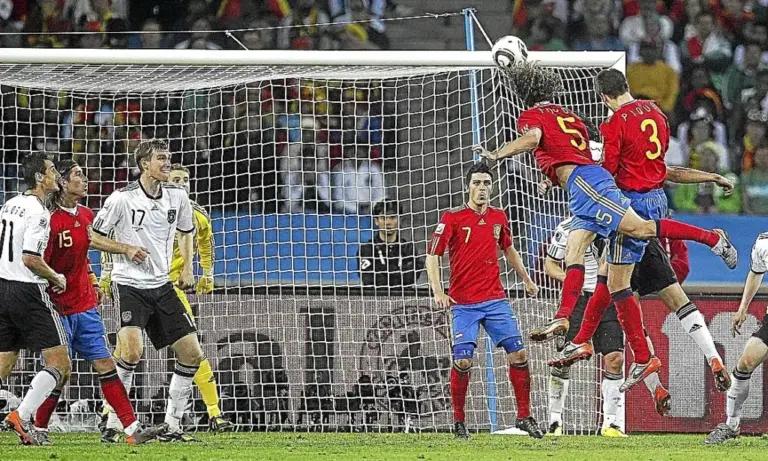
On July 7, 2010, at the Moses Mabhida Stadium in Durban, Spain faced the great sensation of that World Cup. Joachim Löw’s Germany had dazzled with their displays against England (4-1) and Argentina (4-0), driven by the emerging talent of Mesut Özil, Thomas Müller, Manuel Neuer, Sami Khedira… As happened on Tuesday in Dallas, the general feeling was that the Germans were favorites. But that night, Vicente del Bosque‘s team signed one of the most mature matches in its history. Spain monopolized possession, neutralized all the virtues of their rival, and turned the match into an exercise of absolute control. In the 73rd minute came the play that broke the Mannschaft: a corner taken by Xavi to Puyol’s head, emulating the strategy they had practiced so many times at Barcelona. The 0-1 qualified Spain for its first World Cup final in history. Four days later, at Soccer City in Johannesburg, Iniesta’s goal in the 116th minute would decide the toughest possible final against the Netherlands. The only World Cup, pending what happens on Sunday, that shines in the Spanish football trophy cases.
1986 MEXICO WORLD CUP ROUND OF 16
Here the collective memory of one of the most special World Cups in the history of the Spanish national team matters. It was June 18, 1986, at the La Corregidora stadium in Querétaro, at a witching hour in Spain (midnight). The team staged one of its most memorable comebacks. Miguel Muñoz‘s team faced a Denmark that had amazed during the group stage and that many considered a title contender. The Red Dynamite took the lead with a penalty converted by Jesper Olsen and for many minutes it seemed the Spanish path ended there. However, before halftime, Emilio Butragueño appeared to take advantage of a poor pass from Olsen himself. What happened next is part of legend. The Madrid player scored four goals, equaling a feat until then held by Ernst Wilimowski, Ademir de Menezes, Sandor Kocsis, Just Fontaine, and Eusebio. Alongside El Buitre shone Míchel, Julio Alberto, José Antonio Camacho, and the rest of a generation that found its great moment of glory that afternoon. The 5-1 victory meant passage to the quarterfinals, where they fell to Belgium on penalties. The revenge against the Red Devils had to be taken six days ago, thanks to goals from Fabián Ruiz and Mikel Merino for the 2-1 in Los Angeles.
QUALIFICATION FOR EURO 2000
On March 27, 1999, Mestalla witnessed one of the greatest offensive displays in the history of the national team. The team led by Camacho arrived needing a great night in that qualifying phase for Euro 2000 and ended up signing an anthological thrashing. Raúl González was the great protagonist of an unforgettable match by scoring four goals, accompanied by a double from Isma Urzaiz and goals from Fernando Hierro and Fran, plus an own goal from Arnold Wetl. Spain was already leading 5-0 at halftime and turned the second half into a festival against a completely overwhelmed opponent. On the pitch coincided some of the players who would mark Spanish football in the late nineties, such as Pep Guardiola, Raúl, Hierro, Michel Salgado, Juan Carlos Valerón, and Gaizka Mendieta. The 9-0 remains one of the biggest thrashings handed out by La Roja, only surpassed this century by the 10-0 against Tahiti during the 2013 Confederations Cup.
SECOND GROUP STAGE MATCH OF EURO 2024
Let’s talk about this team. The current one. It was June 20, 2024, in Gelsenkirchen. It’s curious because it was in the group stage and Spain could only win by the minimum, with an own goal from Riccardo Calafiori, but the team offered one of the most convincing performances ever against what was then the reigning European champion. The result was, it should be emphasized, barely 1-0, but the score was very short in reflecting what happened on the pitch. De la Fuente’s team dominated their opponent from start to finish, with Nico Williams and Lamine Yamal showcasing their talent for the first time. Gianluigi Donnarumma prevented a much greater punishment with several brutal interventions and was probably the best Italian of the night. Spain achieved mathematical qualification for the round of 16 and sent a resounding message. From then on, three other world champions would fall: Germany, France, and England.