





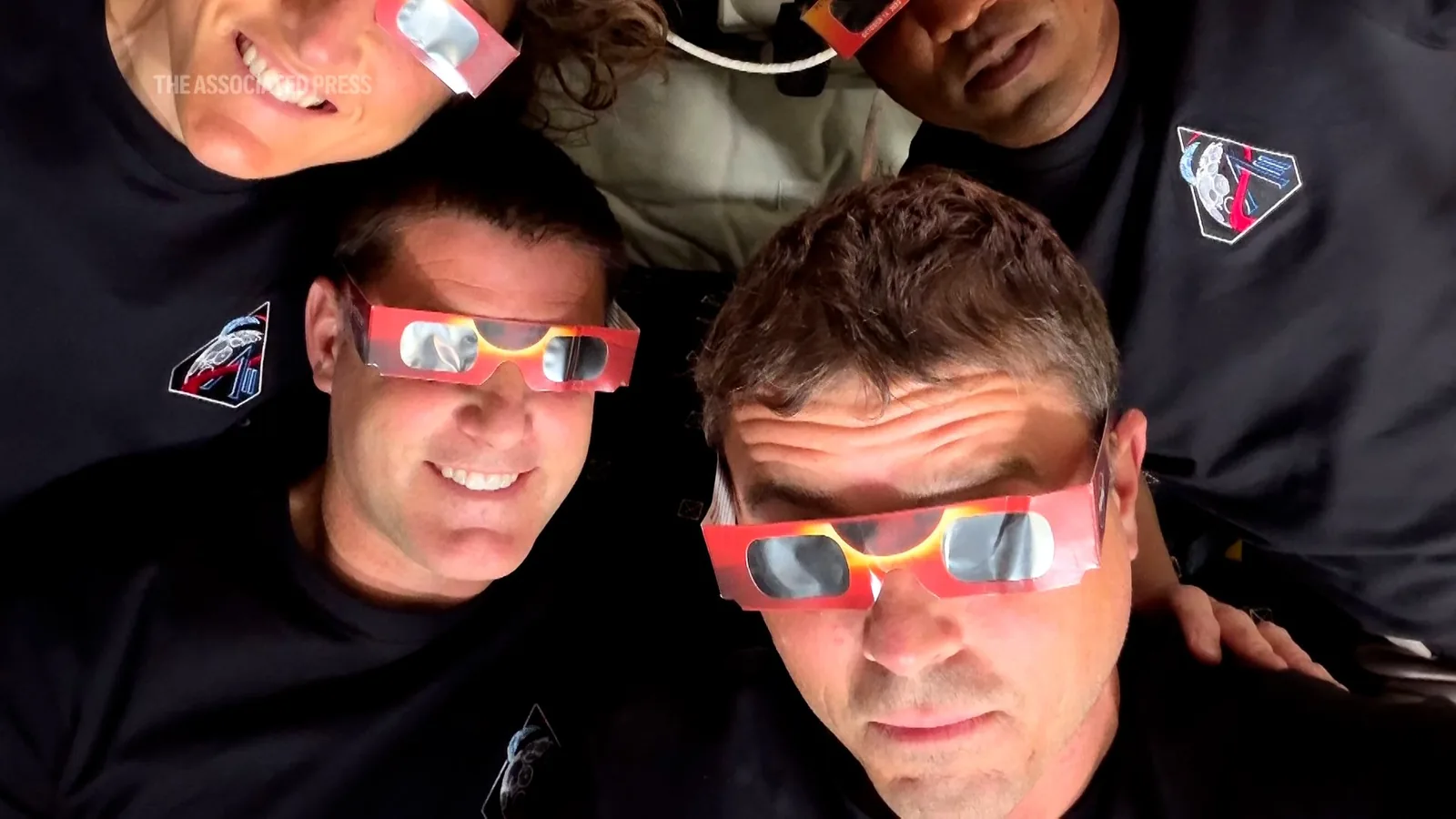
Next Wednesday August 12 we have in Spain a truly exceptional Date with the Sky that we cannot miss. A total solar eclipse does not happen every day, nor every year, nor even every century in each specific place on Earth. Millions of people are preparing to watch how, for a few moments, the Moon completely hides the solar disk. But to fully enjoy the spectacle, you have to prepare. Here we offer you ten keys to live, intensely and safely, the most spectacular moments of the sky.
Read more Rodri rejects the offer from Real Madrid and will try to sign for Barça
1. Choose well where you are going to watch it
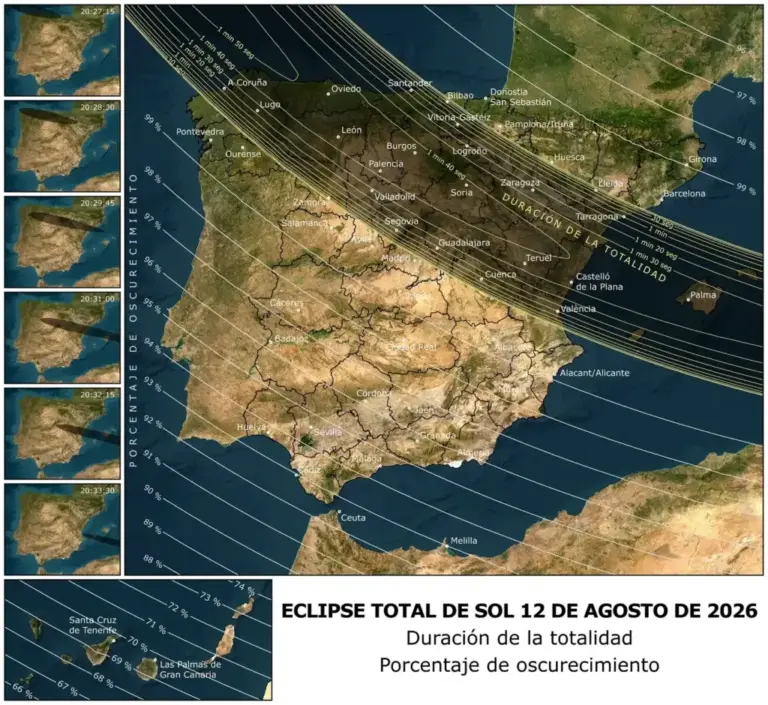
To observe totality you must be located within the path of totality, which is relatively narrow. It is very likely that we already have the observation spot well chosen. But if you do not have it yet, remember that it is advisable to choose the place in advance, with a clear western horizon (since the eclipse takes place at a very low elevation). Of course, it is highly recommended to know the exact start and end times of the eclipse. For this, consult the maps and viewers with all the official information prepared from calculations made at the National Astronomical Observatory (IGN): eclipses.ign.es and trioeclipses.es.
It is not essential to obsess over being exactly on the central line of the path of totality: although totality reaches its maximum duration there, the difference with other points may be just a few seconds. Save yourself unnecessary travel. Often it will be much more important to have enough space, avoid traffic problems, or find a place with good weather conditions.
2. Look at the sky… but also at the weather forecast
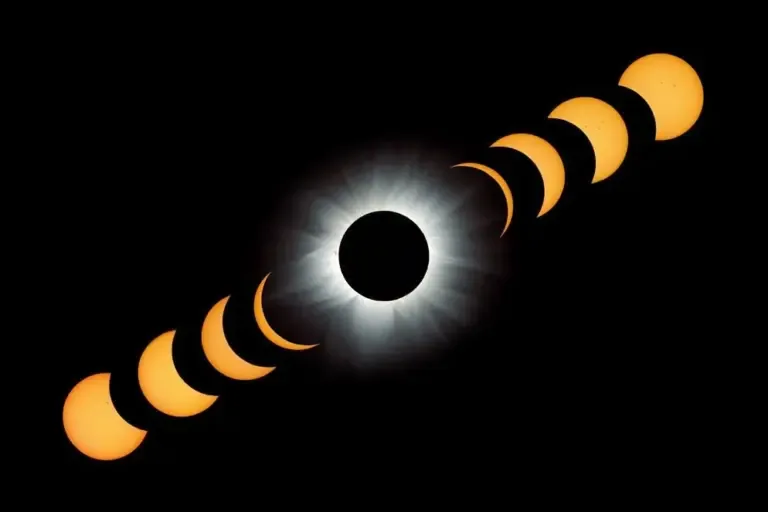
In an eclipse, we can calculate with extraordinary precision where the Moon will be and when each phase will start and end. What we cannot control are the clouds. That is why it is advisable to check the weather statistics of the chosen area in advance and, now that August 12 is so close, follow the specific predictions for that day. If the expected conditions are unfavorable, we might still have time to change our plans and look for a place with better observation possibilities.
3. Plan your trips and, before returning, enjoy the Perseids
Total eclipses attract many people to the path of totality. That means traffic jams and special regulations may occur. If you are going to travel, plan it in advance and consider not only the outbound trip but also the return. A good idea might be to wait a bit after the eclipse ends before starting the return: when a crowd of vehicles tries to leave an area simultaneously, the experience can be much less pleasant.
Remember that this eclipse comes with the bonus of the Perseids on that same night, with the new moon. Take advantage of the occasion and stay a while at the site to observe the meteors.
4. Normal sunglasses are not suitable
This is probably the most important recommendation: never look directly at the Sun without proper protection. Not even when a large part of the solar disk is covered by the Moon.
Conventional sunglasses do not provide the necessary protection, nor do several pairs of sunglasses stacked, X-rays, CDs or DVDs, smoked glass, aluminum foil, or other homemade filters. Looking directly at the Sun can cause serious and permanent eye injuries.
5. Check that your eclipse glasses are really safe
Specific eclipse glasses must comply with the international standard ISO 12312-2:2015. In Europe, they must also bear the corresponding authentic “CE” mark. It is important to check that the packaging or the frame itself clearly shows the relevant indications, as well as the manufacturer and usage instructions.
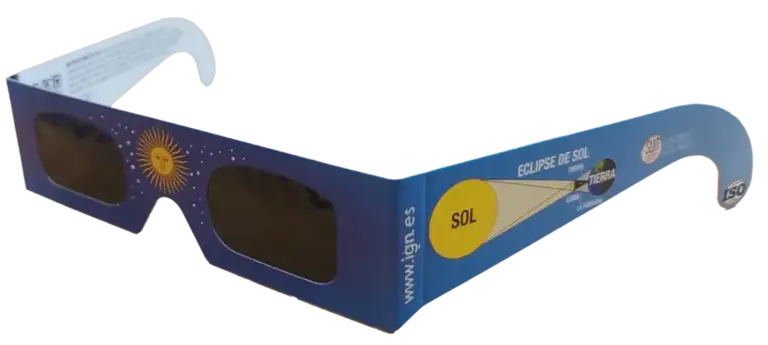
Before using them you must check that they have no scratches, holes, cracks, or any other damage. If you normally wear prescription glasses, it is not necessary to remove them: eclipse glasses can be worn over them.
6. Put them on before looking at the Sun
It is not enough to have good glasses: you also have to use them correctly. The recommendation is to put them on before directing your gaze at the Sun and take them off after looking away.
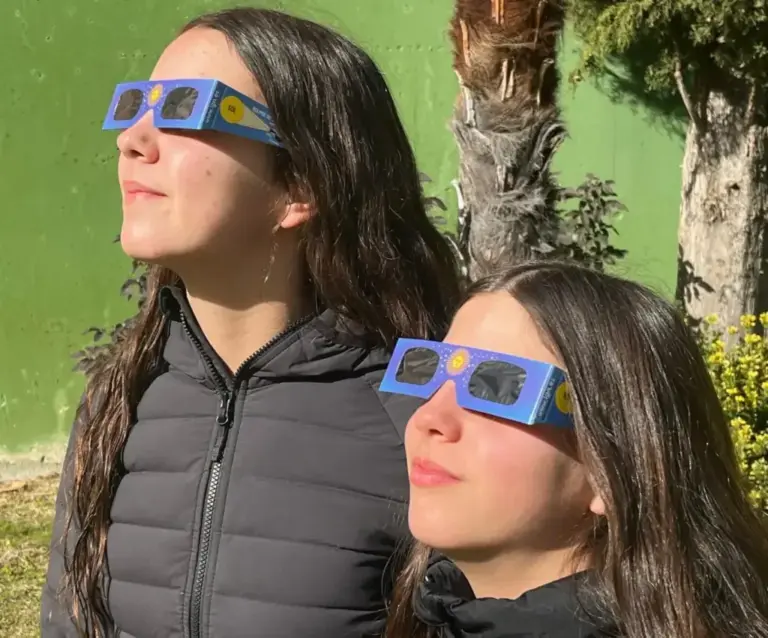
The protection must be used during all partial phases. Even if the sky darkens and it seems that sunlight has greatly diminished, the radiation coming directly from the solar disk is still dangerous for our eyes.
7. There is only one moment when we can take them off
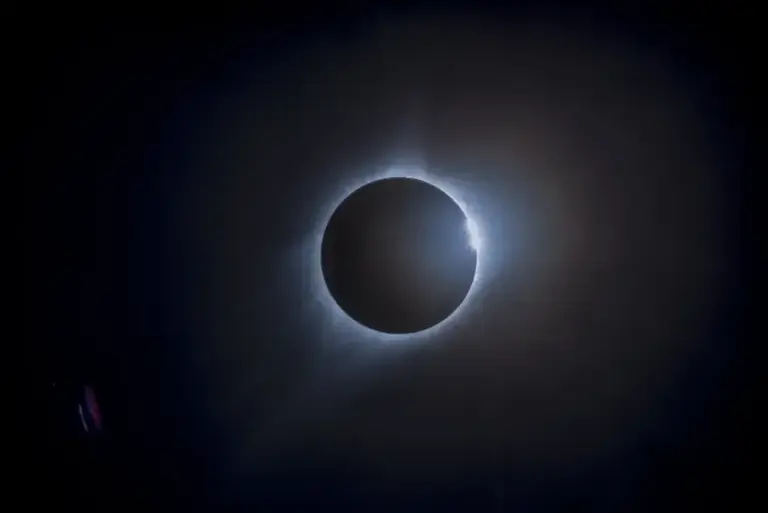
That moment, a wonderful instant, is totality. When the Moon completely covers the bright disk of the Sun, during that brief lapse of time, it is no longer necessary to use the glasses to directly observe the phenomenon.
It is precisely then when we can enjoy one of the great wonders of astronomy: the solar corona, a delicate luminous structure that extends around the black silhouette of the Moon. But you have to be very attentive: as soon as any portion of the solar disk reappears, immediately after the second appearance of Baily’s beads and the diamond ring, we must immediately put the glasses back on.
8. Telescopes, binoculars, and cameras require additional caution
Optical instruments concentrate sunlight and can cause very serious damage (remember what happens when we put a magnifying glass between the Sun and a paper). Therefore, we should never look at the Sun through a telescope, binoculars, or a camera that does not have a proper solar filter.
And there is a fundamental rule: the filter must be placed in front of the objective, at the front of the instrument. Filters placed on the eyepiece should never be used, as they can heat up and break.
Also, it is advisable to always check the filter before use and discard it if it shows any defects.
9. If you want to observe it without looking at the Sun, there are alternatives
Not everyone needs glasses to enjoy the eclipse. A simple and safe option during the partial phases is pinhole projection: standing with your back to the Sun, you can let its light pass through a small hole to project the image of the disk onto a surface.
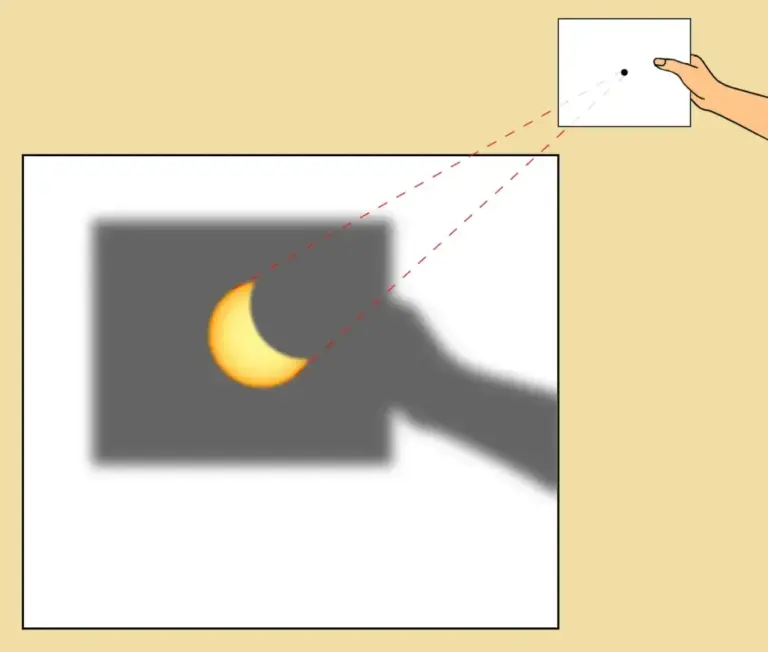
It is a very simple experiment that we can even do with everyday objects. The small spaces between tree leaves also act as tiny projectors and can fill the ground with small images of the eclipsed Sun.
During an eclipse, therefore, it is not necessary to look directly at the sky to discover that something extraordinary is happening.
10. And above all: don’t just look at the Sun!
An eclipse transforms much more than the appearance of the star in front of us. As the Moon moves in front of the Sun, the lighting and shadows of the landscape change. The small gaps between the leaves of the trees project small replicas of the eclipse and the environment takes on a completely unreal appearance, that of a deep and strange twilight.
That is why, although it is tempting to spend all the time focused on the glasses, the camera, or the telescope, it is always advisable to reserve a few moments to look around; especially during totality, when the sky and landscape will undergo a spectacular transformation.
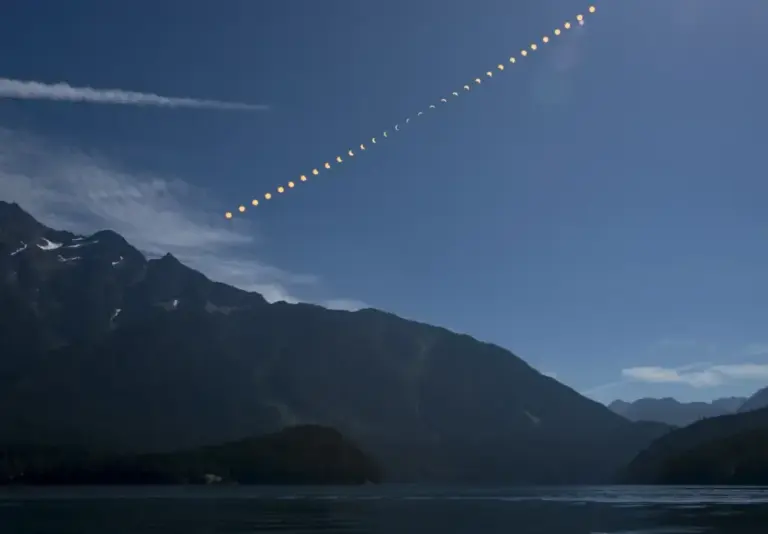
On August 12 there will be time for science, experiments, and photographs. But let us devote the essential part of our time to the simplest thing, which at the same time is the most important: look up and enjoy. A total solar eclipse is an extraordinary astronomical phenomenon that we will never forget in our lives; preparing well is the best way to enjoy every second of the experience.
From these Dates with the Sky we wish you a happy observation.
Rafael Bachiller is director of the National Astronomical Observatory (National Geographic Institute) and president of the Scientific and Advisory Commission of the Eclipse Trio.
Read more End of the saga: Vinicius renews with Real Madrid until 2032