


November 22, 2021. The Minister of Agriculture, Fisheries and Food of Spain, Luis Planas, and the French Minister of Agriculture and Food, Julien Denormandie, agree to strengthen their lines of work to promote “mirror clauses” in the European Commission’s trade agreement negotiations with third countries.
Read more The Head of Immigration in Ceuta for 32 years: «The MENA is the best investment for Morocco»
January 17, 2022. Planas conveys Spain’s support to the European Commission to promote the application of the so-called “mirror clauses” in trade negotiations with third countries in order to require imported products to meet the same quality and food safety standards as those produced in Europe.
March 1, 2024. Meeting of the European Union Agriculture and Fisheries Council. Planas highlights “the need to increase customs control mechanisms and to advance the adoption of mirror clauses that require the same requirements,” but considers the adoption of mirror clauses in the EU lost.
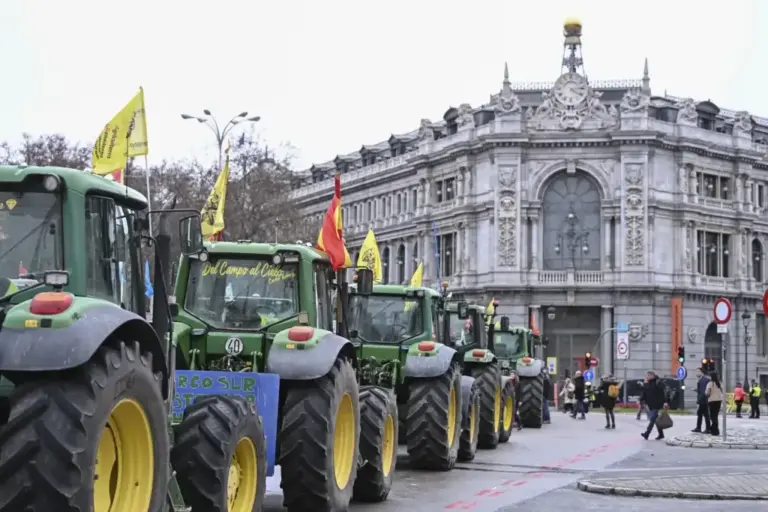
February 12, 2026. Massive farmers’ demonstration in Madrid to denounce “unfair competition” from the EU-Mercosur agreement for not including mirror clauses.
These are four specific dates—there could be more—and more than one legislative term since the Minister of Agriculture committed to addressing one of the major complaints of the Spanish agricultural sector: the double standard in phytosanitary conditions and control of our products in exports versus the permissiveness at customs when they are sent to Spain from third countries. Nothing has been achieved since then. Unfair competition continues and threatens to break the historic Spanish sovereignty of olive oil, the world leader in the sector’s production.
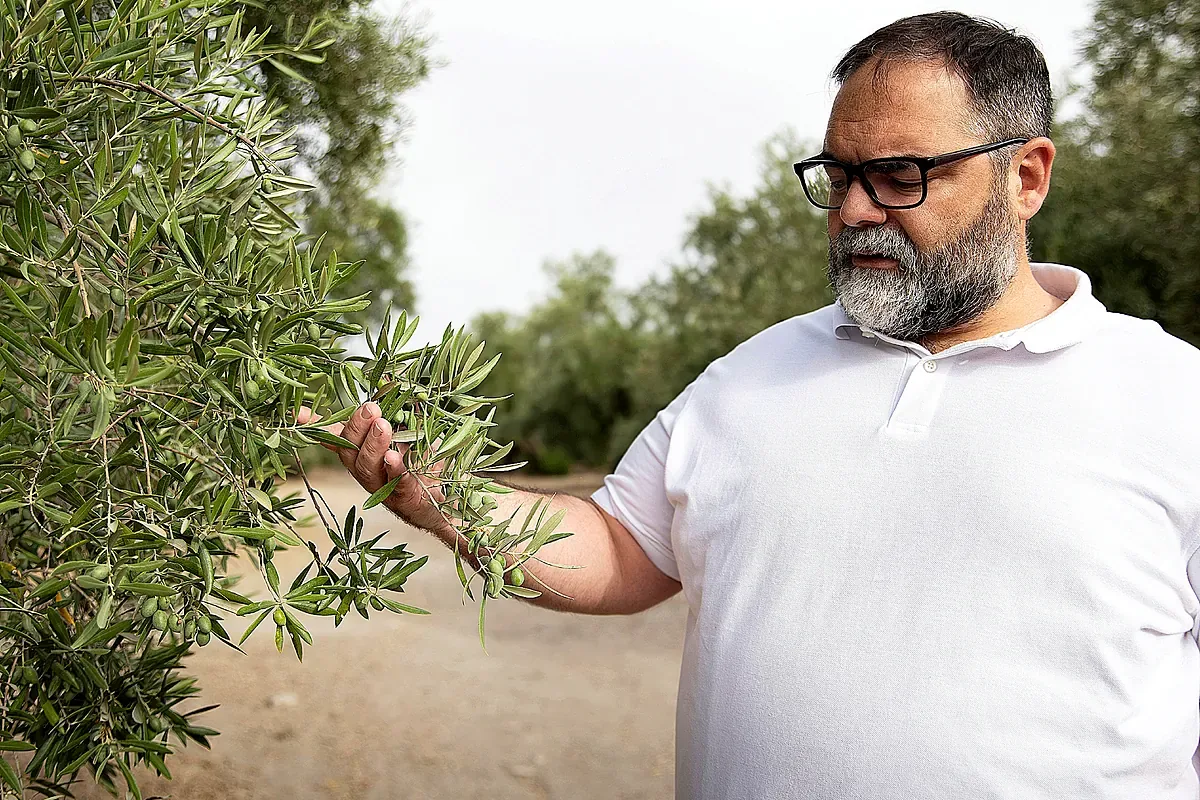
Tired of promises is Paco Elvira, 46 years old, a Spanish producer in Fuente del Rey (Jaén). Together with his father, Felipe, 74, and his brother-in-law José Manuel, 44, he has a family plot of 93 hectares, where they usually produce, depending on the weather, about 150,000 kilos of olives per year: “I was raised under an olive tree, with my grandfather, with my father.” Graduated in Agronomic Engineering, he is one of more than 80,000 producers in the province of Jaén, the world epicenter of olive oil that generates 10 million workdays each year.
Spain is the world’s leading producer of olive oil, with a cultivated area exceeding 2.7 million hectares and a production that in normal years without drought exceeds one million tons from more than 400,000 farms, mostly in the hands of small family tradition farmers with estates between 5 and 30 hectares. Andalusia concentrates more than 75% of national production.
The farmer reviews again the numbers from the last campaign, where he has again invested a significant amount to make the work increasingly mechanized. Cooperatives pay him about 3.60 euros per kilo of oil, a bit more if it is extra virgin, 3.96 (data from June this year), a “reasonable” price if it were not for the fact that in the last three campaigns production costs have skyrocketed: harvesting wages, mandatory phytosanitary products, water, machinery, insurance, social security contributions… The sum does not lie: it costs him 3.80 euros to produce a kilo of oil. The real margin in the best case is 16 cents per kilo. “The accounts don’t add up,” says Elvira.
2,000 kilometers from Jaén, a new continuous cycle olive mill was inaugurated this year in Sfax, the most important port city in southern Tunisia. It is the second extraction line financed by the European Bank for Reconstruction and Development in this African country. Technical assistance is provided by an Italian consortium (Cqverde), which won the tender. Since 2013, and through European funds, facilities have been modernized, incentives linked to olive quality at destination have been introduced for farmers, and digitalization tools (Big Data, AI, and GIS) have been incorporated for traceability management in a country that is not new to the sector (Tunisian olive trees date back to the Roman era).
With more than 1.82 million hectares cultivated, Tunisia is the fourth largest producer worldwide (after Spain, Italy, and Greece) and the leading exporter among non-EU countries. Since 2016, Tunisia has increased its olive oil exports to Spain by 85%. “The paradox is that Europe finances the modernization of Tunisia’s olive sector while lacking effective mechanisms and tools not only to protect the national farmer but also to prevent that improved production from distorting the European market,” laments the producer from Jaén.
The implementation by the government of Pedro Sánchez of Law 3/2021 to improve the functioning of the food chain should have represented a turning point. Its spirit was to obtain “the producer’s legal shield” because the regulation, in theory, expressly prohibits selling at a loss and requires written contracts, sets payment deadlines, and obliges prices to cover production costs, but it is not complied with in the vast majority of cases. “Sanctioning files for non-compliance accumulate in the drawers of the Ministry of Agriculture,” explains the producer, who also complains about the lack of budget to enforce the regulation. The body responsible for supervising sales—the AICA—”lacks sufficient means” to inspect the more than 2,400 registered olive mills, and fines, if they come, arrive too late.
Read more Feijóo’s ‘enough already’ against Morocco’s «blackmail» marks his Government plan
“The problem is that the Spanish farmer is subject to a very demanding regulatory regime, such as mandatory traceability, digitalized field notebooks, prohibition of certain phytosanitary products, quality controls in the mill… while oil from third countries enters the market without undergoing equivalent controls. There is a clear double standard,” points out the national sector head in COAG, who provides an enlightening fact: “Between 2018 and 2023, Spain took only three samples to analyze pesticide residues in imports from other countries arriving at our ports, and in that same period Spanish producers were subject to dozens of mandatory annual controls.”
Climatic variability has always worked against Tunisian production. However, the expansion of super-intensive olive groves—with technified irrigation systems—and the improvement of resistant local varieties reduce historical production problems. In fact, in the 2025-2026 campaign, production reached between 400,000 and 500,000 tons and exports grew by 63.9%, generating revenues exceeding 1.1 billion euros. 87.5% of that volume is exported in bulk, meaning it arrives in the EU without branding, “without final consumer packaging,” as raw material available to large Italian and Spanish packagers, “who process it, blend it, and market it under their own brands,” warns the producer from Jaén. It is a “widespread and tolerated fraud,” he emphasizes.
Trade agreements between the EU and Tunisia allow preferential access to the community market that in practice is “uncontrollable.” Thus, there are three access systems. On the one hand, there is the preferential quota, a kind of subsidized quota for which European authorities grant a zero tariff limited to 56,700 tons. In practice, this quota is exhausted in the first week of the year of each exercise. The second route is the so-called Active Processing Transit (TPA), which allows importing oil from Tunisia without tariffs or VAT on the condition that the product is processed in the EU and then re-exported to third countries to support the European processing industry. This volume exceeds 100,000 tons annually. The third are customs warehouses, with enabled facilities where goods remain without paying tariffs for an unlimited time and without effective control of their final destination, according to COAG’s complaint: “There are no specific data on this route; it is what we call the Tunisian ghost oil, a real uncontrolled leak.”
According to this organization’s data, 38.1% of Tunisian oil exports—almost four out of every ten liters—would have entered the European market “clandestinely or under falsified declarations.” “The Spanish government could request the suspension of the safeguard clause between the EU and Tunisia, but it does not,” criticizes the producer.
Thus, “facing the profitability crisis of the European agricultural sector, the European Commission’s response has not been to review preferential access mechanisms nor activate safeguard clauses for Tunisian oil that disrupt the market, which has allowed downward pressure on Spanish oil prices through low-cost competition: “We are convinced that we must avoid the Chinese model, that is, obtaining more production with prices on the market driven to the ground because our model has always been quality, because we are very good producers and have a differential added value which is our quality and, in any case, that other links in the chain and not always the producers reduce prices, especially the packagers, which form a real oligopoly in very few hands,” points out Paco Elvira.
Farmers already speak of a “structural threat” to the Spanish olive sector: “The abandonment of olive groves, especially in areas of difficult mechanization or scarce water availability, is already visible in certain Andalusian and Extremaduran regions, and abandoned olive groves do not return, it takes decades to recover their production.” While this damage is serious, Paco warns about the “environmental and territorial damage.”
The olive grove is the largest agricultural ecosystem on the Iberian Peninsula, with functions of carbon capture, erosion control, biodiversity conservation, and also has a structuring function in rural communities: “This same scheme can be replicated in other sectors, such as tomatoes, citrus, stone fruits, or cereals, so the question is whether politicians continue not to protect the European internal market and not to apply safeguard policies or whether the uncontrolled expansion of products from third countries, such as Tunisian oil with European financing, continues to distort the market with systemic consequences.” The threat of a hecatomb of Spanish olive oil is a fact.
The latest alarm, Brazilian beef
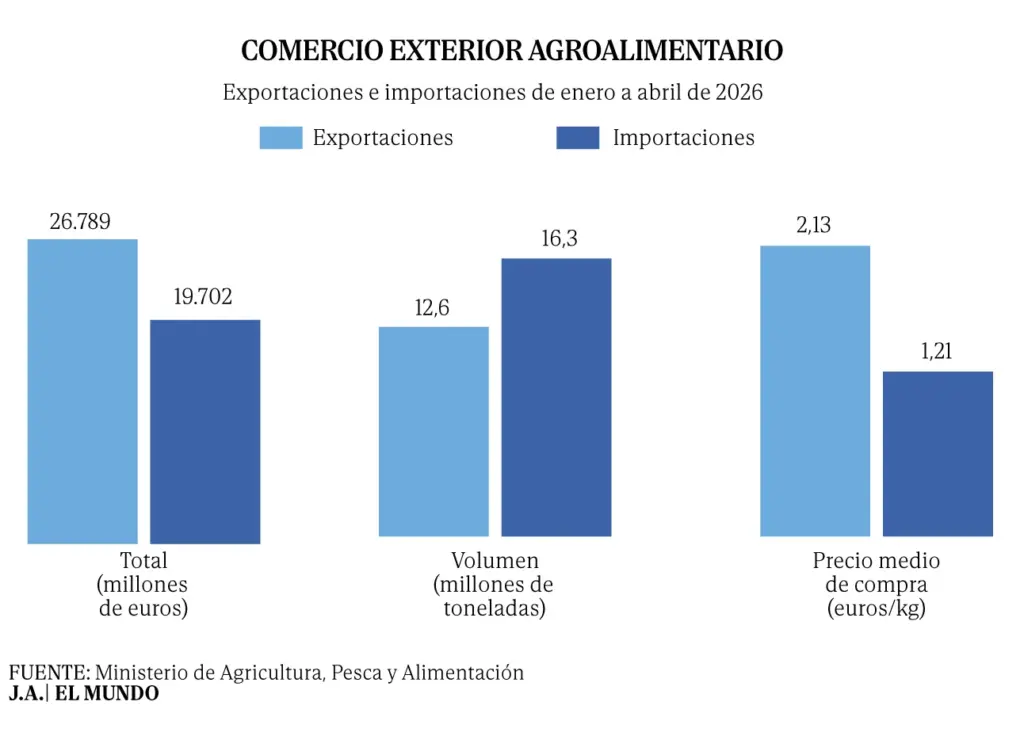
The balance of Spanish agri-food trade continues in “full decline,” the sector denounces. The latest figures from the Ministry of Agriculture confirm that the pace of imports threatens national production, with a reduction in the trade balance in the last year of 2.6%. The latest alarm has been raised in beef. Asaja has demanded that authorities “immediately suspend” production from Brazil after detecting “non-compliances affecting food safety, traceability, and consumer confidence.”
Against the Mercosur agreement.
Tractor caravan, last February, in Madrid, passing by the Bank of Spain. Farmers were demonstrating to protest against the “unfair competition” of the EU-Mercosur agreement.
Read more The Police evict 4,000 Sub-Saharan and Maghrebis from the Trampolín beach in Ceuta