





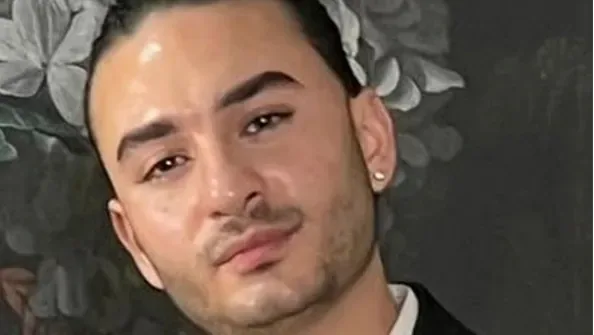
Miguel tied up his hair and tilted his head to check, squinting his eyes, how the formal suit looked on him. His father, the lieutenant general, had been appointed to lead an important institution and wanted to have him by his side in Madrid on the day of his appointment.
Read more Bitcoin and gold soar amid investor doubts over the US Treasury’s bond maneuver
Charming, always impeccably dressed, he discussed his doubts with his friends from La Guitarrería, the flamenco tablao nestled in the imposing Marbeuf palace, where he worked a bit as a public relations person or took classes. He told them about his reluctance to leave, even for a few days, his beloved Alicante, the place where he felt most comfortable. They cleared all his doubts. They encouraged him vehemently. They made him see how natural and wonderful it was that his father wanted to have him by his side on such a special occasion. He returned happy. “The King was there,” he told them. And the Minister of Defense and all kinds of decorated people were captivated by his father’s military talent and kindness.
This week the lieutenant general made the return trip to bury Miguel. “They have killed him,” he sobbed, devastated before the body of his only son. At the funeral home, genealogy in the Infantry or experience in the Legion was of no use. The man broke down and resolved to seek answers; all at once.
The death of Miguel, 27 years old, homosexual, occurred a week ago, on Thursday at 5:20 in the morning, and sparked a controversy first vivid, which has since moderated, in which even the Government considered it necessary to act and requested and obtained the intervention of the Hate Crimes Prosecutor’s Office. Along the way, the data that has emerged has tested the seams of this legislation, already complicated to apply — and probably also showed the Government’s haste. The lawyer of the alleged aggressor revealed, when the hoax of the homophobic attack was beginning to reach stratospheric proportions, that he was bisexual and therefore also part of the LGTBI+ community. According to Manuel Yepes, who explained to Crónica, his client, the 22-year-old young man who will very likely be tried for Miguel’s homicide, suffered bullying for being gay and needed psychological treatment to overcome it, and there is documentation to prove it.
VERY RELIGIOUS AND LOVER OF FLAMENCO
Miguel was an extremely polite man, spoke perfect English. He had studied a Pharmacy module, but despite his shyness, he preferred the bohemian life and loved flamenco. He was deeply religious and interested in art. He took care of his grandmother and his mother, who had been seriously ill for years, but according to his friends, he was starting to listen to those in his family who asked him to continue studying, and he was going to move to Valencia in September to continue his education.
His acquaintances say he was not violent; on the contrary, they called him cannon fodder. They add that he usually did not drink alcohol and that he had a sharp and polished tongue, though without bad intentions. He loved collecting second-hand brand handbags and his imagination was suspended when he sang or heard the song “te quiero vida mía.” With some flirtation, he imitated the cursed glamour of Hollywood stars who once claimed they would die young and leave behind an exquisite corpse. A statement that has become a tragedy.
Read more A federal court overturns the visa suspension ordered by Trump for 75 countries
One early Thursday morning he left the Copity nightclub on San Juan beach and started flirting with another young man. Everything was going well until, according to the alleged murderer’s statement to the police, Miguel asked to take a step further and he refused. Miguel would not have taken it well. Some witnesses claim (there are at least three in the procedure, one independent and two friends of the alleged murderer) that there were insults and a fight, that some people called attention to one of those involved, and that when they reached the tram station, the track separated them because they were going in different directions.
However, the camera footage, according to judicial sources consulted, would show Miguel crossing the tracks to look for his now adversary, who tried to punch him and then kicked him, causing him to lose balance, fall, and hit his head. The alleged murderer’s friends encouraged him to leave while they called the police and emergency services. The alleged murderer obeyed them in a decision that will undoubtedly harm his reputation in the future. In his statement, he claimed he left because he did not know the extent of the injuries and that he surrendered afterward. By then, the assault had become homicide.
As soon as the alleged murderer mentioned that Miguel had made advances and he rejected him, social media buzzed demanding that the hate crime aggravating factor be applied. Some LGTBI+ associations called a demonstration assuming it was simply the murder of a gay man for being gay at the hands of a heterosexual. The Government also jumped on that bandwagon.
Once the clarifications were made by lawyer Manuel Yepes, the demonstration was reduced to a vigil that the more cautious groups chose not to attend. Others requested that the Prosecutor’s Office investigate thoroughly because they believe that between two homosexuals there can be machismo, contempt, and hatred. Others recalled that the police investigation group — “formed by agents very identified with the gay community” — saw no grounds to aggravate the homicide charge with the hate crime charge. And, of course, among the organizers of the vigil, there were those who, despite everything, took the opportunity to say that “any of us could be in Miguel’s place” and hinted that “we all know who will not be on our side.”
The Prosecutor’s Office has appealed the provisional release granted by the judge to the alleged murderer, and Miguel’s family lawyer, newly appointed, has preferred not to make statements to Crónica. That dark early morning weighs heavily when the worst fears were realized.
Read more Morocco asks Spain to return the surviving migrants and the deceased in their crossing to Ceuta