


The network formed by the number two of the PSOE Santos Cerdán and the Ferraz fixer, Leire Díez, had a large number of judges and prosecutors who were inconvenient for their interests. Among them were some already known, such as the chief anti-corruption prosecutor, Alejandro Luzón, or the judge from Badajoz who investigated the case against Pedro Sánchez‘s brother, Beatriz Biedma, but also other targets such as the Supreme Court magistrate and former president of its Criminal Chamber, Manuel Marchena, whom the alleged criminal organization tried to discredit, according to documents in the summary.
The Civil Guard’s Central Operative Unit (UCO) seized several documents from Díez on a computer where the executor of the PSOE’s “sewers” was tracking various magistrates of the Supreme Court, the National Court, and anti-corruption prosecutors.
In the aforementioned documents, along with Luzón, Biedma, and Marchena, appear the former president of the Supreme Court Carlos Lesmes, the current president of the Third Chamber of the High Court Pablo Lucas, the magistrate and member of the General Council of the JudiciaryGema Espinosa (CGPJ) –wife of the “procés” instructor, Pablo Llarena– or the anti-corruption prosecutor José Grinda, among others.
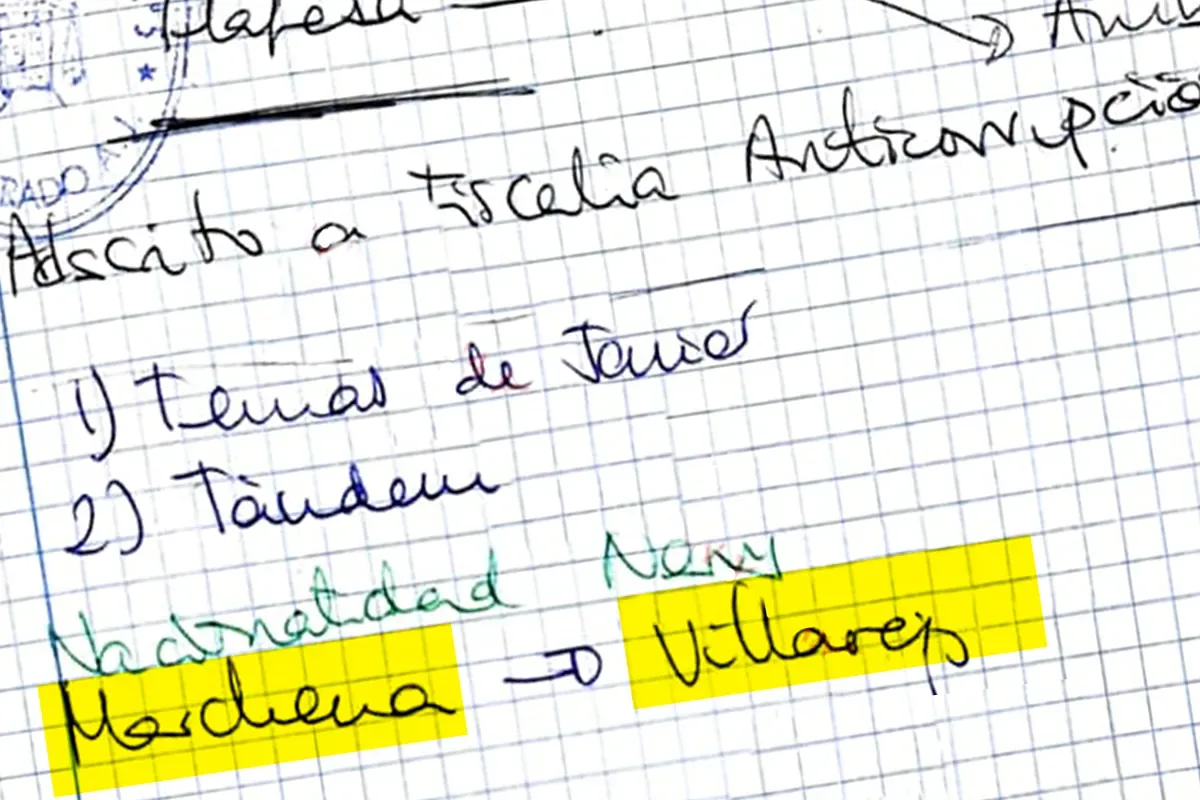
According to the proceedings, the fixer offered retired police commissioner José Manuel Villarejo a deal with the Prosecutor’s Office if, in exchange for information, he provided information about magistrate Manuel Marchena. Díez assured the former senior police officer’s lawyer, Antonio Cabrera, «the FGE will receive you,» referring to Álvaro García Ortiz. «Important: Villarejo has the evidence that would prove Marchena’s corruption,» wrote the fixer.
«At the end of July 2024, we reached an agreement with Villarejo for him to provide us with all the documentation that has not come to light. Among that documentation are the audios and payments involving Marchena and the role of the PP in everything that has been called the Patriotic Police, which involves the entire leadership of Rajoy‘s Government and even Feijóo buying the Galician elections in 2012. The recordings pending delivery are truly explosive,» argued Díez in a document seized by the UCO called “Situation Report,” dated January 2025.
In Marchena’s case, the PSOE’s “sewers” tried to undermine his reputation by obtaining damaging information about him and his children.
Along with the former president of the High Court’s Criminal Chamber, the seized documents reveal actions taken to intimidate the investigating judge of the case opened against the president’s brother, David Sánchez Pérez-Castejón. «It was agreed with Luis Sáenz de Tejada [expelled former judge] that he would file a complaint with the Attorney General’s Office to report cases of judicial corruption in Badajoz that affect, among others, the judge investigating David Sánchez’s case. After telling him to do it in a certain way and sending the complaint, it was archived two days later. The same complaint was resubmitted, with the requested modifications, on 21-11-2024 to the CGPJ,» reads the document seized from the former socialist militant.
For its part, the plot saw it as an impediment that the former president of the Supreme Court and CGPJ, Carlos Lesmes, was now assigned to the Administrative Litigation Chamber – which reviews the decisions of the judges’ governing body – since «he is now judging the acts of the CGPJ itself, which would block the possibility of applying justice in cases of irregularities by magistrates committed during his mandate.» It was an obstacle to torpedoing the judge from Badajoz.
Also on the list was Joaquín Gadea, a reinforcement judge for the already retired National Court magistrate Manuel García Castellón. «He is a member of the board of directors of the conservative judges’ association and is the person who made the audios disappear in García Castellón’s chamber in the Villarejo case,» noted Díez.
Alongside these magistrates, the anti-corruption prosecutor José Grinda appears in a document called ‘Non-compliance’ because «he is the prosecutor behind all the cases of the patriotic police and the cases in Catalonia,» and Luzón, whom the plot tried to find dirt on for having supported the release of commissioner Víctor de Aldama by Anti-corruption. The seized papers also reflect the plot’s obsession with discrediting the UCO and, specifically, Lieutenant Colonel Antonio Balas.