





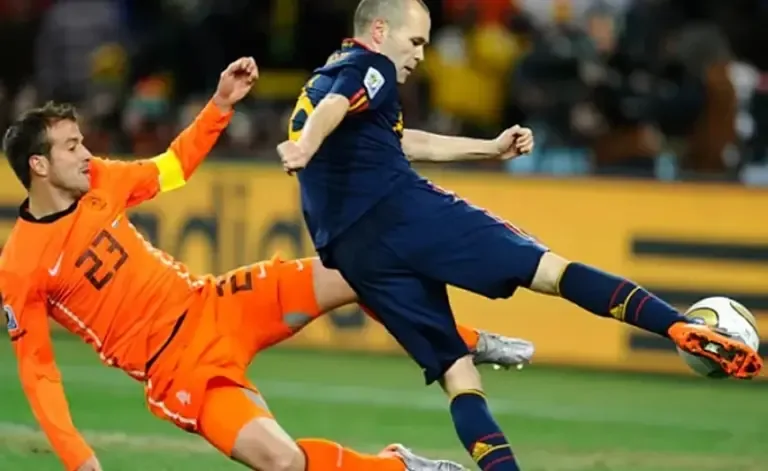
July 11, 2010. Think about it. Surely you remember where you were, what you were doing, and with whom. That day, the whole of Spain glued themselves to the television or radio to shout Andrés Iniesta’s goal at Soccer City in Johannesburg. Today, at MetLife in New Jersey, 26 of those Spanish fans will step onto the American pitch to compete against Argentina in a new World Cup final. Because this team is also that, the memory of the children who thrilled 16 years ago. “I was in the garage at home with friends and family,” recalls Álex Baena. “I bathed in the town square,” says Pedro Porro. “I hope they repeat the celebration at the fountain in Los Palacios, like I did in 2010,” asks Fabián Ruiz.
Read more A final to embrace and an exception: the giant screens that will unite Spain
A garage, the town fountain, a park with friends, a bar, the family home, a summer camp… Memories about 2010 have been accumulating over these weeks in Chattanooga, Atlanta, Guadalajara, Los Angeles, and Dallas, always on the way to New York and New Jersey, where now the question to the internationals becomes even more evident. “What were you doing during the 2010 World Cup?”
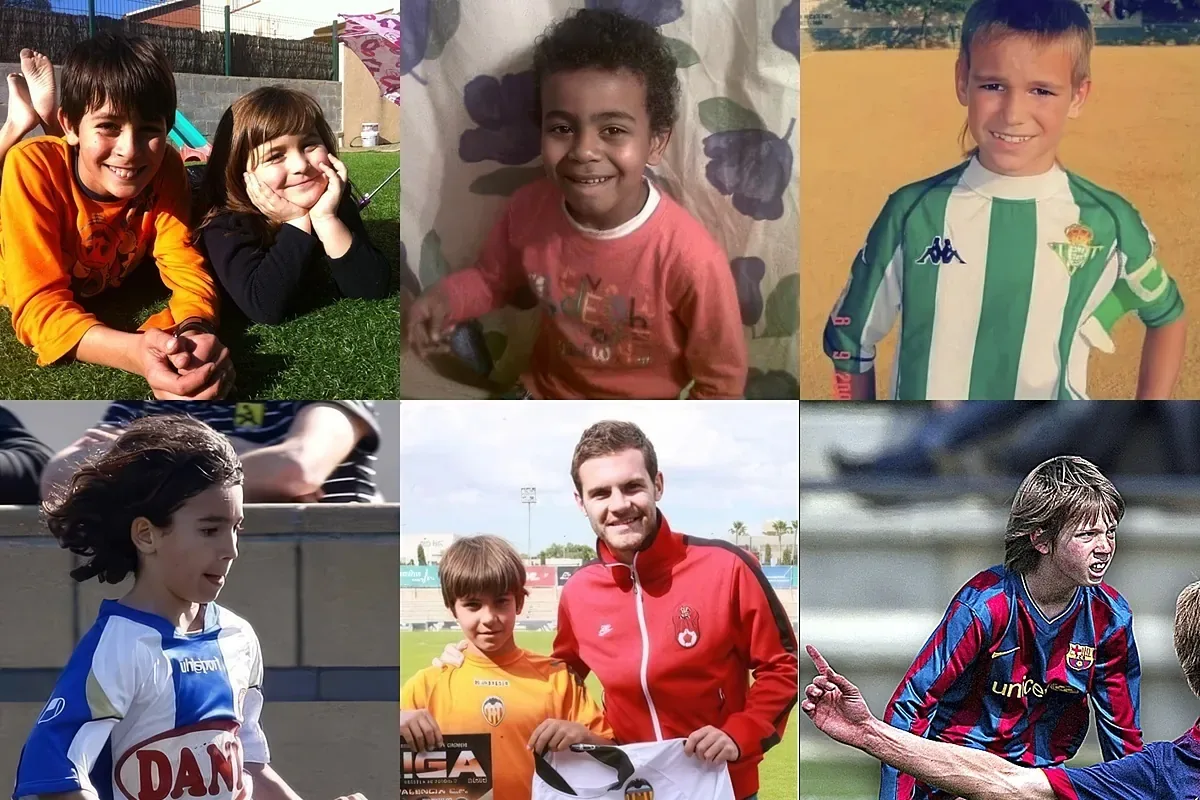
Except for Lamine Yamal and Pau Cubarsí, who were three years old, the rest, older or younger, were already fully involved in football. Some in big youth academies like Barça, Real Madrid, Espanyol, Atlético, Valencia, or Athletic, and others still in small clubs in their town, playing with friends before being discovered by a scout. Let’s take it step by step.
Pedro Porro’s bath
In goal, Unai Simón was 13 years old and Iniesta’s goal caught him at an Athletic camp in Leicester, where “I was learning English and playing football,” he has said these weeks during the training camp. There, interestingly, he coincided with Alberto de la Fuente, the coach’s son. David Raya “was 15 and played at UE Cornellà, a few months later I signed for Blackburn.” Joan García was barely nine springs old and was one more in the Manresa benjamins, from where he ended up moving to Damm and Espanyol: “I watched the match at home with my family,” he replies.
On the flanks, Marc Cucurella, Marcos Llorente, Alex Grimaldo, and Eric García were already playing in big youth academies and thinking that maybe football had something important prepared for them. Cucurella, 11 years old, played at Espanyol before switching from the pericos to Barça, while Llorente, now at Atlético, was 15 and part of Real Madrid’s youth academy. Eric and Grimaldo were already sleeping at La Masia. The center-back, at nine, watching the match with his family, and the left-back at 14, although on July 11 he was in Valencia, his hometown, spending the summer holidays. “I was with my family and friends in a house where we always spend the summer. There we watched Spain’s final,” he explains.
More humble were the cases of Aymeric Laporte, Marc Pubill, and Pedro Porro. The veteran center-back, born in France, had turned 16 and Athletic had loaned him to the French Aviron Bayonnais, while Pubill played in Manresa’s youth academy at seven years old and Porro, at 10, played football at Gimnástico Don Benito. “I watched the final in my town. I was very small, the only thing I remember is that I was bathing in the Plaza de España of my town when we won,” recalls the Tottenham right-back.
“I hope they do the same”
For Rodrigo Hernández, like Unai, Iniesta’s goal caught him outside Spain. The current national team captain, at 14 years old, played in Atlético’s youth academy after having been at Rayo Majadahonda and “was at a camp to learn English in the United States, in Connecticut.” “There was no signal or anything, so I asked please to find a way to watch the final. And there I saw it, in the middle of the forest. I started shouting like crazy with Iniesta’s goal and the others didn’t understand anything,” he points out.
Younger were Pedri, who at seven was part of UD Tegueste and “was in a hotel with my family,” and Gavi, who at five lived in Los Palacios. “I remember there was a giant screen in my neighborhood for the final, but I watched it at home with my parents and my sister.” Fabián also lived in Los Palacios, who at 14 had already joined Betis’s youth academy: “We watched the final in a bar with family and friends and then we got into the town fountain, which is where all the big matches are celebrated. I hope they do the same this Sunday.” Mikel Merino was also 14, training at CD Amigó in Pamplona shortly before signing with Osasuna. Dani Olmo was 12, already in Barcelona’s youth categories, and Álex Baena was eight, about to leave CD Roquetas to join Villarreal’s youth academy: “We watched the World Cup in the garage of our house, with friends and family,” explains the now rojiblanco footballer.
Up front, Lamine Yamal does not remember, of course. He was only three years old. Nico Williams, at seven, sees it a bit more clearly: “I remember it like it was yesterday. I was with my friends in the park, there was a bar open with the match and we all started shouting with the goal,” says the Athletic left winger, who at that time played at JD San Jorge. In the north was also Mikel Oyarzabal, who at 13 played in Eibar’s youth academy.
Ferran Torres, meanwhile, was 10 years old and already wore Valencia’s shirt. With his friends from the alevín team, he watched the World Cup matches at the bar of one of their fathers. The Galician Borja Iglesias also played in the che team, who at 17 was already a youth player, about to move from Valencia to Villarreal.
Víctor Muñoz was about to turn seven and had already joined Barça’s Escola, while in the Canary Islands, Yeremy Pino, also seven, was taking his first football steps at AD Barrio Atlántico.
And finally, Luis de la Fuente, of course. In 2010 he was 49 years old and coached Athletic Club’s B team, which that year would finish 15th in Segunda B, still far from imagining that he would end up sitting on the senior team’s bench. This week, the coach admitted that he has already called Vicente del Bosque to ask for advice. “He is a football sage and has lived this situation, knows the critical moments, advises you, gives you a clue in case you can recognize some of those things and incorporate them into your game…,” he explained. Today, another 26 children could create a new memory if Spain defeats Argentina in New Jersey.