


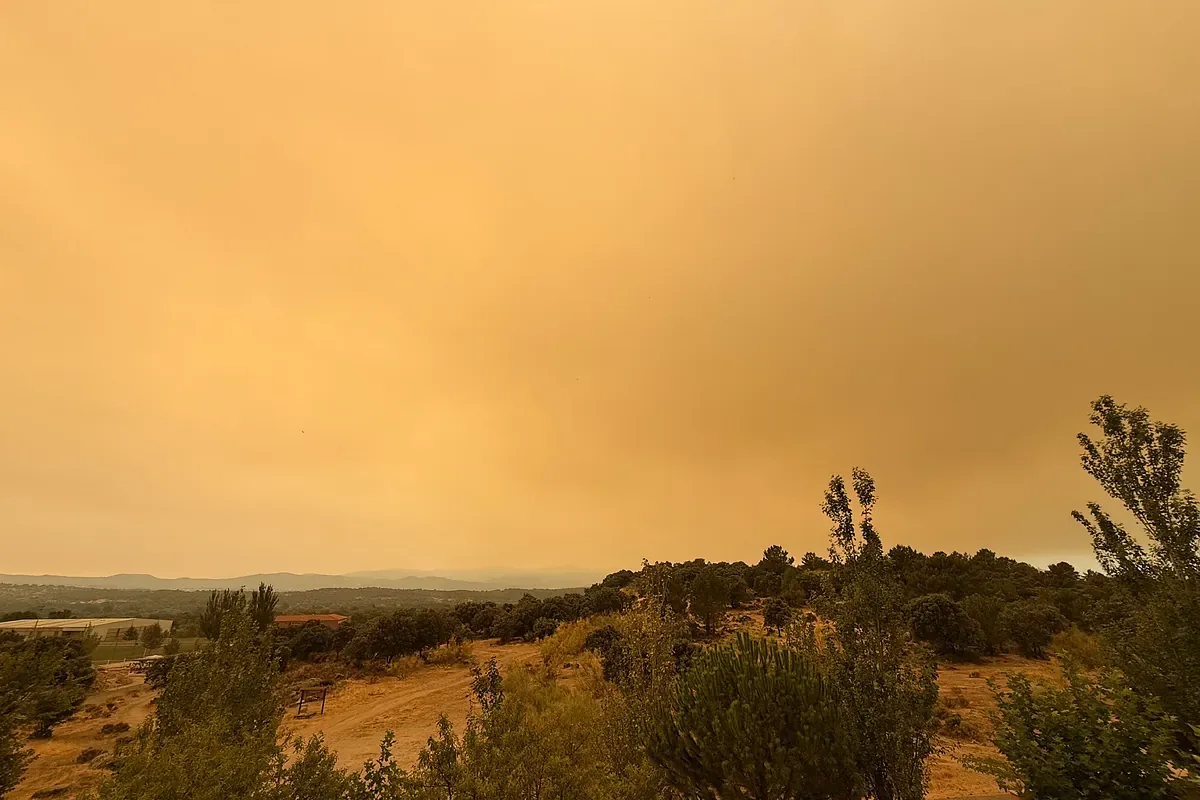
The chain of serious forest fires keeping Spain on edge has not been a surprise for Eduardo Tolosana, dean of the Official College of Forest Engineers: “It doesn’t surprise me at all because a very rainy start to spring has combined with a prolonged drought and very early heatwaves. The rain has greatly developed vegetation, especially fine vegetation, which is very dangerous for fire propagation. It’s the cocktail for any ignition source to spread very quickly. And if the wind helps, as unfortunately is happening in the central area, I cannot be optimistic at all,” says this fire expert during a telephone interview.
Read more The Government will declare the areas devastated by the fires as severely affected
- How do you assess the crisis we are experiencing at a national level, with simultaneous fires as serious as those in La Mierla, in the Sierra Norte of Guadalajara, or those in Ávila and Madrid?
- I believe we are not aware of what is happening. Politicians and people who have the possibility to make decisions are not reacting to the new situation we are experiencing, which has come to stay, at least in the short and medium term. We have uncontrollable fires, beyond the capacity of extinction, which are true monsters, and which are increasingly affecting the urban-forest interface, which is that area where mountains and abandoned fields mix with buildings, population centers, and urbanizations.
- What should politicians do in your opinion? How should they react?
- It cannot be that twice as much is still being invested in extinction as in prevention. Of course, we must invest in extinction, but what is being allocated to prevention should probably be multiplied by 10. It is true that you cannot carry out preventive actions on the entire forest area, which in Spain occupies 56% of the entire country. Furthermore, 72% of that 56% of forest area is private property, especially in the north but also in Catalonia and Castilla y León. We cannot force these owners to take measures, but there are simulation programs based on artificial intelligence that allow choosing strategic management areas. These are the areas where prevention is most efficient because it generates windows of opportunity for the extinction device. If you know there is an area where potential fire trajectories are likely to pass and which is also accessible to the extinction operation, and you keep that area well maintained, clear of scrub and with a distance between trees, it creates a window of opportunity for when the fire reaches that area. However, to act on a small percentage, between 5 and 10% of the surface that are strategic management areas, it would be necessary to multiply the current investment in prevention
- You told me that this wave of fires has not surprised you, but in other years, like 2022, a lot of fuel also accumulated in the forests and it was very hot. And although there were many fires, the situation was not as critical as it is now.
- Each year, meteorological circumstances are completely different from the previous year. For example, in 2025 we had a low-pressure system anchored in Portugal that sent very dry southerly winds, and we had three or four consecutive heatwaves at the end of July and beginning of August, so the explosion of fires occurred in the first weeks of August. This year we have a very different circumstance, which has been a very intense drought at the end of spring followed by heatwaves that started in June and and have also been continuous. And there have been bad years like 2022, in which other meteorological circumstances occurred. It may be that next year is good for fires or that even the next three years are acceptable, meaning they remain at a normal level, but climate change, along with rural abandonment, will bring us years equal to or worse than those we have experienced. And that is why we must react. A true State pact against fires is needed. I am not referring to a State pact against the climate emergency, which is also needed but has other deadlines and measures, such as decarbonization, which I think are great, but climate change is already here and will not be resolved in a few decades. In the meantime, we have a true socio-environmental emergency, which are forest fires, and that’s without having had sixty-odd deaths like in Portugal [in 2017].
- What should that State Pact against fires include?
- I would say it has to touch on three fundamental pillars. The first is prevention, which we have already discussed; the second, self-protection. People are not aware of the risk they run, and now they are starting to see it: their houses are burning, 13 people have died in the Almería fire, fields, facilities, and homes are being destroyed. Furthermore, by legal obligation, there are municipal action plans that have been mandatory for more than 20 years, and urbanizations and isolated settlements must have self-protection plans by legal obligation since 2013. This means there must be cleared strips around buildings, evacuation routes, hydrants for water intake, and instructions for the population so that, in case of emergency, they know what to do, what the safest routes are, etc.
These plans are drafted, but often they are not complied with, because there is no money, because there are other priorities, or because people are not aware. Before, around villages and even urbanizations, there were often cultivated lands, olive groves, vineyards… or grazing. But as that is being abandoned, now there is scrub and trees almost touching the facades. And this is what will end up bringing us a tragedy even beyond what we have experienced in Almería. - What is the third pillar of the State Pact you propose, in addition to prevention and self-protection?
- Promote active and profitable management. These private owners, who own 72% of the forest area, must be helped fiscally and technically so that they can carry out this management, which produces three benefits. Firstly, it reduces the risk of fires: if we select and cut wood, not indiscriminately but sustainably, thinning plantations or forest masses, the fuel load is reduced and, therefore, the risk of fires becoming uncontrollable. In addition, we obtain renewable and sustainable raw materials for the bioeconomy because one of the things that is being seen, and which is also related to climate change, is that the construction sector will promote building with wood. There is a whole movement to reduce the carbon footprint of this sector, which is brutal. Another advantage is that since there is no staff, more and more prefabrication will have to be done. And wood is very good for preparing elements that only need to be placed, instead of building brick after brick.
- Why is it so difficult to extinguish these fires?
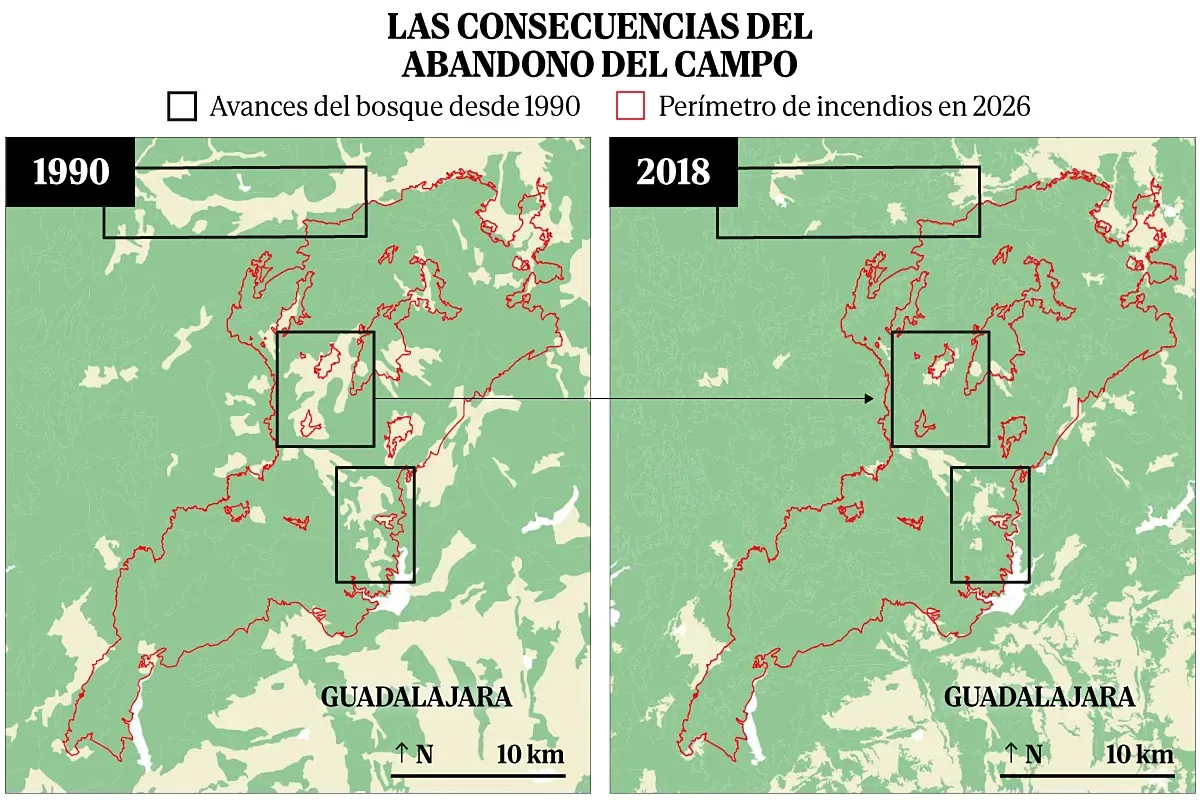
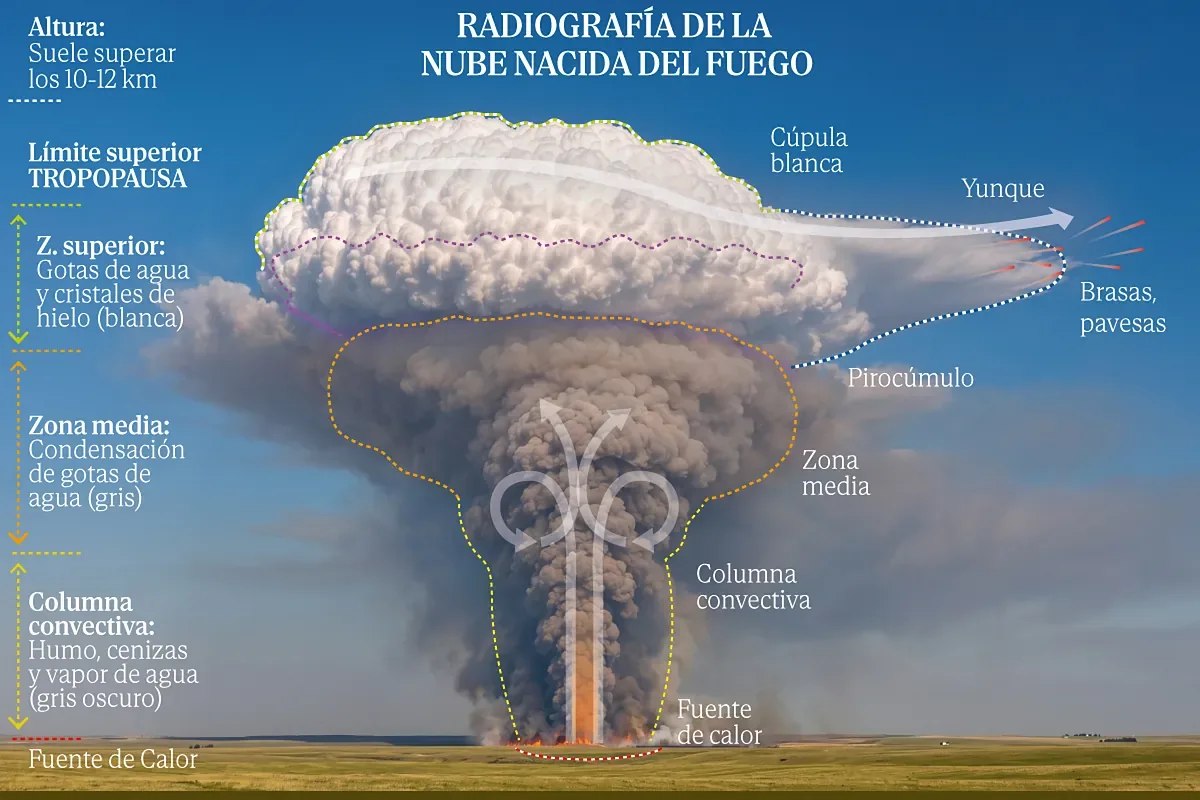
- Firstly, due to the large accumulation of fuel and rural abandonment. It’s a paradox; we have more and more forest area because scrub and trees are occupying old crops and pastures, but if you don’t maintain it, you concentrate combustible material. The second factor is undoubtedly climate change, which is de-seasonalizing us. Before, the risk period and emergencies in most of Spain were from June to September; in the north, there are other risk periods in early spring. But now we have risk from May to October or even November, as happened in Vigo in 2017 and in Portugal in October. The combination of climate change with this accumulation of fuel is producing fires that generate so much energy that water doesn’t reach them; it evaporates before reaching the flames. I’ll give you a piece of data from energy experts: they say that to use water, it’s impossible to get within a reasonable distance of fires that have more than 10,000 kilowatt-hours per meter of front. Well, we have measured fires with more than 100,000 kilowatt-hours per meter of front. With flames 25 or 30 meters high and such energy intensities, practically all that can be done is to wait for circumstances to change, for the wind to change. Of course, extinction teams don’t stand idly by; they attack from the flanks, create backfires so that when the fire arrives, it doesn’t find fuel… but they have to move further and further away because the fires are faster and more intense. And this leads to them lasting a week instead of being extinguished in two or three days at most, as happened a decade or two ago, because you haven’t been able to control it physically, despite how professional the team is and the large number of resources it has. Another problem is simultaneity. We held a conference on fires in May and had people from Extremadura, Galicia, and Castilla y León who told us they had to triage. If you have eight simultaneous fires, they see which one threatens inhabited areas and act on that one, and another that is further away from urbanizations they let burn because they don’t have the capacity.
- What can be done now to prevent fires for the rest of the summer?
- I believe it is already being done, that policy of involving the Civil Guard, the Military Emergency Unit, the devices of neighboring autonomous communities, and acting very quickly with the population, sending ES-Alert messages, and going house by house evacuating or giving confinement orders is the correct approach, although it is not risk-free. Because in the end, we are not infallible, and we are facing fires that are true monsters. The law states it clearly. The extinction device must protect lives first, then property, and thirdly the natural environment. I believe this reaction is partly due to what happened with the DANA in Valencia; lessons have been learned.