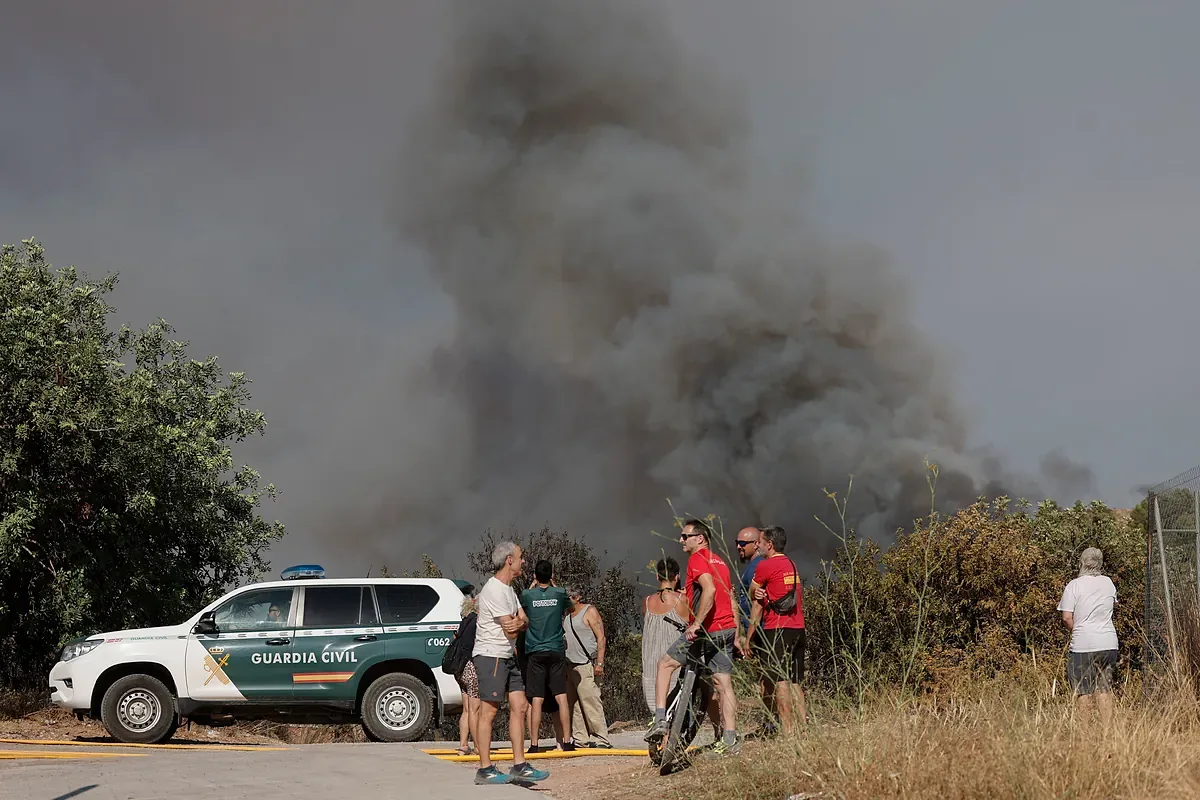





Next Tuesday, the Council of Ministers will declare the areas devastated by the virulent fires sweeping the country as areas seriously affected by civil protection emergencies. The figure, commonly known as the declaration of a disaster zone, opens the door to state aid for the repair of damages.
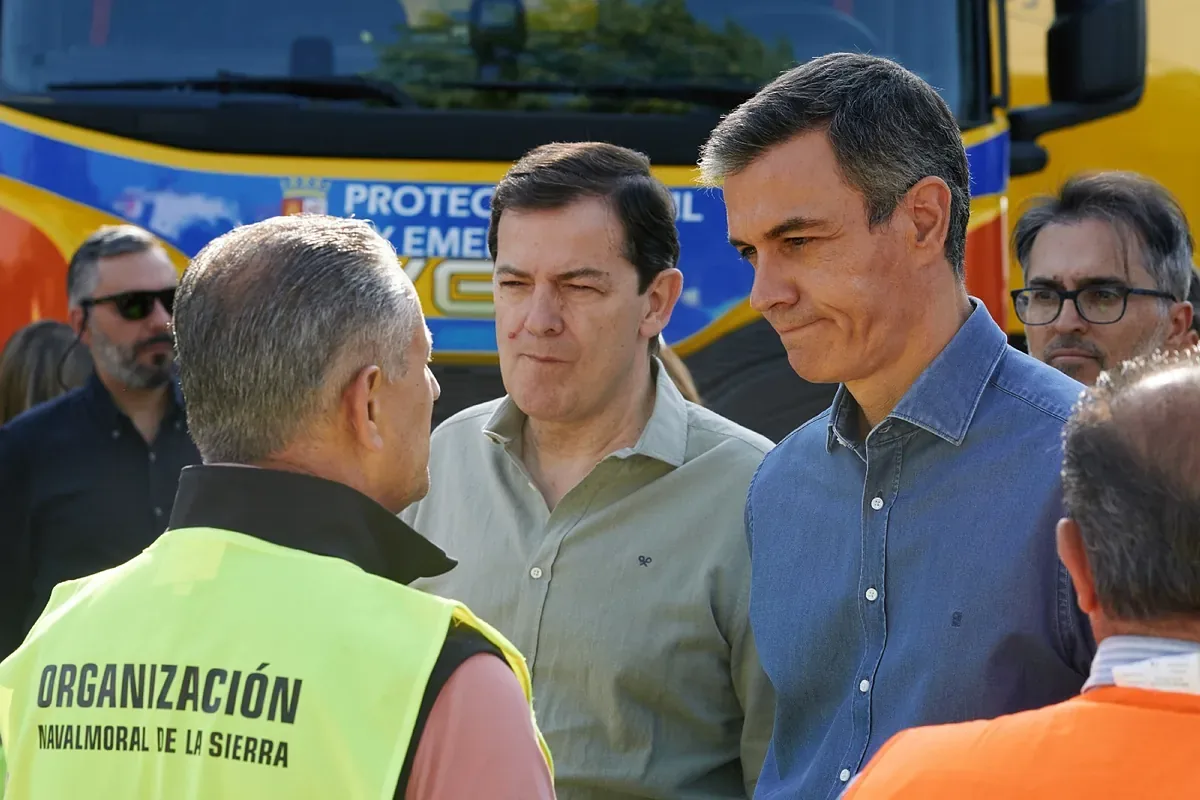
This was announced by the President of the Government, Pedro Sánchez, during an appearance from the Advanced Command Post of Navaluenga (Ávila), where he was accompanied by the Minister of the Interior, Fernando Grande-Marlaska, and where he met with the President of the Junta de Castilla y León, Alfonso Fernández-Mañueco, and the mayor of the town, Armando García Cuenca.
“Tonight has been very positive in relation to the control of the fire,” the president assured, while asking residents to exercise extreme caution because “the magnitude of the disaster we are experiencing, unfortunately one more year, is very difficult to assume.”
For an area to acquire the status of seriously affected, the Council of Ministers must agree on the declaration, which is made at the proposal of the Ministers of Finance and the Interior. The affected public administrations can also request it. This is the case of Castilla y León, as President Mañueco announced in an appearance prior to Sánchez’s.
The decree that goes ahead this Tuesday must determine the specific aid that is promoted. The Civil Protection System Law (2015), which regulates the State’s action in the face of catastrophes, contemplates a wide catalog of measures, although the Council of Ministers can agree on others not foreseen if it deems it convenient.
Among the actions foreseen by the norm are economic aid to citizens for damage to their habitual residence and the loss of essential goods. Also to industries and companies and to those who, due to the catastrophe, have had to perform some type of service.
In his second appearance on the same weekend due to the devastating emergency, the President of the Government stressed that in less than 24 hours we have gone from 135,000 hectares burned to more than 150,000. “This means multiplying the number of hectares by six compared to last year, which was already a particularly serious one,” he emphasized.
Therefore, he continued, “prevention, response, and reconstruction.” A recipe that “all administrations, at all levels, must follow, providing economic resources and cooperating as we are doing in the response,” he stated after praising the national Civil Protection system, “which responds efficiently” through “coordination and cooperation between the different institutions.” One that, in his opinion, is “very well proven throughout the many civil protection emergencies we have been suffering for many years.”
“Not only do we have to give a response that is appropriate and proportionate to the magnitude of these climate emergencies, but we also have to incorporate scientific knowledge to improve public policies for the benefit of our fellow citizens.”
The UME advances “quite a bit” but “active fronts” remain
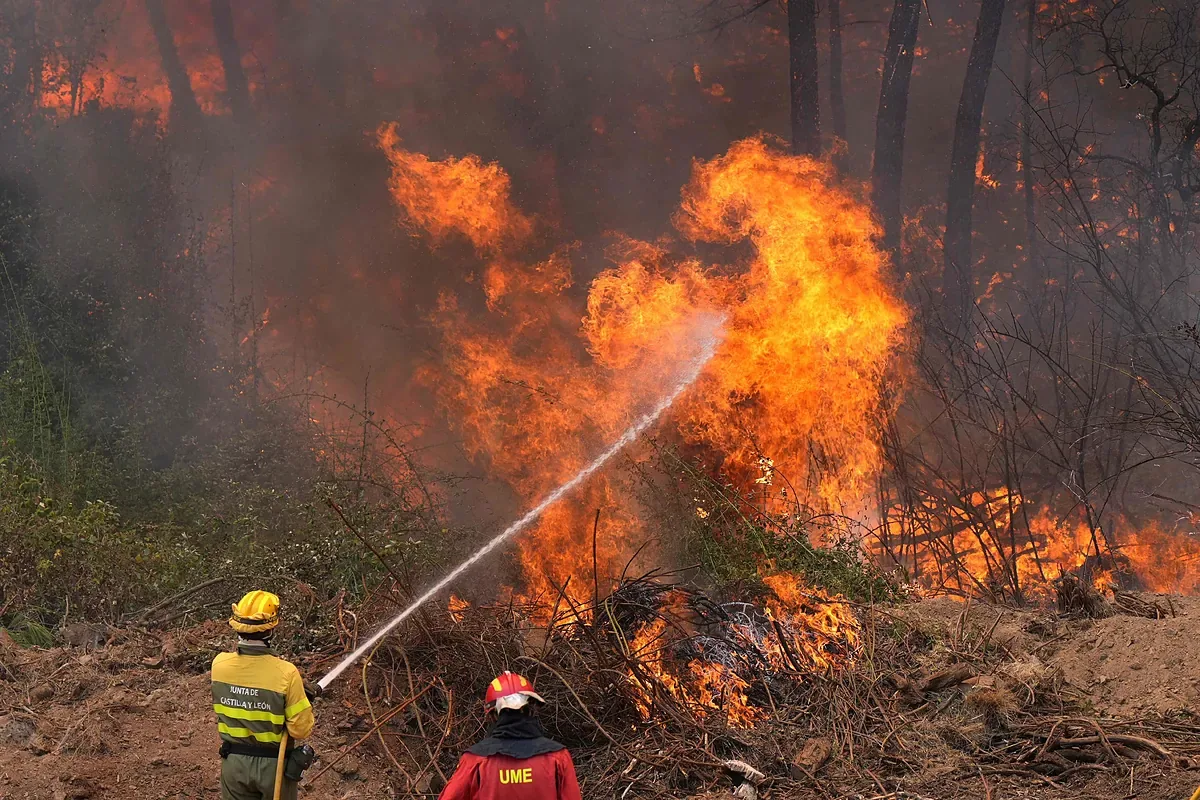
On the other hand, Lieutenant Colonel of the Military Emergency Unit (UME) Alfonso Arribas, assured this Sunday that the work carried out during the night has allowed “considerable” progress in stabilizing the large fire affecting Ávila and Madrid, although “active fronts” still remain on which efforts will be concentrated during the day.
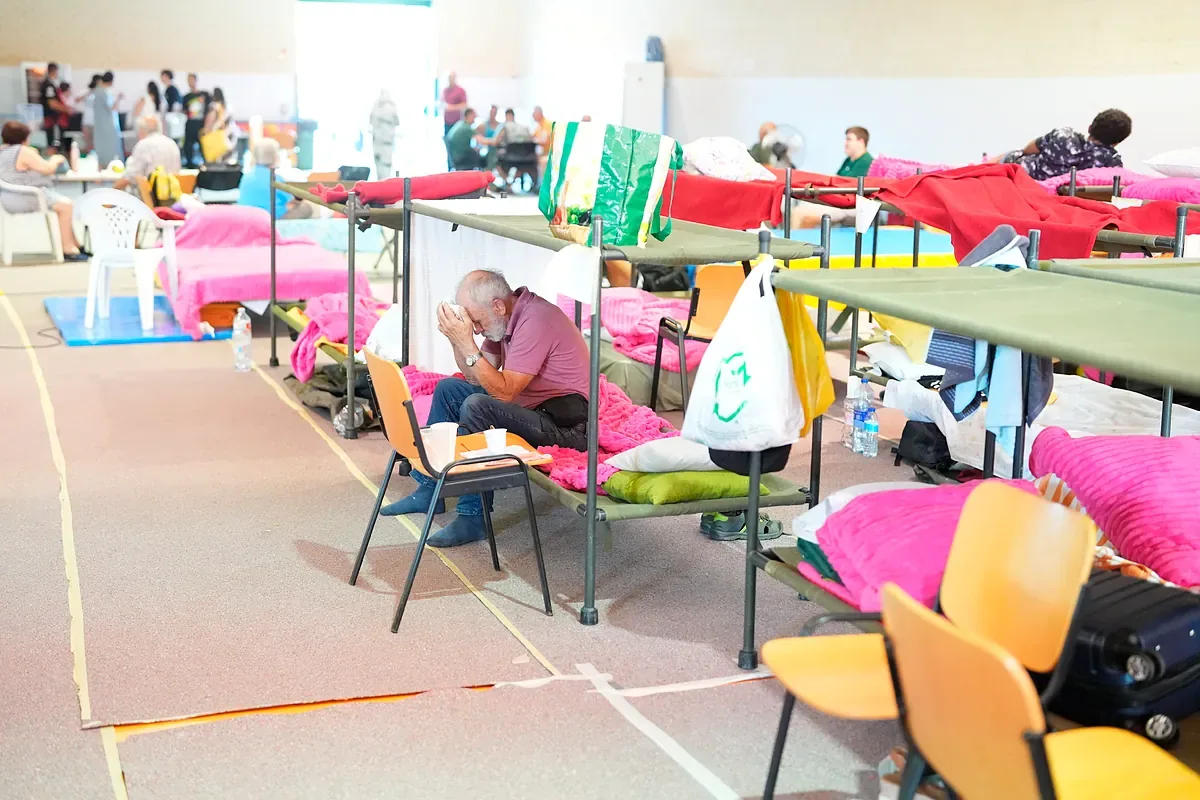
In an interview on RTVE, reported by Europa Press, Arribas explained that, after a “quite unstable” Saturday afternoon, which forced recommended evacuations in the south of the province of Ávila and the north of Toledo, “the entire front is contained,” although he specified that there are “certain parts” that remain out of control.
“Considerable progress has been made in the work carried out throughout the perimeter. Right now we could say that the entire front is certainly contained. There are only a few active fronts where work is being done and today we hope that conditions will allow us to work in those areas that are indeed out of control. But it is not the entire perimeter at all,” Arribas explained.