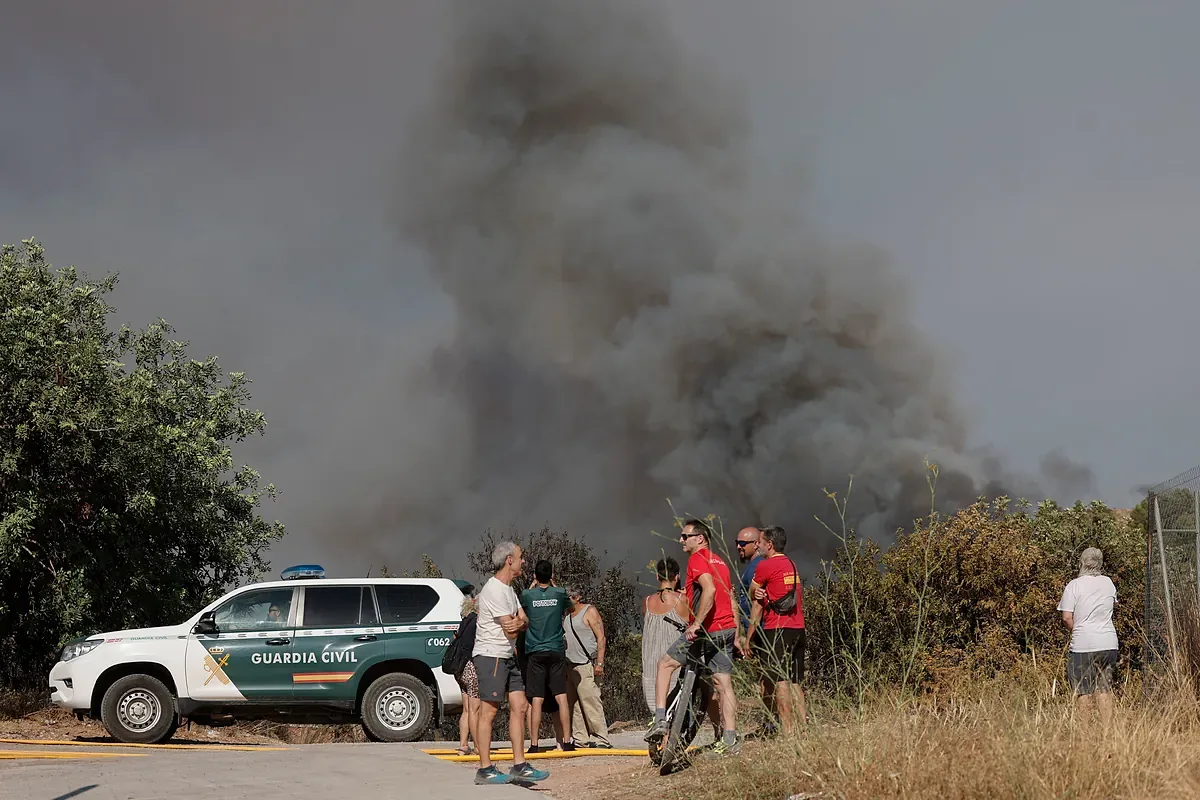





“At around 12 noon is when the evacuation alarm sounded on all mobile phones. And that was really crazy.” Says a resident of La Adrada (Ávila) who perfectly remembers the moment when, last Saturday, the authorities ordered the evacuation of her town due to the advancing fire. “Several buses were called to evacuate dependent people, elderly people. They went door to door to make sure no one was left inside,” she recounts, in a story that will not be very different from what 73,152 citizens in Spain could tell today.
Read more Cover of EL MUNDO on Tuesday, July 28, 2026
The active fires in the provinces of Ávila, Castellón, Madrid, and Toledo have caused the largest evacuation of people in the country this century. And for some of those affected, this has already lasted more than 100 hours: at 7:15 p.m. last Thursday, the residents of Aldea del Fresno (Madrid) received the order to leave on their mobile phones. At the time of this edition’s closing, they still had not been able to return home.
The number of people still evacuated is equivalent to evacuating the city of Palencia or Ciudad Real – even adding some more residents -. Or emptying the city of Teruel twice. According to estimates from the Annual National Security Report, 42,913 people were evacuated due to fires last year; in 2024, only 6,827. Now 73,152 residents are evacuated at once.
The historic nature of the situation is also reflected in comparisons with the exodus caused by other major tragedies: 30,000 people spent the night away from home after the earthquake in Lorca (Murcia), although only 10,000 were forced to – the rest left out of fear -, and 7,800 abandoned their homes due to the eruption of the La Palma volcano. The DANA that devastated the southern belt of Valencia in 2024 destroyed hundreds of houses but did not cause as many evacuations. Other major cold drops, like the one that days after that kept the province of Málaga on edge, displaced a few thousand. It is possible that more than 100,000 people were evacuated during the Tous dam flood (Valencia, 1982), although the figures from that time are unclear.
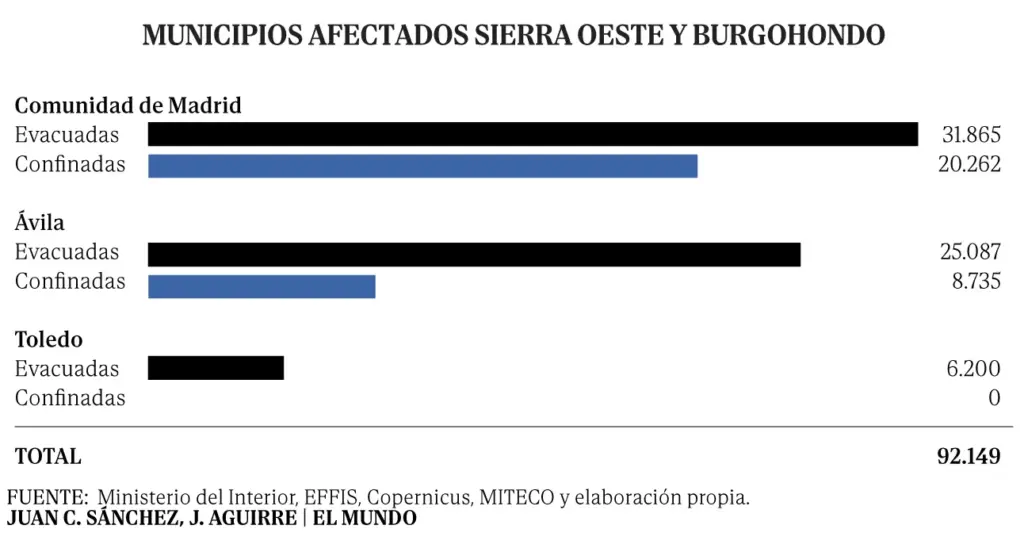
In any case, never this century have 73,152 people been known to remain evacuated last night from about fifty municipalities in the provinces of Madrid (31,865), Ávila (25,087), Toledo (6,200), and Castellón (10,000) – late yesterday, the Interior Ministry authorized the rehousing of nine towns in Toledo, without specifying how many people would return home -. To the displaced residents are added 19,062 people confined to their homes in Madrid, 8,735 in Ávila, and 70,000 in Castellón – 97,797 in total -.
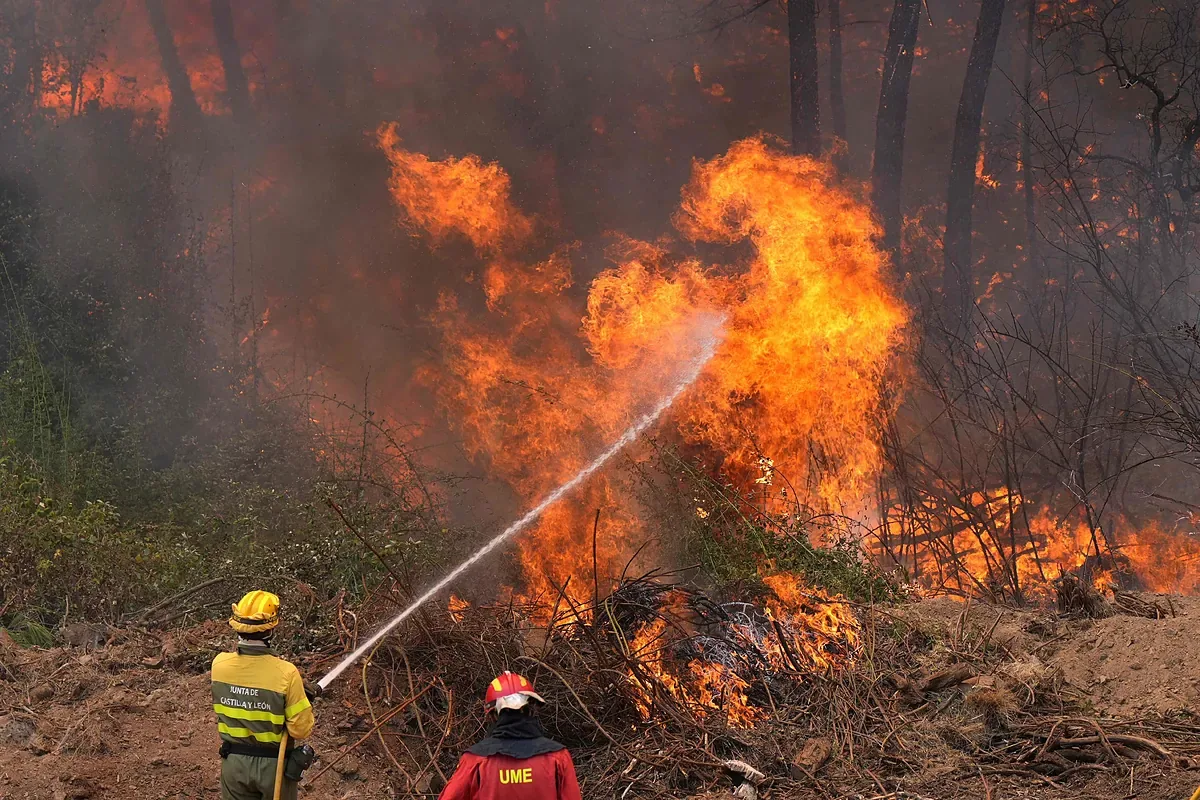
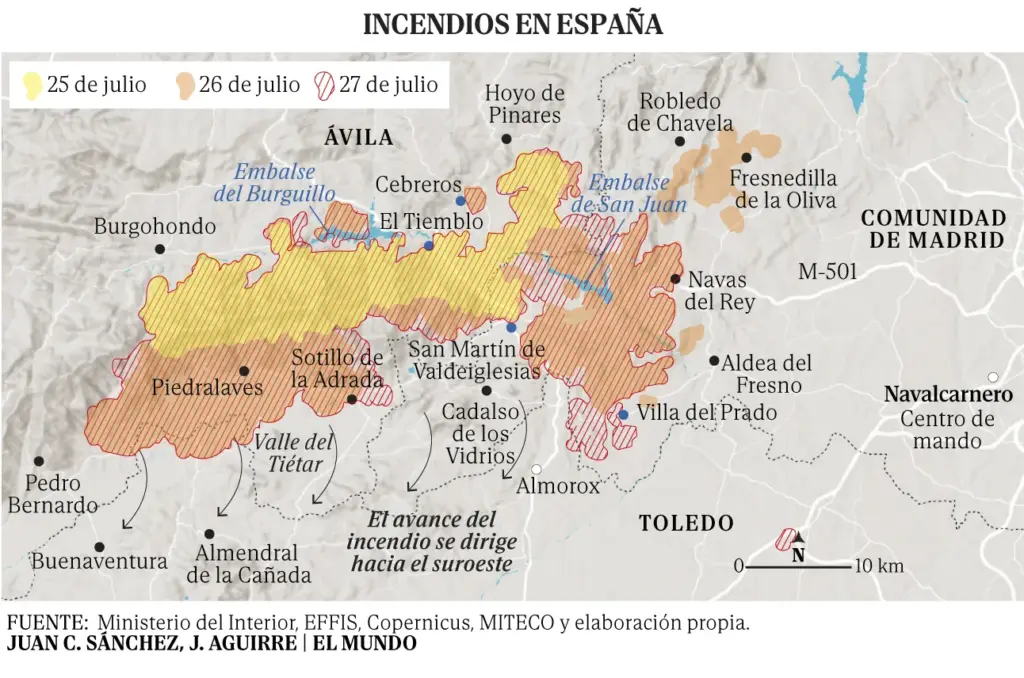
Thus, 170,949 citizens remain on edge today due to three fires: the one that started in Burgohondo (Ávila) on Wednesday, the one affecting the western mountain range of the Community of Madrid since Thursday – which consists of a confluence of three fires, originating in the Madrid municipalities of Villa del Prado and San Martín de Valdeiglesias, and in Almorox (Toledo) – and the one that began on Saturday in Vall d’Uixó (Castellón).
The magnitude of the impact these three fires are having on the civilian population is explained because, unlike what usually happens, these fires – especially the ones in Madrid and Castellón – do not start in depopulated areas of Spain, but in an area with dozens of towns of more than a thousand inhabitants that had to be evacuated in record time.
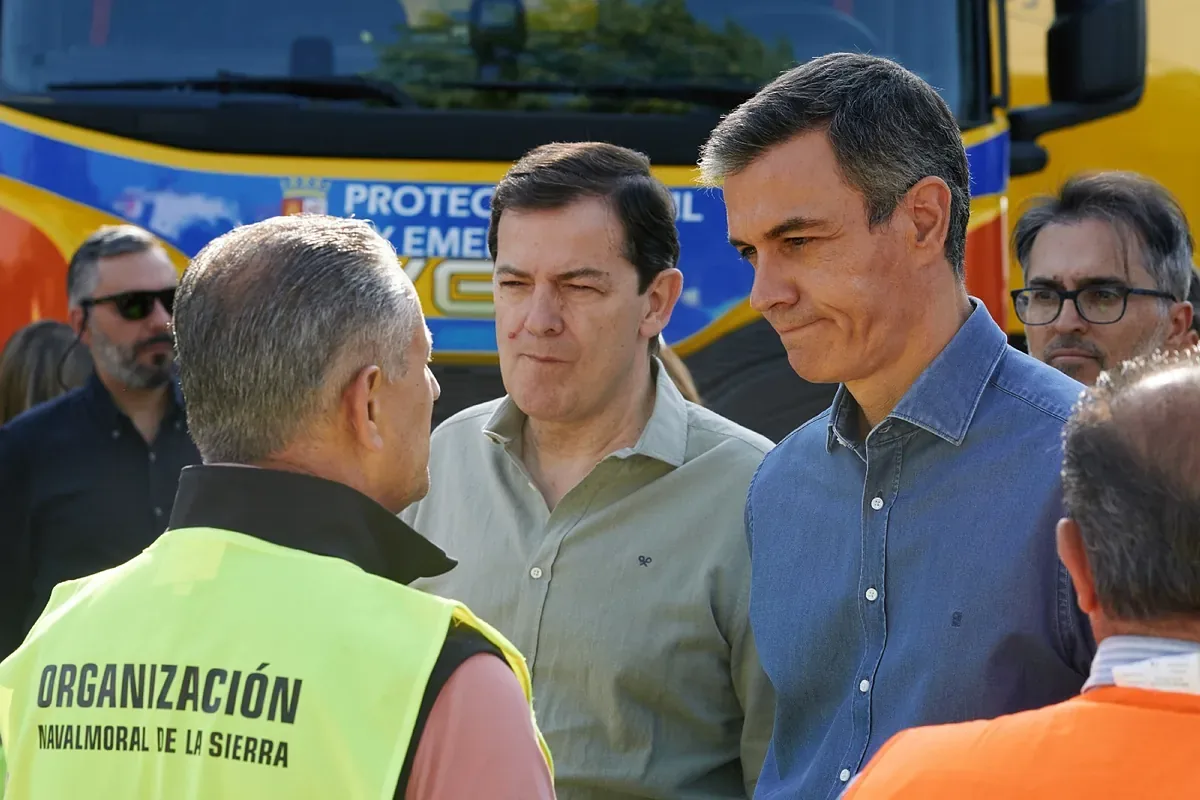
The coordination of the operation has been carried out by the Ministry of the Interior, which took command on Thursday night by declaring a national emergency, a situation that is also unusual: this level of risk, which leads the central government to take command, had only been declared for a few hours during the blackout in April 2025.
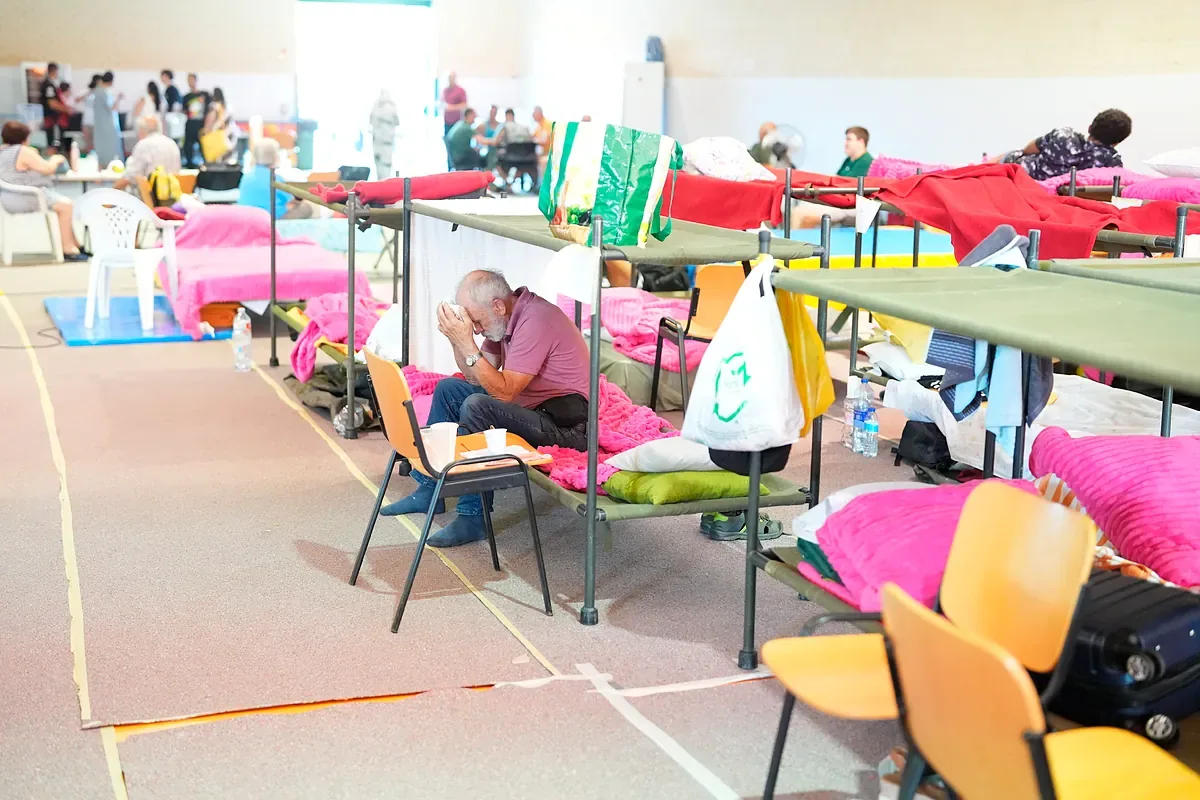
The situation of the evacuees is complicated. In addition to the fatigue from hours away from home, often moving from one improvised shelter to another, there is the anguish of not knowing if their house has been saved from the fire.
Yesterday, residents of the Valle del Tiétar (Ávila) who left the town evacuated over the weekend wanted to return to join the contingents of volunteers who, along with emergency teams, remain there fighting the flames. But they could not. “The Civil Guard is at every entry and exit point of the towns and does not let anyone in,” explains a resident of La Adrada to this newspaper, who until late Sunday was one of those volunteers who stayed in her town. She was in charge of counting the inhabitants who stayed there, “about 150 people,” whose work focused on “making firebreaks around the residential areas to prevent the fire from entering the urban area.”
“They are exhausted,” she describes, and this is confirmed by other residents of the area who, from outside, were asking yesterday for access to their towns: “They need to make shifts. Let these people rest, because there are still fires.” The Provincial Council, together with the town halls, is coordinating the supply provision to the volunteers. Meanwhile, their neighbors watch helplessly from afar as their land continues to burn.
Civil Guard commanders admit that one of the greatest frustrations left by this emergency is the inability to attend to all the residents who have decided to remain in their homes despite evacuation orders. They explain that, in a scenario of limited resources, operational priority inevitably goes to ensuring the safety of those who have left the affected municipalities and concentrating forces on evacuation, rescue, and population protection tasks.
However, they maintain that this situation has once again highlighted a deficiency they have been denouncing for years: the insufficient number of agents assigned to rural areas. In their opinion, the magnitude of the operation required by a disaster of this scale has shown that current staff levels do not allow covering all needs simultaneously, forcing priorities to be set and leaving those who remain in the highest-risk areas without the desired surveillance. “We can’t cover everything,” summarize the consulted commanders, who consider that this crisis has uncovered one of the main structural cracks of the Ministry of the Interior: the lack of personnel in large rural areas, a historic demand of the Armed Institute that, they say, takes on special relevance when a large-scale emergency puts the system under maximum pressure.
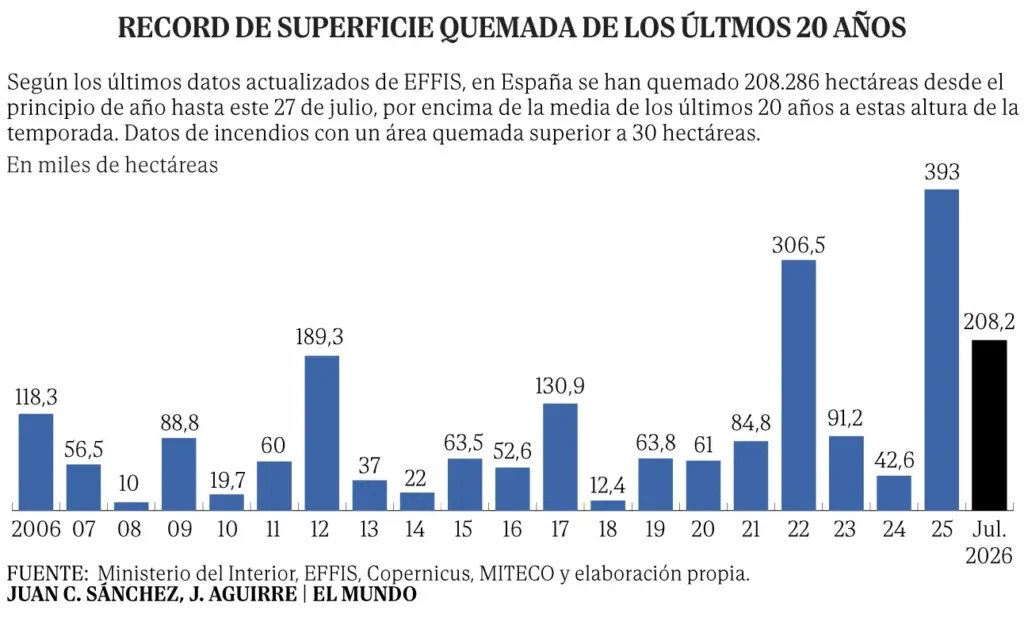
According to the latest data provided, corresponding to Sunday, the active fires have burned around 85,500 hectares: 50,000 in Ávila – the fire that started in Burgohondo is the largest in history -, 25,000 in Madrid, 2,000 in Toledo, and 8,500 in Castellón. Yesterday, the focus of the emergency was on the evolution of the fire on three fronts: Mijares (in the west of the Valle del Tiétar), Casillas (on the east flank of the same area), and in the north of the San Juan reservoir (Madrid). While the first two showed “improvement” throughout the day, the last one still caused “much” concern late yesterday, according to the Minister of the Interior.
On Wednesday, the country will face a new heat wave that will last until Sunday and which, said Fernando Grande-Marlaska, “is decisive, a factor to be substantially considered in these circumstances.” “We call on the responsibility of all citizens,” he concluded.