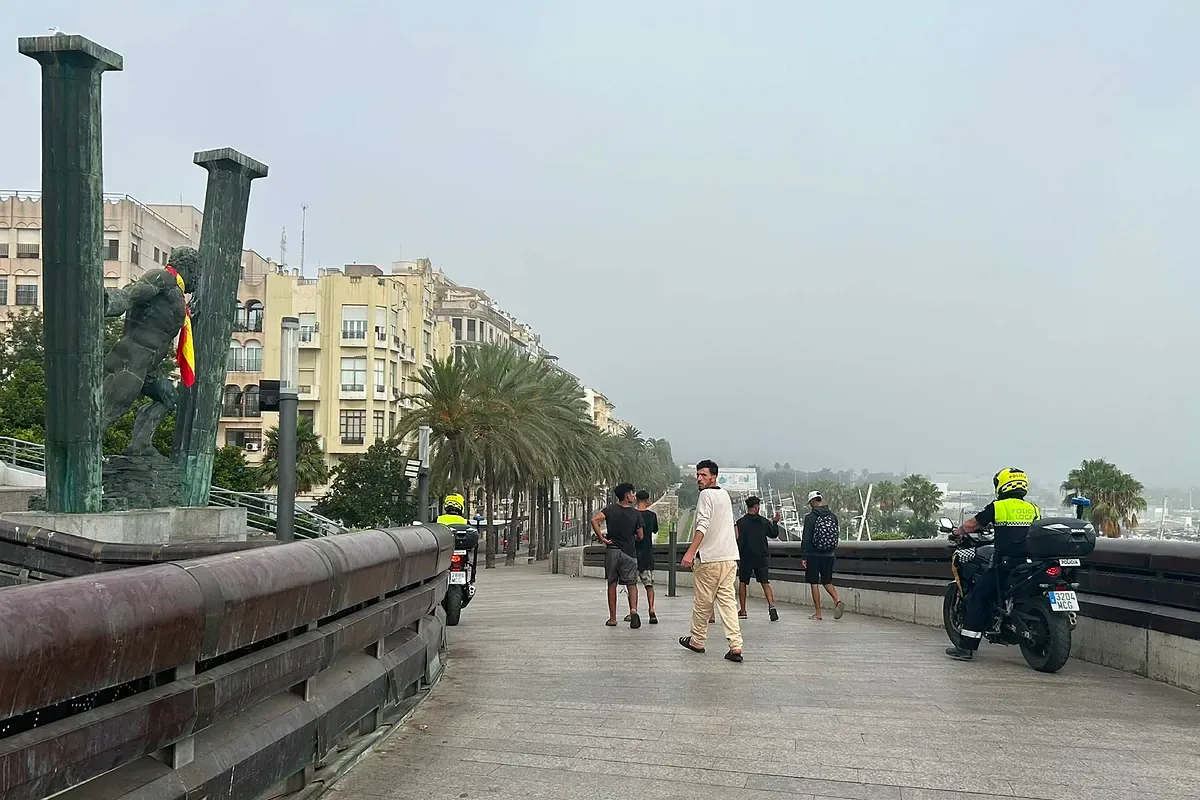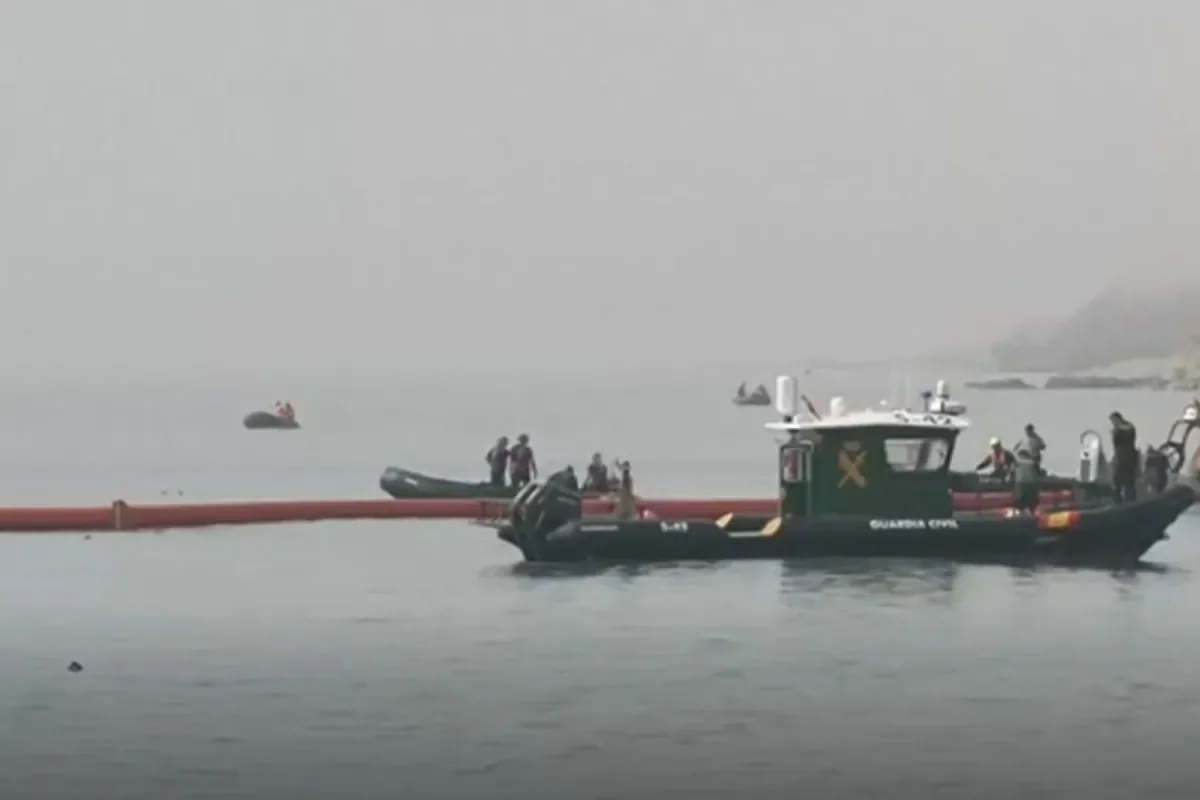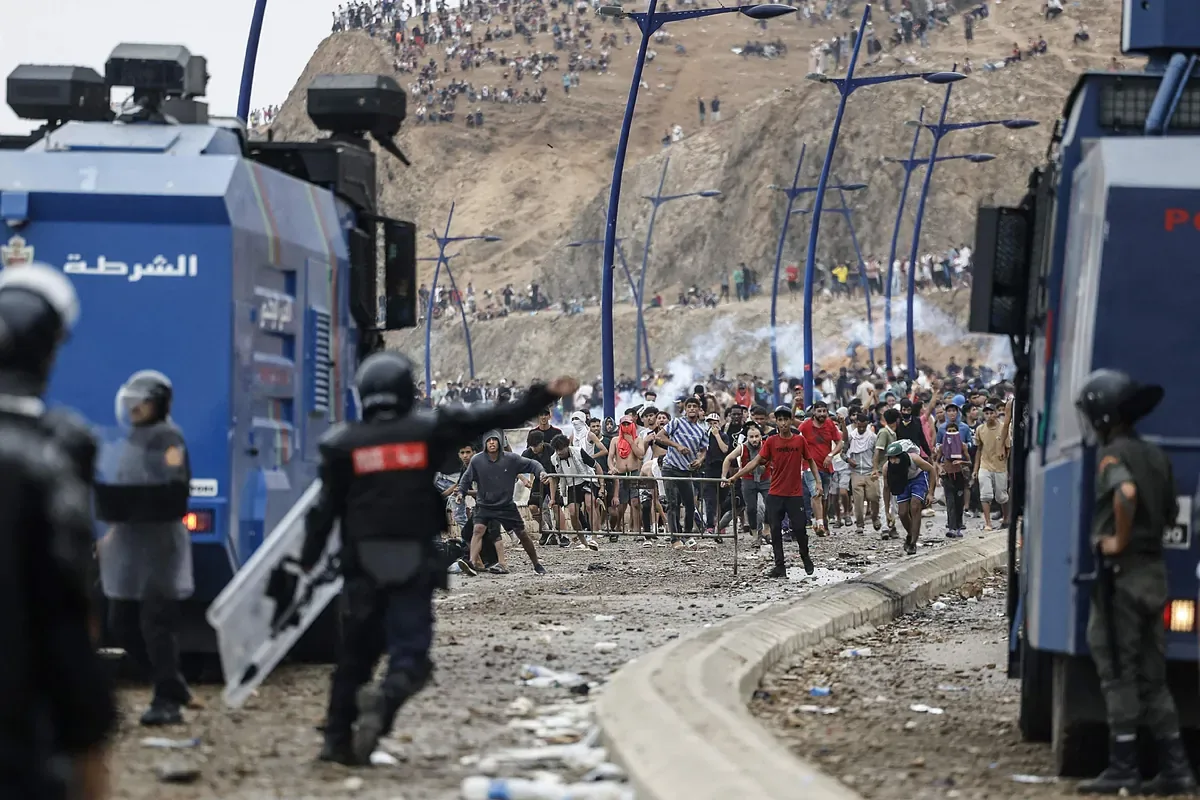

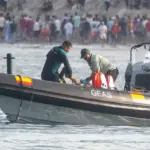
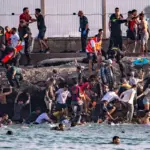

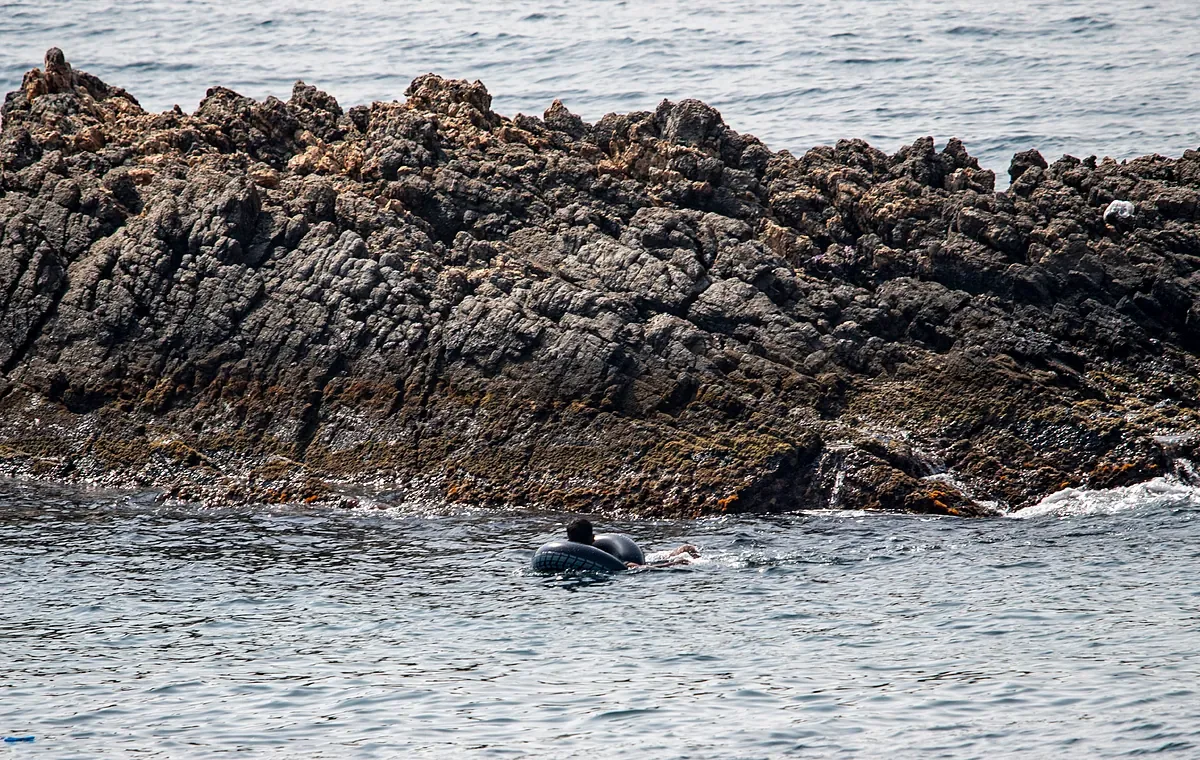
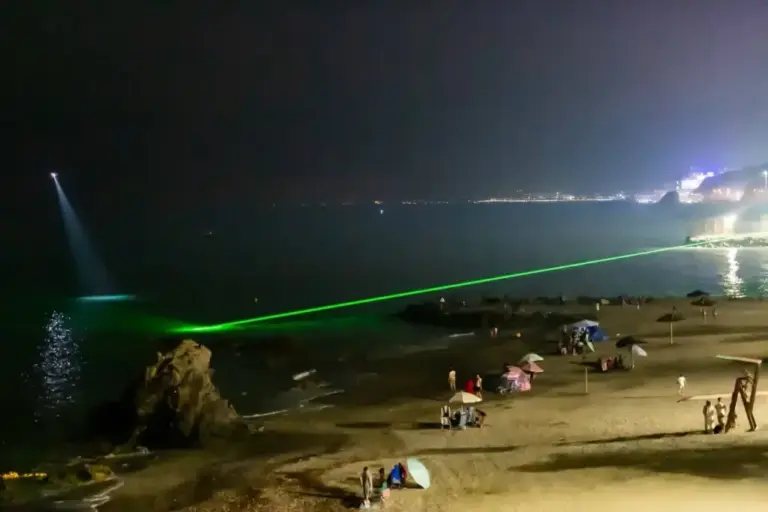
Activity at the maritime border of Ceuta intensifies as the sun sets. While the presence of bathers on Tarajal beach decreases, the permanent surveillance deployment begins over one of Europe’s most sensitive border points. A drone continuously flies over the maritime line between Ceuta and Morocco searching for people in the water. When it detects a swimmer, a laser system installed on land marks their position to facilitate tracking from the coast, while the patrol boats of the Guardia Civil remain deployed in Spanish waters and, on the other side of the border, the Moroccan Royal Navy and the Gendarmerie also maintain a permanent operation.
Arrivals of migrant people concentrate again during the night. Most launch themselves into the sea from the beaches of Fnideq, known in Spain as Castillejos, aiming to go around the Tarajal border breakwater and reach Spanish territory by swimming.
In less than two weeks, around 2,000 people have managed to access Ceuta by this route, representing the episode of greatest migratory pressure recorded in the city since the May 2021 crisis. Although the numbers are lower than then, when about 14,000 people crossed the border in just four days, the operational context is different. The land border remains closed and practically all entries occur by sea.
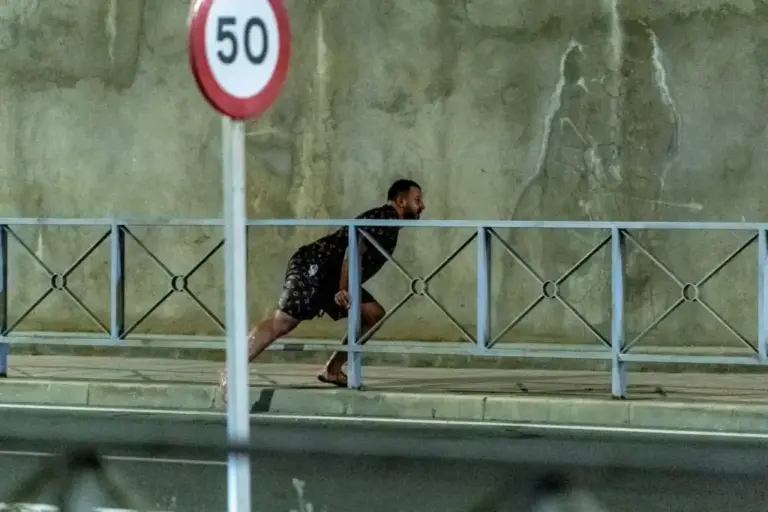
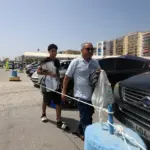
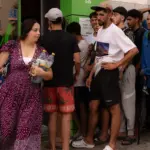
The increase in arrivals has once again pushed the autonomous city’s reception capacity to its limit. The Temporary Stay Center for Immigrants (CETI), with an official capacity of 512 places, currently houses 727 people, mostly of Maghreb origin. Around it remain other migrants who have not yet been able to access the center and who have improvised small camps using blankets, cardboard, plastic, and sheets to protect themselves from the sun. They remain scattered nearby while waiting for a place.
The pressure is also reflected in the minor protection system. Approximately 500 unaccompanied foreign minors have arrived during this migratory episode, which has forced the activation of extraordinary resources to attend to them. Among the people who have accessed Ceuta in the last ten days are also 18 Moroccan women, a profile unusual in this type of maritime entry.
The device deployed at the border operates continuously twenty-four hours a day. Surveillance systems allow detecting movements at sea and mobilizing maritime and land patrols. When people are located before reaching waters under Spanish responsibility, the action corresponds to Moroccan authorities. If they are already in Spanish waters or there is a risk to their physical integrity, Spanish rescue services intervene.
The increase in entry attempts coincides with a rise in the number of deaths on the maritime route to Ceuta. In less than twenty-four hours, four lifeless bodies were recovered at different points along the Ceuta coast. The first appeared on Wednesday morning in the Pineo area. During that same day, two other bodies were found and, during Thursday’s early hours, rescue teams recovered a fourth body. With these findings, the number of deceased persons whose bodies have been recovered on the coasts of Ceuta since the beginning of the year rises to 31. The figures correspond only to bodies located by rescue services and recovered from the sea or the Ceuta coastline.
The president of the Autonomous City, Juan Vivas, has requested the central Government to activate the “national emergency” plan to address the situation. Among the requests made are reinforcement of the State Security Forces and Corps, additional funding for reception resources, the creation of a single coordination command, and greater capacity to manage the arrival of unaccompanied foreign minors.
The migratory pressure coincides with an unprecedented legal scenario at the southern border. The recent doctrine established by the Supreme Court requires processing an individualized administrative procedure for people accessing Ceuta by sea, considering that the border rejection provided in the tenth additional provision of the Immigration Law does not apply to those arriving by swimming. The new criterion modifies the management of these entries and has forced adaptation of police action.
The resolution has provoked the reaction of professional organizations of the State Security Forces and Corps. The Unified Association of Civil Guards (AUGC) has demanded from the Ministry of the Interior clear instructions and legal certainty for agents assigned in Ceuta, especially for Maritime Service personnel, the Special Underwater Activities Groups (GEAS), and the patrols that intervene daily in rescues and interceptions. The association maintains that the jurisprudential change alters the current operational protocols and requires an immediate response from the Administration.
Along the same lines, the Unified Police Union (SUP) has warned that the ruling will increase the workload at a border already under strong migratory pressure. The union considers that each intervention will require opening an individual administrative file, identifying each person, legal assistance and interpreter when appropriate, as well as processing any international protection applications that may be submitted. Both AUGC and SUP demand reinforcement of human and material resources to face a scenario that coincides with the greatest increase in sea arrivals recorded in Ceuta since the May 2021 crisis.
Meanwhile, activity at the border continues at night. Drone flights, tracking through the laser system, and the permanent deployment of boats on both sides of the border are already part of a daily routine marked by successive new attempts to enter by sea and constant pressure on the city’s reception resources.