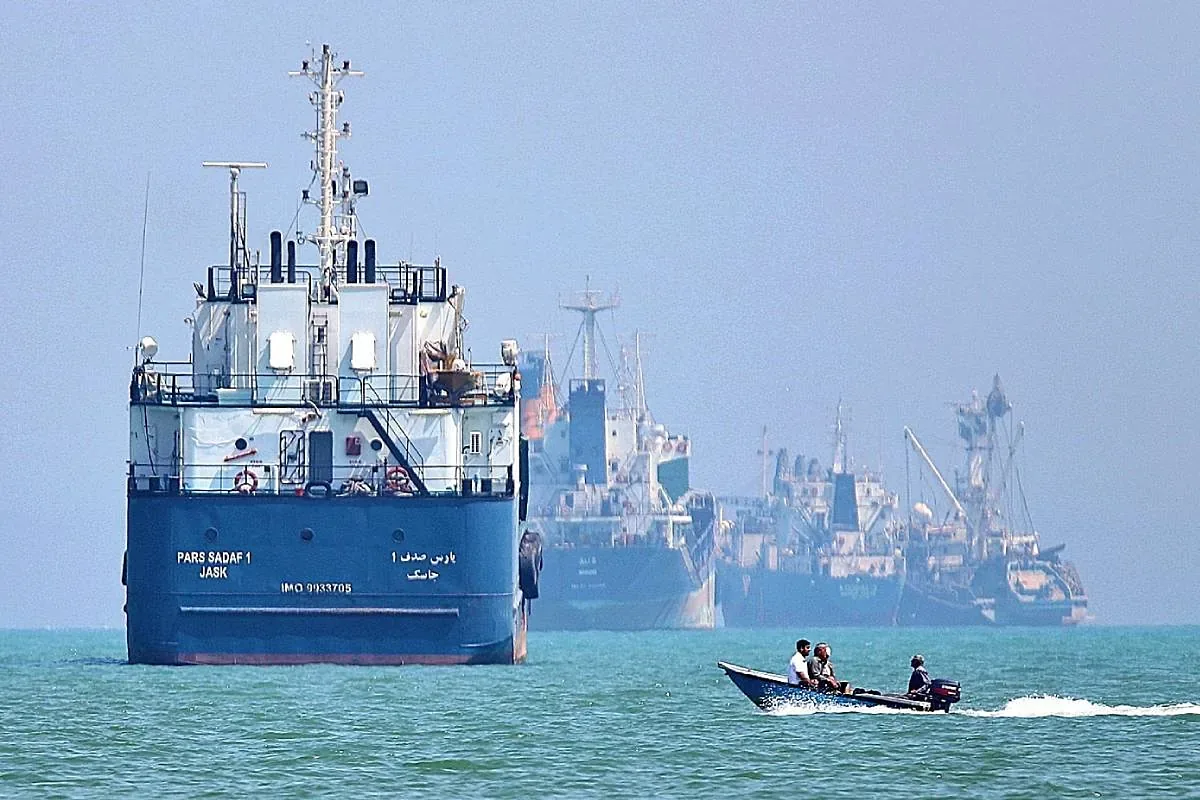




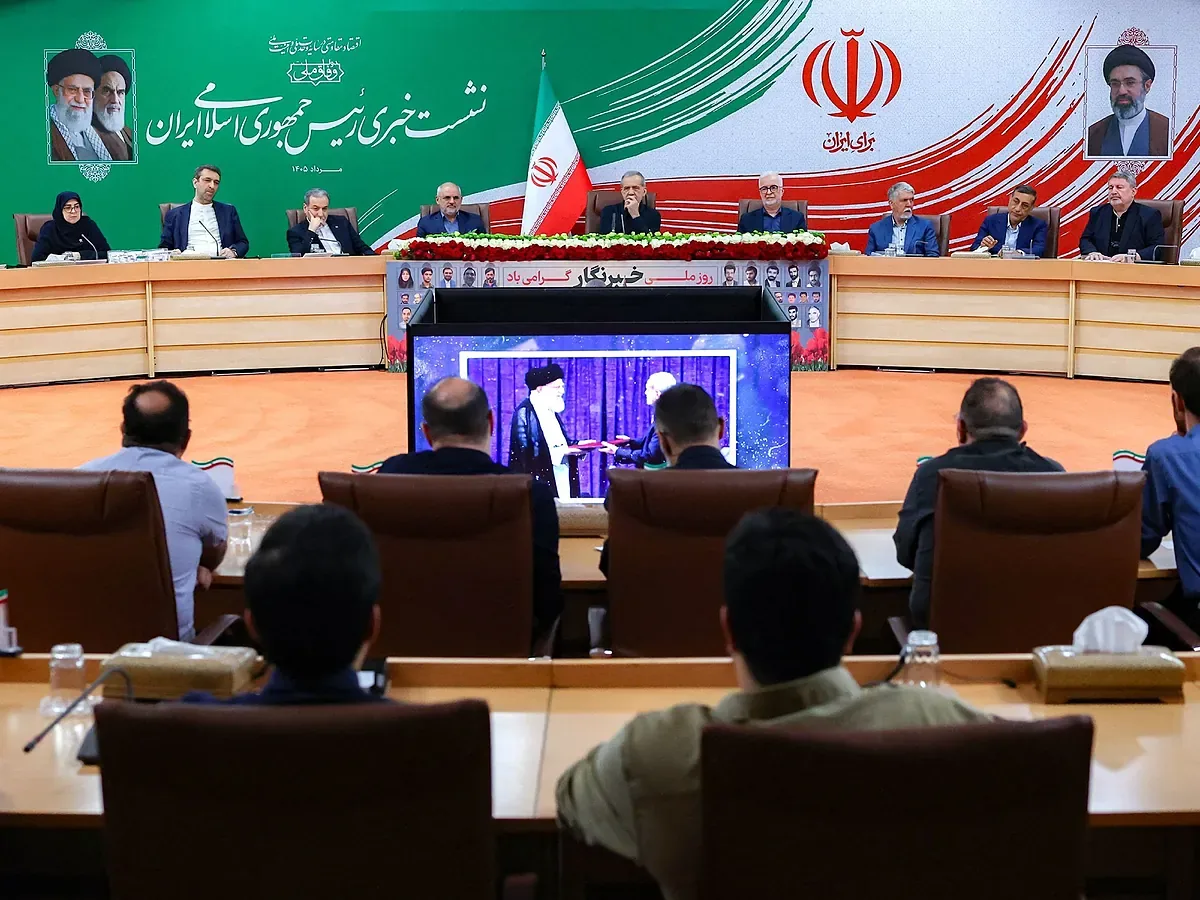
Iran and Oman are very close to reaching an agreement for traffic management in the Strait of Hormuz. This shared custody does not currently mean a return to normality in the maritime route, as Tehran continues to accumulate demands on Washington following the failure of the Memorandum of Understanding that aimed to resolve the main obstacles of the war.
Tehran confirmed that the new maritime corridor has been geographically delimited, highlighting the silent but effective expulsion of the United States from the Strait of Hormuz and the sovereignty claim by Iran and Oman over these waters, a status that did not exist before the war.
Iranian sources indicated that according to the new plan, ships heading to the Persian Gulf will transit through a channel controlled by Iran, bordering its coast, while vessels leaving the Strait will navigate through a channel adjacent to Oman’s territorial waters, maintaining communication with Tehran. This arrangement, described as temporary, includes the imposition of “service fees” to cover security and environmental costs, with revenues to be shared equally between Iran and Oman. “This agreement must be established exclusively between Iran and Oman, and we do not grant any rights to any other country”, said Iranian Deputy Foreign Minister Kazem Gharibabadi in an interview with the IRNA agency.
The diplomatic representative emphasized that, before the current conflict, maritime traffic was conducted only through Omani territorial waters, a condition agreed upon before the 1979 Islamic Revolution in Iran. Now the new model seeks to correct what Iran considers a historical imbalance. Gharibabadi made it clear that the key to the maritime gate remains in Tehran’s hands and warned that in the event of escalating tensions, they will close the route “when necessary”.
U.S. President, Donald Trump, stated on Sunday that he was “semi-negotiating” with Iran, but yesterday he again attacked the Iranian regime for demanding financial compensation for war damages and to reopen Hormuz. “Iran is asking for compensation for the damages caused during the military conflict of the last five months (…) something they have never mentioned during our negotiations,” he said in a post on Truth Social. “I also demand compensation from Iran, for all the people they have killed over the last 50 years, as part of any future peace negotiation”, he added.
According to the latest leaks from U.S. officials to the press, Trump is also looking for ways to reopen maritime traffic and even considers giving up signing a nuclear agreement with Tehran if normality returns to Hormuz.
The rapprochement between Tehran and Muscat arises from years of cooperation between both governments and due to Oman’s mediating role in several regional conflicts. Oman has traditionally played the role of the region’s silent diplomat, facilitating contacts that led to the 2015 nuclear agreement or the thaw between Saudi Arabia and Iran in 2023. Its policy of “active neutrality” has allowed it to maintain cordial relations with the Islamic Republic throughout the war, and its ports and infrastructure have suffered far fewer attacks than its Gulf neighbors. In fact, Omani ports, located outside the Strait, have experienced a 117% increase in exports since the conflict broke out in February, giving Muscat a position of strength and patience. Oman can bypass blockades in the Strait of Hormuz but seeks greater regional stability for its long-term commercial interests.
Its decision to maintain dialogue with Tehran during the war has caused friction with Washington. Amid the truce, Trump issued a threat to Oman, declaring to the press that the country must “behave” or the United States would “destroy it.” Muscat was very critical of the offensive launched by the United States and Israel against Iran in February, as it frustrated its mediation work between Washington and Tehran. In an unusual article published in The Economist, Omani Foreign Minister Sayyid Badr Albusaidi accused the United States of being driven by Israel’s whims, a country that “explicitly seeks the overthrow of the Islamic Republic and probably cares little about how the country is governed.”
The current negotiations are the result of the failure of the memorandum of understanding signed on June 17 between Washington and Tehran, which stipulated an opening of the Strait for 60 days. That agreement broke precisely due to disagreement over maritime routes, after Iran attacked several ships that used a route approved by the United Nations and supported by the United States.