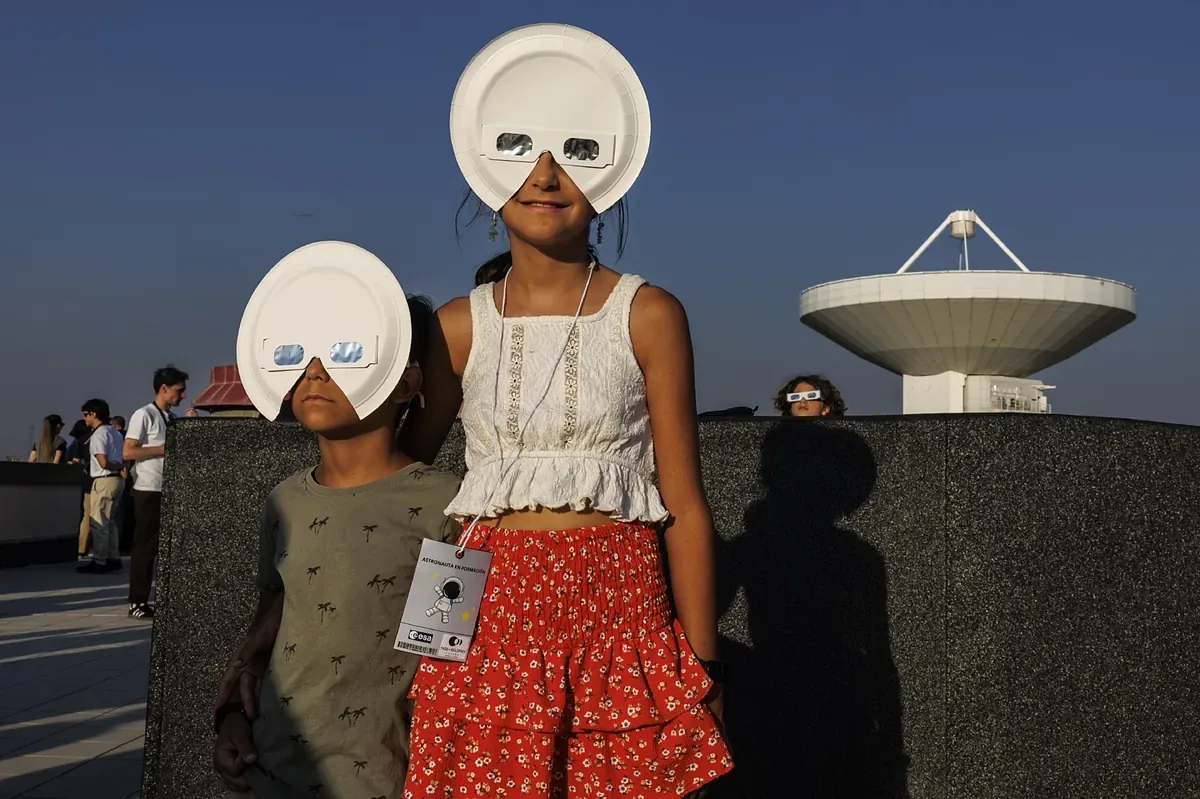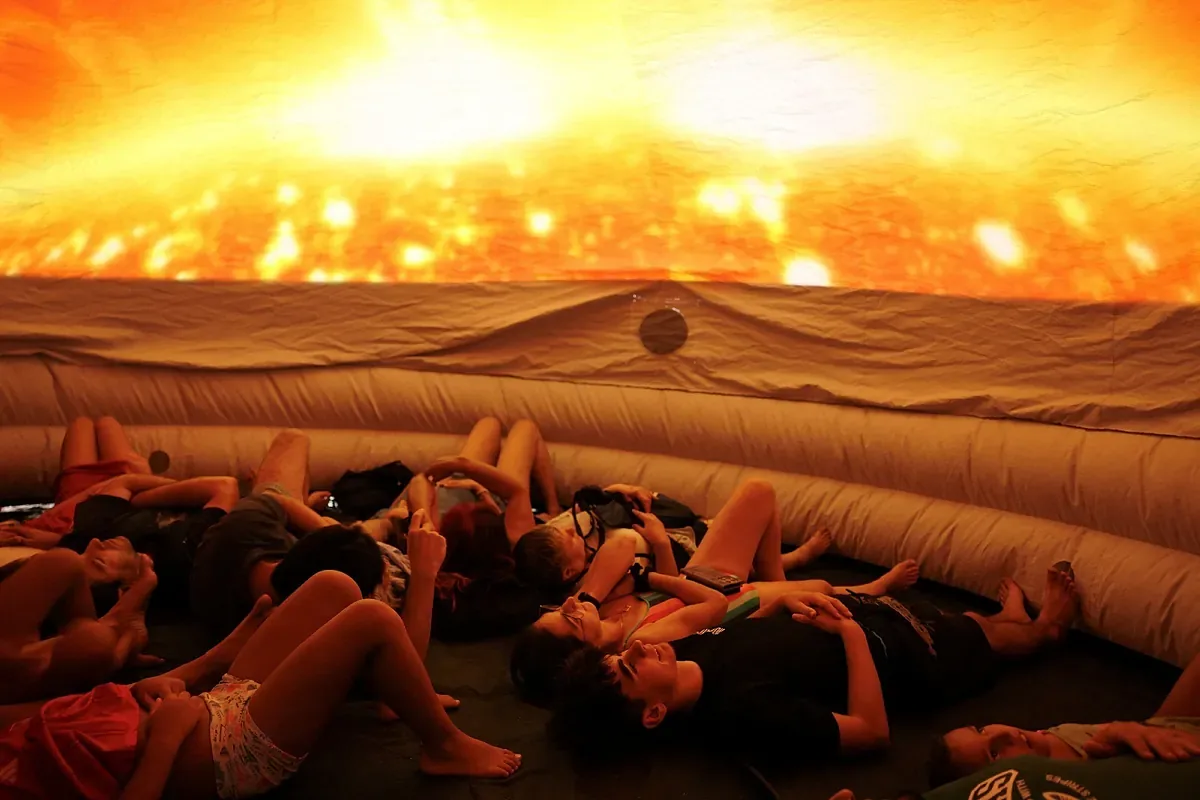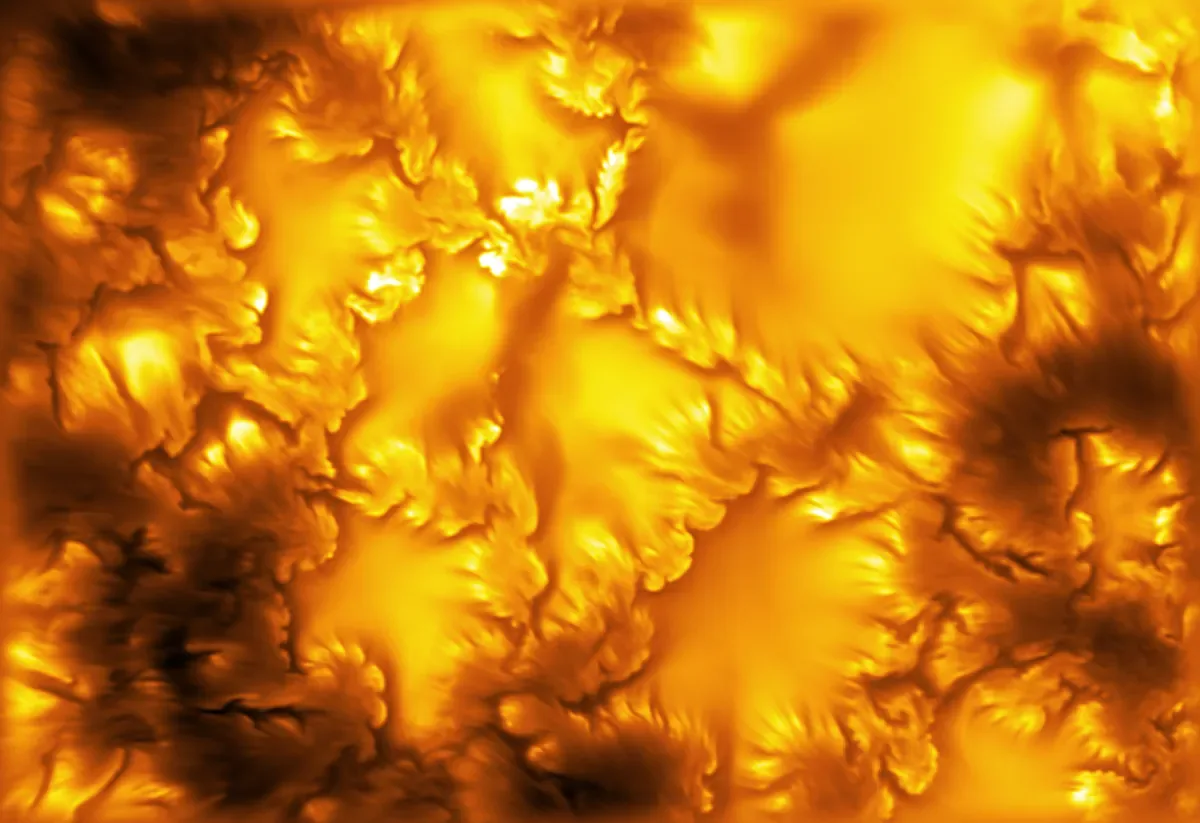




The day has finally arrived. The total solar eclipse that this Wednesday evening will sweep across a wide strip of northern Spain and the Balearic Islands has sparked a true eclipse mania, as for many people, it will be the first time they can enjoy this spectacular astronomical phenomenon. The last time it was visible on the Peninsula was in 1912, and in the Canary Islands, in 1959. However, the 1912 eclipse was brief and affected a small area, so not many people were able to enjoy it. The last one that a large number of people could witness from Spain was in 1905, which was quite similar to today’s, although longer: totality lasted almost four minutes.
In the regions where the solar eclipse will be total, the period of maximum darkness on August 12 will last between half a minute and one minute and 48 seconds. Only when the solar disk is completely covered and the totality phase has begun can you look directly at the sky without glasses for a few moments. Areas of Spain outside the totality will see a partial eclipse, meaning the Moon will not completely cover the Sun, so at no time will it be safe to look at our star without the protection of special glasses. On this website of the National Geographic Institute, you can check how and for how long it will be visible in your area.
These are the key moments of this historic eclipse in the totality zone.
PARTIAL ECLIPSE
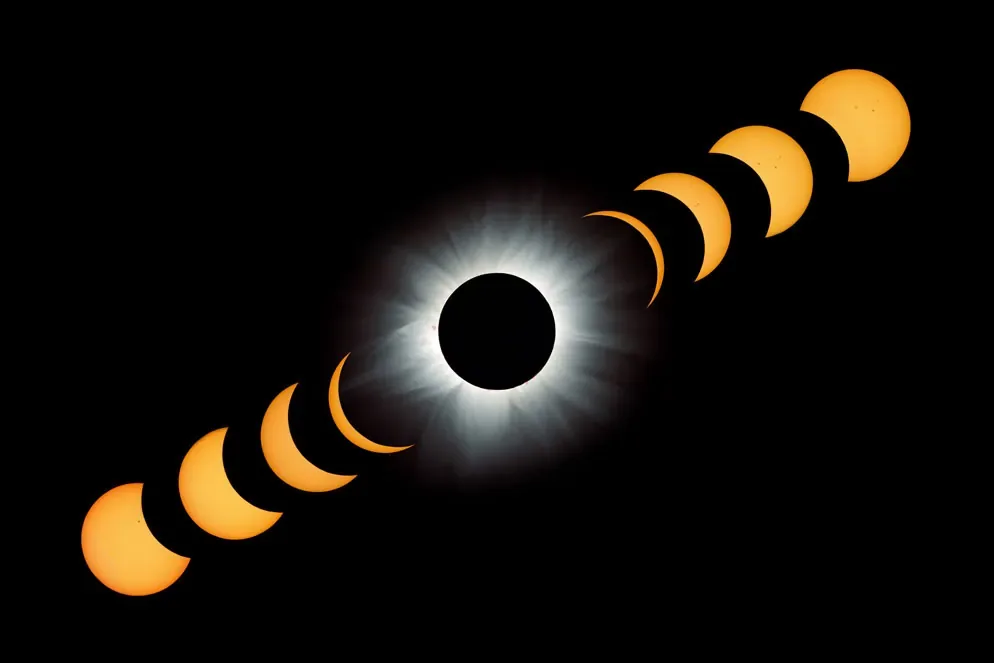
From around 19:30, the Moon will start to gradually cover the Sun. The darkening process begins about an hour before totality. About 20 or 30 minutes before the occultation, the change in light is already noticeable, acquiring a metallic hue.
TEMPERATURE DROP
As the solar disk decreases, the radiation it emits will also drop, so the temperature will noticeably fall about 40 or 50 minutes before totality. It depends on the area, but usually it drops between three and six degrees.
PURKINJE EFFECT
During the 10 minutes before the complete occultation of the Sun, our color perception may change due to the sudden drop in light, and the effects that the light transition causes on the retina. Our eyes quickly shift from vision dominated by cones, typical of daytime, to one involving rods.
This causes bluish and greenish tones to appear brighter while reds seem to dim and darken, perceived as black. This phenomenon is called Purkinje shift or effect.
THE MOON’S SHADOW
When only a couple of minutes remain before the Sun disappears from our view, we will see the lunar shadow, a kind of dark spot that our satellite projects onto the Earth’s surface. We will feel it projected over us.
DIAMOND RING
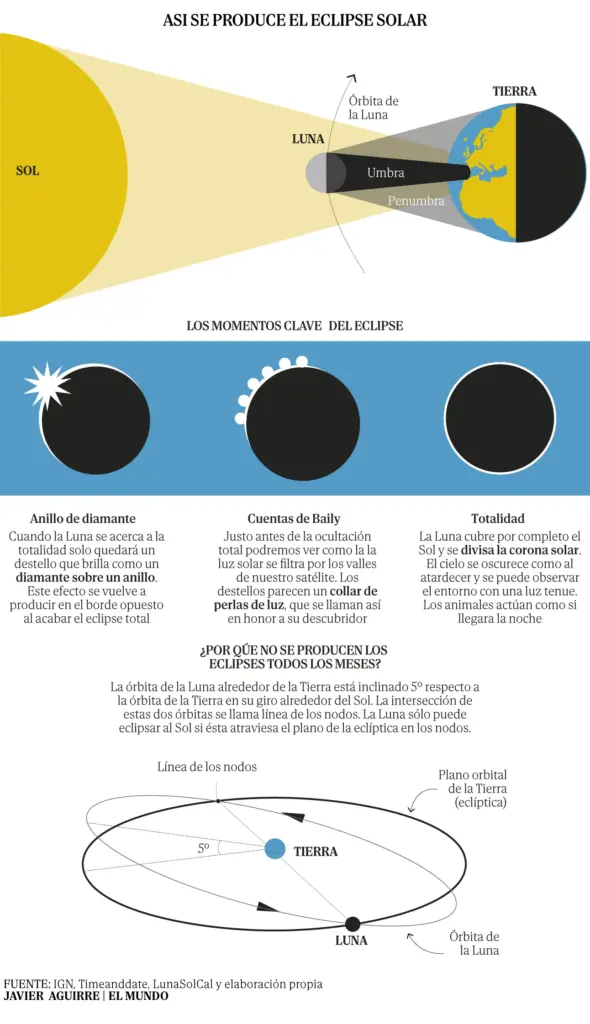
This is one of the most anticipated moments, occurring just before totality—between 15 and 10 seconds before. Only a bright point remains visible while the rest of the Sun disappears from view. It is called this because the image can resemble a ring set with a very bright diamond. People who have seen a total solar eclipse describe this moment as spectacular, making capturing this instant one of the goals of eclipse chasers. It is the last sign before totality begins and the solar corona reveals itself in all its splendor.
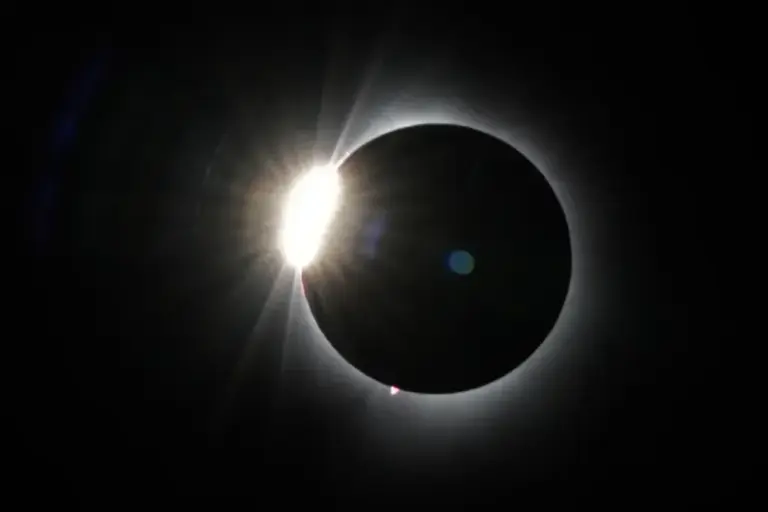
The diamond ring lasts only one or two seconds, but we will be able to see it briefly again when totality ends. Remember that during this phase, you must keep your eclipse glasses on.
BAILEY’S BEADS
Moments before totality—less than 10 seconds before—we will see sunlight filtering through lunar valleys, creating a chain of bright light points around our satellite that resemble a luminous necklace made of small bright beads suspended in space. It is named after British astronomer Francis Baily, who first described this phenomenon during the 1836 solar eclipse. They are also called Bailey’s globules. During the diamond ring and Bailey’s beads phases, we might observe reddish or pinkish areas coming from the chromosphere, one of the Sun’s layers (the solar corona and chromosphere make up the solar atmosphere).
These reddish or pinkish colors are due to hydrogen emission (remember that the Sun is a large gas sphere mainly composed of hydrogen and helium).
TOTALITY
The solar disk is completely covered. We can only see the solar corona, which is the outer part of our star. In this eclipse, this phase will begin between approximately 20:28 and 20:31, depending on the area, and will last between half a minute and one minute and 48 seconds.
Only during this phase can you remove your eclipse glasses to observe the Sun, although some ophthalmologists recommend not removing them, or if you decide to do so, only for a few moments. Look around you, at the landscape and the people around you, and notice the changes in colors, temperature, and the reactions of people and animals.
BAILEY’S BEADS AND SECOND DIAMOND RING
When the totality phase ends, the Moon will start uncovering the Sun. From then on, we will experience the entire process leading up to totality in reverse. The Sun reappears with a bright flash. We will see Bailey’s beads and the diamond ring again with the pinkish tone of the chromosphere.
FINAL PARTIAL ECLIPSE
Between 20:30 and 21:30, the Moon will move away from the solar disk, so it will gradually become daytime again. Since in much of the country this coincides with sunset, we will see an evening with the Sun partially eclipsed.